
Sign up to save your podcasts
Or



This week we’re celebrating Halloween by talking about how we’re planning on surviving the hypothetical zombie apocalypse!
In this episode:
_______________________________
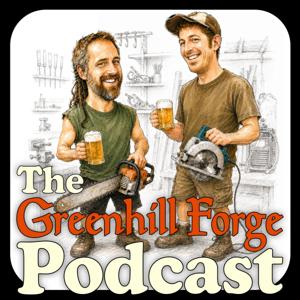
Welcome to the Greenhill Forge Podcast, with Eric from the Greenhill Forge YouTube channel, and my buddy Amal, a fellow builder of many trades.
In this podcast we’ll talk about where the real world meets experiments in alternative energy, wood heating, metal fabrication, off-grid engineering and self sufficiency, so expect discussions about workshops, tools, fabrication, building, homesteading, and what it actually takes to make those dreams real.
We’ll answer a question each week, so send yours to us at https://forms.gle/zNzKTtjDnBEupLBQA
WATCH the podcast on Youtube at https://www.youtube.com/@GreenhillPod
LISTEN on all your favorite podcast platforms.
See you next week!
CHAPTERS
00:02:49 Water and the rule of threes
00:05:32 Realistic collapse scenarios
00:08:10 Surviving the first two years and lean months
00:09:23 Water storage and filtration
00:15:03 Food storage, cooking, and fuel
00:18:40 Animals for food and work
00:19:55 Community size and specialization
00:22:24 Potatoes, grains, and calorie density
00:22:54 Seed saving and heirloom varieties
00:29:14 Fertilizers, companion planting, and composting
00:30:55 Dentistry and health realities
00:31:38 Food preservation methods
00:36:57 Salt as a critical resource
00:38:58 Clothing, shoes, and textiles
00:46:08 Soap, toilet paper, cordage, and tools
00:49:42 Prepping strategies and location
00:55:34 Communication without modern infrastructure
00:58:45 Mental fortitude and physical fitness
01:12:22 Tips of the Week
This week we’re talking about Eric’s recent video on his absorption refrigerator design that uses water as the refrigerant and calcium chloride (road salt) to absorb the vapor, powered by heat instead of a compressor. We’re going through how the cycle works, the main components, the practical limits, and what it takes to keep the system running.
Full Youtube video on fire-powered refrigeration: https://youtu.be/3sv7TBtHcgo?si=qB2NBwEFFEgI2xlk
In this episode:
_______________________________
Welcome to the Greenhill Forge Podcast, with Eric from the Greenhill Forge YouTube channel, and my buddy Amal, a fellow builder of many trades.
In this podcast we’ll talk about where the real world meets experiments in alternative energy, wood heating, metal fabrication, off-grid engineering and self sufficiency, so expect discussions about workshops, tools, fabrication, building, homesteading, and what it actually takes to make those dreams real.
We’ll answer a question each week, so send yours to us at https://forms.gle/zNzKTtjDnBEupLBQA
WATCH the podcast on Youtube at https://www.youtube.com/@GreenhillPod
LISTEN on all your favorite podcast platforms.
See you next week!
_______________________________
CHAPTERS
00:00:04 Absorption refrigerator design overview
00:01:05 Importance of cooling and off-grid power sources
00:02:36 Choosing water and calcium chloride over other options
00:03:05 How calcium chloride absorbs water vapor in a closed system
00:05:26 Exothermic reaction when calcium chloride hydrates
00:06:30 Calcium chloride as road salt and a concrete accelerator
00:07:47 Water as the refrigerant and the absorber’s role
00:08:08 Cooling the absorber to maintain absorption capacity
00:09:26 Multiple heat cycles compared with vapor compression
00:10:23 Expansion valve, pressure drop, and one-time coolers
00:11:48 Generator and absorber replacing the compressor
00:13:09 Lifting refrigerant with heat and gravity feed
00:13:41 Water’s heat capacity advantages and drawbacks as a refrigerant
00:14:08 Latent heat and phase change explained
00:15:46 Boiling point changes with pressure and elevation
00:16:54 Using vacuum to lower the boiling point for cooling
00:17:58 Freezing limitations of water as a refrigerant
00:19:03 Using the system to supplement a root cellar
00:19:43 Achievable evaporator temperatures and ice-making challenges
00:20:24 Issues with antifreeze additives in the system
00:21:47 Flow through the condenser, needle valve, and evaporator
00:22:05 U-bend as a check valve and pressure separation
00:22:57 Running the generator leg with the valve closed
00:24:18 Split of flow between the evaporator and recirculation
00:27:34 Design process and differences from industrial systems
00:28:00 Sizing the U-bend for the pressure differential
00:29:07 Ambient temperature effects on evaporator performance
00:30:35 Enclosing the evaporator and accounting for fan heat
00:31:45 Adding evaporators in parallel and absorber capacity
00:33:29 Limited published data on calcium chloride as an absorbent
00:36:22 Off-grid challenges with compressors and mechanical energy
00:37:13 Power draw and solar options for heat and pumps
00:39:00 Solar heating the generator and thermal storage ideas
00:41:11 Solar irradiance and concentrating sunlight
00:42:45 Solar panel efficiency versus direct heat collection
00:43:30 Using solar-heated fluid to drive the generator
00:44:37 Potential cooling capacity for small units
00:45:57 Sensors, Arduino modules, and voltage readings
00:48:26 Pressure sensors, absolute versus gauge pressure
00:50:07 System pressures remaining below ambient
00:51:15 Structural deflection and reinforcement under vacuum
00:52:58 Vacuum distillation and related applications
00:56:35 Water level shifts between generator and absorber
01:00:06 Water column acting as a barometer
This week we’re talking about alternative alternative energy — ways to run engines and produce power that aren’t the usual solar panels or wind turbines. We go through waste vegetable oil and biodiesel, wood gasification, small-scale ethanol, methane digesters, and a few mechanical systems like wind pumps, water wheels, trompes, and Stirling engines.
_______________________________
Welcome to the Greenhill Forge Podcast, with Eric from the Greenhill Forge YouTube channel, and my buddy Amal, a fellow builder of many trades.
In this podcast we’ll talk about where the real world meets experiments in alternative energy, wood heating, metal fabrication, off-grid engineering and self sufficiency, so expect discussions about workshops, tools, fabrication, building, homesteading, and what it actually takes to make those dreams real.
We’ll answer a question each week, so send yours to us at https://forms.gle/zNzKTtjDnBEupLBQA
WATCH the podcast on Youtube at https://www.youtube.com/@GreenhillPod
LISTEN on all your favorite podcast platforms.
See you next week!
_______________________________
CHAPTERS
00:00:14 Overview of alternative fuels and mechanical energy systems
00:00:58 Running older diesel engines on waste vegetable oil
00:02:02 Cleaning and filtering waste vegetable oil
00:03:30 Dual-tank veggie oil conversion with preheating and purging
00:05:07 Making biodiesel from waste oil
00:06:35 Sourcing methanol and its cost for biodiesel
00:07:50 Biodiesel compatibility with modern engines and seals
00:09:04 Mixing vegetable oil with diesel or kerosene as a simpler option
00:13:31 Using multi-fuel generators and military equipment on alternative fuels
00:16:41 Filtering methods and removing water from waste oil
00:19:04 Trade-offs between pre-processing fuel and engine complexity
00:23:54 Rebuildable injectors and choosing older mechanical diesel engines
00:27:00 Running tractors and farm equipment on vegetable oil
00:29:25 Do indirect injection diesels handle biofuels better than direct injection
00:31:00 Availability of waste vegetable oil
00:33:46 Wood gasification and producing syngas for gasoline engines
00:35:56 Small-scale ethanol production from sugar or starch crops
00:37:02 Fermentation, distillation process, and energy input vs output
00:40:34 Using solar heat to reduce energy needed for distillation
00:44:00 Dehydrating ethanol with molecular sieves for fuel use
00:46:57 Separating methanol heads and monitoring distillation temperatures
00:50:41 Ethanol yields per acre and the role of farm subsidies
00:53:35 Methane digesters that turn farm waste into burnable gas
00:56:20 Mixing manure, scraps, and fat as digester feedstock
00:57:45 Batch versus continuous digester systems for daily use
01:02:38 Mechanical windmills and water wheels for pumping and workshop power
01:05:07 Using water wheels to grind grain or run equipment
01:06:48 Trompes that use falling water to create low-pressure compressed air for forges
01:10:05 Stirling engines that run on heat differentials
01:13:55 Listener Question: Advice for starting out today
01:17:25 Tips of the Week: Trade school and trying new things
This week we're talking wood stoves. We've both heated with wood for decades, so this is the stuff we actually weigh when we're buying and using them.
_______________________________
Welcome to the Greenhill Forge Podcast, with Eric from the Greenhill Forge YouTube channel, and my buddy Amal, a fellow builder of many trades.
In this podcast we’ll talk about where the real world meets experiments in alternative energy, wood heating, metal fabrication, off-grid engineering and self sufficiency, so expect discussions about workshops, tools, fabrication, building, homesteading, and what it actually takes to make those dreams real.
We’ll answer a question each week, so send yours to us at https://forms.gle/zNzKTtjDnBEupLBQA
In this episode:
Creosote powder: US: https://link.amazon/B0iKW8VfJ ; UK: https://shop.vitcas.com/cfc-chimney-flue-cleaner.html
WATCH the podcast on Youtube at https://www.youtube.com/@GreenhillPod
LISTEN on all your favorite podcast platforms.
See you next week!
-----------------
CHAPTERS
00:00:00 Seasoned wood, and staying ahead of a two-year supply
00:04:40 Sizing the wood stove to the house: stove size versus square footage and insulation
00:05:15 Oversized stoves, smoldering, and creosote
00:06:08 House insulation matters
00:07:43 Creosote, chimney fires, and smoke exposure
00:10:15 Sizing rule of thumb
00:11:51 Heat distribution: fans, ducting, basement furnaces, radiant floors
00:18:37 Primary heat versus occasional use
00:20:01 Wood use per winter, before and after insulation
00:21:16 Sourcing rounds and chips from tree crews
00:23:17 Single burn, secondary reburn, and catalytic stoves
00:25:01 EPA testing
00:28:24 Intake controls, exhaust dampers, and shutting a stove down
00:31:19 Carbon monoxide
00:32:08 How catalytic converters work, and the bypass
00:37:50 Fuel quality and catalytic lifespan
00:39:16 Hybrid stoves and short chimneys
00:42:53 A flue-mounted catalytic retrofit
00:47:18 After-stove modifications, heat exchangers, and insurance
00:49:15 Steel, cast iron, and soapstone
00:54:14 Repairing cracked cast iron
00:55:54 Thin sheet-metal stoves
00:56:51 Stove brands, regulation, and burn bans
01:10:05 Outside-air kits and indoor particulates
01:13:54 Listener question: How did you acquire your skills and knowledge?
01:18:52 Weekly tip: shop mice!
This week we’re talking about bike-powered machinery. No fabrication or welding required, tho you may find it useful.
Appropedia https://www.appropedia.org/Welcome_to_Appropedia
Prevention and Control of Distortion in Arc Welding (1945) https://www.youtube.com/watch?v=yhyekAvFc68
In this episode:
_______________________________
Welcome to the Greenhill Forge Podcast, with Eric from the Greenhill Forge YouTube channel, and my buddy Amal, a fellow builder of many trades.
In this podcast we’ll talk about where the real world meets experiments in alternative energy, wood heating, metal fabrication, off-grid engineering and self sufficiency, so expect discussions about workshops, tools, fabrication, building, homesteading, and what it actually takes to make those dreams real.
We’ll answer a question each week, so send yours to us at https://forms.gle/zNzKTtjDnBEupLBQA
WATCH the podcast on Youtube at https://www.youtube.com/@GreenhillPod
LISTEN on all your favorite podcast platforms.
See you next week!
_______________________________
CHAPTERS
0:00 Bicycle-powered equipment and the wheat thresher build
0:51 How many watts a person can actually put out
2:07 Start at the implement and work backward
3:24 Power takeoff: rear wheel or straight off the crank
4:29 Keeping the bike’s gears, freewheel vs cassette
9:46 Flip-flop hubs and a final-drive ring on the other side
11:43 Steel frame over aluminum
13:01 Derailleurs, horizontal dropouts, and chain tension
15:28 Belt drive: rim as a pulley, inner tubes as belts
18:38 Gear ratios and the chicken rotisserie
25:00 Chain tensioners and which side of the chain is loaded
27:32 Geared one-way drive vs fixed forward-and-back
31:46 Sideways shaft takeoff
34:14 Adult trikes as a ready-made shaft
37:09 Standing the bike up and locking the steering
40:24 Bike trainers as a stand and power takeoff
44:18 Simplest path: chain straight off the front chainring
46:13 Safety with chains and chainrings
47:07 Multi-person power and shared shafts
52:39 Appropedia and scaling human power
57:25 Mechanical drive vs electricity, and why solar changes the math
58:58 The kosher wheat thresher
1:02:43 Recap of the practical options
1:04:19 Flywheels, a pedal bench grinder, and line-shaft shops
1:07:10 Listener question: eco-friendly vs conventional building materials
1:17:37 Tips and tricks: weld order and distortion
This week we’re talking about building for longevity — what actually makes a house last 20 years versus 500. We compare modern American stick framing, European masonry, traditional stone, and natural building methods like cob, rammed earth, and straw bale, and why water, airtightness, climate, and skill matter more than the material itself.
In this episode:
_______________________________
Welcome to the Greenhill Forge Podcast, with Eric from the Greenhill Forge YouTube channel, and my buddy Amal, a fellow builder of many trades.
In this podcast we’ll talk about where the real world meets experiments in alternative energy, wood heating, metal fabrication, off-grid engineering and self sufficiency, so expect discussions about workshops, tools, fabrication, building, homesteading, and what it actually takes to make those dreams real.
We’ll answer a question each week, so send yours to us at https://forms.gle/zNzKTtjDnBEupLBQA
WATCH the podcast on Youtube at https://www.youtube.com/@GreenhillPod
LISTEN on all your favorite podcast platforms.
See you next week!
_______________________________
CHAPTERS
00:00:00 Intro: Building for longevity
00:02:22 Modern American stick framing
00:05:16 Tight houses, moisture, and the “Ziploc bag” problem
00:11:04 Wood stoves, negative pressure, and indoor air
00:14:38 Rain screens: how wall assemblies actually last
00:19:16 25-year warranties vs easy repairs
00:22:19 Speed, seasons, and the skills gap
00:24:06 Buildings are systems, not products
00:25:33 Modern European masonry
00:27:01 Dry-in time, cost, and labor
00:31:26 Brick veneer, repairs, and out-of-plumb walls
00:37:01 Low maintenance vs hard to get right
00:42:11 Roofs that last: slate, clay, and standing seam
00:49:19 Traditional stone, field stone, and lost knowledge
00:52:32 Natural bed, grain, and why orientation matters
00:55:34 Hippie building
00:56:56 Cob: Devon tradition vs modern cob
01:00:42 Climate, skill, and how natural building fails
01:05:03 Good feet, good hats, and keeping water off
01:06:16 Thermal mass: desert gift, cold-climate problem
01:08:49 Rammed earth
01:14:22 Straw bale, earthships, earthbags, and papercrete
01:18:16 You will never build a perfectly watertight house
01:19:42 Permits, insurance, and hybrid builds
01:23:10 Question of the week: the tool you most regret buying
01:28:47 Tip of the week
This week we’re comparing the small machines that actually get used on homesteads, hobby farms and small properties: compact tractors, skid steers, walk-behind tractors and mini excavators.
We’ll go through the real jobs — clearing, grading, digging, gardens, compost, firewood, moving material — plus what to rent vs buy, implement cost and swap time, PTO vs hydraulics, fuel, maintenance, where these things get tippy or annoying, and what we’d buy first if we could only afford one.
In this episode:
CHAPTERS
00:00 - Intro: best small machinery for homesteads, hobby farms and smallholdings
00:51 - Start with the job: raw land vs established property
01:26 - Heavy clearing and big root balls. Rent, don’t buy
04:46 - After infrastructure: when owning a machine starts to make sense
09:51 - Compact tractors, skid steers, walk-behind tractors and mini excavators
11:00 - Mini skid steers / dingos: great on job sites, poor homestead fit
13:55 - Tipping and stability (mini skids, then tractors)
14:13 - Compact tractors: Swiss Army knife, balance problems, counterweights
19:01 - Walk-behind tractors: cheap entry, high labour, fast implement changes
21:34 - Mini excavators: digging, gardens, drainage, compost, reach vs travel speed
33:01 - Skid steers: power, attachments, fuel, visibility, implement swap speed
35:07 - Tractor vs skid steer: pulling, road legality, cost, fuel, maintenance
43:53 - How implements are powered: PTO vs hydraulics
45:39 - Maintenance, parts and how hard each machine is to work on
48:45 - Buying strategy if you can only afford one machine first
52:51 - Size, emissions (sub-25 hp) and dealer vs import brands
55:45 - Audience question: how to start welding
01:00:51 - Weekly tips: stop procrastinating simple jobs + make test pieces
01:04:37 - Wrap-up
_______________________________
Welcome to the Greenhill Forge Podcast, with Eric from the Greenhill Forge YouTube channel, and my buddy Amal, a fellow builder of many trades.
In this podcast we’ll talk about where the real world meets experiments in alternative energy, wood heating, metal fabrication, off-grid engineering and self sufficiency, so expect discussions about workshops, tools, fabrication, building, homesteading, and what it actually takes to make those dreams real.
We’ll answer a question each week, so send yours to us at https://forms.gle/zNzKTtjDnBEupLBQA
WATCH the podcast on Youtube at https://www.youtube.com/@GreenhillPod
LISTEN on all your favorite podcast platforms.
See you next week!
This week we’re talking about the most valuable skills that we've learned along the way, and we answer a listener question about buying tools as a beginner.
_______________________________
Welcome to the Greenhill Forge Podcast, with Eric from the Greenhill Forge YouTube channel, and my buddy Amal, a fellow builder of many trades.
In this podcast we’ll talk about where the real world meets experiments in alternative energy, wood heating, metal fabrication, off-grid engineering and self sufficiency, so expect discussions about workshops, tools, fabrication, building, homesteading, and what it actually takes to make those dreams real.
We’ll answer a question each week, so send yours to us at https://forms.gle/zNzKTtjDnBEupLBQA
WATCH the podcast on Youtube at https://www.youtube.com/@GreenhillPod
LISTEN on all your favorite podcast platforms.
See you next week!
Welcome to the Greenhill Forge Podcast, with Eric from the Greenhill Forge YouTube channel, and my buddy Amal, a fellow builder of many trades.
In this podcast we’ll talk about where the real world meets experiments in alternative energy, wood heating, metal fabrication, off-grid engineering and self sufficiency, so expect discussions about workshops, tools, fabrication, building, homesteading, and what it actually takes to make those dreams real.
This week we’re covering our favorite metal shop tools and answering a listener question about insulating old stone buildings.
We’ll answer a question each week, so send yours to us at https://forms.gle/zNzKTtjDnBEupLBQA
WATCH the podcast on Youtube at https://www.youtube.com/@GreenhillPod
LISTEN on all your favorite podcast platforms.
See you next Friday!
From the publisher's feed