
Sign up to save your podcasts
Or



ChatGPT is adding ads. The AI millions use for healthcare questions, retirement planning, and caregiving decisions will soon have a financial incentive to steer your answers. And that's not even the biggest news from this week.
What you'll take away:
Share this with the spouse helping you navigate your parents' care decisions.
Google Gemini grew from 450 million to 650 million users in months. Sam Altman declared code red. Pause ads. Pause shopping. Pause health agents. The company that started the AI revolution just shelved the tools families need most.
What you'll learn:
The White House just signed an executive order comparing itself to the Manhattan Project. 17 national laboratories. 40,000 scientists. Decades of federal health data about to be opened to AI. They're calling it the Genesis Mission.
What you'll learn:
The White House signed an executive order comparing itself to the Manhattan Project. 17 national labs. 40,000 scientists. They're calling it the Genesis Mission—and they're opening federal data vaults to AI.
NIH has 80 years of health research. VA has generations of patient records. Medicare covers tens of millions. Most has never been analyzed at scale. The government just offered what private companies couldn't access. The choices made now determine what care looks like as you age.
Bill Gates just said what most tech leaders won't. AI will affect the job market over the next several years. Not decades. Years. And he has no reason to say it unless he means it.
What you'll learn:
Bill Gates said what most tech leaders won't: AI will affect the job market in years, not decades. He compared it to the internet bubble—the transformation is real, but a lot of bets will be dead ends. He has no reason to say it unless he means it.
Gates also warned: we don't have permission to drive up people's electricity costs. Data centers are power-hungry. If you're on a fixed income watching utility bills rise, the infrastructure decisions made now will affect what you pay for the next twenty years.
What if the most powerful AI isn't built by the youngest programmers, but by people who understand that innovation without inclusion is just expensive exclusion? Mahmoud Sammour proves this doesn't have to be our reality.
This data scientist at SanTech Solutions builds critical cybersecurity for US government agencies while developing Arabic chatbots for Dubai's government. But here's what makes him different: he's trained over 300 students in AI with a 90% completion rate, and he's pursuing his PhD while mentoring professionals who never thought they'd understand smart technology.
Key Insights:
Guest Mahmoud Sammour is a data scientist, PhD candidate, and AI educator who bridges cultural wisdom with cutting-edge technology. From catching hackers in government internet traffic to building AI that understands Arabic culture, his work challenges the idea that tech advancement means leaving people behind.
This isn't your typical Silicon Valley success story. It's about a researcher who gets that the best AI doesn't just process data—it processes dignity.
Subscribe wherever you listen to podcasts. Forward this to someone over 50 who's building something that matters.
What if the most dangerous AI isn't the one that fails, but the one that succeeds without a soul? Sivaram A has worked with Fortune 100 companies and scrappy startups alike, and he's not just using Gen AI—he's architecting how it should be deployed, coached, and scaled responsibly.
This isn't just an episode about technology. It's about care, about coaching intelligence that belongs in the real world. From watching AI make decisions about senior care without any human in the loop to seeing algorithms decide who gets medication and who matters, we're not just building tools anymore—we're building judges.
Key Insights:
Guest Sivaram A is the mind behind Phygitalytics. He's built and architected Gen AI solutions across industries—retail, supply chain, fashion, and real estate. He doesn't stop at the tech stack; he teaches, he patents, he advises, and he's redefining what it means to lead with intelligence and conscience.
This conversation challenges the narrative that AI agents are going to replace humans. Instead, it offers a blueprint for guided intelligence that protects as much as it produces.
Subscribe wherever you listen to podcasts. Forward this to someone building AI that matters.
What if the future isn't about humans versus machines, but humans with machines? Michael Glavich sees a world where AI becomes less of a tool and more of a companion—embedded not just in our cities, but in our bodies, our minds, our daily lives.
Key Insights:
Guest Michael Glavich leads growth at AI Mine Systems and works with the Blockchain Research Institute. He's spent years building bridges between emerging tech and human needs—from smart cities to regenerative infrastructure—always asking who gets left behind when systems scale faster than people can adapt.
This isn't about the technology that's coming. It's about the humanity we're choosing to build into it.
Subscribe wherever you listen to podcasts. Forward this to someone over 50 who's building something that matters.
Can we build AI that protects dignity, not just delivers services?
Dr. Mihaela Ulieru believes it’s not just possible — it’s necessary. In this episode, we explore how decentralization, blockchain, and ethical AI can reshape the future of aging, care, and autonomy.
This conversation blends tech and soul — and offers a blueprint for anyone who’s ever wondered, “Is tech still for us?”
What You’ll Take Away:
- How centralized AI systems exclude vulnerable populations
- What decentralized tech can do for caregivers and aging adults
- Why privacy and dignity must be the foundation of eldercare
- Real-world examples of ethical AI in action
- A new way to think about legacy, innovation, and inclusion
Guest Bio:
Dr. Mihaela Ulieru is a global tech futurist and one of the minds behind SingularityNET. Her work focuses on building open, ethical AI systems that serve humanity — especially in care, aging, and social impact.
What if the most powerful thing you could offer someone with dementia isn’t memory — but presence?
In this episode, Laura Wayman shares what it means to truly “meet someone where they are.” Known as The Dementia Whisperer, Laura invites us into a different kind of leadership — one rooted in emotional safety, deep empathy, and clarity in the chaos of caregiving.
This is for anyone navigating the heartbreak of memory loss — in your family, your work, or your own fear of aging.
What You’ll Take Away:
- Why logic fails in dementia care — and what works instead
- A new way to define success when memory is slipping
- How to build emotional trust with someone who feels unreachable
- The single most overlooked cause of caregiver burnout
- What real leadership looks like in aging and care
Guest Bio:
Laura Wayman is an author, educator, and care consultant known nationally as The Dementia Whisperer. Her approach blends emotional intelligence and practical training to help families and professionals transform the dementia experience.
When AI answers with confidence—but not accuracy—who gets hurt first?
In this eye-opening episode, Alon Bochman, founder of RAGMetrics and former head of AI at Microsoft and Google, unpacks the hidden dangers inside today's most trusted AI tools. From faulty medical chatbot advice to flawed voice interfaces for seniors, we explore how retrieval-augmented generation (RAG) systems fail—and what must be done to protect the people least equipped to detect those failures.
💡 What You’ll Learn:
- The #1 reason RAG systems mislead users (and why most teams miss it)
- How to harden your AI system for seniors, caregivers, and critical domains
- Why hallucination isn't just a bug—it's a systemic design flaw
- How to embed empathy, accuracy, and auditability into your RAG pipeline
- The ethical red line when AI pretends to “remember” someone with dementia
👤 About Alon:
Alon Bochman is the founder of RAGMetrics, leading the charge in retrieval optimization, observability, and AI safety for regulated industries. His work sits at the intersection of machine learning rigor and human-first ethics—especially for the aging population.
🎯 If you build or deploy AI systems—or care for someone who relies on them—this episode is a must-listen.
From the publisher's feed
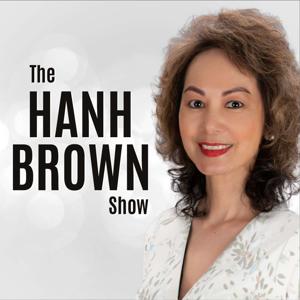
About Hanh Brown
Hanh Brown’s journey into the world of AI, aging, and health tech is as unique as it is inspiring. Once an automotive executive leading performance integration for the…
Her transition from high-performance vehicles to high-impact technology was fueled by her personal involvement in the caregiving journey of family members facing dementia and Parkinson’s. She witnessed the challenges. She felt the emotional toll. These experiences opened her eyes to the transformative potential of AI and health tech. For older adults. For their families. For the future.
A self-proclaimed tech geek, Hanh is also a fitness enthusiast. She believes in living fully. Staying sharp. And learning continuously. Her conservative approach to health and relentless curiosity about AI make her a relatable and dynamic voice in the tech world.
What to Expect
In The Hanh Brown Show, Hanh brings her unique blend of expertise, empathy, and enthusiasm to every episode. From exploring how AI can enhance senior living to diving into groundbreaking age-tech innovations, Hanh breaks down complex topics into relatable, actionable insights.
But it doesn’t stop there. Hanh also tackles the broader societal impact of AI, including:
Some Standout Episodes
Why Listen?
Hanh’s personal journey and professional expertise make her the perfect guide to the intersection of AI, aging, and health tech. Her ability to simplify complex concepts and her passion for making technology accessible ensure that every listener walks away informed and inspired. Plus, her fearless exploration of AI’s impact on social matters, public policy, and ethics sets her podcast apart as a must-listen for anyone interested in the future of technology and society.
Join the Conversation
Tune in to The Hanh Brown Show and become part of a growing community of forward-thinkers. Together, let’s decode the future of AI, aging, and health tech—one episode at a time.
Subscribe now and embark on a journey to understand the technologies shaping our tomorrow!
Have questions or want to connect? Feel free to reach out to Hanh at [email protected]. She’d love to hear from you!
#AITech #HealthTech #FutureOfAging #AIandAging #EthicalAI #TechForGood #DecodingTheFuture #AgingInnovation #TechThatCares #AIForGood