
Sign up to save your podcasts
Or



In this episode of The Hardest Part, host Kieron Banerji is joined by London band Famous to unpack the writing of “Leaving Tottenham,” a climactic and emotionally charged track from their debut album Party Album.
The band’s frontman opens up about the long and often painful process behind the song—one that wrestled with personal embarrassment, grand ambition, and the frustration of trying to make private feelings mean something beyond the self.
“Leaving Tottenham” started as a raw reaction to seeing an ex and evolved into something much harder to finish: a song that tries to hold both heartbreak and philosophy in the same space. He reflects on the danger of writing confessional music that feels self-absorbed, and how he tried to reconcile that with a deeper desire for meaning and universality—without falling into false grandiosity.
We talk through the song’s two strands of writing, the line he calls the hardest he’s ever had to finish, and the influence of theology, Turner’s painting The Angel Standing in the Sun, and the idea that “real life starts outside of time.”
The episode ends with a stripped-back live performance of “Leaving Tottenham,” highlighting the delivery and nuance behind a song that—flawed or not—was written to matter.
Since recording this episode, Famous have announced they’ll be taking a farewell (for now), with their final show happening at London’s ICA on October 2nd. They'll also be releasing two final songs. This conversation—and the stripped-back performance—feels like a quiet full stop to a band that always reached for something bigger than the moment.
Artist: Famous
Song: “Leaving Tottenham”
Album: Party Album
Host and Executive Producer: Kieron Banerji
Recording Engineer: Max Walker
Creative: Callum Baker
Recording Location: Thin White Duke Studios, London
See omnystudio.com/listener for privacy information.
In this episode of The Hardest Part, host Kieron Banerji sits down with Devi Mambouka, the artist and music producer who performs as Masma Dream World, to explore the deeply spiritual and emotionally raw process behind the making of her art.
Unlike traditional songwriting, Devi's process is entirely intuitive—a sonic ritual guided by the goddess Kali, whose presence she channels through daily meditation, field recordings, and unplanned studio improvisation. She describes the act not as writing, but as receiving: “I just do what she asks me to do.”
Alongside longtime collaborator and engineer Chris Weiss, she crafts in real time—often without speaking—communicating through a shared, cultivated intuition. Devi shares how the trust between them allows her to stay fully immersed in the ritual while Chris captures and translates the message into form.
But the hardest part didn’t happen in the studio. Devi opens up about the spiritual crisis that led her to the brink of suicide—and the moment of divine intervention that brought her back. What began as an attempt to make a dub record became a vessel for transformation—guided by light, grief, and the persistence of the spirit.
Artist: Masma Dream World (Devi Mambouka)
Host and Executive Producer: Kieron Banerji
Recording Engineer: Max Walker
Creative: Callum Baker
Recording Location: Thin White Duke Studios, London
See omnystudio.com/listener for privacy information.
In this episode of The Hardest Part, host Kieron Banerji is joined by Australian group Folk Bitch Trio to reflect on the long, messy road to finishing “Sarah,” a song that was nearly cut from their debut album Now Would Be a Good Time.
What began as a heartbreak-fueled acoustic track quickly became the most difficult song to finish—emotionally, technically, and collaboratively. Written in isolation, reworked through voice memos, and road-tested live, “Sarah” was put to bed more than once, only to be revived through a mix of persistence, instinct, and radical feedback.
The trio open up about their internal songwriting process—how the safest space for vulnerability is also where the most brutal honesty lives. They talk about the difference between writing for yourself and writing for a band, how cringe can become clarity, and why trusting each other enough to say “that’s not your best work” might be the only way forward.
The episode ends with a live version of “Sarah.”
Artist: Folk Bitch Trio
Song: “Sarah”
Album: Now Would Be a Good Time
Host and Executive Producer: Kieron Banerji
Recording Engineer: Chris Goldsmith
Mix Engineer: Max Walker
Creative Team: Callum Baker & Giovanni Almonte
Recording Location: Thin White Duke Studios, London
See omnystudio.com/listener for privacy information.
In this episode of The Hardest Part, host Kieron Banerji is joined by Bria Salmena to unpack the winding creative journey behind “Closer to You,” a standout track from her debut solo album Big Dog.
Written across two cities—Bria in Los Angeles, Duncan Hay Jennings in Toronto—the song came to life through long-distance collaboration and relentless back-and-forth. What started as an acoustic skeleton became a hybrid of organic and electronic textures, reshaped again and again as Bria searched for the right emotional tone. But the hardest part? Landing the chorus. Or even deciding if it was a chorus. Bria reflects on the frustration of not finding that “aha” moment and how letting go of control, embracing creative blocks, and learning to trust the process ultimately allowed the song to take its final form.
She also shares how the lyric “move me closer to you” evolved from a call toward someone else into a deeper pull inward—and how working with Meg Remy on vocal production helped her reconnect to the emotional core of her writing.The episode closes with a stripped-back live session.
Artist: Bria Salmena
Song: “Closer to You”
Album: Big Dog
Host and Executive Producer: Kieron Banerji
Recording Engineer: Chris Goldsmith
Mix Engineer: Max Walker
Creative: Callum Baker
Recording Location: Thin White Duke Studios, London
See omnystudio.com/listener for privacy information.
In this episode of The Hardest Part, host Kieron Banerji is joined by singer, songwriter, and producer Jack Garratt for a deeply introspective conversation about his track “Mara” from the album Love, Death & Dancing.
Jack opens up about the emotional and psychological weight that followed his debut album, and how “Mara” became a turning point—a song that helped unlock not just the record, but a new understanding of himself. Written during a time of quiet struggle and self-doubt, “Mara” began as a simple, meditative walk from his kitchen to his garden studio, but unfolded into a profound confrontation with internal voices and anxiety.
Inspired by a Buddhist parable, the song personifies “Mara” as the spirit of self-sabotage and fear—one Jack learns to meet not with resistance, but with compassion. He takes us deep into his writing and production process, describing how a dusty Moog synth, a groove borrowed from Motown, and his own evolving relationship with procrastination shaped the final version.
The episode closes with an exclusive live performance.
Jack's new album 'Pillars' is out August 15th on Cooking Vinyl
Artist: Jack Garratt
Song: “Mara”
Album: Love, Death & Dancing
Host and Executive Producer: Kieron Banerji
Engineers: Max Walker & Chris Goldsmith
Creative Team: Callum Baker, Giovanni Almonte
Recording Location: Thin White Duke Studios, London
See omnystudio.com/listener for privacy information.
In this episode of The Hardest Part, host Kieron Banerji sits down backstage at The Barbican with Casper Clausen of Danish band Efterklang to dive into the quiet evolution of their track “Getting Reminders,” from the album Things We Have In Common.
Unlike their typical in-the-box production style, “Getting Reminders” grew slowly and organically — first as a sketch on Casper’s mother’s old guitar in his Lisbon studio, then as a living, breathing piece shaped by years of live performance. The song blends simplicity with deep emotional nuance, capturing a tension between the natural world and human control, between personal surrender and global disintegration.
Casper opens up about the instrument’s worn character, the river outside his window that served as a kind of spiritual metronome, and how songwriting became a feedback loop of intuition and revision. He also reflects on the magic of collaboration, including how Beirut’s Zach Condon brought trumpet arrangements that transformed the track’s DNA.
Listeners will hear an exclusive live session of “Getting Reminders,” offering a rare glimpse into the raw, evolving version of a song that has taken on new shape each time it’s played.
Artist: Efterklang
Song: “Getting Reminders”
Album: Things We Have In Common
Host and Executive Producer: Kieron Banerji
Recording and Mix Engineer: Max Walker
Creative Team: Callum Baker & Giovanni Almonte
Recording Location: The Barbican & Thin White Duke Studios, London
See omnystudio.com/listener for privacy information.
In this episode of The Hardest Part, host Kieron Banerji is joined by Ashaine White to explore the emotional and creative depths of her song “Hotel.”
Ashaine opens up about how the track was sparked by a phrase she often heard growing up: “You treat this house like a hotel.” At the time, it felt like a criticism — one that stirred up rebellion, anxiety, and a desire for independence. But as she matured and moved into her own space, the phrase took on new meaning, revealing the unspoken fears and sacrifices of her single mother raising daughters in a complicated world.
In a deeply reflective conversation, Ashaine walks us through the dual perspectives woven into “Hotel”: her teenage self seeking freedom, and her adult self understanding the protective love behind her mother’s words. She shares how a simple change — swapping “you” for “Ash” in the lyrics — unlocked the emotional clarity she needed to write the song honestly and with empathy.
The episode concludes with an intimate acoustic performance of “Hotel,” showcasing Ashaine’s raw vocal delivery and dynamic guitar work. This stripped-back version invites listeners to hear the emotional layers embedded in the song — a diary entry in sound, balancing defiance with understanding.
Artist: Ashaine White
Song: “Hotel”
Host and Executive Producer: Kieron Banerji
Recording Engineer & Mix: Max Walker
Creative Team: Callum Baker (Photography), Giovanni Almonte (Videography)
Recording Studio: The Thin White Duke, London
See omnystudio.com/listener for privacy information.
In this episode of The Hardest Part, host Kieron Banerji is joined in the studio by Matt Thomson of The Amazons to unpack the creative journey behind two defining songs: “Black Magic” and “Joe Bought a Gun.”
Matt reflects on the early days of writing “Black Magic,” a track that first came together when the band were teenagers. Born from heartbreak and shaped by years of experimenting, the song laid the foundation for the band’s layered and instinct-driven approach to songwriting. He shares how this process—throwing everything onto the page before carefully chiseling it down—has come to define their musical identity.
The conversation then turns to “Joe Bought a Gun,” a powerful track from their latest album 21st Century Fiction. Inspired by a friend’s decision to buy a weapon out of fear of societal collapse, the song tackles themes of fear, masculinity, and modern anxiety. Matt opens up about how current cultural tensions have shaped the record’s narrative and why “Joe Bought a Gun” sits at the emotional and conceptual heart of the album.
The episode features intimate acoustic performances of both songs, offering a stripped-back look at the band’s evolving sound and emotional depth.
Artist: The Amazons
Songs: “Black Magic” and “Joe Bought a Gun”
Host and Executive Producer: Kieron Banerji
Recording Engineer: Chris Goldsmith
Mix Engineer: Max Walker
Creative Team: Callum Baker and Giovanni Almonte
Recording Studio: The Thin White Duke, London
See omnystudio.com/listener for privacy information.
In this episode of The Hardest Part, host Kieron Banerji is joined in the studio by musician Ora Cogan to explore the intricate journey behind her song "Crickets." Ora shares how the song took shape over an extended period, written across multiple landscapes—including New Mexico, the Pacific Northwest, and Italy—all of which left a deep imprint on its sound and themes.
The conversation delves into the challenge of translating her connection to the natural world into music, as well as the turbulent political climate that influenced her creative process. Ora also reflects on the song’s unconventional time signature and structure, which pushed her beyond her usual songwriting methods.
The episode concludes with a special performance of "Crickets," offering listeners an immersive experience into the song’s haunting and atmospheric world.
Artist: Ora Cogan
Song: "Crickets"
Host and Producer: Kieron Banerji
Recording Engineer: Max Walker
Creative Team: Callum Baker and Giovanni Almonte
Recording Studio: The Thin White Duke, London
See omnystudio.com/listener for privacy information.
In this episode of The Hardest Part, host Kieron Banerji is joined in the studio by Amahla to explore the creation of her song "Apathy." The conversation delves into the deeply personal journey behind the track, touching on themes of emotional overwhelm, detachment, and the vices people turn to when life becomes too difficult.
Influenced by folk and gospel music, Amahla shares her process of finding her voice and the guilt that comes with tuning out from the world's problems. She also reflects on the song’s lyrics, the creative blocks she faced during its composition, and the profound impact of artists like Nick Drake and Lauryn Hill on her music.
The episode concludes with a stripped-back performance of "Apathy."
Artist: Amahla
Song: "Apathy"
Host and Producer: Kieron Banerji
Recording Engineer: Max Walker
Creative Team: Callum Baker and Giovanni Almonte
Recording Studio: The Thin White Duke, London
See omnystudio.com/listener for privacy information.
From the publisher's feed
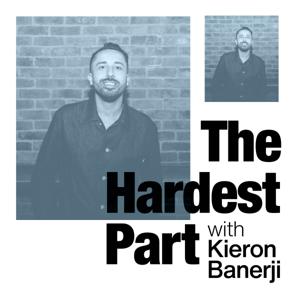
Hosted by Kieron Banerji, The Hardest Part dives deep into the most challenging songs ever written. Every two weeks, an artist joins Kieron in the studio to break down the struggles, breakthroughs, and raw emotions behind their toughest songwriting experiences. From overcoming creative blocks to tapping into painful memories, these conversations reveal the delicate balance between self-expression and self-protection.
Each episode wraps with an exclusive live performance of the song—raw, real, and sometimes heard this way for the first time.
Follow the Hardest Part wherever you get your podcasts, and watch footage from the show on our YouTube and socials.