
Sign up to save your podcasts
Or

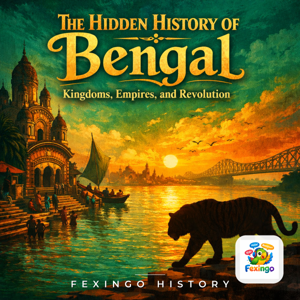


Before the British arrived, before the zamindars built their palaces, and long before the partition drew borders through the land, Bengal was defined by its water. This episode explores the geological and ecological foundations of the region—the shifting channels of the Padma, the Ganges, and the Meghna—that made Bengal both fertile and fragile. We trace how the delta’s unpredictable nature shaped early settlement patterns, influenced the rise of the Pal Empire’s Buddhist monasteries, and created a unique cultural identity centered on riverine trade and survival. Lucas and Luna discuss the role of the Bhuiyan chiefs in managing floodplains, the impact of the 1784 earthquake that altered river courses, and how the very soil of Bengal dictated its political fate for centuries. From the ancient Mahasthangarh site to the modern-day challenges of climate change, this conversation reveals how the land itself was the first empire builder and destroyer in South Asia.
#BengalDelta #GangesRiver #PadmaRiver #MeghnaRiver #PalEmpire #Mahasthangarh #BhuiyanChiefs #SouthAsiaHistory #GeologicalHistory #RiverineCivilization #FexingoHistory #HistoryPodcast #BangladeshHistory #WestBengalHistory #ColonialBengal #EnvironmentalHistory #MonsoonClimate #Deltas
Keep every episode free: buymeacoffee.com/fexingo
In 1772, the East India Company seized control of Bengal’s Diwani, or revenue rights, following their victory at Plassey. This shift from trading partners to tax collectors triggered a massive, decentralized resistance known as the Sannyasi Rebellion. Unlike the organized armies of later nationalist movements, this uprising was led by wandering ascetics, Hindu holy men, and local Zamindars who had lost their traditional patronage and livelihoods under colonial rule. Led by figures like the Fakir of Satgaon, Majnu Shah, and Bhabani Charan, these rebels used guerrilla tactics to harass Company officials and disrupt trade routes along the Hooghly River. The rebellion lasted for over two decades, proving that the British conquest was far from complete even after major battles like Buxar. We explore how spiritual authority merged with political dissent, creating a unique form of anti-colonial warfare that terrified the Company’s administrators and forced them to deploy entire regiments to hunt down non-traditional fighters. This episode reveals the human cost of early empire-building in South Asia.
#SannyasiRebellion #BengalHistory #EastIndiaCompany #MajnuShah #FakirOfSatgaon #WarrenHastings #RobertClive #DiwaniRights #HooghlyRiver #Murshidabad #Navadvipa #Tantric #ColonialResistance #SouthAsia #18thCentury #GuptaDynasty #BhabaniCharan #History #FexingoHistory
Keep every episode free: buymeacoffee.com/fexingo
In this episode of The Hidden History of Bengal, we explore the deep, often overlooked influence of geography and water on South Asian power structures. Lucas and Luna trace the shifting courses of the Ganges, Brahmaputra, and Meghna rivers from the medieval period through the colonial era. We examine how the decline of key river ports like Sonargaon and Satgaon paved the way for Calcutta’s rise as the capital of British India. The conversation delves into the strategic importance of the Hooghly River during the Dutch and English conflicts, the impact of siltation on trade routes, and how the Great Famine of 1770 was exacerbated by disrupted supply chains along these waterways. You will learn about the engineering marvels of the Farakka Barrage concept in historical context, the role of the Bhagirathi-Hooghly channel in defining Bengal's political heartland, and how natural disasters shaped imperial policy. This is not just a story of battles or kings, but of mud, monsoon, and the relentless flow of history itself.
#BengalHistory #HooghlyRiver #CalcuttaRise #SonargaonDecline #BritishEmpire #GangesDelta #ColonialIndia #TradeRoutes #MughalBengal #RiverPorts #FarakkaBarrage #MonsoonClimate #SiltationEffects #DutchBengal #EastIndiaCompany #GeographyOfPower #SouthAsiaHistory #History
Keep every episode free: buymeacoffee.com/fexingo
While the East India Company tightened its grip on Bengal through battles like Plassey and Buxar, a quieter but far more profound revolution was unfolding in the spiritual landscape of the region. This episode explores the Bhakti movement, a devotional surge that reshaped Bengali society by bypassing Sanskrit elites and bringing faith directly to the masses. We focus on Chaitanya Mahaprabhu, the 16th-century saint whose ecstatic chanting of the Hare Krishna mantra ignited a cultural awakening across Navadvipa and beyond. Unlike the political rebellions of Sanyasis or Sikhs covered earlier, this movement operated through poetry, music, and radical social inclusivity, challenging caste hierarchies and elevating vernacular Bengali as a language of divine expression. Listen as we trace how the writings of Chandidas and the later works of Kabir influenced this shift, creating a syncretic culture where Hindu devotion blended with local traditions. Discover how this spiritual resilience provided the bedrock for the later Bengal Renaissance, connecting the ecstatic fervor of the 1500s to the intellectual reforms of Raja Ram Mohan Roy centuries later. It is a story of how faith can dismantle empire not through swords, but through songs sung in the streets.
#BhaktiMovement #ChaitanyaMahaprabhu #Navadvipa #HareKrishna #BengalHistory #SouthAsianSpirituality #16thCenturyIndia #Vaishnavism #CasteSystem #VernacularLiterature #Chandidas #SriChaitanya #GaudiyaVaishnavism #IndianDevotion #MedievalBengal #ReligiousReform #FexingoHistory #History
Keep every episode free: buymeacoffee.com/fexingo
Long before the British arrived, Bengal was a beacon of learning under the Pala Empire. This episode explores the reigns of Gopala and Dharmapala, who established Vikramashila and Nalanda as global centers of Tantric Buddhism. We trace how this dynasty protected ancient texts and fostered intellectual exchange across Asia, creating a legacy that shaped South Asian history for centuries. Listen to hear about the Sena conquest, the decline of monastic universities, and the enduring impact of Bengali scholarship on the wider world.
#PalaEmpire #Gopala #DharmapalaDevapala #VikramashilaUniversity #Nalanda #TantricBuddhism #SenaDynasty #Mahajanapada #BengalHistory #SouthAsiaHistory #MedievalIndia #BuddhistScholars #IndianPhilosophy #MonasticEducation #ShailendraDynasty #Palaeography #FexingoHistory #History
Keep every episode free: buymeacoffee.com/fexingo
Before the great famines of the twentieth century, Bengal suffered a catastrophe that killed nearly a third of its population in the early 1770s. This episode explores the Great Bengal Famine of 1770, a disaster caused not by drought alone, but by the rigid extraction policies of the newly formed British East India Company following their victory at Plassey. We examine how Warren Hastings and Robert Clive maintained revenue collection even as crops failed, ignoring pleas for relief to protect the Company’s bottom line. Through the lens of contemporary accounts from Dutch traders and British officials like Benjamin Smith, we reconstruct the horror of villages emptied by starvation and the subsequent economic recovery that favored merchants over peasants. The conversation also touches on the role of local zamindars who hoarded grain, the specific administrative failures in the Diwani system, and how this tragedy reshaped British colonial policy in India for decades to come.
#BengalFamine #1770Famine #EastIndiaCompany #WarrenHastings #RobertClive #BritishColonialism #IndianHistory #SouthAsiaHistory #PlasseyAftermath #DiwaniRights #BenjaminSmith #ZamindariSystem #CalcuttaHistory #HooghlyRiver #MughalDecline #ColonialEconomics #HumanitarianCrisis #HistoryPodcast #FexingoHistory
Keep every episode free: buymeacoffee.com/fexingo
We trace the intellectual awakening of nineteenth-century Calcutta, moving past the colonial battles to explore how local thinkers reshaped Indian society. The episode centers on Raja Ram Mohan Roy, a polyglot visionary who founded the Brahmo Samaj and challenged orthodox practices like sati while advocating for women’s rights and rational education. We examine his translation of the Upanishads into Bengali, his journal Satyadharma Prabhakar, and the complex tensions between modernization and tradition that defined the era. Alongside him, we look at Ishwar Chandra Vidyasagar’s campaign for widow remarriage and the broader cultural shift that turned Bengal into a laboratory for social reform. This is not just a story of Western influence, but of Indians actively curating their own future through debate, print culture, and legal advocacy in the heart of the British Raj.
#RajaRamMohanRoy #BrahmoSamaj #BengalRenaissance #IshwarChandraVidyasagar #SatiAbolition #CalcuttaHistory #Upanishads #WidowRemarriage #19thCenturyIndia #IndianIntellectuals #SatyadharmaPrabhakar #SocialReformIndia #HinduReform #ColonialBengal #EducationReform #FexingoHistory #SouthAsianHistory #History
Keep every episode free: buymeacoffee.com/fexingo
Long before the Mughals or the British, Bengal was the intellectual heart of medieval Asia under the Pala dynasty. This episode explores the rise of Gopala and the consolidation of power by Dharmapala in the 8th century, a period that transformed the region into a sanctuary for Buddhist scholarship. We examine the founding of the great monastic universities at Vikramashila and Nalanda, where scholars from Tibet, China, and Southeast Asia converged to study logic, medicine, and philosophy. The conversation highlights the unique political structure of the Mahajanapadas, the local self-governing councils that kept order amidst imperial expansion. We also look at the cultural synthesis of the era, including the patronage of Tantric Buddhism and the artistic legacy visible in the terracotta temples of later Bengal. Through the lens of the Sena dynasty’s eventual takeover, we trace how this ancient administrative and spiritual framework influenced Bengali identity for centuries.
#PalaDynasty #GopalaChakravartin #Dharmapala #Vikramashila #NalandaUniversity #BengalHistory #Mahayanabuddhism #TantricBuddhism #Mahajanapada #MedievalIndia #SouthAsianHistory #BuddhistScholarship #TibetanBuddhism #SenaDynasty #TerracottaArt #IndianEmpire #HistoryPodcast #FexingoHistory
Keep every episode free: buymeacoffee.com/fexingo
While the British East India Company’s rise is well-documented, the history of the Dutch East India Company in Bengal offers a starkly different narrative of imperial rivalry and sudden collapse. This episode explores the year 1759, when the VOC attempted to reclaim its trading privileges through military force, culminating in the Battle of Chinsurah. We trace the journey of Hendrik van Raaphorst, the Dutch commander who underestimated the resolve of the Nawab Mir Qasim and the British garrison. The conversation details the tactical movements along the Hooghly River, the surprising resistance offered by the local populace, and the rapid disintegration of the Dutch expedition. Unlike the protracted conflicts with the Mughals or the later Anglo-French wars, this engagement was brief but devastating for Dutch prestige in the region. We also examine the aftermath, including the exile of the Dutch governor, Adriaan Valckenier, and how this defeat permanently shifted the balance of power in Bengal toward the British. Through letters, troop records, and the political maneuvering of the time, we uncover why a maritime empire chose land warfare on foreign soil and what it cost them.
#Chinsurah #VOC #DutchEastIndiaCompany #MirQasim #HendrikvanRaaphorst #AdriaanValckenier #HooghlyRiver #BengalHistory #18thCenturyColonialism #AngloDutchWars #Surrey #IndianMilitaryHistory #EuropeanEmpireRivalry #CalcuttaHistory #NawabOfBengal #MaritimeTrade #SouthAsianHistory #FexingoHistory
Keep every episode free: buymeacoffee.com/fexingo
While most history focuses on the major uprisings led by Sannyasis or Paikas, this episode explores a lesser-known but vital chapter of resistance: the Kuka Movement within Bengal’s colonial borders. We trace how Baba Ram Singh’s Namdhari sect, known locally as Kukas, organized spiritual and political dissent in the Chhota Nagpur region during the late 19th century. The conversation details the tension between traditional Sikh practices and British administrative interference, highlighting figures like Hari Singh Nalwa’s legacy and the specific grievances that led to conflict with Governor General Canning’s administration. Through the lens of the Satguru’s teachings and the Sardar-led community structure, we uncover how faith became a vehicle for anti-colonial assertion, offering a nuanced look at religious identity and resistance in the eastern provinces of British India.
#KukaUprising #NamdhariSikhs #BabaRamSingh #ColonialBengal #ChhotaNagpur #HariSinghNalwa #GovernorGeneralCanning #Satguru #Namdar #IndianResistance #BritishEmpire #SikhHistory #ReligiousDissent #19thCenturyIndia #SouthAsianHistory #AntiColonialism #FexingoHistory #History
Keep every episode free: buymeacoffee.com/fexingo
From the publisher's feed