
Sign up to save your podcasts
Or

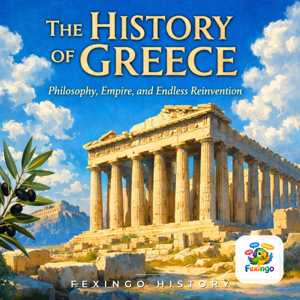


While most histories focus on the hoplites and their battles, this episode explores the radical social experiment of Spartan women in the Archaic period. We examine how Lycurgus’s reforms granted them unprecedented property rights, public education, and physical freedom, creating a class of powerful matrons who managed household economies while men were at war. Through the lens of figures like Gorgo and the poetess Alcman, we uncover how Spartan society valued strong mothers to produce strong soldiers. This deep dive into the gynaeceum reveals a culture where women could own land, compete in athletics, and speak boldly to kings, challenging our modern assumptions about ancient Greek gender roles and offering a unique look at how law shaped daily life in Laconia.
#Sparta #AncientGreece #Lycurgus #SpartanWomen #Gorgo #Laconia #Hoplite #Agoge #Alcman #Panhellenic #Agesidamos #Korythalia #Xenophon #Plutarch #SocialReform #GenderRoles #MediterraneanHistory #ClassicalAntiquity #FexingoHistory
Keep every episode free: buymeacoffee.com/fexingo
We often think of democracy as a modern invention, but the ancient Athenians had a radical safety valve designed to protect their fragile political system from ambitious individuals. In this episode, we explore the mechanism of ostracism, a practice where citizens voted to exile a prominent figure for ten years without confiscating their property or stripping them of civil rights. We look at how this process worked in practice, focusing on the famous case of Themistocles, whose ostracism was less about personal corruption and more about political maneuvering by his rival Cimon. The story reveals the tensions within the Athenian Ecclesia, the role of the Areopagus in overseeing the vote, and the complex social dynamics that led to the exile of one of Greece’s greatest naval strategists. Through the lens of the clay pottery shards used for voting, we uncover a deeper truth about how ancient societies balanced individual ambition against collective stability.
#Ostracism #Themistocles #AthenianDemocracy #Cimon #AncientGreece #Pnyx #Kleisthenes #Ecclesia #Areopagus #Hippias #Hyperbolus #Aristides #Plataea #Marathon #GreekHistory #FexingoHistory #HistoryPodcast #ClassicalAntiquity
Keep every episode free: buymeacoffee.com/fexingo
In this episode, we step away from the later Hellenistic courts and philosophical academies to return to the moment that defined the Greek identity against imperial overreach. We examine the Persian Wars, specifically the events of 490 BCE at the plain of Marathon. Lucas walks us through the strategic dilemma facing Miltiades, the Athenian general who commanded the hoplite phalanx. Luna joins him to unpack the logistical nightmare of fighting a vastly larger force on home soil, the role of the messenger Pheidippides, and the controversial decision to engage rather than wait for Spartan reinforcements. We look at Herodotus’s account of the battle, the formation of the 'hollow center' tactic, and the immediate political fallout in Athens. This isn't just a recounting of combat; it is an exploration of how a small city-state managed to halt the first major invasion attempt by the Achaemenid Empire, altering the course of Western history. We also touch upon the archaeological evidence found in the burial mounds, or tumuli, along the Marathon coast, which provide physical proof of the scale of the conflict.
#BattleOfMarathon #Miltiades #DariusI #AchaemenidEmpire #PersianWars #HoplitePhalanx #Pheidippides #Herodotus #Athens #Salamis #Xerxes #GreekHistory #AncientGreece #MilitaryStrategy #Tumuli #FexingoHistory #ClassicalAntiquity #History
Keep every episode free: buymeacoffee.com/fexingo
We often romanticize Athenian democracy as a pure celebration of civic participation, but the system had a dangerous pressure valve that could turn majority rule into mob rule overnight. This episode explores ostracism, the controversial practice where citizens voted to exile a prominent figure for ten years without losing their property or citizenship rights. We examine how this mechanism was designed to prevent tyranny, yet was frequently weaponized by political rivals to settle scores and manipulate public sentiment. Through the lens of key figures like Themistocles, Aristides, and Hyperbolus, we uncover the intricate mechanics of the clay shards used in voting, the role of the Pnyx in organizing these secret ballots, and the profound social anxiety that drove ordinary Athenians to banish their own heroes. You will learn why the system eventually fell out of favor, how it reflected the fragile balance between individual ambition and collective security, and what the archaeological record of thousands of inscribed potsherds tells us about the fears and aspirations of ancient Athens.
#AthenianDemocracy #Ostracism #Themistocles #Aristides #Hyperbolus #Pnyx #Kleisthenes #Ostraka #AncientGreece #PoliticalExile #MobRule #ClassicalAthens #VotingHistory #AncientPolitics #GreekHistory #HistoricalArchaeology #FexingoHistory #History
Keep every episode free: buymeacoffee.com/fexingo
Between the collapse of the Mycenaean palaces around 1200 BCE and the emergence of Archaic Greece, there was a profound silence. This episode explores the Greek Dark Ages, a period often misunderstood as mere barbarism. We trace how the destruction of Linear B led to the loss of literacy and how oral tradition preserved the memory of heroes like Achilles and Agamemnon through the works attributed to Homer. Lucas and Luna examine the archaeological evidence from sites like Lefkandi and Eleusis, revealing that this era was not empty but transformative. We discuss the invention of the alphabet from Phoenician traders, the shift from palace economies to small villages, and how the Iliad and Odyssey were composed. You will learn about the Dorian invasion theories, the significance of the Geometric pottery style, and why the Iron Age began in Greece while bronze technologies faded. This conversation uncovers the fragile threads that connected the Bronze Age world to the Classical future, showing how storytelling became the vessel for cultural survival when writing disappeared.
#GreekDarkAges #Homer #Iliad #Odyssey #Mycenaeans #LinearB #BronzeAgeCollapse #OralTradition #Lefkandi #GeometricPottery #IronAgeGreece #Achilles #Agamemnon #PhoenicianAlphabet #HomericQuestion #Archaeology #AncientHistory #FexingoHistory #History
Keep every episode free: buymeacoffee.com/fexingo
This episode explores the chaotic fragmentation of Alexander the Great’s empire following his sudden death in 323 BCE. We trace the rise of the Diadochi, or Successors, as generals like Ptolemy, Seleucus, and Antigonus carved out their own kingdoms from the ashes of a unified Macedonian realm. The conversation details the pivotal Battle of Ipsus in 301 BCE, where the coalition of Cassander, Lysimachus, and Seleucus crushed Antigonus I Monophthalmus, permanently dividing the Greek world into Egypt, Asia Minor, Syria, and Macedonia. We also examine how this political instability fostered a cosmopolitan culture, blending Greek ideals with Eastern traditions in cities like Alexandria and Antioch. Listeners will discover how the search for personal security led to the development of Stoicism and Epicureanism, shifting philosophical focus from the public polis to individual inner peace. Through specific anecdotes about the wars of the Successors and the cultural shifts they triggered, we reveal how the end of classical Greece gave birth to the Hellenistic age.
#AlexanderTheGreat #DiadochiWars #PtolemyISoter #SeleucusINicator #AntigonusIMonophthalmus #BattleOfIpsus #Cassander #Lysimachus #HellenisticPeriod #Alexandria #Stoicism #Epicureanism #ZenoOfCitium #Epicurus #Macedonia #SeleucidEmpire #PtolemaicEgypt #History #FexingoHistory
Keep every episode free: buymeacoffee.com/fexingo
We often hear about the grand battles of Marathon or the philosophical debates in the Academy, but rarely do we step into the actual streets where these ideas took root. This episode examines the polis not as a military machine, but as a lived community of citizens bound by law, ritual, and shared space. We look at how the Athenian democracy functioned day-to-day, from the sortition of magistrates to the complex system of ostracism that kept power in check. You will meet key figures like Ephialtes and Pericles, who reshaped the Areopagus, and explore the role of the Ecclesia in making decisions that affected every free male citizen. Beyond politics, we discuss the social fabric of the city-state, including the exclusion of women from public office and the vital economic contributions of metics and slaves that allowed the political class to participate. By understanding the mechanics of the Heliaia court and the daily rhythms of the Agora, we see how the Greek experiment in self-governance was both remarkably inclusive for its time and deeply exclusive in its boundaries. This is an exploration of the infrastructure of freedom, revealing why the Greek city-state remains a foundational model for modern political thought despite its glaring omissions.
#Polis #AthenianDemocracy #Areopagus #Ecclesia #Heliaia #Ostracism #Pericles #Ephialtes #Agora #Metics #Hoplite #DirectDemocracy #AncientGreece #GreekHistory #ClassicalAthens #Cleisthenes #Demos #History #FexingoHistory
Keep every episode free: buymeacoffee.com/fexingo
We often romanticize the Golden Age of Athens, but beneath the Parthenon’s marble lay a complex web of imperial control. In this episode, we explore the Delian League’s transformation into an Athenian empire through the lens of tribute payments, known as phoros. We examine how Athens used its naval supremacy to enforce loyalty, suppress revolts like those in Naxos and Thasos, and fund ambitious civic projects that defined classical culture. Lucas and Luna discuss the economic mechanisms behind the league, the political friction with Sparta, and the human cost of maintaining hegemony. From the minting of the Owl tetradrachm to the suppression of dissent, we uncover how Athens balanced democracy at home with autocracy abroad. This deep dive reveals the tensions between idealism and power, offering a nuanced view of one of history’s most influential city-states during the fifth century BCE.
#AthenianEmpire #DelianLeague #GoldenAgeAthens #PhorosTribute #NaxosRevolt #ThasosRevolt #OwlTetradrachm #Cimon #Pericles #ParthenonFunding #AthenianNavy #ClassicalGreece #AncientGreekPolitics #ImperialismHistory #MaritimeHegemony #Pentakosiostoi #Archons #SpartanRivalry #History #FexingoHistory
Keep every episode free: buymeacoffee.com/fexingo
While earlier episodes explored the internal politics of Athens and the philosophical roots of Greek thought, this episode shifts focus to the existential threat that forged the Hellenic identity. In 480 BCE, King Xerxes I launched the second Persian invasion of Greece with an army estimated at over two hundred thousand men. This wasn't just a border skirmish; it was an attempt by the Achaemenid Empire to subjugate the entire Mediterranean world. We trace the strategic decisions behind the Battle of Thermopylae, where King Leonidas and his small force held the pass for three days, buying crucial time for the Greek fleet. Then we move to the naval engagement at Salamis, where Themistocles outmaneuvered the vastly larger Persian navy. Through these conflicts, the loosely allied city-states found a temporary unity that would define Western concepts of freedom versus tyranny. Listen as we examine how fear, diplomacy, and tactical brilliance allowed a fractured collection of poleis to repel one of history’s greatest empires.
#PersianWars #XerxesI #BattleOfThermopylae #BattleOfSalamis #KingLeonidas #Themistocles #AchaemenidEmpire #GreekCityStates #HopliteWarfare #TriremeNavy #Herodotus #Marathon #DariusI #TempleOfApollo #Eurybiades #Aristides #MediterraneanHistory #AncientGreece #History #FexingoHistory
Keep every episode free: buymeacoffee.com/fexingo
While we often think of ancient Greece through the lens of marble temples and democratic debates, their most enduring legacy lies in the quiet discipline of mathematics. This episode explores how figures like Euclid of Alexandria systematized geometry in his Elements, creating a logical framework that would govern scientific thought for two millennia. We trace the journey from practical Egyptian land-measurement to the abstract beauty of proofs, examining why the Greeks insisted on demonstrating truth rather than merely observing it. The conversation also looks at Archimedes, whose work on levers and buoyancy bridged pure theory with engineering marvels, and Hippasus, whose discovery of irrational numbers threatened the very foundations of Pythagorean belief. By the end, you will understand how these thinkers shifted humanity from myth-based explanations to rigorous analysis, laying the groundwork for everything from Newtonian physics to modern computer science.
#Euclid #Archimedes #Pythagoras #AncientMathematics #Geometry #Elements #IrrationalNumbers #HellenisticScience #Alexandria #SpiralOfTheodorus #GoldenRatio #GreekPhilosophy #HistoryOfScience #MediterraneanHistory #FexingoHistory #History #Education #ClassicalAntiquity #Mathematics
Keep every episode free: buymeacoffee.com/fexingo
From the publisher's feed