
Sign up to save your podcasts
Or

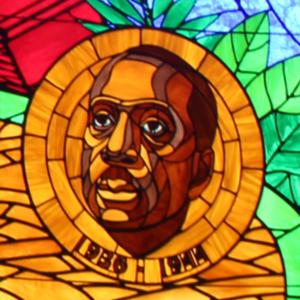


A recording of Howard Thurman reading a selection of Psalms for recordings by the American Bible Society devotionals entitled, "Hear Us and Help" in November 1971. On this side of the recording, Thurman read Psalms 4, 5, 6, 13, 16, 25, 31, 33, 42, 61, 70.
Part of the Collection, NA
Tags: American Bible Society, Here Us and Help, Psalms
Description by Erik Mattson
Recorded in NA
Citation: Thurman, Howard, “Hear Us and Help, Psalms in Today's English Version (American Bible Society), 1971 Nov,” The Howard Thurman Digital Archive, accessed July 9, 2024, https://thurman.pitts.emory.edu/items/show/72.
In this brief add-on to Thurman's sermon on Jesus and the Natural order, Thurman discusses the paradox that human beings are at once a part of the natural order, and yet also seem to be over and against nature. Human beings always feel themselves to be threatened by the impersonal forces of nature, which ultimately feeds the fear that perhaps we are alone, cut off, isolated in this world. If only the world could acknowledge us, to know our private world of hopes, dreams, and aspirations, perhaps we would feel comforted and assured. For this reason, Thurman says we are always trying to put a human face onto the world of nature so that we may be in conversation with it. For this reason, Thurman spoke to the ocean and to the stars as a boy, hoping to break his isolation.
Part of the Collection, Friends Five-Year Meeting (1969, Earlham College, Richmond, IN)
Tags:
Description by Rodell Jefferson III.
Recorded in Earlham College, Richmond, Indiana
Citation: Thurman, Howard, “Friends Five-Year Meeting, Part 3: Jesus and the Natural Order (continued), 1969 July 22,” The Howard Thurman Digital Archive, accessed July 9, 2024, https://thurman.pitts.emory.edu/items/show/62.
In this second sermon from the Friends Five-Year Meeting, Thurman returns to the temptations of Jesus. The tempter urges Jesus to jump off a tower. Thurman says that the logic behind the tempter's dare is that there is no order or structure to existence; the tempter tries to convince Jesus that he is above the natural order. However, the truth is that if we do not act in accordance with the order, the order itself will destroy us. "Thou shalt not tempt God." Thurman relates this to America and the empires of history that have deemed themselves favored and thus unbound by the order that other peoples are bound to. Thurman says that the miracles we must seek are the unseen miracles of the spirit: the resolution of the inner conflicts which keep us separate and despairing.
Part of the Collection, Friends Five-Year Meeting (1969, Earlham College, Richmond, IN)
Tags:
Description by Rodell Jefferson III.
Recorded in Earlham College, Richmond, Indiana
Citation: Thurman, Howard, “Friends Five-Year Meeting, Part 3: Jesus and the Natural Order, 1969 July 22,” The Howard Thurman Digital Archive, accessed July 9, 2024, https://thurman.pitts.emory.edu/items/show/61.
In this second sermon from the Friends Five-Year Meeting, Thurman parallels the insights of Jesus with the principles of Gothic architecture. In the iconic Gothic arch, Thurman sees pillars that are grounded in the earth, and yet stretch up into infinity. This, he says, reflects human beings in both our earth-bound creatureliness and the reality of the human spirit which seeks trust, understanding, and love. Thurman ties this insight to the temptation story in which the tempter urges Jesus to turn stone to bread, to which Jesus responds that man does not live by bread alone. Here, Thurman says, Jesus affirms that human beings have both creaturely and spiritual needs, and that the two are indeed part of one creative beat.
Part of the Collection, Friends Five-Year Meeting (1969, Earlham College, Richmond, IN)
Tags:
Description by Rodell Jefferson III.
Recorded in Earlham College, Richmond, Indiana
Citation: Thurman, Howard, “Friends Five-Year Meeting, Part 2: Jesus and the Gothic Principle, 1969 July 21,” The Howard Thurman Digital Archive, accessed July 9, 2024, https://thurman.pitts.emory.edu/items/show/60.
In this sermon given at a Quaker conference, Howard Thurman gives words to religious experience as an encounter with the living God. For Thurman, religious experience is a moment in which one becomes personally and privately aware of God as a fact. This is an experience that cannot be controlled or willed, but rather it is given by grace, by God's own autonomy. Our responsibility is not about holding tightly to religious experience of the past, but rather to be open and prepared to encounter God in our lives, and to be transformed by divine presence.
Part of the Collection, Friends Five-Year Meeting (1969, Earlham College, Richmond, IN)
Tags:
Description by Rodell Jefferson III.
Recorded in Earlham College, Richmond, Indiana
Citation: Thurman, Howard, “Friends Five-Year Meeting, Part 1: Jesus and the Religious Experience, 1969 July 20,” The Howard Thurman Digital Archive, accessed July 9, 2024, https://thurman.pitts.emory.edu/items/show/59.
"Throughout history, physical violence has been used to bring about immediate social change. However, it is unable to rob a person of the “final vote” – the option to give up one’s life. Non-physical violence is a more devastating reality for Thurman because when it is effective, the person surrenders the will and is robbed of the option. Willingness to die, to escape the forced option, is “the organic basis for freedom in human life.” The force of violence does not enter the will but “Nonviolence insinuates itself into the will,” creates a new sense of self and freedom, and enables the person to become an unbounded instrument of social change.
Part of the Collection, Man and Social Change Series (1969, California State College, Long Beach, CA)
Tags: Ghandi, non-physical violence, nonviolence, option, physical violence, social change, violence, will, World War I, World War II
Description by Dr. Tim Rainey
Recorded in California State College, Long Beach, California
Citation: Thurman, Howard, “Man and Social Change, Part 3: Violence and Nonviolence (continued), 1969 March 21,” The Howard Thurman Digital Archive, accessed July 9, 2024, https://thurman.pitts.emory.edu/items/show/58."
"Throughout history, physical violence has been used to bring about immediate social change. However, it is unable to rob a person of the “final vote” – the option to give up one’s life. Non-physical violence is a more devastating reality for Thurman because when it is effective, the person surrenders the will and is robbed of the option. Willingness to die, to escape the forced option, is “the organic basis for freedom in human life.” The force of violence does not enter the will but “Nonviolence insinuates itself into the will,” creates a new sense of self and freedom, and enables the person to become an unbounded instrument of social change.
Part of the Collection, Man and Social Change Series (1969, California State College, Long Beach, CA)
Tags: Ghandi, non-physical violence, nonviolence, option, physical violence, social change, violence, will, World War I, World War II
Description by Dr. Tim Rainey
Recorded in California State College, Long Beach, California
Citation: Thurman, Howard, “Man and Social Change, Part 3: Violence and Nonviolence, 1969 March 21,” The Howard Thurman Digital Archive, accessed July 9, 2024, https://thurman.pitts.emory.edu/items/show/57."
"Community is evinced when any form of life identifies with another. For Thurman, humans experience wholeness when individual existence recognizes itself within the fullness of all existence. Community is an expression of life because its manifestation follows the “harmony,” “order,” and “inner togetherness” consistent with a person’s inner order. In this way, Thurman notes, community makes sense to the mind. Recognizing this profound continuity, persons in community must widen the “magnetic field” of their relationships and pursue experiences of harmony that compel the spirit more than ideologies, creeds, or, fears that divide.
Part of the Collection, Man and Social Change Series (1969, California State College, Long Beach, CA)
Tags: community, disharmony, harmony, innocence, life, organism, racial memory of the human
Description by Dr. Tim Rainey
Recorded in California State College, Long Beach, California
Citation: Thurman, Howard, “Man and Social Change, Part 2: Man and the Experience of Community (continued), 1969 March 20,” The Howard Thurman Digital Archive, accessed July 9, 2024, https://thurman.pitts.emory.edu/items/show/56."
"Community is evinced when any form of life identifies with another. For Thurman, humans experience wholeness when individual existence recognizes itself within the fullness of all existence. Community is an expression of life because its manifestation follows the “harmony,” “order,” and “inner togetherness” consistent with a person’s inner order. In this way, Thurman notes, community makes sense to the mind. Recognizing this profound continuity, persons in community must widen the “magnetic field” of their relationships and pursue experiences of harmony that compel the spirit more than ideologies, creeds, or, fears that divide.
Part of the Collection, Man and Social Change Series (1969, California State College, Long Beach, CA)
Tags: community, disharmony, harmony, innocence, life, organism, racial memory of the human
Description by Dr. Tim Rainey
Recorded in California State College, Long Beach, California
Citation: Thurman, Howard, “Man and Social Change, Part 2: Man and the Experience of Community, 1969 March 20,” The Howard Thurman Digital Archive, accessed July 9, 2024, https://thurman.pitts.emory.edu/items/show/55."
Freedom is the will and ability to act at any moment, Thurman says, “as to influence” or “determine the future.” For him, the experience of freedom relies on one’s ability to create options. Without options, there can be no sense of self. To keep the possibility of choice alive, a person must take responsibility for her life so that one resist becoming a prisoner to the will of others and life events.
Part of the Collection, Man and Social Change Series (1969, California State College, Long Beach, CA)
Tags: action, freedom, inward journey, liberty, option, reaction, responsibility
Description by Dr. Tim Rainey
Recorded in California State College, Long Beach, California
Citation: Thurman, Howard, “Man and Social Change, Part 1: Man and the Experience of Freedom (continued), 1969 March 19,” The Howard Thurman Digital Archive, accessed July 9, 2024, https://thurman.pitts.emory.edu/items/show/54.
From the publisher's feed
It is my goal to support the The Howard Thurman Digital Archive, at Pitts Theology at Emory University, with their…
I've set a personal goal of listening to all 290+ recordings in one year, and having these recordings available as a podcast will help tremendously. I am so grateful to have them. And I am hopeful that others will discover Dr. Thurman through this podcast.