
Sign up to save your podcasts
Or

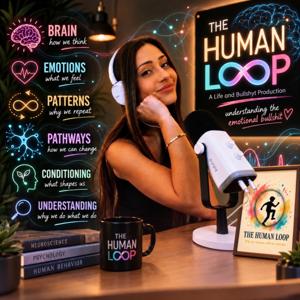


What if positivity isn’t about forcing yourself to “think happy,” but learning to notice the negative thoughts your brain produces automatically? In this episode, I explore why our minds are wired to notice threats, how automatic negative thoughts can shape our reactions before we even realize it, and how catching those patterns in real time can slowly create a different response. Positivity isn’t pretending life is perfect — it’s practicing a new way of meeting it.
Have you ever wanted something so badly… only to realize you barely enjoyed it once you got it? In this episode, we’re exploring the dopamine loop — how anticipation, reward, habits, scrolling, shopping, cravings, and even substances can tap into the brain’s motivation system. We’ll break down the difference between “wanting” and “liking,” why cues can trigger urges before we consciously realize it, and how noticing the loop can help us interrupt it.
Ever stand up, turn your head, or roll over in bed and suddenly feel like the entire room is spinning?
In this episode, I’m breaking down what vertigo actually is, why your inner ear and brain play such a huge role in balance, and how things like BPPV, vestibular migraine, stress, and the nervous system can all factor into that dizzy, off-balance feeling.
We’ll also talk about why anxiety can sometimes intensify dizziness, how the brain learns to adapt, and why calming your nervous system may be one piece of the puzzle — without pretending every case of vertigo is “just anxiety.”
Because when the world starts spinning, understanding what your body is doing can make it feel a whole lot less terrifying.
This episode is for educational purposes only and is not medical advice. New, severe, or concerning vertigo symptoms should always be evaluated by a medical professional.
What if anxiety doesn’t start in your thoughts at all? In this episode of The Human Loop, I break down the brain-body connection, the vagus nerve, the prefrontal cortex, and why your body can feel unsafe even when your mind knows you’re okay. I’m not an expert — just fascinated by the science behind the loop and how understanding it can make anxiety feel a little less mysterious.
Why can anxiety make something that hasn’t even happened yet feel completely real? In this episode, I explore a few different ways anxiety can show up — from anticipatory anxiety and catastrophic thinking to rumination, social anxiety, and health anxiety. We’ll look at how anxious thoughts can turn into a brain-body loop, why those thoughts can feel so convincing, and how simply recognizing the pattern can help us respond differently.
Why do some thoughts and reactions feel automatic, even when we know better?
In this episode of The Human Loop, I’m diving into myelinated neural pathways, neuroplasticity, and why the brain gets so efficient at repeating the same patterns over and over again.
Using my favorite analogy — a giant waterslide in your brain — we’ll look at how repeated thoughts and reactions can become easier to fall into, why familiar doesn’t always mean true, and the hopeful part: your brain can keep learning.
You may have spent years building one pathway, but that doesn’t mean it has to be the only route available to you. 🧠✨
This episode first lived on Life and Bullshit. I’m bringing it here because this is where it started becoming The Human Loop.
I made that show to put the anxiety, the motherhood, and the days my nervous system was running everything. The questions got bigger. Why we become who we become. How much of “personality” is just a pathway the brain has practiced for years.
I’m not an expert. I’m learning out loud. If you’re coming from the old show or finding this for the first time, welcome. This is the start of going underneath the day-to-day and asking what’s actually running the loop.
From the publisher's feed