
Sign up to save your podcasts
Or

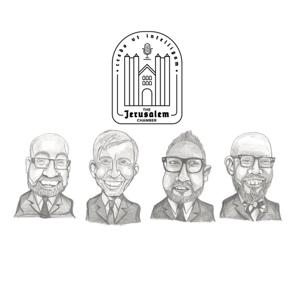


What are the differences between this paragraph and those found in chapter 7? What does the Confession mean by “communicated to the elect”? What is the virtue of redemption? What is the efficacy of redemption? What are the benefits of redemption? Why does the Confession say “slain from the foundation of the world”? What’s the difference between this paragraph and the London Baptist Confession of 1689? What role does Biblical Theology have in the Confess? Join Joel, Nathan, Shawn and Kyle as we discuss these questions from WCF 8.6:
Although the work of redemption was not actually wrought by Christ till after His incarnation, yet the virtue, efficacy, and benefits thereof were communicated unto the elect, in all ages successively from the beginning of the world, in and by those promises, types, and sacrifices, wherein He was revealed, and signified to be the seed of the woman which should bruise the serpent’s head; and the Lamb slain from the beginning of the world; being yesterday and today the same, and forever.
https://jerusalemchamber.com/wp-content/uploads/2018/05/ep-8-6-redemption-in-ot.mp3
For more resources on today’s topic check these out:
The Person of Christ by GC Berkouwer
Jesus the Son of God by DA Carson
The Two Natures of Christ by Martin Chemnitz
The Word Enfleshed by Oliver Crisp
The Christology of John Owen by Richard Daniels
What is the Incarnation by William Evans
The Son of God and New Creation by Graeme Goldsworthy
Christ Set Forth and the Heart of Christ in Heaven by Thomas Goodwin
The God Who Became Human by Cole Graham
The Christian’s Pocket Guide to Jesus Christ by Mark Jones
The Virgin Birth by J Gresham Machen
The Person of Christ by Donald MacLeod
The Glory of Christ by John Owen
The Person of Christ by John Owen
Dialogue on the Two Natures of Christ by Peter Martyr Vermigli
The Lord of Glory by BB Warfield
God the Son Incarnate by Stephen Wellum
Can you explain the terms “active” and “passive” obedience? Can you historically explain the question(s) about the active obedience of Christ? Give some specific examples of Christ’s obedience. Why does the WCF connect Christ’s suffering to the justice of his Father? What does the WCF mean with the phrase “through the eternal Spirit”? How does this paragraph limit the death of Christ? Join Nathan, Kyle, Joel, and Shawn as we discuss these and other questions from WCF 8.5:
The Lord Jesus, by His perfect obedience, and sacrifice of Himself, which He through the eternal Spirit, once offered up unto God, has fully satisfied the justice of His Father; and purchased, not only reconciliation, but an everlasting inheritance in the kingdom of heaven, for those whom the Father has given unto Him.
https://jerusalemchamber.com/wp-content/uploads/2018/04/ep-8-5-christs-obedience-and-suffering.mp3
For more resources on today’s topic check these out:
The Person of Christ by GC Berkouwer
Jesus the Son of God by DA Carson
The Two Natures of Christ by Martin Chemnitz
The Word Enfleshed by Oliver Crisp
The Christology of John Owen by Richard Daniels
What is the Incarnation by William Evans
The Son of God and New Creation by Graeme Goldsworthy
Christ Set Forth and the Heart of Christ in Heaven by Thomas Goodwin
The God Who Became Human by Cole Graham
The Christian’s Pocket Guide to Jesus Christ by Mark Jones
The Virgin Birth by J Gresham Machen
The Person of Christ by Donald MacLeod
The Glory of Christ by John Owen
The Person of Christ by John Owen
Dialogue on the Two Natures of Christ by Peter Martyr Vermigli
The Lord of Glory by BB Warfield
God the Son Incarnate by Stephen Wellum
Why does the WCF incorporate significant details about the life of Jesus that are absent from the Apostles’ Creed? What does the Confession mean when it speaks of Christ estate of humiliation and exaltation? Why does the Confession say Christ “most willingly” undertook the office of Mediator? What’s the significance of suffering in body and soul? Where’s the creedal statement “He descended into hell”? What’s important about being raised with the same body? Where is the Mediator presently and what is he doing? Join Nathan, Shawn, Joel, and Kyle as we sit down to discuss WCF 8.4:
This office the Lord Jesus did most willingly undertake; which that He might discharge, He was made under the law, and did perfectly fulfil it; endured most grievous torments immediately in His soul, and most painful sufferings in His body; was crucified, and died, was buried, and remained under the power of death, yet saw no corruption. On the third day He arose from the dead, with the same body in which He suffered, with which also he ascended into heaven, and there sits at the right hand of His Father, making intercession, and shall return, to judge men and angels, at the end of the world.
https://jerusalemchamber.com/wp-content/uploads/2018/04/ep-8-4-humiliation-and-exaltation.mp3
For more resources on today’s topic check these out:
The Person of Christ by GC Berkouwer
Jesus the Son of God by DA Carson
The Two Natures of Christ by Martin Chemnitz
The Word Enfleshed by Oliver Crisp
The Christology of John Owen by Richard Daniels
What is the Incarnation by William Evans
The Son of God and New Creation by Graeme Goldsworthy
Christ Set Forth and the Heart of Christ in Heaven by Thomas Goodwin
The God Who Became Human by Cole Graham
The Christian’s Pocket Guide to Jesus Christ by Mark Jones
The Virgin Birth by J Gresham Machen
The Person of Christ by Donald MacLeod
The Glory of Christ by John Owen
The Person of Christ by John Owen
Dialogue on the Two Natures of Christ by Peter Martyr Vermigli
The Lord of Glory by BB Warfield
God the Son Incarnate by Stephen Wellum
In light of recent controversies what in this paragraph relates to the ontological and economic Trinity? How does this paragraph set forth Jesus as the New Adam? What is different about Jesus’ sanctification from ours? Where is the encouragement in this for us? Why did Jesus need to be holy, harmless, and undefiled? Hos is the Mediatorial reign of Jesus depicted here? Join Nathan, Shawn, Joel, and Kyle as they discuss WCF 8.3:
The Lord Jesus, in His human nature thus united to the divine, was sanctified, and anointed with the Holy Spirit, above measure, having in Him all the treasures of wisdom and knowledge; in whom it pleased the Father that all fullness should dwell; to the end that, being holy, harmless, undefiled, and full of grace and truth, He might be thoroughly furnished to execute the office of a Mediator and Surety. Which office He took not unto Himself, but was thereunto called by His Father, who put all power and judgment into His hand, and gave Him commandment to execute the same.
https://jerusalemchamber.com/wp-content/uploads/2018/04/ep-8-3-the-perfection-of-jesus.mp3
For More Resources on Today’s Topic Check These Out…
The Person of Christ by GC Berkouwer
What are some of the heresies rejected by this paragraph? Where does the language “very and eternal God” come from and why does the WCF use it? What does the “fullness of time” mean? What portions of Scripture talk about Jesus’ true humanity? Why does it matter that Jesus was truly man? Why is it important he be “very God”? Join Nathan, Shawn, Joel, and Kyle as we discuss these and more questions from WCF 8.2:
The Son of God, the second person of the Trinity, being very and eternal God, of one substance and equal with the Father, did, when the fullness of time was come, take upon Him man’s nature, with all the essential properties, and common infirmities thereof, yet without sin; being conceived by the power of the Holy Ghost, in the womb of the virgin Mary, of her substance. So that two whole, perfect, and distinct natures, the Godhead and the manhood, were inseparably joined together in one person, without conversion, composition, or confusion. Which person is very God, and very man, yet one Christ, the only Mediator between God and man.
https://jerusalemchamber.com/wp-content/uploads/2018/04/ep-8-2-two-natures.mp3
For More Resources on Today’s Topic Check These Out…
The Person of Christ by GC Berkouwer
How do we know that sending Jesus wasn’t God’s emergency plan? Could the Father or Spirit have been the Mediator? How is Jesus a Prophet? Priest? King? What does it mean that he is Head of the church? How are the blessings of salvation connected to Jesus? Join Nathan, Shawn, Joel, and Kyle as we discuss these questions and more from WCF 8.1:
It pleased God, in His eternal purpose, to choose and ordain the Lord Jesus, His only begotten Son, to be the Mediator between God and man,the Prophet, Priest, and King, the Head and Savior of His Church, the Heir of all things,and Judge of the world: unto whom He did from all eternity give a people, to be His seed,and to be by Him in time redeemed, called, justified, sanctified, and glorified.
https://jerusalemchamber.com/wp-content/uploads/2018/03/ep-81-christ-the-mediator.mp3
For More Resources on Today’s Topic Check These Out…
The Person of Christ by GC Berkouwer
This special episode is a Q&A of all things related to chapter seven. Thanks for those who sent in questions. Tune in as we discuss questions like: why do some people reject a covenant of works? What were the “sacraments” of the covenant of works? Would Adam have inherited eternal life in heaven or a continuation of life on earth? What’s the difference between Reformed Covenant Theology and Particular Baptist Covenant Theology? Federal Vision Theology? New Covenant Theology? What is the Covenant of Redemption? And more!
https://jerusalemchamber.com/wp-content/uploads/2018/03/q-and-a-7.mp3
(NOTE: Sorry for the audio…we were having some technical difficulties!).
How do we understand the place of the gospel in the Old Testament? What is the relation of the new covenant to the covenant of grace? Why does the confession speak of Christ as the “substance”? What is meant by “administered with more simplicity”? What does it mean that these ordinances “dispense” the covenant of grace? How does preaching do this? How do the sacraments? Tune in as Joel, Nathan, Shawn, and Kyle discuss these questions and more from WCF 7.6:
Under the Gospel, when Christ, the substance, was exhibited, the ordinances in which this covenant is dispensed are the preaching of the Word, and the administration of the sacraments of Baptism and the Lord’s Supper: which, though fewer in number, and administered with more simplicity, and less outward glory, yet, in them, it is held forth in more fullness, evidence, and spiritual efficacy, to all nations, both Jews and Gentiles; and is called the New Testament. There are not therefore two covenants of grace, differing in substance, but one and the same, under various dispensations.
https://jerusalemchamber.com/wp-content/uploads/2018/02/ep-7-6-cog-in-the-nt.mp3
For More Resources on Today’s Topic Check These Out…
A Treatise on the Covenant of Grace by John Ball
The True Bounds of Christian Freedom by Samuel Bolton
A View of the Covenant of Grace by Thomas Boston
The Doctrine of the Covenant and Testament of God by Johannes Cocceius
The Law is Not of Faith ed by Bryan Estelle
Covenant Theology by Peter Golding
The Covenant of Grace by Matthew Henry
Introducing Covenant Theology by Michael Horton
Covenant of Grace by John Murray
The Great Mystery of the Covenant of Grace by Samuel Petto
Christ of the Covenants by O Palmer Robertson
The Covenant of Life Opened by Samuel Rutherford
A Discourse of the Two Covenants by William Strong
Christ and Covenant Theology by Cornelis Venema
The Covenant of Grace by JG Vos
The Economy of the Covenants Between God and Man by Herman Witsius*
*Kyle’s favorite set!
What is the difference between law and grace? What is the difference between Dispensationalism and Covenant Theology in understanding the Old Testament? What are some of the promises, pictures, and prophecies Israel received about Jesus? How were the “shadowy” things of the Old Testament sufficient unto salvation? Tune in as Joel, Nathan, Shawn, and Kyle discuss these questions and more from WCF 7.5:
This covenant was differently administered in the time of the law, and in the time of the Gospel: under the law it was administered by promises, prophecies, sacrifices, circumcision, the paschal lamb, and other types and ordinances delivered to the people of the Jews, all foresignifying Christ to come; which were, for that time, sufficient and efficacious, through the operation of the Spirit, to instruct and build up the elect in faith in the promised Messiah, by whom they had full remission of sins, and eternal salvation; and is called the Old Testament.
https://jerusalemchamber.com/wp-content/uploads/2018/02/ep-7-5-covenant-of-grace-in-the-ot.mp3
For More Resources on Today’s Topic Check These Out…
A Treatise on the Covenant of Grace by John Ball
The True Bounds of Christian Freedom by Samuel Bolton
A View of the Covenant of Grace by Thomas Boston
The Doctrine of the Covenant and Testament of God by Johannes Cocceius
The Law is Not of Faith ed by Bryan Estelle
Covenant Theology by Peter Golding
The Covenant of Grace by Matthew Henry
Introducing Covenant Theology by Michael Horton
Covenant of Grace by John Murray
The Great Mystery of the Covenant of Grace by Samuel Petto
Christ of the Covenants by O Palmer Robertson
The Covenant of Life Opened by Samuel Rutherford
A Discourse of the Two Covenants by William Strong
Christ and Covenant Theology by Cornelis Venema
The Covenant of Grace by JG Vos
The Economy of the Covenants Between God and Man by Herman Witsius*
*Kyle’s favorite set!
What is a “testament” and “testator”? Why is it important to retain this language? How does this help us understand the covenant of grace? Why are the benefits of the covenant of grace connected to the death of Jesus? What is the inheritance? Tune in as Nathan, Joel, Shawn, and Kyle discuss these questions and more from WCF 7.4:
This covenant of grace is frequently set forth in scripture by the name of a testament, in reference to the death of Jesus Christ the Testator, and to the everlasting inheritance, with all things belonging to it, therein bequeathed.
https://jerusalemchamber.com/wp-content/uploads/2018/01/ep-7-4-testament-and-testator.mp3
For More Resources on Today’s Topic Check These Out…
A Treatise on the Covenant of Grace by John Ball
The True Bounds of Christian Freedom by Samuel Bolton
A View of the Covenant of Grace by Thomas Boston
The Doctrine of the Covenant and Testament of God by Johannes Cocceius
The Law is Not of Faith ed by Bryan Estelle
Covenant Theology by Peter Golding
The Covenant of Grace by Matthew Henry
Introducing Covenant Theology by Michael Horton
Covenant of Grace by John Murray
The Great Mystery of the Covenant of Grace by Samuel Petto
Christ of the Covenants by O Palmer Robertson
The Covenant of Life Opened by Samuel Rutherford
A Discourse of the Two Covenants by William Strong
Christ and Covenant Theology by Cornelis Venema
The Covenant of Grace by JG Vos
The Economy of the Covenants Between God and Man by Herman Witsius*
*Kyle’s favorite set!
From the publisher's feed