
Sign up to save your podcasts
Or

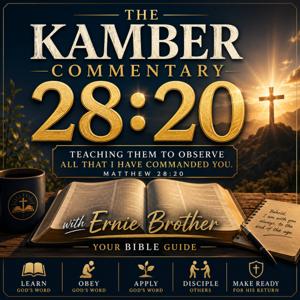


What difference could a few feet possibly make?
For the disciples, it was the difference between empty nets and an overwhelming catch.
In Luke 5 and John 21, experienced fishermen had worked hard and come up empty. Then Jesus gave a simple instruction: cast the net where He directed them. The boat had not changed. The net had not changed. The fishermen had not changed. What changed was their obedience to the voice of Christ.
In this episode of The Kamber Commentary 28:20, we look at the powerful truth that sometimes the breakthrough is not miles away—it may only be a few feet of obedience away.
We’ll examine why hard work alone is not enough, how the Holy Spirit guides believers in where and when to “cast the net,” why the gospel must be taken into messy places, and why faith often requires obedience before we fully understand.
The net sitting safely in the boat catches nothing.
God provides the direction.
God provides the opportunity.
God provides the power.
But somebody still has to cast the net.
FAITH STILL CASTS.
Continue your study with The Kamber Commentary 28:20
📺 Watch on YouTube
https://www.youtube.com/@KamberCommentary
🎙️ Listen on Spotify
https://open.spotify.com/show/033GXNfhcjyGzQKppRHTVe
🌐 Read, listen, and explore more at
https://kambercommentary.com
“Teaching them to observe all that I have commanded you.” — Matthew 28:20
Learn • Obey • Apply • Disciple
Jesus does not treat sin casually—and neither should His followers.
In Matthew 18:7–20, Jesus warns about the seriousness of causing others to stumble, calls for radical action against personal sin, reveals the Father’s concern for the wandering sheep, and gives practical instruction for confronting a brother or sister who sins.
This passage moves from personal responsibility to loving restoration, then to the responsibility of the church when repentance does not come. Jesus also explains the authority involved in “binding and loosing” and reminds His disciples of the significance of believers gathering together in His name.
In this episode of The Kamber Commentary 28:20 L.O.A.D. Bible Study, we look closely at what Jesus teaches about stumbling blocks, discipline, restoration, church accountability, agreement in prayer, and the often-quoted promise: “For where two or three are gathered in my name, there am I among them.”
This episode is part of our continuing L.O.A.D. Bible Study through the Gospel of Matthew.
Continue your study with The Kamber Commentary 28:20
📺 Watch on YouTube
https://www.youtube.com/@KamberCommentary
🎙️ Listen on Spotify
https://open.spotify.com/show/033GXNfhcjyGzQKppRHTVe
🌐 Read, listen, and explore more at
https://kambercommentary.com
“Teaching them to observe all that I have commanded you.” — Matthew 28:20
Learn • Obey • Apply • Disciple
The disciples asked Jesus a revealing question: “Who is the greatest in the kingdom of heaven?”
In Matthew 18:1–6, Jesus answers by bringing a child into their midst and turning their idea of greatness upside down. The kingdom of God does not measure greatness by position, recognition, influence, or status. Jesus points instead to humility, dependence, and the seriousness of how we treat those who belong to Him.
In this episode of The Kamber Commentary 28:20 L.O.A.D. Bible Study, we examine what Jesus meant when He said we must “turn and become like children,” what biblical humility really looks like, and His sobering warning concerning anyone who causes “one of these little ones” to stumble.
This episode is part of our continuing L.O.A.D. Bible Study through the Gospel of Matthew.
Continue your study with The Kamber Commentary 28:20
📺 Watch on YouTube
https://www.youtube.com/@KamberCommentary
🎙️ Listen on Spotify
https://open.spotify.com/show/033GXNfhcjyGzQKppRHTVe
🌐 Read, listen, and explore more at
https://kambercommentary.com
“Teaching them to observe all that I have commanded you.” — Matthew 28:20
Learn • Obey • Apply • Disciple
In Matthew 17:22–27, Jesus again tells His disciples that He will be betrayed into the hands of men, killed, and raised on the third day. The disciples hear His words, but they are overwhelmed with grief. They understand the suffering He has predicted, yet they do not seem to grasp the promise of resurrection that follows.
Jesus is not being overtaken by circumstances. He knows what awaits Him, and He willingly continues toward Jerusalem. The cross is not an unexpected interruption in His mission—it is central to the purpose for which He came.
When Jesus and His disciples arrive in Capernaum, collectors of the temple tax ask Peter whether Jesus pays the tax. Jesus explains that the sons of a king are normally exempt from taxes collected by their father. As the Son of God, Jesus is greater than the temple and is not truly obligated to pay for the support of His Father’s house.
Nevertheless, Jesus chooses to pay the tax so that He will not cause unnecessary offense. He instructs Peter to cast a hook into the sea, take the first fish he catches, and retrieve a coin from its mouth—enough to pay the tax for both Jesus and Peter.
This passage reveals both the divine authority and the gracious humility of Christ. The One who controls creation and provides a coin through a fish willingly surrenders His rights to avoid placing an unnecessary obstacle before others. Christian freedom is not merely the right to do something; it also includes the wisdom to surrender that right for the sake of another person’s conscience and the advance of God’s work.
Key themes include:
This episode is part of our continuing L.O.A.D. Bible Study through the Gospel of Matthew.
Learn • Obey • Apply • Disciple
Continue your study with The Kamber Commentary 28:20
📺 Watch on YouTube
https://www.youtube.com/@KamberCommentary
🎙️ Listen on Spotify
https://open.spotify.com/show/033GXNfhcjyGzQKppRHTVe
🌐 Read, listen, and explore more at
https://kambercommentary.com
“Teaching them to observe all that I have commanded you.”— Matthew 28:20
Sometimes spiritual maturity is demonstrated not by demanding our rights, but by willingly laying them down.
In Matthew 17:14–21, Jesus comes down from the mountain and immediately encounters a desperate father, a suffering son, and disciples who were unable to help.
The father pleads with Jesus to have mercy on his son, who is tormented and repeatedly thrown into dangerous situations. The disciples had tried to cast out the demon but failed. Jesus rebukes the unbelieving generation, commands that the boy be brought to Him, and delivers him immediately.
Later, the disciples privately ask Jesus why they could not cast it out. Jesus points directly to their lack of faith. His words about faith like a mustard seed do not describe faith as a force for accomplishing whatever we desire. They teach that even small, genuine faith placed in an all-powerful God can accomplish what appears humanly impossible when it is consistent with His will.
The problem was not that the disciples needed more confidence in themselves. They needed deeper dependence upon God. Ministry cannot be sustained by past experiences, borrowed authority, religious routine, or human effort. Spiritual opposition requires spiritual dependence.
This passage challenges us to ask whether we are attempting God’s work through our own strength. Mountains do not move because faith is impressive. They move because the God in whom we trust is mighty.
Key themes include:
This episode is part of our continuing L.O.A.D. Bible Study through the Gospel of Matthew.
Learn • Obey • Apply • Disciple
Continue your study with The Kamber Commentary 28:20
📺 Watch on YouTube
https://www.youtube.com/@KamberCommentary
🎙️ Listen on Spotify
https://open.spotify.com/show/033GXNfhcjyGzQKppRHTVe
🌐 Read, listen, and explore more at
https://kambercommentary.com
“Teaching them to observe all that I have commanded you.”— Matthew 28:20
Faith does not make us powerful. Faith connects us to the One who is.
In Matthew 17:4–13, Peter responds to the glory of the transfiguration by offering to build three tents—one for Jesus, one for Moses, and one for Elijah. But before he can finish speaking, a bright cloud overshadows them, and the voice of the Father declares:
“This is my beloved Son, with whom I am well pleased; listen to him.”
Peter’s mistake was not that he honored Moses and Elijah. His mistake was placing them alongside Jesus as though all three held equal authority. Moses represented the Law, and Elijah represented the Prophets, but Jesus is greater than both. The Law and the Prophets point to Him, and the Father commands the disciples—and us—to listen to His Son.
Overwhelmed by the voice of God, the disciples fall facedown in fear. Jesus comes near, touches them, and tells them not to be afraid. When they look up, they see no one except Jesus. That moment carries a powerful truth: when everything else fades, Christ remains.
As they descend the mountain, Jesus tells them not to speak of the vision until after His resurrection. The disciples then ask about Elijah, and Jesus explains that Elijah has already come in the ministry of John the Baptist, though the people failed to recognize him. In the same way, they would also reject and mistreat the Son of Man.
Key themes include:
This episode is part of our continuing L.O.A.D. Bible Study through the Gospel of Matthew.
Learn • Obey • Apply • Disciple
Continue your study with The Kamber Commentary 28:20
📺 Watch on YouTube
https://www.youtube.com/@KamberCommentary
🎙️ Listen on Spotify
https://open.spotify.com/show/033GXNfhcjyGzQKppRHTVe
🌐 Read, listen, and explore more at
https://kambercommentary.com
“Teaching them to observe all that I have commanded you.”— Matthew 28:20
In Matthew 17:1–3, Jesus takes Peter, James, and John up a high mountain, where He is transfigured before them. His face shines like the sun, and His clothes become white as light.
For a brief moment, the disciples are allowed to see something normally hidden from human eyes: the divine glory of Jesus Christ. He is not merely a teacher, prophet, healer, or miracle worker. He is the eternal Son of God, clothed in majesty and glory.
Then Moses and Elijah appear, speaking with Jesus. Moses represents the Law, and Elijah represents the Prophets. Together, their presence points to the truth that the entire Old Testament finds its fulfillment in Christ.
This passage gives the disciples a glimpse of the King in His glory before they witness Him suffer on the cross. It also reminds us that the Jesus who walked toward suffering is the same Jesus who possesses all power, authority, and divine splendor.
Key themes include:
This episode is part of our continuing L.O.A.D. Bible Study through the Gospel of Matthew.
Learn • Obey • Apply • Disciple
Continue your study with The Kamber Commentary 28:20
📺 Watch on YouTube
https://www.youtube.com/@KamberCommentary
🎙️ Listen on Spotify
https://open.spotify.com/show/033GXNfhcjyGzQKppRHTVe
🌐 Read, listen, and explore more at
https://kambercommentary.com
“Teaching them to observe all that I have commanded you.”— Matthew 28:20
In Matthew 16:21–28, Jesus begins to speak plainly to His disciples about what lies ahead: He must go to Jerusalem, suffer, be killed, and be raised on the third day.
Peter, who had just confessed that Jesus is the Christ, now rebukes Him for speaking of suffering and death. Jesus responds sharply because Peter is thinking according to human expectations rather than the purposes of God. Peter wanted the crown without the cross, but Jesus makes it clear that suffering, sacrifice, and obedience are central to His mission.
Jesus then turns to all His disciples and explains the cost of following Him: deny yourself, take up your cross, and follow Me. Discipleship is not merely believing certain truths about Jesus. It means surrendering self-rule, accepting the cost of obedience, and following Christ wherever He leads.
This passage also confronts us with the value of the soul. A person may gain the whole world and still lose what matters most. Earthly success, possessions, approval, and power cannot compensate for the loss of one’s soul.
Key themes include:
This episode is part of our continuing L.O.A.D. Bible Study through the Gospel of Matthew.
Learn • Obey • Apply • Disciple
Continue your study with The Kamber Commentary 28:20
📺 Watch on YouTube
https://www.youtube.com/@KamberCommentary
🎙️ Listen on Spotify
https://open.spotify.com/show/033GXNfhcjyGzQKppRHTVe
🌐 Read, listen, and explore more at
https://kambercommentary.com
“Teaching them to observe all that I have commanded you.”— Matthew 28:20
Salvation is free. Discipleship is costly.
In Matthew 16:13–20, Jesus brings His disciples to Caesarea Philippi and asks them one of the most important questions ever spoken: “Who do you say that I am?”
The crowds had many opinions about Jesus. Some thought He was John the Baptist, Elijah, Jeremiah, or another prophet. But Peter answered with a clear confession: “You are the Christ, the Son of the living God.”
Jesus explains that this truth was not discovered through human wisdom alone, but revealed by the Father. He then speaks about building His church, the gates of hell not prevailing against it, and the keys of the kingdom of heaven.
This passage is not merely about what other people believe concerning Jesus. It confronts every listener personally. Public opinion cannot replace personal conviction, and religious familiarity cannot substitute for genuine faith. The central question remains: Who do you say that Jesus is?
Key themes include:
This episode is part of our continuing L.O.A.D. Bible Study through the Gospel of Matthew.
Learn • Obey • Apply • Disciple
Continue your study with The Kamber Commentary 28:20
📺 Watch on YouTube
https://www.youtube.com/@KamberCommentary
🎙️ Listen on Spotify
https://open.spotify.com/show/033GXNfhcjyGzQKppRHTVe
🌐 Read, listen, and explore more at
https://kambercommentary.com
“Teaching them to observe all that I have commanded you.”— Matthew 28:20
The Pharisees and Sadducees came to Jesus demanding a sign from heaven, but their request did not come from sincere faith. They could interpret the appearance of the sky, yet they failed to recognize the spiritual significance of the One standing before them.
In Matthew 16:1–12, Jesus warns His disciples about the “leaven” of the Pharisees and Sadducees. At first, they misunderstand Him and think He is talking about bread. Jesus reminds them of His previous miracles and teaches them that the real danger is not a shortage of food, but the corrupting influence of false teaching, unbelief, hypocrisy, and spiritual blindness.
This passage challenges us to examine whether we are truly listening to Christ or merely looking for Him to prove Himself on our terms. A small amount of false doctrine can spread quietly and influence an entire life, church, or generation.
Key themes include:
This episode is part of our continuing L.O.A.D. Bible Study through the Gospel of Matthew.
Learn • Obey • Apply • Disciple
Continue your study with The Kamber Commentary 28:20
📺 Watch on YouTube
https://www.youtube.com/@KamberCommentary
🎙️ Listen on Spotify
https://open.spotify.com/show/033GXNfhcjyGzQKppRHTVe
🌐 Read, listen, and explore more at
https://kambercommentary.com
“Teaching them to observe all that I have commanded you.”— Matthew 28:20
From the publisher's feed