
Sign up to save your podcasts
Or

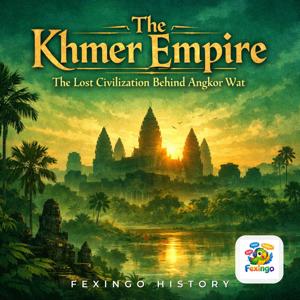


When we imagine the Khmer Empire, we think of stone temples and rice paddies, not warships. But in the 12th century, Angkor fought a decades-long naval campaign against the kingdom of Champa—a conflict fought on rivers, lakes, and the open sea. This episode follows the Cham invasion of 1177, which saw a fleet sail up the Mekong and across the Tonlé Sap to sack Angkor itself. Then we explore how King Jayavarman VII rebuilt Khmer naval power, using war boats to launch a counterattack and ultimately conquer Champa. We look at the design of Khmer ships, the role of the Mekong as a highway for war and trade, and the archaeological clues left behind—from bas-reliefs at Angkor Wat to Chinese records of Khmer envoys. For listeners who know the land-based story of Angkor, this is the water war that changed everything.
#KhmerEmpire #Champa #NavalWarfare #AngkorWat #JayavarmanVII #MekongRiver #TonleSap #1177Invasion #SoutheastAsianHistory #MedievalNavies #KhmerNavy #WarBoats #ChamFleet #Indradevi #PreahKhan #History #FexingoHistory #AncientWarfare
Keep every episode free: buymeacoffee.com/fexingo
In this episode, Lucas and Luna dive into one of the most important documents from the Khmer Empire: the Sdok Kak Thom inscription, a 1052 CE stone slab that records the devaraja cult and the lineage of the priests who served it. They explore how this inscription, discovered at a remote temple in present-day Thailand, rewrites our understanding of Khmer state religion, the founding of Angkor, and the political role of the priestly family. Lucas explains the inscription's account of Jayavarman II's ritual on Phnom Kulen, the establishment of the devaraja as a sacred royal mandate, and the way the text uses Sanskrit to legitimize power. They also discuss the inscription's mention of the 'Kambuja' people, the naming of the empire, and how scholars like George Coedès used it to piece together early Khmer history. The episode touches on the controversy over the devaraja's meaning—was it a linga, a statue, or a political ideology?—and why this single stone remains a cornerstone of Southeast Asian historiography.
#SdokKakThom #KhmerEmpire #devaraja #JayavarmanII #GeorgeCoedès #Sanskrit #PhnomKulen #Kambuja #Angkor #Inscription #Epigraphy #KhmerHistory #Cambodia #Brahmin #Priesthood #MountMeru #History #FexingoHistory
Keep every episode free: buymeacoffee.com/fexingo
In 1177, the Khmer Empire suffered its most devastating military defeat when a Cham fleet sailed up the Mekong and Tonlé Sap rivers, sacked the capital Yasodharapura, and killed the reigning king. This episode focuses on the invasion itself: the masterful Cham naval strategy under Jaya Indravarman IV, the Khmer reliance on a river-based defense that failed catastrophically, and the immediate aftermath that left Angkor in chaos. We explore how the Cham exploited monsoon winds and tidal currents to bypass Khmer land fortifications, the brutal sack of the city and temple complexes, and the political vacuum that allowed Jayavarman VII to eventually seize power and rebuild. Drawing on Cham inscriptions, Khmer chronicles, and archaeological evidence from the Tonlé Sap floodplain, we reconstruct a turning point that reshaped Southeast Asian power dynamics for centuries.
#ChamInvasion1177 #KhmerEmpire #JayaIndravarmanIV #Yasodharapura #TonléSap #Angkor #Champa #NavalWarfare #MedievalSoutheastAsia #JayavarmanVII #MekongRiver #MonsoonStrategy #MilitaryHistory #SackOfAngkor #CambodianHistory #History #FexingoHistory #SoutheastAsianHistory
Keep every episode free: buymeacoffee.com/fexingo
In the late 13th century, the Khmer Empire underwent a violent religious upheaval. King Jayavarman VIII, a fervent Hindu, launched a systematic campaign to erase Mahayana Buddhism from Angkor, smashing Buddha images, converting temples back to Hindu shrines, and persecuting monks. This episode explores the motives behind the purge, the archaeological evidence of mutilated statues, and the political context: a backlash against the Buddhist kings who preceded him, especially Jayavarman VII. We also examine how this religious shift weakened the state, alienating allies and paving the way for the rise of Theravada Buddhism. Lucas and Luna discuss inscriptions, temple art, and the curious case of the Bayon's altered faces, offering a fresh angle on a tumultuous period in Khmer history that has rarely been covered in detail.
#KhmerEmpire #JayavarmanVIII #MahayanaBuddhism #Angkor #ReligiousPurge #Theravada #Bayon #AngkorThom #BuddhistPersecution #CambodiaHistory #Devaraja #13thCentury #SoutheastAsia #HinduRevival #Archaeology #History #FexingoHistory #Episode163
Keep every episode free: buymeacoffee.com/fexingo
Who was the Leper King? For centuries, a mysterious statue at Angkor Thom has puzzled historians and visitors alike. This episode peels back the layers of myth, archaeology, and royal intrigue surrounding the Terrace of the Leper King. We explore the statue's possible identities—from the Khmer king Yasovarman I to the Hindu god Yama—and examine the 15th-century inscription that named it. Along the way, we uncover how the statue was moved, broken, and restored, and what its enigmatic smile tells us about Angkor's shifting religious landscape. Featuring insights from the National Museum of Cambodia, the Angkor Conservation Office, and recent scholarship on the devaraja cult, this is a deep dive into one of Angkor's most haunting works of art.
#LeperKing #AngkorThom #YasovarmanI #Yama #KhmerEmpire #AngkorWat #Cambodia #Archaeology #JayavarmanVII #TerraceOfTheLeperKing #NationalMuseumOfCambodia #Devaraja #MountMeru #Sandstone #12thCentury #13thCentury #History #FexingoHistory
Keep every episode free: buymeacoffee.com/fexingo
In late 13th-century Angkor, a Theravada Buddhist monk named Suo Du arrived from Sri Lanka and sparked a religious revolution. His teachings challenged the centuries-old devaraja cult that had legitimized Khmer kings as divine Shiva-linga incarnations. King Jayavarman VIII, a staunch Shaivite, saw this new faith as a threat to royal authority and launched a violent purge of Mahayana and Theravada monks. But Suo Du's ideas didn't die. Within a generation, Theravada Buddhism became the state religion under Indravarman II, erasing the devaraja tradition that had sustained Angkor for 500 years. This episode explores the ideological battle behind Angkor's religious transformation: the shrines that were defaced, the monks who were executed, and the quiet persistence of a faith that outlasted an empire. Key sites include the Vatt Sithor inscription, Prasat Neak Buos, and the Bayon's altered iconography.
#TheravadaBuddhism #SuoDu #JayavarmanVIII #Angkor #VattSithor #PrasatNeakBuos #devaraja #Shaivite #Mahayana #Kambuja #13thCentury #ReligiousSchism #KhmerEmpire #SriLanka #BuddhistMonks #AngkorWat #Bayon #FexingoHistory
Keep every episode free: buymeacoffee.com/fexingo
In this episode of The Khmer Empire, Lucas and Luna explore one of Angkor's most mysterious figures: the Leper King. They discuss the enigmatic statue at the Terrace of the Leper King in Angkor Thom, its possible identities—including the legendary king Yasovarman I and the god Yama—and the medical and cultural context behind the name. The conversation delves into the statue's unique posture, the discovery of a hidden underground chamber beneath the terrace, and what the leprosy motif might reveal about Khmer attitudes toward disease and kingship. They also touch on the restoration work by the Angkor Conservation Office and the statue's current home in the National Museum of Cambodia. This episode offers a fresh perspective on a lesser-known corner of Angkorian art and mythology.
#LeperKing #AngkorThom #YasovarmanI #KhmerArt #Yama #Leprosy #TerraceOfTheLeperKing #JayavarmanVII #AngkorConservation #NationalMuseumCambodia #SoutheastAsianHistory #CambodianMythology #AngkorWat #FexingoHistory #History #Archaeology #AncientMysteries #KhmerEmpire
Keep every episode free: buymeacoffee.com/fexingo
In 1177, the Khmer Empire suffered its most humiliating defeat when a Cham fleet sailed up the Mekong and Tonlé Sap rivers, sacked the capital Yasodharapura, and killed the reigning king. The attack exposed the vulnerabilities of Angkor's riverine defenses and triggered a radical transformation of the empire under Jayavarman VII. This episode reconstructs the invasion from Khmer and Cham sources, including the role of King Jaya Indravarman IV, the naval battle on the Great Lake, and the brutal aftermath that led to Jayavarman VII's unprecedented building program. We also examine the geopolitical rivalry between the two mainland powers—Champa and Kambuja—that had simmered for centuries, and the fate of the Cham prisoners who later served in Jayavarman VII's construction projects. A riveting story of hubris, revenge, and resilience that reshaped Southeast Asia.
#KhmerEmpire #ChamInvasion #JayavarmanVII #Angkor #Champa #Yasodharapura #TonleSap #MekongDelta #JayaIndravarmanIV #NavalWarfare #1177 #SoutheastAsianHistory #MedievalHistory #MilitaryHistory #Cambodia #Vietnam #History #FexingoHistory
Keep every episode free: buymeacoffee.com/fexingo
Episode 158 of The Khmer Empire podcast deciphers the Preah Khan inscription, the longest and most detailed foundation text from Angkor. Discovered by French archaeologist Louis Finot in 1902, this 247-line Sanskrit stele records Jayavarman VII's dedication of the temple in 1191 CE. We explore how the inscription lists the temple's 97,840 servants, 2,200 monks, and 952 deities, along with the staggering wealth donated: 2,390 kg of silver, 3,800 kg of gold, and 40,000 pearls. The text also reveals Jayavarman VII's personal grief over his father's death and his mother's role as a Buddhist nun. The inscription names the temple 'Nagarindra Yasodhara' and describes the consecration of the central Buddha image, Avalokiteshvara, and other deities. We discuss how this single stone provides a census of Angkorian society, from palace officials to rice farmers, and details the seven-year construction process. The episode also touches on the Cham invasion of 1177 that preceded the temple's construction, and how Jayavarman VII used this monument as both a religious statement and a political manifesto. Join Lucas and Luna as they unravel the secrets of the Preah Khan stele, the Rosetta Stone of Khmer history.
#PreahKhan #JayavarmanVII #KhmerInscription #Sanskrit #Stele #Angkor #KhmerEmpire #BuddhistArt #Avalokiteshvara #AngkorWat #SoutheastAsianHistory #Archaeology #MedievalAsia #Cambodia #FoundationText #LouisFinot #ChamInvasion #FexingoHistory
Keep every episode free: buymeacoffee.com/fexingo
On the border between Cambodia and Thailand, perched atop a 525-metre cliff, stands Preah Vihear — a Khmer temple that has sparked one of the longest-running territorial disputes in Southeast Asia. In this episode, Lucas and Luna explore the temple's origins under Suryavarman I and II, its exquisite sandstone carvings and mountain symbolism, and its role as a flashpoint for national identity. They trace the temple's history from construction through French colonial arbitration, the 1962 International Court of Justice ruling, and the deadly clashes of 2008–2011. Along the way, they discuss the Hindu cosmology embedded in the temple's design, the role of the devaraja cult, and how a monument meant to honour Shiva became a battlefield. This is a story of sacred geography, colonial cartography, and modern nationalism — all centred on one of the most spectacular Khmer sites ever built.
#PreahVihear #SuryavarmanI #SuryavarmanII #KhmerEmpire #ICJ #ThaiCambodiaBorder #Dvaravati #HinduCosmology #MountMeru #Devaraja #SoutheastAsiaHistory #TempleDispute #Shiva #FrenchColonialism #AncientArchitecture #GeographyOfPower #History #FexingoHistory
Keep every episode free: buymeacoffee.com/fexingo
From the publisher's feed
Ranked by our users in the last 21 days