
Sign up to save your podcasts
Or

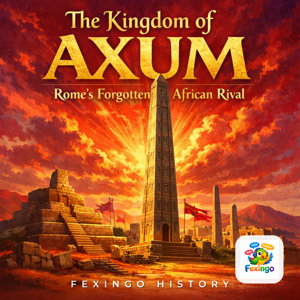


In this episode of Fexingo History, Lucas and Luna explore the towering obelisks of Axum — the ancient Ethiopian kingdom that rivaled Rome. They discuss how these massive granite stelae were quarried, carved, and erected without modern machinery, and what they reveal about Axumite engineering, religion, and royal power. The episode also covers the last known stelae — the 33-meter Great Stele that collapsed and shattered, possibly during construction — and the mysteries that still surround these monuments. From the Stelae Park to the Church of Our Lady Mary of Zion, this is a deep dive into one of Africa's most impressive ancient wonders.
#Axum #Stelae #Obelisks #AncientEngineering #EastAfrica #EthiopianHistory #StelePark #GreatStele #KingEzana #Mahrem #Ge'ez #AncientTechnology #Quarrying #Granite #Archaeology #History #FexingoHistory #AfricanCivilizations
Keep every episode free: buymeacoffee.com/fexingo
In this episode of Fexingo History, Lucas and Luna uncover the engineering marvels behind Axum's towering obelisks—the largest single pieces of stone ever quarried and erected in the ancient world. From the granite quarries of the highlands to the precise carving of the stepped stelae, they explore how a sophisticated African kingdom moved, shaped, and raised monuments that still stand in modern Ethiopia. Along the way, they meet King Ezana, whose reign saw the peak of this monumental tradition, and they wrestle with the mystery of the Great Stela, a 1,000-ton giant that toppled before completion. Discover the tools, mathematics, and sheer human effort that made Axum's skyline a wonder, and learn how these obelisks were more than tombstones—they were symbols of a civilization's connection to the divine and to its own history. This episode also touches on the rise of Christianity, the decline of the stelae tradition, and why the obelisks remain a source of pride and controversy today.
#Axum #Obelisks #Stelae #Ezana #AncientEngineering #Africa #Ethiopia #Ge'ez #mahrem #steppedstelae #StoneCarving #MonumentalArchitecture #AncientWorld #FexingoHistory #History #Archaeology #AncientTechnologies #AxumiteEmpire
Keep every episode free: buymeacoffee.com/fexingo
Long before the medieval kingdoms of Ethiopia, the ancient empire of Axum dominated the Red Sea world. In episode 193, Lucas and Luna dive deep into the reign of one of its most ambitious rulers, King Kaleb — the man who, in the sixth century, launched a crusade across the Red Sea to destroy a persecutor of Christians and restore Axum's ancient authority. They explore Kaleb's inscriptions at Axum, his alliance with Byzantium against the Sassanid Persians, and the dramatic campaign that toppled the Himyarite king Dhu Nuwas. Along the way, they uncover the intricacies of Axumite diplomacy, the legacy of the earlier king Sembrouthes, and how Kaleb's actions helped shape the religious and political landscape of the Arabian Peninsula. This episode also looks at the complex motives behind the war — from genuine religious fervor to strategic trade interests — and asks what Kaleb's decision to retire to a monastery says about his reign. For anyone interested in African history, the Red Sea trade, or the complex interactions between Christianity and Judaism in late antiquity, this conversation offers a vivid portrait of a forgotten ruler and a pivotal moment in African and world history.
#AxumiteEmpire #KingKaleb #Himyar #DhuNuwas #RedSea #Byzantium #Sassanid #ChristianHistory #EthiopianHistory #EastAfrica #Adulis #Najran #Procopius #CosmasIndicopleustes #MonumentumAdulitanum #AncientTrade #WorldHistory #FexingoHistory
Keep every episode free: buymeacoffee.com/fexingo
When King Ezana of Axum carved his victories into a stone slab in Ge'ez, Sabaean, and Greek around 350 CE, he left more than a monument. He left a bilingual Rosetta Stone that would let modern scholars crack the language of an empire. This episode follows the Ezana Stone from its discovery in the ruins of Aksum to the decipherment that unlocked Axum's history, and asks what Ezana's own words reveal about how he saw his realm and his gods. We look at the stone's three scripts, the challenges of matching the Ge'ez text to the Greek, and the moment a young scholar realized the stone's account of a campaign against the Noba matched no known event—until it did. We also consider what the stone doesn't say: the silences about victims, rivals, and the religious shift underway. For anyone who has heard of Axum's stelae but never the stone that spoke, this episode shows how a single artifact turned the kingdom's own voice into our clearest window on its past.
#EzanaStone #Aksum #Ge'ez #Sabaean #GreekInscriptions #KingEzana #NobaCampaign #RosettaStoneOfAxum #EthiopianHistory #AncientAfrica #AxumiteEmpire #TrilingualInscription #Decipherment #Kaleb #Meroë #RedSeaTrade #History #FexingoHistory
Keep every episode free: buymeacoffee.com/fexingo
Before Axum was a Christian kingdom of stelae and rock churches, it was a commercial powerhouse built on elephant ivory. In this episode, Lucas and Luna explore the ivory trade that made Axum rich — from the Periplus of the Erythraean Sea to the Aksumite monopoly on the Elephant Highway. They trace how tusks from the African interior traveled through Adulis to Rome, India, and Persia, funding the stelae and the military might that would later challenge empires. They examine the role of the elusive 'elephant road' that linked Axum to the Mediterranean world, and hear the echo of that trade in the sixth-century account of Cosmas Indicopleustes. Along the way, they discuss how the demand for ivory shaped Axum's relations with its neighbors, the ecological toll of the trade, and the ethical questions it raises today. This is a story of commerce, power, and the elephant at the center of it all — a fresh angle on an ancient African empire.
#Axum #IvoryTrade #ElephantHighway #Adulis #PeriplusOfTheErythraeanSea #CosmasIndicopleustes #AncientAfrica #EastAfrica #AxumiteEconomy #LuxuryGoods #ElephantEcology #AncientTrade #RomanTrade #IndianOceanTrade #RedSea #AfricanHistory #History #FexingoHistory
Keep every episode free: buymeacoffee.com/fexingo
In this episode of The Kingdom of Axum, Lucas and Luna explore the environmental factors that contributed to the decline of the Aksumite Empire. Drawing on recent archaeological studies, they discuss deforestation, soil erosion, a severe drought in the 7th century, and the impact of the Justinian Plague. They also examine how shifts in Red Sea trade after the Sassanid conquest of Yemen cut off Axum's economic lifeblood. This episode offers a fresh perspective on the empire's fall, moving beyond traditional narratives of invasion to reveal a complex interplay of human and natural forces. Listen as they piece together the story of a civilization that slowly faded, not with a bang but with a whisper.
#Axum #AksumiteEmpire #ClimateChange #EnvironmentalCollapse #Deforestation #Drought #LakeTana #PollenCores #JustinianPlague #RedSeaTrade #Sassanids #Yemen #Decline #History #FexingoHistory #Archaeology #EastAfrica #AncientEmpires
Keep every episode free: buymeacoffee.com/fexingo
In the early 6th century, the Aksumite king Kaleb Ella Atsbeha launched a military campaign across the Red Sea that would reshape the geopolitics of Arabia and cement Axum's role as a Christian power. This episode tells the story of the Himyarite War—a brutal conflict sparked by the persecution of Christians in the Yemeni kingdom of Himyar, ruled by the Jewish king Dhu Nuwas (Yusuf As'ar Yath'ar). We trace the events leading to the massacre at Najran, the Aksumite invasion of Yemen, the siege of Zafar, and Kaleb's eventual victory. Along the way, we explore the Byzantine connection, the complex religious tensions of the time, and the lasting consequences for both Axum and the Red Sea world. Featuring the ancient sources of Procopius and the Book of the Himyarites, this episode offers a rare look at Axum's imperial ambitions and its place in the late antique world.
#Axum #Kaleb #HimyariteWar #DhuNuwas #Najran #Zafar #Byzantium #Sassanid #RedSea #Yemen #Christianity #Judaism #AncientAfrica #EthiopianHistory #MilitaryHistory #LateAntiquity #History #FexingoHistory
Keep every episode free: buymeacoffee.com/fexingo
In this episode, Lucas and Luna dive deep into the Monumentum Adulitanum, a massive stone inscription that once stood in the ancient port of Adulis. This Greek text, copied by the 6th-century merchant-traveler Cosmas Indicopleustes, preserves one of the most detailed accounts of Axum's military expansion at its height. They explore who commissioned it—likely King Sembrouthes or an earlier unnamed ruler—and what it reveals about Axum's campaigns against the Beja, the Arabbites, and peoples as far south as the Somali coast. The inscription also illuminates Axum's control over the Red Sea trade routes and its ambitions in the Horn of Africa. Lucas deciphers the geographical and historical puzzles of the text, including its mention of conquered tribes and captured booty. The episode also delves into the circumstances of the inscription's survival—how Cosmas copied it during a visit to Adulis in the 520s CE—and its subsequent loss. The conversation reflects on the challenges of interpreting fragmentary ancient sources and what the Monumentum Adulitanum tells us about Axum's self-image as a dominant power in the region.
#MonumentumAdulitanum #Adulis #CosmasIndicopleustes #Sembrouthes #Axum #Aksum #AncientAfrica #Geʻez #GreekInscription #EthiopianHistory #RomanRedSea #IndianOceanTrade #Beja #AxumExpansion #AncientTrade #History #FexingoHistory #HornOfAfrica
Keep every episode free: buymeacoffee.com/fexingo
In this episode, we trace Axum's evolving relationship with the early Islamic world, from the famous first hijra in 615 AD to the later correspondence between the Negus Ashama and the Prophet Muhammad, and the empire's gradual isolation as Muslim powers rose around it. We examine the historical authenticity of the Prophet's letter to the Negus, Axum's role in early Muslim tradition, and the economic and political shifts that led to Axum's decline. Along the way, we touch on the archaeological evidence for trade routes, the influence of Byzantine diplomacy, and the legacy of Axum's Christian identity in the face of Islamic expansion. Key figures include the Negus Ashama ibn Abjar, the Quraysh delegation, and the Muslim historian Ibn Ishaq. This episode fills a gap between the well-known hijra story and the later Zagwe period, offering a nuanced look at how an African Christian kingdom navigated the rise of a new religious and political force.
#Axum #Aksumite #RiseOfIslam #Hijra #NegusAshama #ProphetMuhammad #Byzantium #Ethiopia #Christianity #Islam #Trade #RedSea #Adulis #IbnIshaq #Quraysh #EastAfrica #History #FexingoHistory
Keep every episode free: buymeacoffee.com/fexingo
In this episode of Fexingo History, Lucas and Luna delve into the military organization and achievements of the Aksumite Empire. How did this East African kingdom field armies that could defeat Kush and invade Arabia? They discuss the role of the Negus as commander-in-chief, the iron-tipped spears and leather shields of the infantry, the use of war elephants trained in the highlands, and the navy that controlled the Red Sea from Adulis. Specific campaigns are examined, including the conquest of Meroë under Ezana, the defense against Beja invasions, and the naval expeditions to Himyar. The conversation also touches on the symbolic importance of victory monuments like the stelae and the role of the war god Mahrem. Insights from the Monumentum Adulitanum and Greek sources like Procopius provide texture. This episode offers a ground-level view of how Axum projected power across three continents.
#Aksum #Axum #MilitaryHistory #EastAfrica #WarElephants #Ezana #Kush #Beja #Adulis #RedSea #Negus #Mahrem #IronAge #Procopius #MonumentumAdulitanum #AncientWarfare #History #FexingoHistory
Keep every episode free: buymeacoffee.com/fexingo
From the publisher's feed