
Sign up to save your podcasts
Or



In this episode of The Knowledge Catalyst, we explore open science in practice through the journey of Renato Alves, a biologist-turned-bioinformatician and Senior Bioinformatics Community Manager at EMBL. Renato shares how open-source values, reproducible research, and thoughtful community management help bridge the gap between lab work, data, and code. The conversation highlights the human and technical foundations needed to foster collaboration, lower barriers to participation, and sustain open science in modern life science research.
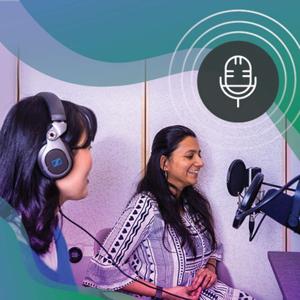
In this episode of The Knowledge Catalyst, Victoria speaks with Malvika Sharan, Senior Researcher at the Alan Turing Institute and co-founder of Open Life Science, about her journey in open science and community building. They discuss the challenges of supporting non-traditional research roles, the importance of mentorship and leadership in open science, and the need for greater inclusivity and equity in global research. Malvika shares insights from her work at EMBL, the Turing Way, and Open Life Science, highlighting how training, collaboration, and recognition of diverse contributions can strengthen the open science movement.
In this episode of the Knowledge Catalyst, Dr. Jean-Karim Heriché (JK), the Computational Support at EMBL's Cell Biology and Biophysics Unit, shares insights from his career on how to make your data FAIR and your research more reproducible. He emphasizes that open science begins with consistent, thorough documentation, essential for managing datasets of any size or complexity. JK also advocates for more dedicated resources and support for scientists, recognizing data stewardship as a core part of their work.
For the accompanying resources and transcript, please visit: https://www.embl.org/about/info/open-science/podcast/open-science-must-be-the-standard-for-modern-research/#vf-tabs__section-ba57b372-a3e7-4698-9bbc-6eb88819e29c
In the very first episode of The Knowledge Catalyst, Dr. Mahnoor Zulfiqar, postdoctoral fellow at EMBL, shares how she builds FAIR computational workflows to tackle challenges in metabolomics. From identifying unknown compounds using marine-derived metabolites to integrating tools across platforms with Docker and CWL, Mahnoor’s work enhances reproducibility and supports drug discovery. We explore how standardized, interoperable workflows can improve confidence in data analysis—and rebuild public trust in science.
For the accompanying resources, please visit: https://www.embl.org/about/info/open-science/mahnoor-zulfiqar-tackling-the-bottleneck-in-metabolomics-with-a-fair-computational-workflow/
From the publisher's feed
The Knowledge Catalyst is an open science podcast and an EMBL Open Science…
We get to know EMBL’s open science champions, in how and why they started their open science journey. Each episode is a starter pack with useful resources and links for applying open science and the FAIR principles in a specific use case.