
Sign up to save your podcasts
Or

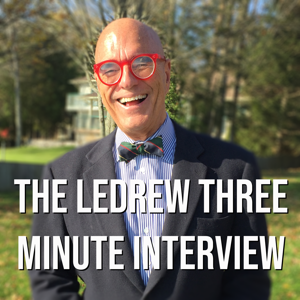


John Capobianco of FleishmanHillard joins Stephen LeDrew to discuss one of Ottawa’s most persistent problems: a federal bureaucracy that can make even major government priorities extraordinarily difficult to deliver.
The conversation begins with the departure of the Prime Minister’s handpicked official tasked with military procurement after roughly a year on the job. LeDrew argues that the episode raises a larger question: what happens when even people given a direct mandate from the Prime Minister struggle to move through the federal system?
Capobianco says Canada needs a strong professional public service, and stresses that many bureaucrats do valuable work. But he argues that government becomes dysfunctional when departments grow too large, political leadership and the bureaucracy become disconnected, or procurement systems become so complicated that businesses simply walk away.
Military procurement is the clearest example. Both argue that repeated attempts at reform have failed to solve a problem that has persisted across governments of different political stripes.
The question is no longer whether Ottawa has a bureaucracy problem — but what government is prepared to do about it.
Topics Covered:
Hosted on Acast. See acast.com/privacy for more information.
Conservative strategist Michael Diamond joins Stephen LeDrew to tackle a frustrating question for the Conservative Party: if Canadians are unhappy with the economy, housing, transportation and the direction of the country, why isn’t the opposition further ahead?
LeDrew argues that Mark Carney may understand strategy but has failed to deliver good government. Diamond pushes back, arguing that Conservatives make a mistake if they underestimate Carney’s political ability.
The two debate Carney’s handling of Donald Trump, his political momentum, Parliament, military procurement and whether standing up to the United States has become the defining issue for Canadian voters.
This is the first Three Minutes. Become a member to watch the full debate between LeDrew and Michael Diamond.
Topics Covered
Hosted on Acast. See acast.com/privacy for more information.
In this LeDrew rant, Stephen LeDrew argues that Canada needs more accountability, more public participation and far more scrutiny of the people elected to govern.
Pointing to Alberta Premier Danielle Smith’s push for faster project approvals and citizen-initiated votes, LeDrew asks whether Canadians should have more direct ways to influence government between elections.
That could include referendums on major issues — or even recall mechanisms when politicians fail to deliver on important promises.
LeDrew also argues that Canadians themselves need to take politics more seriously: looking beyond personality, asking tougher questions about policy and understanding what politicians actually plan to do once elected.
He says Canada has suffered from years of poor federal governance, excessive bureaucracy and too little accountability — and argues that both politicians and the media should face much tougher scrutiny.
The bigger question: should Canadians have more power to hold governments accountable before the next election arrives?
Topics Covered:
Hosted on Acast. See acast.com/privacy for more information.
Alberta Premier Danielle Smith joins Stephen LeDrew to discuss Donald Trump, the Canada-U.S. trade war and why she believes Canada needs to stop thinking only about Washington.
Smith argues that the strongest advocates for Canadian trade are often Americans themselves — governors, legislators, businesses and workers who benefit directly from doing business with Canada.
She points to Bombardier as an example of how U.S. political pressure can change when American jobs and investment are at stake, and says every premier should be building stronger relationships south of the border.
The conversation also turns to energy, critical minerals, defence, interprovincial trade and whether Trump’s pressure has forced Canada to take its own economic potential more seriously.
Smith says Alberta is now moving ahead with dozens of investment projects, faster provincial approvals and a new working relationship with Ottawa — including hopes for a major West Coast oil pipeline.
Topics Covered:
Hosted on Acast. See acast.com/privacy for more information.
Conservative political strategist Michael Diamond joins Stephen LeDrew to debate a basic question about political loyalty: should anyone support a party simply because they always have?
Diamond says no. Political parties still have to earn votes by producing policies that respond to the issues Canadians actually care about.
The conversation turns to the Conservative Party’s challenge under Pierre Poilievre. Mark Carney remains popular for his response to Donald Trump, while affordability, government spending and other domestic issues struggle to break through.
Diamond argues that Conservatives cannot simply recycle the issues of the previous election. They need to address today’s problems while preparing for a future election that may look very different — especially once Trump is no longer the dominant political issue.
LeDrew also presses Diamond on government accountability and whether Parliament should be sitting while major decisions are being made.
Topics Covered
Hosted on Acast. See acast.com/privacy for more information.
John Capobianco of FleishmanHillard joins Stephen LeDrew to look at the latest federal by-elections and ask whether Conservatives should actually be worried about the results.
Capobianco argues that by-elections are usually snapshots rather than predictions of the next general election. Two of the recent contests were in longstanding Liberal territory, while the Conservative loss in Quebec may deserve closer attention after the party fell to third place.
But the bigger question is what happens next.
Mark Carney remains politically strong, particularly because Canadians approve of his response to Donald Trump and the ongoing trade dispute. Capobianco argues that beneath that headline, however, Canadians are still worried about affordability, rent, gas prices and the cost of living.
If Trump stops dominating Canadian politics, does the entire political landscape change?
Topics Covered
Hosted on Acast. See acast.com/privacy for more information.
Former Conservative MP Michelle Ferreri joins Stephen LeDrew to tackle the question being asked after another difficult night of by-election results: does the Conservative Party need a new leader?
Ferreri says replacing Pierre Poilievre would be an easy answer — but probably the wrong one.
Her argument is that Donald Trump currently consumes so much of the Canadian political conversation that almost everything else is being pushed aside. Canadians may be unhappy with affordability, immigration, healthcare and the performance of the federal government, but Ferreri believes Carney continues to benefit from presenting himself as the leader standing between Canada and Trump.
She argues that changing Conservative leaders would do little to alter that dynamic.
The conversation then turns to Mark Carney’s leadership, government transparency and Ferreri’s contention that Canadians should pay much closer attention to Carney’s internationalist political philosophy and the details of Canada’s trade negotiations.
Want more? Become a member to watch Stephen LeDrew’s full 12-minute conversation with Michelle Ferreri.
Topics Covered
Hosted on Acast. See acast.com/privacy for more information.
In this LeDrew rant, Stephen LeDrew argues that Canada is undergoing major changes in its relationships with the United States, China and Europe — but Canadians are getting far too little information about where the country is heading.
His central concern is not simply Mark Carney. It is the absence of parliamentary debate and accountability while major decisions are being made.
LeDrew questions why Parliament has been sidelined, why Canadians know so little about international negotiations and agreements, and whether too much power has become concentrated in the Prime Minister’s Office.
He argues that intelligence and experience in banking do not automatically make someone an effective political leader. Drawing a historical contrast between Neville Chamberlain and Winston Churchill, LeDrew says judgment, character, debate and respect for democratic institutions matter just as much.
He also takes aim at the media, arguing that politicians are too often allowed to make sweeping claims without serious challenge.
His demand is simple: recall Parliament, explain where Canada is going and let Canadians hear the debate.
Topics Covered:
Hosted on Acast. See acast.com/privacy for more information.
Joe Adam George, researcher with the Middle East Forum, joins Stephen LeDrew to discuss the Muslim Brotherhood, its international reach and concerns about its influence in Canada.
George explains that the Muslim Brotherhood is a transnational political Islamist movement founded in Egypt in the 1920s and distinguishes it clearly from Muslims generally or Islam as a faith.
The conversation focuses on allegations that individuals sympathetic to Muslim Brotherhood ideology have gained influence within Canadian institutions, and why Canada has been too reluctant to investigate or confront extremist political movements operating within the country.
LeDrew and George also discuss national security, antisemitism, threats against religious and minority communities, Canada’s relationship with the United States, and why George believes Ottawa should examine the issue more seriously.
Topics covered in this episode:
Hosted on Acast. See acast.com/privacy for more information.
Former Conservative MP Michelle Ferreri joins Stephen LeDrew to discuss why Donald Trump continues to dominate Canadian politics — and what that means for Pierre Poilievre and the Conservative Party.
In this free three-minute preview, Ferreri argues that Trump has become such an overwhelming political distraction that Canadians are struggling to focus on domestic issues like affordability, debt, immigration and the economy.
She says Conservatives may have little choice but to wait for the political environment to change while Canadians eventually turn their attention back to what is happening at home.
LeDrew and Ferreri also discuss political exhaustion, media saturation and why so many Canadians appear more focused on the U.S. president than on their own government.
Become a member to watch the full conversation.
Topics covered in this preview:
Hosted on Acast. See acast.com/privacy for more information.
From the publisher's feed
Hosted on Acast. See acast.com/privacy for more information.
Ranked by our users in the last 21 days
15 Listeners

1 Listeners
124 Listeners
5 Listeners

4 Listeners

7 Listeners

2 Listeners

6 Listeners

15 Listeners
5 Listeners
14 Listeners

33 Listeners

0 Listeners

48 Listeners

7 Listeners