
Sign up to save your podcasts
Or

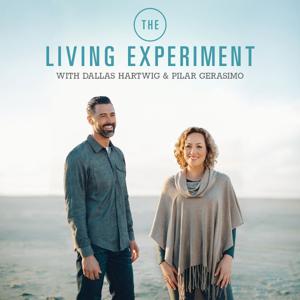


This week on The Living Experiment, we're talking about "mansplaining" — that dynamic where men sometimes explain things to women in condescending, clueless, or less-than-respectful ways.
Perhaps a man persists in explaining something that a woman already knows. Perhaps he talks over her attempts to express her own point of view. Or perhaps he holds forth in some way that generally does not honor his listener as an equal.
Mansplaining has become a popular term and a hot topic over the past few years, and because it's such an common source of stress and strife in our world, we also see it as an important and under-recognized health issue.
So in this episode, we talk about the origins of the word "mansplaining." We share our personal experiences with it and discuss how increasing our awareness of it can help men and women communicate in more constructive, mutually satisfying ways.
Finally, we serve up some experiments to help you notice how mansplaining might be showing up in your life — and what you can do about it.
"Mansplaining" Episode HighlightsDallas suggests:
1) For men: Pay attention to how you speak to women, notice when you're mansplaining, and own up to it in the moment it happens.
2) For women on the receiving end of mansplaining, intervene with the man in a constructive way.
Pilar suggests:
1) Read Rebecca Solnit's thought-provoking essay, "Men Explain Things to Me", to get a sense of why this issue matters so much, and carries so much social, emotional and political charge.
2) Start noticing mansplaining on television, the radio, or wherever you overhear conversations.
Get full show notes and resources at http://livingexperiment.com/mansplaining/
We are big fans of coffee. We dig its flavor, its aroma, its health benefits, its feel-good buzz. We also know it's easy to overdo, particularly when we're rushed, stressed and depleted — which is precisely when all that caffeine is most apt to do us biochemical harm. In this week's episode of The Living Experiment, we look at both the upsides and downsides of coffee, explaining how it affects both your body and brain from the moment you take a sip. We suggest ways to fine tune your coffee selection and habits, and offer our thoughts on the pros and cons of the burgeoning "butter coffee" trend. Finally, we present some experiments to help you make more conscious coffee decisions in your own life.
"Coffee" Episode HighlightsDallas suggests:
Take a three-week break from coffee and all caffeine to assess your relationship with it and its effect on you.
Pilar suggests:
1) The next time you go into a coffee shop, order a "small," not a grandé, venti or super-jumbo-big-gulp.
2) Experiment with different ratios of cream to coffee.
Get full episode notes and links at http://livingexperiment.com/coffee/
Every season has its gifts, but we live in a culture that prefers to celebrate the bright, "go-go" energy of summer. Without the haven of a winter recovery cycle to replenish us, though, we get depleted, overstimulated, and overwhelmed. So in this week's episode of The Living Experiment, we talk about the important and under-appreciated aspects of the winter season. We explain how you can observe its traditions by strategically adjusting your mindset, sleep schedule, food, fitness activity, and more. Drawing on ancient wisdom and modern-day science, we suggest some experiments to help you make the most of winter in your own world.
"Winter" Episode HighlightsDallas suggests:
Progressively adjust your bedtime to get more winter sleep.
Pilar suggests:
1) Add more seasonal vegetables to your shopping list.
2) Swap night-time TV watching for some other low-key, constructive or creative activity, even if it's just for a half hour and one night a week to start.
Get resources and other helpful links at livingexperiment.com/winter.
Shame is universal. It touches every age, gender, and ethnicity — from a child who wets the bed to a presidential candidate who is caught off guard in a debate. Shame operates at your core, often playing out in a debilitating combination of aggression, withdrawal, and perfectionism. But how can you address shame if you have difficulty acknowledging or talking about it? In this week's episode of The Living Experiment, we discuss shame openly, flushing it out of hiding and into the light of day. We talk about where shame comes from, how men and women feel it differently, and how it impacts relationship dynamics. We also suggest steps to shift from shame toward self-acceptance and insight.
"Shame" Episode HighlightsDallas suggests: Identify and compassionately acknowledge your shame.
Pilar suggests: In the moments you feel shame, change the questions you ask.
Get resources and other helpful links at livingexperiment.com/shame.
Sitting on our butts — it's something most of us do for hours on end. We sit at our desks and in meetings. We sit while parked in front of screens at home. We sit while eating, drinking and socializing. We sit while driving cars and riding in planes and trains and — well, pretty much everywhere, most of the time.
Given how much of our lives we spend sitting, it's worth knowing how it affects our bodily systems — not just our musculoskeletal health, but our metabolism, biochemistry, and more.
One expert quoted in The Washington Post asserts that after 30 minutes of sitting, your metabolism can slow by as much 90 percent, and that after two hours, the good cholesterol in your blood stream can drop 20 percent. Yikes!
So in this week's episode of The Living Experiment, we offer insights into the damage done by prolonged sitting, plus an explanation for why simply swapping sitting for standing isn't an ideal solution, and some simple, doable ways to keep your body in motion at healthy intervals throughout the day.
"Sitting" Episode HighlightsDallas suggests:
Establish a rule: If you're going to watch TV or play video games, stand up while doing so.
Pilar suggests:
Take a look at the environments where you spend most of your time seated – both at work and at home – and evaluate how you might be able to adjust or redesign those spaces to encourage more frequent and regular movement.
If you're enjoying The Living Experiment, please tell your friends about it (check out the "Share This" widget and other social-media tools on this page). People are always looking for great new podcasts, and your personal recommendations mean a lot.
We'd also love to have you connect with us on Facebook, Instagram, and Twitter — share your thoughts, stories and reflections there.
ResourcesWe live in a culture that encourages us to consume far more than we create. That's a dynamic that directly undermines both our health and happiness. Learn why, and how you can achieve a more empowering balance.
Creativity — whether preparing a delicious meal or exchanging witty banter with an old friend — can bring deep satisfaction. Consumption — whether enjoying a fine wine or a riveting Game of Thrones episode — can also be a delightful experience.
But when creativity- and consumption-based pleasures get out of balance in our lives, our health and happiness start to suffer. Giving without receiving can be exhausting, while consuming without producing can feel aimless.
In this week's episode of The Living Experiment, we explore the dynamic relationship between creativity and consumption, the historic events that have led to our modern-day imbalance, and some strategies for establishing a healthier equilibrium.
"Creativity vs. Consumption" Episode HighlightsDallas suggests:
Identify one or two places where you mindlessly over-consume, and pick a creative replacement activity instead.
Pilar suggests:
1) Reduce your in-car media consumption, and instead make a creative effort to drive with exceptional kindness and generosity.
2) Swap some TV time in favor of an activity that improves your personal environment or quality of life.
If you're enjoying The Living Experiment, please tell your friends about it (check out the "Share This" widget and other social-media tools on this page). People are always looking for great new podcasts, and your personal recommendations mean a lot.
We'd also love to have you connect with us on Facebook, Instagram, and Twitter, share your thoughts, stories and reflections there.
Resources
From a health perspective, what comes out of your body is every bit as important as what goes in. So we think it's high time we gave poo the respect it deserves.
Look, we know, it's an awkward topic. And that's why it's so rarely discussed among friends, lovers and family members, or even with health care professionals.
The problem is, when we don't talk about it, we don't learn about it. And when we don't learn about something as important as healthy digestion and elimination, we get into serious trouble.
That's why more than 60 million Americans suffer from constipation, and far many too many endure oppressive bowel related discomfort, toxicity and related inflammatory diseases.
So in this week's episode of The Living Experiment, we have a frank conversation about feces, defining what's "normal" — in frequency, form, and yes, even aroma. We also offer some helpful counsel on identifying and resolving common poo problems, and more.
Even if you're a little grossed out, you're not going to want to miss this essential wisdom for improving your digestive process, your elimination experience, and your overall health.
"Poo" Episode HighlightsPilar suggests:
1) Incorporate a good-sized serving of fresh, non-starchy, leafy-green, or other fibrous vegetables with each meal of the day.
2) Notice and immediately respect your body's first-inkling signal that you need to poop.
Dallas suggests:
1) Drink at least one to two glasses of lukewarm water within 15 minutes of waking up in the morning;
2) Consider using a Squatty Potty.
If you're enjoying The Living Experiment, please tell your friends about it (check out the "Share This" widget and other social-media tools on this page). People are always looking for great new podcasts, and your personal recommendations mean a lot.
We'd also love to have you connect with us on Facebook, Instagram, and Twitter, share your thoughts, stories and reflections there.
ResourcesCan you ever have "enough" — money, time, energy, love? Do you trust that you will have enough in the future? Do you believe you are enough, right now, just as you are?
Your answers to those questions can have a profound influence on your health and happiness.
In this week's episode of The Living Experiment, we examine the opposing mentalities of scarcity and abundance. We explore how they affect our experiences in the present moment, and how they can impact our future.
Research suggests that worrying about "not enough" — or even focusing on on imaginary "not enough" scenarios — can reduce both our available IQ and our ability to respond to real-life challenges.
As Pilar says, "scarcity mentality tends to produce scarcity results." That's why we're excited to offer up insights and experiments to help you evolve your mindset in more rewarding directions.
"Enough" Episode HighlightsDallas suggests: Explore and reframe your scarcity-driven feelings.
Pilar suggests: 1) Adopt a posture of plenty; and 2) ask, "What am I missing?"
Visit livingexperiment.com for links to Resources!
In this week's episode of The Living Experiment, we dig into the fundamentals of Paleo and Primal eating approaches — their origins, similarities, and differences, plus practical steps for integrating them into the way you eat today.
We also examine the modern nutritional reductionism that led us to think about food as merely a sum of its parts (macronutrients, calories, and so on) rather than considering the value and integrity of whole foods in their natural state.
In addition to evaluating the differences between Paleo and Primal dietary strategies, we explore their key principles in the context of the larger ancestral nutrition movement — arguably the most significant dietary trend of the past two decades.
Contrasting the hunter-gatherer diets our ancestors consumed for most of human history (2.6 million years) with the more processed and grain-heavy diets we've embraced over the past 10,000 years, we offer up insights about why some foods seem to reliably produce health and vitality, while others consistently produce distress and disease.
"Paleo vs. Primal" Episode HighlightsDallas encourages listeners to take on the Whole30 nutritional program:
Pilar suggests going a week without grains or sugars:
If you're enjoying The Living Experiment, please tell your friends about it (just click the "share this" tool on this page). People are always looking for great new podcasts, and your personal recommendations mean a lot. We'd also love to have you connect with us on Facebook, Instagram, and Twitter, share your thoughts, stories and reflections there.
ResourcesWrapping up our successful first season, we offer a big picture view of what we see as the top 10 fundamentals of healthy, happy living, and how they fit into five key domains of wellbeing. We point out some of the essential connections between all these considerations, and we explain why each of them matters — especially those elements commonly overlooked or underemphasized by the conventional media. If you're looking for a quick tour of what healthy living looks and feels like, you've come to the right place.
Episode Highlights:
Share the love!
If you're enjoying The Living Experiment, please tell your friends about it (just click the "share this" tool on this page). People are always looking for great new podcasts, and your personal recommendations mean a lot. We'd also love to have you connect with us on Facebook, Instagram, and Twitter, share your thoughts, stories and reflections there.
Resources:
PLUS ...
From the publisher's feed