
Sign up to save your podcasts
Or



Not every solution lives in your inbox.
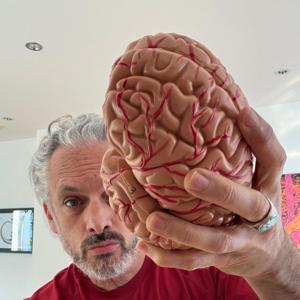
In this personal episode, Brandon Keenen steps away from marketing tactics to share how a recent sound bath rewired his thinking and why slowing down might be the most powerful business tool you’re not using.
You’ll hear:
What a sound bath actually does to your brain
The neuroscience of nervous system reset
Why marketers are burning out in the era of AI
How clarity and creativity return when we turn off the noise
If you’re tired of the scroll, the prompts, and the pressure...this one’s for you.
If your audience is bouncing, it might not be your product; it might be their brain.
In this episode, Brandon Keenen breaks down the psychology of cognitive load and how complexity kills conversion. From cluttered messaging to overloaded UX, you’ll learn how simplifying your communication can instantly improve how your brand is received.
You’ll learn:
What cognitive load is (and why it matters for marketers)
Real examples from Stripe, Headspace, and Spotify
How to reduce mental strain across your funnel
Why clarity creates trust, and trust drives action
Because the brain rewards what’s easy to understand and punishes everything else.
More tests ≠ more insight.
In this episode, Brandon Keenen explores why mid-market brands often mistake data for strategy and why constant A/B testing can lead to confusion instead of clarity. If you’re optimizing endlessly but still not connecting, you might be testing the wrong thing.
You’ll learn:
Why testing without intention leads to “brand mush”
How to test for emotion, belief, and clarity , not just conversion
The difference between tactics, data, and real strategic insight
Because testing isn’t strategy , it’s only as good as the thinking behind it.
What elements contribute to a brand naturally feeling trustworthy?
In this episode, Brandon Keenen explores the psychology of familiarity, consistency, and emotional safety, revealing why we gravitate toward brands that feel like home. From Glossier’s soft, recognizable identity to Patagonia’s unshakable purpose, Brandon breaks down the subtle signals that build real trust — especially in a world full of automation and noise.
You’ll learn:
Why the brain trusts what it’s seen before (Mere Exposure Effect)
How emotional consistency builds brand loyalty
Why creativity alone doesn’t cut it anymore
How AI risks breaking the “trust signal” if misused
In the era of limitless AI content, people rent attention, but they earn trust.
Why do we keep scrolling? Clicking? Buying?
In this episode, Brandon Keenen unpacks the dopamine-driven design behind modern marketing, from social media’s slot machine logic to drop culture, flash sales, and behavioral triggers.
You’ll learn:
How dopamine loops shape consumer habits
Why variable rewards are so addictive (and risky)
How AI supercharges attention-grabbing tactics
What ethical, trust-based marketing looks like in a noisy, optimized world
This isn’t about manipulation — it’s about intention.
Because in today’s market, attention is power — and how you earn it matters.
Episode 1 – Identity, Archetypes & the Marketing Gap Brands Miss
Most marketers talk to demographics. But real connection happens when you understand identity — not just who someone is, but who they’re becoming.
In this debut episode, Brandon Keenen explores how psychological development, life stages, and Jungian archetypes shape consumer behavior in ways traditional marketing misses. With insights from Erikson, examples from Nike and BuzzFeed, and his personal experience inside the world of media, Brandon reveals why understanding the emotional journey of your audience is the key to lasting brand relevance.
You’ll learn:
Why demographics fall short and identity evolution matters more
What Jung’s archetypes can teach us about branding
How brands like Nike connect through story, while others lose relevance
A simple framework for mapping your audience’s psychological stage
Whether you’re a founder, marketer, strategist, or just a curious observer of human behavior — this episode will reframe how you think about influence in a noisy, AI-saturated world.
From the publisher's feed