
Sign up to save your podcasts
Or

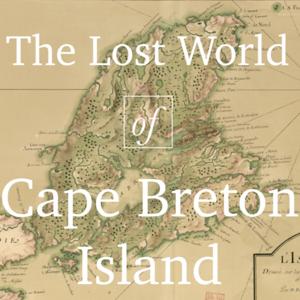


John M. Gow's Cape Breton Illustrated (Attractions of Cape Breton for Tourists) is a vivid tour of the island through Victorian eyes, a snapshot of the island as it was in 1893. As Gow guides us through Cape Breton's landscapes and communities, he shares his personal views on the island's economic potential and occasionally offers his thoughts on faith and religion. This is Victorian writing in its fullest sense - unhurried, elegant and unapologetically thorough. As we continue our work exploring the lost world of Cape Breton Island, we are delighted to share this audio version of a chapter from John M. Gow's 1893 classic, another piece of the island's rich and often overlooked history.
Written at Louisbourg on September 1, 1755, this remarkable letter from Antoine de La Boularderie offers a rare first-hand account of life, war, and loss in 18th-century Île Royale (Cape Breton Island). Addressed to the French Minister during a period of escalating conflict between France and Great Britain, the correspondence details Boularderie’s military service, the destruction of his estate, and his heartfelt appeal for royal recognition, including the Cross of Saint Louis. Preserved in Les Derniers Jours de l’Acadie by Gaston du Boscq de Beaumont, this primary source document remains an invaluable window into the fall of Louisbourg and colonial Acadia, offering rich insight for anyone interested in the history of 18th-century Cape Breton.
MUSICAL CREDITS:-- 11ElevenLabs "A_Solemn_Farewell"-- George Frideric Handel "Harpsichord"SOURCE:1. Les Derniers Jours de l'Acadie 1748-1758, Gaston du Boscq de Beaumont
Follow Antoine de La Boularderie and his family as they navigate the most violent and uncertain years in Cape Breton’s history. As the shadow of the 1758 siege looms over the Fortress of Louisbourg, the Boularderies find themselves caught between a crumbling empire and an inevitable invasion. Experience a story of upheaval, survival, and the displacement that redefined Cape Breton forever.
CHAPTERS:
00:00 - Antoine in Boston
04:30 - Atlantic Canada During the War of Austrian Succession
06:05 - The Boularderies Return to Cape Breton
13:30 - Antoine’s Attempted Assassination
16:50 - Mounting Tensions in Atlantic Canada
20:47 - The Second Siege of Louisbourg Begins
29:10 - Aftermath
31:57 - John Laboularderie de Treville
33:41 - Conclusion and Little Bras d’Or Today
MUSICAL CREDITS:
-- Robert Deveaux & Les Zorvenants - "Cela me réjouit" (Lost World theme)
-- Violin by Dayna Bee - "The Ballad of Chevy Chase"
-- Franz Joseph Haydn (1732 - 1809) - "Symphony No.49 in F minor - III. Menuetto e trio"
-- Les Habitants - "Tourdion"
-- Johann Sebastian Bach (1685 - 1750) - "BWV 0023 Du wahrer Gott und Davids Sohn - 04 - Christi, du Lamm Gottes"
-- Jorge Méndez - "Song: Cold; Album: Silhouettes"
-- Louis Couperin - "Pièces de clavecin du manuscrit Bauyn - Prélude non mesuré (For Violoncello piccolo solo)"
-- Johann Sebastian Bach (1685 - 1750) - "BWV 0018 Gleichwie der Regen und Schnee vom Himmel fällt - 01 - Sinfonia"
-- Cédric Dind-Lavoie - "Le prince Eugène" Full song available here https://youtu.be/rUW0w7E3aXQ?si=NwUtyqCJsYjH21XQ
-- Giuseppe Domenico Scarlatti - "Sonata in D minor, K9"
SOURCES:
1. Les Derniers Jours de l'Acadie 1748-1758, Gaston du Boscq de Beaumont
2. Louisbourg From its Foundation to its Fall, J.S. MacLennan
3. Antoine Le Poupet de La Boularderie, Dale Miquelon (Canadian Biographical Dictionary) - https://www.biographi.ca/en/bio/le_poupet_de_la_boularderie_antoine_4E.html
4. The Fall of Louisbourg 1758, by Hugh Boscawen
DISCLAIMER: The pictures, paintings and music used on the project "The Boularderies of Little Bras d'Or" are a mix of paid stock, by attribution, royalty-free, public domain, and other copyright-free sources. No copyright infringement is intended. All rights belong to their respective owners. If you are or represent the copyright owner of materials used in this video and have an issue with the use of said material, please send an email to [email protected] and we will respond immediately.
In 1744 the French and English beat the drums of war, and Antoine de La Boularderie finds himself in the middle of a conflict that rages across Cape Breton Island and Acadia. In the second part of this episode, we will listen to Antoine’s eyewitness account of the days leading up to the first siege of Louisbourg. We will also visit Little Bras d’Or, a once thriving French settlement in the heart of Cape Breton and the home of the Boularderie Family.
CHAPTERS:
00:00 - Intro/The Raid on Canso
02:40 - Little Bras d'Or
08:35 - The 1745 Siege of Louisbourg
11:40 - The Attack at Gabarus Bay
MUSICAL CREDITS:
-- Robert Deveaux & Les Zorvenants - "Cela me réjouit" (Lost World theme)
-- Les Habitants - "Branles: Pinagay et Sabots"
-- Franz Joseph Haydn (1732 - 1809) - "String Quartet In D, Op. 645, H 363, Lark - I. Allegro Moderato"
-- Johann Sebastian Bach (1685 - 1750) - "Fugue in G minor, The Little Fugue, for string orchestra by Daniel Leavitt"
-- Sparks of Light Music - "Reminiscence"
Although Antoine Le Poupet de La Boularderie and his father Louis-Simon have been designated Canadian Historic Persons – individuals who made significant contributions to the history of Canada – their story has only ever been partially told. Part of their story can be found on Cape Breton Island, another part in France, and still another part in the American State of South Carolina. We will reassemble the family’s entire story for the first time.
MUSICAL CREDITS:
— Robert Deveaux & Les Zorvenants – “Cela me réjouit” (Lost World theme)
— Pietro Alessandro Gaspare Scarlatti (1660 – 1725) – “Concerto Grosso no. 2 in C minor”
— Lazzarini Salami (1590 – 1653) – “Pavane pour le mariage du roy Louis XIII”
— Johann Sebastian Bach (1685 – 1750) – “Orchestral Suite No. 2 in B Minor, BWV 1067: II. Rondeau”
— Middlesex County Volunteers Fifes & Drums – “Village Dance”, from the album Military Music from the Age of Reason
— Jean-Baptiste Lully (1632 – 1687) – “Le Bourgeois gentilhomme – 6. Gavotte”
The audio book The Acadians was produced in collaboration with the Canadian Historical Association.
CHAPTERS
00:00 - Introduction
01:18 - Who Are the Acadians?
03:56 - The Acadians Until the Deportation (1604 - 1755-63)
30:55 - The Slow Reconstruction of Acadian Communities (1763 - 1900)
54:33 - The Long Twentieth Century
1:38:10 - The Acadians Facing the Future
This book is booklet #33 of the CHA’s Immigration and Ethnicity in Canada booklet series.
Founded in 1922, the Canadian Historical Association / La Société historique du Canada is a bilingual not-for-profit and charitable association devoted to fostering the scholarly study and communication of history in Canada. The Association seeks to encourage the integration of historical knowledge and perspectives in both the scholarly and public spheres, to ensure the accessibility of historical resources, and to defend the rights and freedoms of professional and emerging historians in the pursuit of historical inquiry.
Canadian Historical Association website: https://cha-shc.ca/
Text version of The Acadians available at the link below:https://cha-shc.ca/wp-content/uploads...
Copyright by the Canadian Historical Association
Ottawa, 2015
Published by the Canadian Historical Association with the support of the Department of Canadian Heritage, Government of Canada
All rights reserved. No part of this publication may be reproduced, (text or audio version), in any form or by any electronic or mechanical means including information storage and retrieval systems, without permission in writing from the Canadian Historical Association.
Ottawa, 2015
The Acadians, Caroline Isabelle-Caron
Caroline Isabelle-Caron is an associate professor in the Department of History at Queen's University with a specialty in 19th and 20th century Acadian and Québec cultural history.
MUSICAL CREDITS:
-- Initial opening sequence - School children from the Chéticamp region in Nova Scotia. Circa 1950s. Possibly recorded by Helen Creighton.
-- Opening sequence for "The Acadians until the Deportation (1604 to 1755‐63)" Un beau vendredi sung by Joseph Athanase Larade, recorded by Ansleme Chiasson.
-- Opening sequence for "The Slow Reconstruction of Acadian Communities (1763‐1900)" Au chant de l'alouette performed by Les Habitants.
-- Opening sequence for "The Long Twentieth Century" Branle: Pinaguay performed by Les Habitants.
-- Opening sequence for "The Acadians Facing the Future" Tourdion performed by Les Habitants.
-- Last sequence for "Census Acadie 1671" Voilà la Récompense performed by Les Habitants.
MAPS:
-- Carte de l'Acadie et pays voisins Artist: Bellin, Jacques Nicolas (1703 - 1772)Public DomainSource: Library of Congress, Geography and Map Division
-- Port Royal Artist: attributed to Jean de Labat (1638 - 1714)Public Domain Source: Archives Canada-France (number FR CAOM 3DFC60B)
-- Map of the northeastern part of Canada Artist: Herman Moll (1654 - 1732) Public Domain Source: https://www.raremaps.com
SUGGESTED READINGS:https://drive.google.com/file/d/1vzek...
DISCLAIMER: The pictures, paintings and videos used on the project "The Acadians" were chosen by the creators of The Lost World of Cape Breton Island and are a mix of royalty-free, public domain, by attribution and other copyright-free sources. No copyright infringement is intended. All rights belong to their respective owners. If you are or represent the copyright owner of materials used in this video and have an issue with the use of said material, please send an email to [email protected] and we will respond immediately.
You can read the Montresor Journals in their entirety here - https://archive.org/details/montresorjourna00montgoog/page/n16/mode/2up
As “Keeper of the King’s Instruments” for Louis XV, Christophe Chiquelier Jr’s work was endless but no doubt fulfilling. He was a master musical instrument maker, supplier of harpsichords to the Royal Family, and an instrument collector. But for a brief time during his youth, he was a soldier in Louisbourg, the capital of the French colony of Île Royale, known today as Cape Breton Island.
SHOWNOTES
MUSICAL CREDITS:
-- Concerts royaux, Quatrième concert – Sarabanda – Armonie Symphony Orchestra, Stefano Seghedoni
-- Pièces de clavecin VI. L’Aimable. Rondeau
-- JS Bach Italian Concerto, BWV. 971 – 2. Andante [harp]
-- Carolan’s Welcome from The Celtic Lute by Ronn McFarlane
-- Reel la Rocque – Les Habitants
-- Andreas Böhlen – baroque recorders, Aline Zylberajch, harpsichord French Baroque Music
-- Jean-Baptiste Lully (1632-1687) – Orchestral Suite from ‘Alceste’
SOURCES:
1. “Les derniers musiciens du roi de l’Ancien Régime. Versailles-Paris 1761-1792” – Youri Carbonnier
2. “After Midnight We Danced Until Daylight”: Music, Song and Dance in Cape Breton, 1713-1758 – Kenneth Donovan
3. “La Complainte de Louisbourg : chansons de sieges et circulation des cultures militaires entre Europe et Acadie à l’époque coloniale” – Éva Guillore
The finale of our three part series on the life and times of James Johnstone. Follow the Chevalier de Johnstone’s escapades in Cape Breton from 1756 through to 1758 and see how this Scotsman’s memoirs tell the long forgotten stories of Cape Breton’s past.
SHOWNOTES –
MUSICAL CREDITS:
-- Concerto Grosso for Strings “Palladio”: Allegro
-- Pièces de clavecin VI. L’Aimable. Rondeau
-- Les Habitants – Quand J’étais Sur Mon Père
-- Sinfonia in G Minor, T. Si 7
-- Symphony No.8 in D Minor, Op. 2
-- Enigma Variations, Op. 36
SOURCES:
1. Memoirs of the Rebellion of 1745 and 1746 – https://archive.org/details/memoirsof...
2. The Campaign of Louisbourg 1750 – ’58 – https://www.canadiana.ca/view/oocihm....
3. Du Boscq de Beaumont, G. (1899). Les derniers jours de l’Acadie, 1748-1758, p. 65. Paris : E. Lechevalier
4. T. A. Crowley, “JOHNSTONE, JAMES, Chevalier de Johnstone,” in Dictionary of Canadian Biography, vol. 4, University of Toronto/Université Laval, 2003
5. Johnston, A. J. B. (Andrew John Bayly) Endgame 1758 : the promise, the glory, and the despair of Louisbourg’s last decade, 2007
CORRECTION - At 8:42, the names should read (left to right) Alex Storm, David MacEachern and Harvey MacLeod. Thanks to Eilieen Burke for pointing this out to us!
Travel back in time to the year 1753 and see Cape Breton Island through the eyes of Scottish exile the Chevalier de Johnstone. We will also bridge two very different eras in Cape Breton's past - the French colonial period of the early 18th century, and the era of Scottish migration that took place in the 19th century.
SHOW NOTES -
MUSICAL CREDITS:
-- chtidrummer - "La diane et le rigodon (le reveil au bivouac napoleon)" • La diane et le rigodon(le reveil au b...
-- Antonio Vivaldi - The Four Seasons-Summer
-- Michael Schaeffer - French Baroque Lute Music
-- Barde - Whelan’s Jig, the Swallow’s Tail, Coleman’s Cross
-- Hopkinson Smith - J.H. Kapsberger Libro Primo d’Intavolatura di Lauto (First Book of Lute Tablature) Roma, 1611
SOURCES:
1. Memoirs of the Rebellion of 1745 and 1746 - https://archive.org/details/memoirsof...
2. The Campaign of Louisbourg 1750 - ’58 - https://www.canadiana.ca/view/oocihm....
3. Du Boscq de Beaumont, G. (1899). Les derniers jours de l’Acadie, 1748-1758, p. 65. Paris : E. Lechevalier
4. T. A. Crowley, “JOHNSTONE, JAMES, Chevalier de Johnstone,” in Dictionary of Canadian Biography, vol. 4, University of Toronto/Université Laval, 2003–, accessed March 3, 2024, http://www.biographi.ca/en/bio/johnst....
From the publisher's feed

227,484 Listeners
23,749 Listeners

9,370 Listeners

205 Listeners

5,867 Listeners

105 Listeners

10,315 Listeners

243 Listeners
29,144 Listeners