
Sign up to save your podcasts
Or

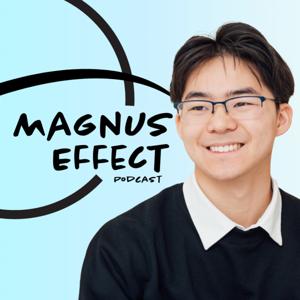


Ethan Jagoda wears a lot of labels, like a software engineer, musician, traveler, but underneath all of them is a single commitment: live life to the fullest by going all-in on whatever creates genuine enjoyment.The episode opens with Ethan's story of climbing Mount Kilimanjaro without training, and his account of just how brutally difficult the experience was. He then connects it to a broader philosophy of deliberately doing something truly hard, a concept called "Misogi" and makes a compelling case for rethinking risk by focusing on real downsides rather than the fears that only live in our heads.We also get into his guiding principle of "impact × experience," his approach to travel through talking to strangers, and his belief that difficulty is often exaggerated from the outside. Ethan shares how he built community at Berkeley through his music club Tiny Dorm, and makes a strong argument for optimizing social connection, while reflecting honestly on identity, insecurity, and why college was ultimately worth it for the formative experiences it offers.0:00 Intro01:29 Climbing Kilimanjaro with no experience04:04 Summit day08:49 What it's like to experience hypoxia15:52 Misogi: The art of doing something impossible every year20:17 The start to an addiction of chasing fear23:38 Why solo traveling changes you31:36 Impact × Experience: Ethans life principle33:45 Difficulty is exaggerated from the outside43:49 Building Berkeley's Underground music scene49:57 Living for connection over comfort 51:49 Rethinking risk: What's actually a downside?57:07 The Night That Made Tiny Dorm Worth It01:07:27 The pain of becoming yourself01:13:41 Is College Still Worth It?01:22:53 Rejecting self-help books and going back to first principles01:34:50 Traveling to Japan and experiencing something new every night 01:40:35 The Skull Bottle01:46:47 What it's like to free dive 01:52:41 Rethinking risk part two01:59:25 A debate on western belief to not stay together as one community. 02:08:13 Final Message
Dylan has grown his business staging properties for real estate brokers to over $50,000 a month while still a student at UC Berkeley, but this conversation is less about flexing revenue and more about the weird, in‑between space of being young, ambitious, and deeply unsure what “enough” even means. I wanted to document this snapshot in his life to capture how he’s thinking about his experiences so far, the risks he’s taken, and the way he sees the world before whatever comes next.The result is a conversation about chasing bread versus doing things “for the culture,” the false glamour of college partying, and why so many people say they’re “locked in” instead of taking real risks in dating, work, and creativity. We dig into FOMO, college social pressure, fear of rejection, and a looming future shaped by AI and robotics, asking what it means to build a life that feels alive, not just successful on paper.Despite all the directions this conversation takes, Dylan comes back to one core idea: that we are all mortal, and obsessing over success misses the point. He believes almost anyone can learn to make thousands of dollars a month if they commit just two focused years to something and that what you do with that freedom matters far more than the flex itself.00:00 Intro1:14 Creating impact on students by leading classes04:34 A better way of thinking of the traditional "college experience"06:39 Berkeley nightlife isn't actually all that13:01 The fear of rejection and the excuse "I'm too locked in" is ruining this generation19:44 Everything you do traces back to procreation31:21 The 3-Year window to escape poverty36:51 How Dylan made money with labor arbitrage38:59 Human data, the demand, and why its so profitable45:04 Tesla's secret heart surgery robot and Elon's 3-Year medical degree prediction01:13:18 Dylan's fear for the matrix serving as his greatest motivation01:17:16 Traveling to Europe with no phone and why everyone should too01:21:06 You do things to look cool instead of figuring out what you want01:28:17 You desperately need to find your unfair advantage01:33:15 Dylan's future life after making his money01:43:07 The pursuit towards being the unincorporated man (an idea from Palmer Luckey)01:51:25 Dylan's realization from a professor who works at the Federal Reserve02:03:16 Is making money its own rat race?02:07:36 A debate on chasing money vs doing what you love02:22:06 The Swimming Apes Theory: Omega-3, Japan's IQ, and Raw Salmon02:31:33 Abuse your body in your 20s because you can? Or maintain your health for the entirety of your life?02:38:16 Dylans final message to the worldGet in touch in the comments below or head to...Instagram: https://www.instagram.com/magnus.akaTwitter: https://www.x.com/magnuskuEmail: [email protected]
Welcome back to the Magnus Effect! In this episode, we talk to Ryusei Hayashi, an international student at UC Berkeley and founder of @reachbest-ai , a platform using AI to help with college admissions. Ryusei shares his story of starting a business at 17, his mixed cultural background, and how his family inspired him. We dive into his challenges as a young entrepreneur and the lessons he's learned. Whether you're in college or thinking about launching a startup, this episode is full of wisdom and inspiration. Tune in to hear Ryusei's insights on innovation, family, and finding your own path. Don't miss out!00:00 Introduction to the Magnus Effect Podcast01:15 Meet Ryusei Best Hayashi: Young Entrepreneur01:32 The Best Dynasty: Family Legacy and Values06:15 Cultural Identity and Multicultural Background10:29 Striving for Excellence: Academics and Extracurriculars18:34 Navigating College Admissions During COVID-1923:29 The Birth of ReachBest: From Personal Tool to Startup26:45 Turning ReachBest into a Business32:27 Discovering Berkeley's Unique Culture33:13 The Evolution of ReachBest35:07 Entering Berkeley Skydeck36:13 Challenges and Growth in Year Three37:48 Focusing on the U.S. Market38:51 The Importance of Autonomous Platforms42:11 Innovative Hiring Practices54:42 Rapid Fire Questions01:05:51 Final Thoughts and Advice for Future Generations
Ever feel like dating apps just waste your time? Allen Wang felt the same, so he built something different. He dropped out of Berkeley to launch Ditto AI, an app that skips the small talk, skips the swiping, and just… sends you on the date. In this episode, we talk about how it all started: digital pets, guerrilla marketing with a Cybertruck, and co-hosting the biggest party at UCSD. But more than that, we unpack Allen’s mindset — why he builds fast, how he filters feedback.Try Ditto: https://ditt.ai/Allen: https://www.linkedin.com/in/allen-wang-1b82761b8///TIMESTAMPS//0:00 Introduction01:50 Allen's Background04:06 Early Projects and First Steps06:31 Building the Team and Initial Challenges08:11 Pivoting to a Dating App12:35 Marketing Strategies and Unique Campaigns16:24 User Experience and Feedback18:02 Event Planning and Community Building21:29 Overcoming Challenges and Future Vision38:53 Future of Social Media Platforms39:17 Building Confidence as a Founder39:57 Roles and Responsibilities in a Startup40:23 Targeting College Campuses41:42 Competition and Focus43:50 User Experience and Product Confidence45:22 Inspiration from Black Mirror46:18 Handling Skepticism and Belief in AI48:38 Impact of Funding and Media Attention52:24 Importance of Taste in Hiring55:29 Drawing Inspiration from Consumer Products01:03:52 Networking and Seeking Expertise01:07:43 Final Thoughts and Future Goals
What does it take to build the next generation of social connection, and who gets to lead that revolution? In this episode, we sit down with Sean and Nathaneo, Yale students and founders of Series, the AI-powered platform reimagining what a network can be. We explore how faith, grit, and intention helped them raise $3.6 million while staying grounded, and why building real community means bridging the gaps that traditional social media ignored. From late-night risk-taking to rewriting what "being a builder" means, this conversation is about creating access where there once was none.Try Series: https://series.so/Nathaneo: https://www.linkedin.com/in/nathaneo-johnson-86aa4a253/Sean: https://www.linkedin.com/in/seanhargrow/Yavuz: https://www.linkedin.com/in/yavuz-ozgun-4b9b6220a///TIMESTAMPS//00:00 Intro00:21 Calling Out Competitors: A Strategy for Success01:05 The Importance of Diverse Experiences01:40 Navigating the Startup Journey03:30 Building a Community with Series04:45 The Role of AI in Social Networks06:07 Democratizing Networks and Accessibility06:43 The Value of In-Person Connections08:15 Challenges in Community Building13:41 Entering the Entrepreneurship Space19:23 Understanding Acceptance Rates and Individuality20:11 The Importance of Mentorship and Shared Vision21:06 Forming a Strong Partnership21:58 Early Entrepreneurial Adventures23:06 Securing the First Major Investment25:32 Mutual Admiration and Personal Qualities28:15 The Role of Faith in Entrepreneurship33:54 Building and Continuous Improvement36:50 Reflecting on Personal Growth and Future Aspirations
Astha is a talented filmmaker who started her journey at a young age, driven by her love for storytelling. Over the years, she has worked with major companies like Netflix and Marvel, holding roles such as production assistant, art designer, script supervisor, and assistant director. Her accomplishments include working on popular shows like Bridgerton and various Marvel projects. Astha's work has been recognized in prestigious film festivals, including Sundance, where her films have been showcased. She has also won awards at the New York Film Festival and continues to push creative boundaries in the industry.0:00 Introduction01:38 Asta's Early Passion for Filmmaking 07:36 The Role of Family Support 11:26 Navigating Career Doubts and Decisions 17:03 Climbing the Film Industry Ladder 31:01 The Creative Process and Idea Generation 47:52 Lessons from Early Filmmaking Experiences 53:41 The Journey to Quality Filmmaking 54:35 Exploring Different Film Genres 58:31 Film Festival Experiences and Success 01:04:27 The Importance of Film Festivals 01:11:53 Balancing College and Filmmaking Ambitions 01:21:34 Challenges in the Film Industry 01:25:17 Systemic Issues and Gender Dynamics 01:35:20 Technological Advances in Filmmaking 01:36:00 Rapid Fire Questions and Reflections 01:38:48 Closing Thoughts and Future Aspirations
In this episode, we talk to Dawson Kelly, a young and creative college student at Berkeley, about his journey in starting a card game called 'Fuck the Small Talk.' He shares how he defines his ever-changing identity, his passion for entrepreneurship, and his struggle to balance school life with his projects. Dawson discusses his inspirations, the importance of mentorship, and how he believes creativity can solve many of today's problems. He also gives practical advice on how to manage social media addiction and create more meaningful relationships. Tune in to learn about Dawson's approach to doing what you love, making things happen, and the power of persistence.00:00 Introduction to Identity and Creativity02:24 Balancing Creativity and Monetization04:08 The Importance of Effort and Discipline05:01 Entrepreneurial Inspirations and Mentorship08:25 The Journey into Entrepreneurship13:08 Creating 'Fuck the Small Talk' Card Game29:12 Marketing and Launch Strategies36:51 Overcoming Stuckness and Self-Doubt37:57 The Power of Momentum and Creation39:04 Branding and Audience Engagement40:49 Kickstarter Strategy and Content Creation44:03 Balancing School and Entrepreneurship45:29 Dealing with Doubt and Failure01:06:47 The Importance of Mentorship and Climate Action01:08:22 Closing Thoughts and Future PlansSupport Dawson's project at:http://kck.st/4hjUsvU
In this episode, we talk with a pre-med student at UC Berkeley about their journey and challenges. Learn about choosing the right school, managing tough courses, and competing for club spots. Discover how they started the Glass Slipper Initiative, a nonprofit helping kids with disabilities, and how they balance school with running this impactful project. Get inspired by their dedication to making a real difference while pursuing their dreams in medicine.
From the publisher's feed