
Sign up to save your podcasts
Or

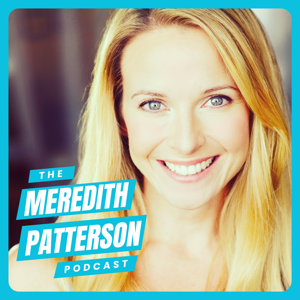


Hello, beautiful friends! 🌸 Welcome back to The Meredith Patterson Podcast. I'm Meredith—mom, performer, storyteller, and your resident "Bliss Is Your Birthright" hype woman.
In today's solo episode, I'm inviting you into a practice that looks ordinary but, when held close, has the power to shift your life: one small word.
✨ The word is already.
When spoken with intention—and protected in stillness—it becomes a key. A key that unlocks peace, alignment, love, opportunity, and abundance. Not "someday." Not "if I'm lucky." But now.
Together, we'll explore how to use this word to:
Protect your dreams when they're still tender 🌱
Shift from "I hope" to "I already"
Re-train your nervous system toward calm certainty
Create a morning, midday, and evening ritual you can actually keep
Set boundaries around what to share and what to protect
Replace old doubt-driven language with new affirmations of worth and possibility
Act I: Why we protect what's sacred and how sharing too soon can shake your flame.
Act II: The power of the word already and why it softens your nervous system.
Act IV: A simple daily practice (Morning • Midday • Night) to anchor the word into your life.
Act VII: Real-life "language swaps" that move you from lack to alignment.
Act VIII: Gentle affirmations that remind you—you are already enough.
Act XI: A 7-Day Challenge to bring already into your daily rhythm.
Keyword: Already = completion, alignment, calm action
Rituals: Morning (5 min) • Mid day • Night (3 min)
Affirmations: Choose 3 (see Act VIII)
Challenge: 7 days of "already" + one action you've delayed
Friend, you don't need to hustle your soul into worthiness. You are already worthy. Let this little word be your daily doorway back to that truth.
Take a breath with me. Inhale. Exhale. Whisper: Already.
If this episode encouraged you, please:
Share it with a friend who's learning to trust their timing
Subscribe, rate, and review the show (it helps so much!)
Come say hi on Instagram @MerPatterson & @MeredithPattersonPodcast
💎 For deeper tools, explore my Bliss Is Your Birthright resources coming soon on Patreon.
✨ Remember: Protect what's sacred, choose the quiet power, and hold this truth close… you are already enough.
#MentalHealthMonday - Your Feelings Are Welcome, The Behavior Is Not
Hi friends—welcome back to The Meredith Patterson Podcast. I'm Meredith, and today we're diving into a powerful mindset and practice that can change how you lead, love, and live: "Your feelings are welcome. The behavior is not."
Here's what I mean. All feelings are valid. Anger, jealousy, grief, shame, joy, excitement—every emotion is a messenger. But while feelings deserve room at the table, not every behavior gets a seat. There is a time and a place, and our job as adults is to feel fully and choose our actions wisely.
This episode is not medical advice; it's education and support. Take what serves you, and talk to a professional if you need more personalized care.
Feelings vs. Urges vs. Behavior
Let's separate three things we often blur together:
Feeling: the internal experience—tight chest, heat in the face, sadness behind the eyes.
Urge: the impulse that follows—slam the door, send the text, shut down.
Behavior: the action you actually take—or don't take.
Key truth: Feelings aren't problems to fix; they're signals to listen to. Urges are temporary waves. Behavior is the part you control.
A helpful reframe: "My anger is welcome; yelling is not." Or, "My anxiety is welcome; avoidance and ghosting are not."
Why We "Flip"—a quick brain primer
When we feel threatened or overwhelmed, our brain's alarm system fires. Concentration narrows, and impulse control drops. That's why good people sometimes do unhelpful things. It's not a character flaw—it's a nervous system in overdrive.
So the move is not to shame the feeling—it's to regulate the body so the thinking brain comes back online, and you can choose behavior you're proud of.
The 60–90 Second Reset Menu
Before you respond, regulate. Try one of these quick resets and pick your favorite for the week:
Physiological sigh: two small inhales through the nose, one long exhale through the mouth. Repeat 3–5 times.
Name it to tame it: "I'm noticing anger and a fast heartbeat." Labeling helps the intensity drop.
Move it: brisk walk, 10 wall pushups, shake out hands and jaw for 60 seconds.
Cold water splash or cool compress on the back of your neck or palms.
Box breath: inhale 4, hold 4, exhale 4, hold 4 (four rounds).
You're telling your system: "We're safe. We can choose."
The F-A-C-T-S Framework (feel → choose → act)
Here's a simple flow you can keep on your phone:
F — Feel it. Where is it in your body? Heat, tension, fluttering?
A — Allow it. "This feeling is allowed." No arguing with your own biology.
C — Clarify the need. What is this emotion protecting or asking for—respect, rest, reassurance, repair?
T — Time & place. Decide when/where to address it. Now, later today, or tomorrow at 10?
S — Skillful behavior. Choose the action that honors your value and the relationship.
Behavior Boundaries—your "Always/Never" list
Create a tiny code of conduct for heated moments. Keep it short and visible.
Always:
Speak in "I" statements.
Ask for a pause if flooded.
Return to finish the conversation.
Never:
Name-calling, sarcasm, or threats.
Text-fighting big topics.
Bringing up past conflicts to score points.
Post this where you'll see it—fridge, notes app, studio wall.
Scripts You Can Use
When you're flooded:
"I want to handle this well. I'm too activated to do that right now. I'm going to take 20 minutes and come back at 6:30."
With a partner or friend:
"My feelings are loud and I care about us. I'm going to press pause so I don't say something I'll regret. Can we revisit after dinner?"
At work:
"I'm committed to solving this. I need a beat to think clearly. Let's regroup at 2:00 with two options on the table."
With a child/teen:
"It's okay to feel angry. It's not okay to throw. Let's stomp our feet together for 10 seconds, then use words."
Self-talk:
"My jealousy wants attention. I'm not going to scroll-spy. I'm going to take a walk and then ask for reassurance directly."
After a Misstep—Repair in 3 Steps We're human. When behavior slips, repair ASAP:
Own it: "I raised my voice. That's on me."
Name the impact: "That probably felt scary/disrespectful."
State the plan: "Next time I'll pause and text, 'I need 20 minutes.' Can we try again?"
Repair doesn't erase—but it rebuilds trust.
Micro-Practices that Build the Muscle
Daily 2-minute reps:
Body scan + label: "Tight chest—anxiety." Hand to heart, 3 slow breaths.
Journaling prompt: "Right now I feel ____. It's here to tell me ____."
Behavior rehearsal: Visualize your next hard moment and practice your pause line out loud.
Connection: Send one honest, kind text. Co-regulation is real.
Weekly 10-minute check-in:
What feeling showed up most?
What boundary did I keep? Where did I slip?
What's my one cue for next week? (Alarm label, sticky note, lock screen.)
Common Traps & Gentle Reframes
Trap: "If I allow this feeling, it'll take over." Reframe: Feelings pass faster when acknowledged than when suppressed.
Trap: "If I don't react, I'm weak." Reframe: Pausing is not passivity; it's precision.
Trap: "They made me behave this way." Reframe: Others can trigger; only you choose behavior.
Challenge & Call to Action Here's your one-week challenge:
Write your 'Always/Never' list and share it with one person who can cheer you on.
Choose one reset from the menu and practice it daily—even when calm.
Pick a pause sentence and save it as a phone snippet. Use it once this week.
If this episode helped, share it with someone who might need language for big feelings and better choices. Tag me so I can celebrate your wins. And remember—Bliss is your birthright. When you welcome your feelings and lead your behavior, you protect your peace and your relationships.
Thank you for listening to The Meredith Patterson Podcast. If you want the printable "FACTS Framework" and my sample scripts, check the show notes. I'm proud of you.
Hello, beautiful friends, and welcome back to The Meredith Patterson Podcast. I'm your host, Meredith, and today I'm joined by someone who means the world to me — my husband of almost 14 years, the father of our two boys, and an extraordinary talent you may know from the Trans-Siberian Orchestra and countless performances around the world — Dustin Brayley.
BIO Dustin Brayley is a powerhouse vocalist and performer whose career spans Broadway, national tours, and international stages. With a voice that blends rock grit and soulful warmth, he has captivated audiences worldwide as a featured vocalist with the Trans-Siberian Orchestra and in headlining concerts across the U.S. and abroad.
Beyond the stage, Dustin is a songwriter and storyteller who believes music has the power to heal, uplift, and connect. His performances are marked not only by vocal brilliance but also by a deep authenticity that leaves audiences moved and inspired.
At home in Montana, Dustin is a devoted husband to actress and producer Meredith Patterson and a proud father of their two boys. Family fuels his artistry, and every song he sings carries the heart of a man who values kindness, resilience, and the joy of making people feel truly seen.
You can connect with Dustin and follow his journey at www.dustinbrayleyofficial.com and on Instagram and TikTok @dustinbrayley.
Dustin, thank you for your honesty and courage in sharing this part of your story. It's not easy, but I know it will help people listening today feel less alone.
Friends, if you or someone you love is struggling, please know there is help. In the U.S., you can dial 988 for the Suicide and Crisis Lifeline, available 24 hours a day. You are not alone, and reaching out is a brave and powerful first step.
By lifting the veil and telling the truth, we honor the lives of those we've lost and help create a future where shame and silence no longer keep people from getting the support they need.
Thank you for joining us for this important conversation.
Welcome back to Mental Health Monday on The Meredith Patterson Podcast. I'm Meredith Patterson. Today's episode is all about a movement I'm calling 'Therapy Bro': how men are stepping into therapy like never before—and in doing so, reshaping what it means to be masculine today. Let's dive in.
The Cultural Shift
In 2025, something remarkable is unfolding.
A new cultural moment dubbed therapy bro summer is making headlines—men are increasingly seeking mental health support, breaking long-standing stigmas around emotional vulnerability. This isn't just lip service; for many, therapy has become a relationship-building tool, a form of self-respect, and a marker of emotional maturity. Experts note that 'emotional intelligence' is now seen as a green flag in dating—strength isn't hiding your struggles, but healing through them.
Research supports this shift. A 2025 wellness report found that 95% of men now prioritize mental health, and the men's self-care industry has ballooned into a $90 billion+ market. Spaces like barbershops and fitness centers are evolving into informal mental wellness hubs.
From Stigma to Strength
For a long time, traditional masculine norms—emphasizing stoicism, self-reliance, toughness—kept many men from seeking help. Studies show that these norms create real barriers to mental healthcare, even though nearly 1 in 10 men experience depression or anxiety. Less than half get treatment. Meanwhile, men are four times more likely than women to die by suicide.
But that's changing. Men who choose therapy today are flipping the script—showing that emotional strength means connection, awareness, and courage.
Community and Connection
It's not just therapy. Peer-led support groups and male-focused coaching are booming.
In the UK, Andy's Man Club now hosts over 240 groups with more than 5,700 participants weekly—simple gatherings where men talk honestly over a brew, guided by prompts: 'How's your week been?' 'Something good?' 'Need to get something off your chest?' It's helping reduce isolation, one chat at a time.
And in-person touchpoints are growing too. Men's talking circles—where guys take turns sharing in a safe space—have proven profoundly therapeutic. Participants leave feeling lighter, clearer, seen.
Meanwhile, life coaches like Ben Bidwell and Bryan Reeves are stepping in as emotionally intelligent guides. Rising above the divisive manosphere, they offer mentorship rooted in authenticity and emotional fulfillment—not dominance or anger. These coaches are reaching men who are quietly craving connection and introspection.
What It Means for Us All
What does this surge in male therapy and emotional openness mean—for men and for the world?
Stronger relationships. Men who understand and share their feelings build deeper bonds—with partners, children, and friends.
Breaking cycles. Emotional work dismantles generational patterns of repression and disconnection.
Healthier communities. When men model vulnerability, they create environments where everyone can feel safe to heal.
Redefining strength. Therapy isn't a weakness—it's a brave act. A self-care practice, like any physical training, for the mind and heart.
And this isn't about perfection—it's about progress. Every conversation, every therapy session, every talking circle nudges us all closer to a more emotionally healthy society.
Call to Action
So here's my challenge for you this week:
If you're a man, consider taking that first step—look up a therapist, join a men's group, or even just share honestly with someone you trust.
If you know a man, encourage him. Let him know therapy is strength, not shame.
And whether you're seeking emotional honesty or offering it—you're part of a cultural shift worth celebrating.
Thank you for tuning in to this Mental Health Monday. If this episode moved you, share it with someone you care about. Remember—vulnerability is courageous, and healing starts with a single word.
Until next time, I'm Meredith Patterson—take care of your heart, your mind, and each other.
Welcome to today's episode of The Meredith Patterson Podcast. This one is close to my heart because we're talking about Huntington's disease—something I have a family connection to—and we're doing so during Suicide Awareness Month.
Suicide rates among people living with Huntington's, or even those who've simply tested positive for the gene, are among the highest in the world. Today, we're going to talk openly about this reality, about resilience, and about hope.
Joining me is someone who has dedicated her life to this mission: Lauren Holder. She is the host and producer of Help 4 HD Live!, the first international radio show for the Huntington's community, and an advocate who has walked this path herself. Lauren, welcome.
Part 1: Lauren's Journey Into Advocacy
You've been part of the HD community for many years, both as a caregiver to your father and as someone who tested for the gene yourself. Can you share what led you to take that test so young, and how that decision shaped your journey?
Many of us who love someone with HD experience years of anticipatory grief—watching symptoms develop in a parent or sibling. What was that like for you as a young woman stepping into a caregiver role for your dad?
After time away from advocacy, you stepped into producing Help 4 HD Live! in 2018. What pulled you back into this space, and what does it mean to you personally to carry these stories forward?
Part 2: Mental Health and Suicide Awareness
Suicide Awareness Month is such an important reminder, especially in the HD community where suicide rates can be up to 10 times higher than the national average. When you think about those numbers, how does that land for you emotionally—as both an advocate and someone personally impacted?
What do you believe are the biggest factors driving these high rates of depression, anxiety, and suicidal ideation in the HD population?
For someone who has just tested positive for the gene, that reality can feel like a heavy weight. What are the first things you think they need to hear, and what conversations should we as a community be having with them?
Part 3: Staying Grounded and Positive
You've talked about the importance of self-care, even in small daily rituals. Can you share what grounds you—whether that's time with your kids, connecting with nature, or simply giving yourself space to feel?
Advocacy work can be both healing and draining. How do you balance the emotional toll of telling these stories with the joy and purpose it brings you?
Do you ever find yourself overwhelmed by the weight of HD, and if so, what helps you shift back into hope?
Part 4: Breaking Stigma and Building Community
Mental health still carries stigma, and in HD families, it can feel like one more thing to hide. How do you use your platform on Help 4 HD Live! to break that silence and create a judgment-free space?
From your perspective, what role does community—whether through support groups, peer connections, or just having someone to talk to—play in sustaining resilience?
What would you say to listeners who might be struggling right now—either living with HD, caring for someone, or just feeling alone in the journey?
Part 5: Looking Ahead
You've said before that this work gives you purpose. When you look toward the future, what's the vision you hold—for yourself, for Help 4 HD Live!, and for the HD community at large?
What gives you hope when you think about the generations who will come after us, who may be carrying this gene?
Lauren, thank you for sharing your heart with us today. Your honesty, your compassion, and your commitment to keeping these conversations alive are such a gift to this community.
And to everyone listening: if you or someone you love is struggling, please know you are not alone. In the U.S., you can call or text 988 to connect with the Suicide & Crisis Lifeline. For Huntington's-specific support, visit hdsa.org or Help 4 HD Live! at help4hd.org.
This conversation doesn't end here—let's keep reaching out, keep supporting one another, and keep holding on to hope.
If this episode resonated with you please share it with your community, like, subscribe, download and write a 5 star review on Apple Podcasts or Spotify. It all helps us get the word out into the world and create a positive ripple effect.
Bliss Is Your Birthright
Have vision for what you want and be grateful for where you are every single day.
Thank you for listening www.Help4HD-International.org
Welcome back to #MentalHealthMonday on The Meredith Patterson Podcast. Today I want to talk about something that often gets overlooked when we think about wellness: Neurological Wellness.
Now, I know that sounds very clinical, but at its core, neurological wellness is simply about taking care of the most powerful system in your body—your brain, your spinal cord, and your nervous system.
These systems are the command center of who you are. They regulate your thoughts, your emotions, your ability to move, remember, and connect with others. And yet, so often, we don't give them the same intentional care we might give our muscles, our skin, or even our heart.
What is Neurological Wellness?
Neurological wellness goes beyond the absence of disease. It's not just about preventing conditions like Alzheimer's, Parkinson's, or Multiple Sclerosis. Instead, it's about actively supporting and strengthening your nervous system so that you can live with more clarity, more energy, and more resilience—whether or not you have a diagnosed neurological condition.
Think of it this way: we maintain our cars with tune-ups before they break down. Neurological wellness is that tune-up for your brain and nervous system.
The Pillars of Neurological Wellness
Let's break this down into five main pillars, each of which you can start working on right now.
1. Mental HealthStress, anxiety, and chronic worry all put your nervous system into overdrive. Over time, that takes a toll on your brain's ability to function at its best. Practices like meditation, mindfulness, therapy, and journaling don't just calm your mind—they literally change the wiring in your brain through something called neuroplasticity. Your brain can create new pathways and rewire itself to handle stress more effectively.
2. Physical FitnessWhen you move your body, you're not just working your muscles—you're giving your brain a workout, too. Exercise increases blood flow, oxygen, and growth factors that keep brain cells healthy and even encourage new ones to grow. Activities that involve coordination, like dance or yoga, are especially powerful because they challenge both the body and the mind at the same time.
3. Cognitive FitnessYour brain loves a challenge. Learning a new language, doing puzzles, reading, or even trying to play a new instrument can keep your neurons firing and your memory sharp. Think of it as strength training for your mind.
4. NutritionThe food you eat is either fueling your brain or fogging it up. Diets high in processed foods and sugars increase inflammation in the body and can impair neurological function. On the other hand, omega-3 fatty acids, antioxidants from fruits and veggies, and whole foods rich in vitamins and minerals help protect your neurons and support clear thinking.
5. Social EngagementHumans are wired for connection. Regular social interaction stimulates the brain, reduces stress, and protects against cognitive decline. Whether it's a phone call with a loved one, volunteering, or joining a community class, staying socially active is a crucial part of neurological health.
A Holistic Approach
When we talk about neurological wellness holistically, it means weaving these practices together into a plan that fits your lifestyle.
It's about asking yourself:
How can I move my body in ways that feel joyful?
What new skill or activity could I learn that excites me?
What small changes can I make to my diet this week?
Who can I reach out to today to connect with?
There is no "one-size-fits-all." Your neurological wellness plan should reflect who you are and what brings you fulfillment.
So here's my invitation for you this week: choose just one practice that strengthens your nervous system.
Maybe it's trying a brain-boosting recipe with salmon or leafy greens.
Maybe it's setting aside ten minutes for deep breathing each morning.
Maybe it's calling a friend you haven't talked to in a while.
Or maybe it's signing up for that dance class you've always wanted to take.
Remember—neurological wellness isn't about doing everything perfectly. It's about building intention and consistency, one step at a time. And every step you take strengthens your brain, your body, and your spirit.
✨ Because when your nervous system thrives—you thrive. If today's episode resonated with you, share it with a friend who might need a reminder to nurture their brain and body. And as always, remember: Bliss is your birthright. Have vision for what you want but be grateful for where you are every single day.
Thank you for listening
Welcome to the Meredith Patterson podcast. Here's your host, Meredith Patterson. Hello everyone and welcome back to the Meredith Patterson podcast. I'm your host Meredith and today we are doing part two of my conversation with Huey Lewis, an incredible icon, an incredible man. And if you haven't listened to part one yet, please go back and start there because today we're going to dive even deeper. In this episode, Huey's going to talk about Montana. We're going to talk about his passion for Broadway, performing on Broadway, his passion for fly fishing, conservation, and so many other things and how he has remained resilient and positive in the face of his hearing loss. So of course, we will also go to the end where I always talk about my vision for what you want and being grateful for where you are. And Huey will also say what he's grateful for and what his vision for the future is. So without further ado, let's continue my conversation with the amazing Huey Lewis. www.hueylewisandthenews.com
What an incredible conversation with a true icon. I am just so incredibly grateful to Huey Lewis for sharing his time with me, his wisdom with all of us, his heart, and just giving of himself. If this interview inspired you as much as it did me, please share it with someone you love and subscribe and leave a review. It's the best way to support this podcast and keep these kinds of conversations going. And as always, everybody, remember bliss is your birthright and have vision for what you want, but be grateful for where you are every single day. Thank you so much for listening, everyone.
Welcome to another #MentalHealthMonday on The Meredith Patterson Podcast. I'm your host, Meredith Patterson, and today we're diving into a topic that is incredibly close to my heart: How Music and Dance Heals the Body and Mind.
As a Broadway dancer and singer, I've lived much of my life moving to music. But beyond the spotlight, I've discovered something deeper—music and dance aren't just art forms. They are healing modalities. They are medicine for the soul, therapy for the mind, and nourishment for the body.
The Science of Music & Dance on the Brain
Let's start with the science. Studies show that listening to music releases dopamine—the "feel good" neurotransmitter. It reduces cortisol, the stress hormone, and even lowers blood pressure. Dance, meanwhile, lights up the brain's motor circuits, strengthens memory, and stimulates endorphins, the body's natural painkillers.
That's why you feel lighter after singing your favorite song in the car or dancing in your living room when no one's watching. Your brain and body are literally rewarding you for engaging with rhythm and movement.
Music & Dance as Emotional Release
Beyond science, music and dance allow us to process emotions. Sometimes words aren't enough. When you've gone through grief, heartbreak, or stress, putting on a song that reflects how you feel gives you a safe outlet. Moving your body to it—whether through gentle swaying, dancing full out, or even just tapping your foot—releases the emotional energy trapped inside you.
I've experienced this firsthand. After some of my darkest moments, I would step into a rehearsal studio or put on a piece of music in my home and just move. No choreography, no rules, just letting my body express what my words couldn't. Every single time, I walked away feeling freer, lighter, more whole.
Dance & Music in Community
One of the most beautiful aspects of music and dance is how they connect us. Think about concerts, weddings, or even a simple drum circle. The moment music begins, strangers can become family. Dance and music build bridges across cultures, generations, and experiences.
When we sing together or dance together, our heartbeats literally sync. Studies show group singing and dancing can foster feelings of belonging, reduce loneliness, and even strengthen the immune system. Connection, joy, and healing—it's all built in.
Practical Ways to Use Music & Dance for Healing
So, how can you bring this into your own life—especially if you're not a "dancer" or "musician"?
Start small. Play a song that matches your mood and let yourself feel.
Move your body. This could be stretching, swaying, or dancing like nobody's watching in your kitchen.
Sing out loud. Even if it's off-key, your body still receives the benefits.
Create rituals. Use music for your morning motivation, calming playlists for winding down, or dance breaks throughout your workday.
Join community. Go to a concert, a dance class, or even a local drum circle. Surround yourself with others who are experiencing joy through music and movement.
Call to Action
Music and dance are not luxuries. They are powerful tools for healing your body and mind. They can carry you through grief, lift you in joy, and connect you to others in ways nothing else can.
So, this week, I invite you to carve out just ten minutes a day. Put on a song, close your eyes, and let your body and soul respond. Notice how you feel before, during, and after. That is the healing power of music and dance.
Thank you for joining me for this Mental Health Monday. If this episode inspired you, please share it with someone you love. And as always, remember: Bliss is your birthright. Have vision for what you want, and be grateful for where you are every single day.
Welcome to the Meredith Patterson podcast. Here's your host, Meredith Patterson. Hello, everyone, and welcome to the Meredith Patterson podcast. I'm your host, Meredith. And today begins part one of a very special two -part conversation with a man who I can't believe I got a chance to talk to. And I'm just so excited to welcome to my podcast a man whose music defined not just a decade but an entire era of American culture and quite frankly my childhood. My guest today is the one and only Huey Lewis. Yes you guys Huey Lewis is here. His band, Huey Lewis and The News has sold more than 30 million records worldwide. That's amazing. And I'm just, I could go on and on with his credits. But their music wasn't just popular. It was a part of the cultural fabric of the 80s. From radios to MTV to the big screen to Back to the Future, Huey Lewis is not just a musician. He is a rock and roll icon. And yet what's really remarkable about my conversation with him that you're going to get to listen in on today is that Huey, behind all the success has remained incredibly humble, grounded, generous, and I'm so incredibly lucky that that's the Huey that I get to share with you guys today. So without further ado, here is my incredible guest, Huey Lewis.
www.hueylewisandthenews.com Thank you everyone for tuning into part one of this incredible conversation with Huey Lewis. And this is just the beginning. You won't want to miss part two of this incredible conversation with this legend. So if you enjoyed listening, please share this episode, subscribe to the podcast, and leave a review. It really helps us grow this community. And remember, bliss is your birthright, everyone, and have vision for what you want, but be grateful for where you are every single day. Thank you so much for listening.
Hi, beautiful souls and welcome to another #MentalHealthMonday episode of The Meredith Patterson Podcast—Today's episode is simple, powerful, and deeply personal.
We're writing a letter—to our future self.
Whether you're listening to this in your car, out on a walk, folding laundry, or hiding in the bathroom for five minutes of peace (Mama's, I see you)—I want you to pause for a moment and imagine this: Who are you becoming?
Because the truth is: what we focus on expands. And when we get intentional with our thoughts, our words, and our vision…the Universe listens.
💌 Why Write a Letter to Your Future Self?
There was a time in my life, not so long ago, when I had hit what felt like the bottom. Emotionally. Financially. Spiritually. I was a Broadway actress who had filed for bankruptcy and the next year divorce. My heart was broken. My confidence was shattered. I had no idea what was next.
And in the middle of all that… upon the brilliant advice from my therapist Terri Cole, I wrote a letter.
Not a journal entry. Not a cry for help. A letter—to the woman I knew I could become.
It was a turning point. A declaration. A moment where I stopped asking "why me?" and started saying, "Yes. This is who I am now."
I wrote that letter in the present tense—as if everything I wanted had already happened. This is important. You aren't wanting it and seeing it "out there" as something to obtain. You are writing the letter celebrating what is already yours….
In this letter I described the kind of life I was living… the kind of woman I had become… the kind of partner I had attracted… the career, the peace, the home, the love, the bliss that is my birthright.
Here's a piece of what I wrote back then:
"I wake up feeling calm and grateful. I live in a home filled with light, love, music, and laughter. I am a successful performer, writer, and creator. I am married to a man who adores me—kind, talented, humble, funny, grounded. We are raising our two children with joy, presence, and love. I feel whole. I feel safe. I feel free."
I wrote it 6 months before I met my now husband, Dustin. Before we had our two beautiful sons. Before I found peace in motherhood and reinvested my magic in manifesting. But that letter? It opened the door. I started reading it every day and believing it to already be true. It aligned my energy with the woman I was becoming.
The Universe listened and it came to me faster than I expected. And my only obstacle was honestly, me accepting how fast everything was changing and trusting that it was exactly what I asked for.
🧠 The Mental Health Benefits of Future Self Writing
From a mindset perspective, writing to your future self has real power. It helps:
Reduce anxiety by shifting your focus from fear to faith.
Clarify your vision so your subconscious can start working in your favor.
Build confidence by reminding you that where you are now is not where you'll always be.
And most importantly, it activates hope—the most powerful medicine we have.
🕊️ Write Your Own Letter: A Guided Practice
So today, I invite you to write your own letter.
Here's how to begin:
Start with the date – One year from today. For example: August ___, 2026
Write in the present tense. Not "I hope…" but "I am and I have."
Get specific. Where are you waking up? Who are you with? What do you do each day? What do you feel like in this version of your life?
Focus on feelings. Not just the external results—but the internal shift. Do you feel calm? Confident? Aligned?
Close it with gratitude. Thank the Universe. Thank yourself. Anchor in the belief that it's already yours.
🫶 From Paper to Reality
This practice is not about "wishing." It's about aligning.
It's about stepping into the vibration of the life you want—and starting to live it now, moment by moment.
Because the version of you who is already living your dream life? She's not a fantasy. She's already inside you, waiting to be remembered.
If you do this exercise, I would love to hear from you. Tag me on Instagram @merpatterson or email me your letter. You don't have to share the whole thing—just tell me what shifted for you. What you saw. What you felt.
And if this episode inspired you, please leave a 5-star review, subscribe, and share it with a friend who needs hope today.
You can also pick up the Bliss Is Your Birthright affirmation card deck—created to help you stay grounded in the vision of who you're becoming. The purchase link is in the show notes.
Remember: you are not broken. You are becoming. You are not behind. You are right on time.
Write the letter. Live the life. And never stop dreaming.
I love you. I believe in you. See you next time. **Bliss Is Your Birthright Inspirational Card Deck will be available in the Fall at www.meredithpatterson.com Follow @bliss.is.your.birthright on instagram to be inspired @meredithpattersonpodcast
From the publisher's feed