
Sign up to save your podcasts
Or

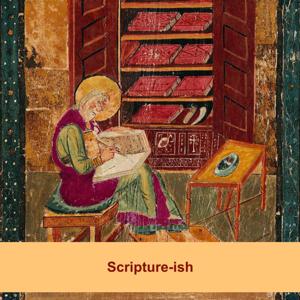

Should you read the Minor Prophets as if these twelve different prophetic voices together constitute a single book?
I have a definite answer to this question: hmm, maybe.
Thanks for reading Gallagher! Subscribe for free to receive new posts and support my work.
This is a thing that scholars like to talk about—or, at least, they used to. Maybe it’s not so in fashion now to engage in scholarly arguments over the unity of the Book of the Twelve. (That’s the name scholars often use for the Minor Prophets when engaging in these discussions: the Book of the Twelve, which is an ancient name for this collection.) It became a common thing to talk about in the 1990s, but maybe the trend has waned a little by now, or the positions have become more settled.
Here I’m going to talk about some of the evidence for the idea that the Book of the Twelve is, in fact, a single book, and what it might mean to read the Minor Prophets in this way, what difference it would make. It’s this last idea that leaves me a little cold, where I struggle to find a meaningful payoff. But some people seem to think it’s important or helpful to read the Twelve as essentially one, a unified collection or composition.
Part of a Trend in Scholarship
The pursuit of understanding the Minor Prophets as a unified collection could be seen as an instance of the recent-ish impulse to perceive larger structures in the Hebrew Bible.
For most of the time that modern biblical scholarship has been practiced, since around the year 1800, most observers would say that scholars have endeavored to break things apart, to examine the sources of the books, to say, for instance, that the book of Isaiah was not all written by Isaiah but by different people. The book of Isaiah is not unified according to authorship. Same for the Pentateuch: not by Moses but by different authors. Same for even the books of the Minor Prophets: Hosea didn’t write all of Hosea, nor Amos his book, nor Micah his book, nor Zechariah his book, nor probably any of the prophets. All these books grew over the course of the centuries, supplemented by editors (or redactors), often seeking to make the ancient message meaningful to a contemporary audience.
But if that’s the way the books were written, is the task of interpretation simply to undo all the supplementation, to seek out the original compositions and situate those compositions within the time of the original author? What about the actual books that we have, the book of Isaiah, or the book of Zechariah, or the Pentateuch? Were the editors who supplemented earlier writings (laws and stories and oracles and such) imbeciles, as scholars seem to have usually assumed, or were they theologians or prophets or artists with intentions about how they went about their work? Did these redactors have something to say that is worthy of scholarly pursuit and reflection?
These are some of the questions that animated the work of, for instance, Brevard Childs and James Sanders and others in the 1960s and 1970s, who pioneered what Sanders called “canonical criticism” and what Childs called “the canonical approach.” Maybe these approaches or criticisms are two different things, but they are similar and a lot of people conflate them. A couple of classic texts by these scholars are Torah and Canon (1972) by Sanders, and An Introduction to the Old Testament as Scripture (1979) by Childs.
The work of Childs and Sanders and others spurred people to examine the larger structures in the Hebrew Bible. Granted that Isaiah was originally written by different prophets, how did the book of Isaiah come together into its present form? These days the study of the unity of Isaiah along these lines is well-established. See, for instance, the 30-year-old book by H. G. M. Williamson, The Book Called Isaiah (1994).
Another good example of this trend—an especially helpful example for comparison with the Minor Prophets—is scholarship on the book of Psalms. In his Introduction from 1979, Childs didn’t really talk about the “book” of Psalms, the overall composition, the editing principles, but one of Childs’ students, named Gerald Wilson, argued in his dissertation that there was something like a plot in the Psalter, an overall structure—even if loose—in the book of Psalms, editing principles that could still be discerned.
A few years later (1993), James Nogalski published his dissertation arguing for the redactional unity of the Book of the Twelve, and this concept has been a part of the scholarly conversation ever since.
Ancient Evidence for a Single Book
The ancients—Jews and Christians—did often talk about the Minor Prophets as a single book. Here is a list of the basic evidence.
* Sirach 49:10
* Josephus, Against Apion 1.37–42
* 4 Ezra 14:44–48
* Early Christian canon lists
* The Talmud, Bava Bathra 13b and 14b
* Masoretic manuscripts
* Dead Sea Scrolls
* Septuagint
I’ll discuss these bits of data further in a moment, and you can read other similar discussions, such as the essay by Anna Sieges in The Oxford Handbook of the Minor Prophets (2021). All this evidence indicates that the Twelve Prophets belonged together, and that when counting up the books of the Jewish Scriptures, the Twelve Prophets counted as one book, just like Isaiah counted as one book, and Proverbs counted as one book. Only the Talmud explains why the Twelve count as one, and its explanation—relating to the short length of each of the Minor Prophets—cannot be taken seriously as an explanation of how or why the Twelve came together. The reason why we can’t take it seriously in that way will become clear as we continue our discussion.
Masoretic manuscripts
I’ve discussed some examples of these manuscripts in another post. That post concludes this way: “The Masoretic manuscripts treat the Twelve as a biblical book, and the individual prophets in the Twelve as not a full-fledged biblical book even if more than a mere chapter.”
Dead Sea Scrolls
I discussed the Minor Prophets in the DSS here. The evidence is complex, more complex than scholars have often realized. It is not clear that the DSS show that the Minor Prophets were always on the same scroll. Probably not. Probably sometimes a single Minor Prophet was on a scroll by itself. There is strong evidence that one of the scrolls features a collection of Minor Prophets in a sequence that diverges from the sequence of the Masoretic Text and the LXX, which both feature Malachi at the end of the collection. The commentaries on the Minor Prophets, the pesharim, do not clearly interpret the individual prophets as a part of a collection. But, one of the DSS probably did originally contain all twelve Minor Prophets, in the traditional sequence, and another scroll not from Qumran probably did, as well. So the DSS provide evidence that the Minor Prophets were sometimes perceived to be a unit, or at least copied on a single scroll in a standard sequence, but not always. Maybe not even most of the time.
Septuagint
I discussed the Minor Prophets in Septuagint manuscripts here. These Greek manuscripts feature a standard sequence for the Minor Prophets, slightly divergent from the sequence of the Masoretic Text, and the individual prophets are closer to being represented as their own books, but still within a collection of Twelve, since each of the Twelve Prophets is numbered.
Sirach
The book of Sirach is one of the deuterocanonical/apocryphal books, in the Catholic and Orthodox Bibles but not in the Jewish Bible or the Protestant Bible. Sirach is the Greek name for the book; in Hebrew it is called Ben Sira and its Latin name is Ecclesiasticus. It was written in Hebrew in the early second century BC, around the year 180 BC. Near the end of the same century (perhaps about 115 BC), it was translated into Greek. We have the book of Ben Sira or Sirach complete in Greek, but we do not have a complete copy in Hebrew. A few scraps in Hebrew from around the time of Jesus have been discovered among the Dead Sea Scrolls and associated finds, and before that (end of the nineteenth century) more substantial Hebrew copies of Ben Sira came to light in the Cairo Geniza in Egypt.
Ben Sira is a long book, filled with proverbs. Near the end it mentions the Twelve Prophets, though not the individual prophets. It says:
May the bones of the Twelve Prophetssend forth new life from where they lie,for they comforted the people of Jacoband delivered them with confident hope. (Sirach 49:10 NRSV)
This verse is preserved in one of the Cairo Geniza copies of Ben Sira (copy B, accessible here).
Sirach is thus the earliest evidence we have that the Minor Prophets were grouped together and could be referenced collectively as the Twelve Prophets.
Josephus
The first-century AD Jewish historian writing in Greek, in one of his works, offers a quick overview of the books of the Jewish Scriptures. The work is called Against Apion, and it is an apologetic work arguing for the nobility of Judaism as a way of life, against a critic of Judaism named Apion. One of the things that should be considered a good point favoring Judaism, Josephus thinks, is that it has a limited number of books that it considers authoritative (Against Apion 1.37–42). The total number of authoritative books is 22, and Josephus divides these 22 into three categories: 5 books of law, 13 books of history written by prophets, and 4 books of hymns and precepts. Josephus does not, in this passage, specify the names of the books. But all modern scholars think that Josephus’s 22 books must have resembled very closely the modern Jewish Bible, which counts the books as 24.
These 24 books of the modern Jewish Bible are the same as the 39 books of the Protestant Old Testament, with only mechanical differences in calculations. Whereas the Protestant Bible has two books of Samuel, the Jewish Bible reckons the same material as a single book. In fact, all Christian Bibles have two books of Samuel—Catholic Bibles, Orthodox Bibles, Protestant Bibles, and whatever other Christian Bibles there are. There’s no difference in content for the book(s) of Samuel, just a difference in whether to divide the material into two (Christians) or not (Jews). The same goes for the books of Kings and Chronicles: Christian Bibles have two books where Jews have the same material united in one book. The same goes for Ezra and Nehemiah, counted as a single book in the Jewish Bible. And the same goes for the Minor Prophets: the modern Jewish Bible counts all Twelve as a single book. That’s how the 39 books of the Protestant Bible are equivalent to the 24 books of the Jewish Bible.
We can’t know for sure what all books Josephus included in his count of 22 authoritative Jewish books, because he doesn’t name them, but at that late date (end of the first century AD) and with the description he provides, and the way he talks about Judaism and sacred literature elsewhere, it’s clear that his 22 books were very similar to the 24 books of the modern Jewish Bible, maybe exactly the same. A couple centuries after Josephus, we have evidence for Christians enumerating the books of the Jewish Bible as 22, and these Christians do name off the books, and the books they name are the same as the modern Jewish Bible (maybe with a difference here or there) with another counting trick: as opposed to the modern Jewish Bible, these ancient Christian lists of 22 books of the Old Testament treat Ruth as a part of the book of Judges, and Lamentations as a part of the book of Jeremiah. That’s how 24 becomes 22. Maybe Josephus assumed the same counting trick, or maybe he omitted a couple books that are in the modern Jewish Bible, perhaps Ecclesiastes or Song of Songs. At any rate, all modern scholars think that Josephus included the books of the Minor Prophets within his collection of 22 authoritative books, and if he did, he must have counted them as a single book. There’s no other way to get the numbers to work.
4 Ezra
This book is not, I think, in anyone’s Bible, but it was named for the biblical character of Ezra. This book is contemporary with Josephus, also written at the end of the first century AD, and it has a passage near the end in which the character Ezra is told by God to write out the books of the Bible—more-or-less. Here’s the passage:
So during the forty days, ninety-four books were written. And when the forty days were ended, the Most High spoke to me, saying, “Make public the twenty-four books that you wrote first, and let the worthy and the unworthy read them; but keep the seventy that were written last, in order to give them to the wise among your people. For in them is the spring of understanding, the fountain of wisdom, and the river of knowledge.” And I did so. (4 Ezra 14:44–48 NRSV)
Without explaining everything about this passage, I can say that it indicates two sets of books that together total 94 and together represent divine revelation. The first set of books, totaling 24, is for public consumption, and the second set, totaling 70, is not for public consumption but is reserved for the wise. The first set, the 24 public books, seems so reminiscent of the modern Jewish Bible that most scholars (all scholars?) make that connection. The 70 books, on the other hand, are the apocalyptic works like 4 Ezra itself. At any rate, for our inquiry, it is clear that if the Minor Prophets were included among the 24 public books, as everyone who studies the issue believes, then they must have been counted as a single book.
Canon Lists
Christians in the early centuries (beginning in the late second century) sometimes wrote up lists of the biblical books. There are a couple dozen such lists in Greek and Latin in the first few centuries of the church; John Meade and I collected most of them in our book The Biblical Canon Lists from Early Christianity (2017). So if you want the full spectrum of evidence, go there. Here I’ll just say that almost always these canon lists refrained from naming the Minor Prophets individually but simply listed the Book of the Twelve.
I’ll give an example. One of the earliest lists of Old Testament books comes from Melito of Sardis, who wrote in Greek in about the year 170 AD. Unfortunately, his work does not survive except in quotations in other authors. Eusebius of Caesarea, in the early fourth century, wrote a book called The Church History (or Ecclesiastical History), and he quoted Melito’s list of Old Testament books (see Eusebius, Church History 4.26.12–14). The following is the last bit of the quotation that Eusebius provides. So, this is Melito as quoted by Eusebius.
Having gone, then, to the east and having gotten to the place where these things were proclaimed and accomplished, and having learned accurately the books of the Old Testament, I have arranged them and sent them to you, of which the names are: of Moses—five: Genesis, Exodus, Numbers, Leviticus, Deuteronomy, Joshua of Nun, Judges, Ruth, of Kingdoms—four, of Paralipomena—two, of the Psalms of David, of Solomon—Proverbs which is also Wisdom, Ecclesiastes, Song of Songs, Job, of prophets—of Isaiah, of Jeremiah, of the Twelve in one book, of Daniel, of Ezekiel, of Esdras, from which also I have made extracts, dividing into six books.
Alright, yes, there are a lot of interesting points to consider in this paragraph from Melito, and John and I provide commentary on this extract in our book. For now, what we need to notice is that Melito says “the Twelve in one book.” That way of referring to the Minor Prophets is completely common in the early biblical canon lists.
The Talmud
The Talmud is a collection of rabbinic traditions, edited perhaps around 600 AD. One of the tractates of the Talmud is called Bava Bathra, and this tractate contains a discussion of the biblical books. You can find the text of the Talmud online at sefaria.org, and the relevant portion is Bava Bathra 14b. You’ll want to go to §8, where you’ll find a list of the books in the section of the Hebrew Bible called “Prophets,” and one of the books is called the Twelve. The discussion continues (into §9), questioning why Hosea is not copied onto its own scroll; why always with the other books of the Twelve? The answer: because it’s so small it would get lost if it were a scroll unto itself.
I said earlier that we cannot take this answer seriously as an explanation for why the Twelve were collected together. One reason: the book of Ruth is much smaller than Hosea, but it counts as its own book. Also, we’ll see later (I’m thinking about catchwords, but we’ll have to get to that idea in a later post) that there is a great deal of evidence that the compiler of the Twelve gave some thought to the compilation; he didn’t just put all the small prophetic books together on a single scroll.
The Talmud also has a discussion showing that the individual Minor Prophets were not exactly conceptualized as “chapters” of a single book, nor as full-fledged biblical books, but as something in between. On the previous page of Bava Bathra (13b §11), we find this interesting discussion.
The Gemara states: When different books are included in the same scroll, four empty lines of space should be left between each book of the Torah, and similarly between one book of the Prophets and another. But between each of the books of the Twelve Prophets only three empty lines should be left, because they are considered one book. And the scribe may finish a book at the bottom of one column and begin the next book at the top of the next column without leaving any empty space in between. (sefaria translation)
In this translation, the words in bold are the words actually represented in the Hebrew text of the Talmud, while the words not in bold are added for the sake of clarity. (The Talmud is a famously sparse text.)
The point of the passage is to establish a policy for copying a biblical scroll. When you finish the book of Isaiah and are getting ready to start copying the book of Jeremiah, you need to leave 4 blank lines between the books. But when you finish Hosea and are ready to start copying Joel, leave 3 blank lines. A scribe does not leave 3 blank lines after Genesis 1 before starting Genesis 2, nor even after Psalm 1 before starting Psalm 2. See the Aleppo Codex. Here is the transition between Psalm 1 and Psalm 2. There is one blank line.
Here is the transition between Hosea and Joel in the same manuscript.
You can see between the books exactly three lines without biblical text. These are not exactly blank lines, because there is some writing there, three Hebrew letters, which I explained in an earlier post.
The point I make here both from the Talmudic discussion and from the Aleppo Codex is that the policy was to treat the Minor Prophets as something between a full-fledged biblical book and a mere section of a book.
Conclusion
This post has surveyed only the external evidence for the treatment of the Minor Prophets as a single biblical book. There is also internal evidence—mostly, the catchwords, that I just mentioned. But I’ll have to get to that in a later post. And we’ll have to talk about what difference it makes to read the Minor Prophets as one or twelve. But for now we can say that there is strong evidence that many ancient Jews and Christians did consider the Minor Prophets to be a single book.
Thanks for reading Gallagher! Subscribe for free to receive new posts and support my work.
 View all episodes
 By Ed Gallagher
Should you read the Minor Prophets as if these twelve different prophetic voices together constitute a single book?
I have a definite answer to this question: hmm, maybe.
Thanks for reading Gallagher! Subscribe for free to receive new posts and support my work.
This is a thing that scholars like to talk about—or, at least, they used to. Maybe it’s not so in fashion now to engage in scholarly arguments over the unity of the Book of the Twelve. (That’s the name scholars often use for the Minor Prophets when engaging in these discussions: the Book of the Twelve, which is an ancient name for this collection.) It became a common thing to talk about in the 1990s, but maybe the trend has waned a little by now, or the positions have become more settled.
Here I’m going to talk about some of the evidence for the idea that the Book of the Twelve is, in fact, a single book, and what it might mean to read the Minor Prophets in this way, what difference it would make. It’s this last idea that leaves me a little cold, where I struggle to find a meaningful payoff. But some people seem to think it’s important or helpful to read the Twelve as essentially one, a unified collection or composition.
Part of a Trend in Scholarship
The pursuit of understanding the Minor Prophets as a unified collection could be seen as an instance of the recent-ish impulse to perceive larger structures in the Hebrew Bible.
For most of the time that modern biblical scholarship has been practiced, since around the year 1800, most observers would say that scholars have endeavored to break things apart, to examine the sources of the books, to say, for instance, that the book of Isaiah was not all written by Isaiah but by different people. The book of Isaiah is not unified according to authorship. Same for the Pentateuch: not by Moses but by different authors. Same for even the books of the Minor Prophets: Hosea didn’t write all of Hosea, nor Amos his book, nor Micah his book, nor Zechariah his book, nor probably any of the prophets. All these books grew over the course of the centuries, supplemented by editors (or redactors), often seeking to make the ancient message meaningful to a contemporary audience.
But if that’s the way the books were written, is the task of interpretation simply to undo all the supplementation, to seek out the original compositions and situate those compositions within the time of the original author? What about the actual books that we have, the book of Isaiah, or the book of Zechariah, or the Pentateuch? Were the editors who supplemented earlier writings (laws and stories and oracles and such) imbeciles, as scholars seem to have usually assumed, or were they theologians or prophets or artists with intentions about how they went about their work? Did these redactors have something to say that is worthy of scholarly pursuit and reflection?
These are some of the questions that animated the work of, for instance, Brevard Childs and James Sanders and others in the 1960s and 1970s, who pioneered what Sanders called “canonical criticism” and what Childs called “the canonical approach.” Maybe these approaches or criticisms are two different things, but they are similar and a lot of people conflate them. A couple of classic texts by these scholars are Torah and Canon (1972) by Sanders, and An Introduction to the Old Testament as Scripture (1979) by Childs.
The work of Childs and Sanders and others spurred people to examine the larger structures in the Hebrew Bible. Granted that Isaiah was originally written by different prophets, how did the book of Isaiah come together into its present form? These days the study of the unity of Isaiah along these lines is well-established. See, for instance, the 30-year-old book by H. G. M. Williamson, The Book Called Isaiah (1994).
Another good example of this trend—an especially helpful example for comparison with the Minor Prophets—is scholarship on the book of Psalms. In his Introduction from 1979, Childs didn’t really talk about the “book” of Psalms, the overall composition, the editing principles, but one of Childs’ students, named Gerald Wilson, argued in his dissertation that there was something like a plot in the Psalter, an overall structure—even if loose—in the book of Psalms, editing principles that could still be discerned.
A few years later (1993), James Nogalski published his dissertation arguing for the redactional unity of the Book of the Twelve, and this concept has been a part of the scholarly conversation ever since.
Ancient Evidence for a Single Book
The ancients—Jews and Christians—did often talk about the Minor Prophets as a single book. Here is a list of the basic evidence.
* Sirach 49:10
* Josephus, Against Apion 1.37–42
* 4 Ezra 14:44–48
* Early Christian canon lists
* The Talmud, Bava Bathra 13b and 14b
* Masoretic manuscripts
* Dead Sea Scrolls
* Septuagint
I’ll discuss these bits of data further in a moment, and you can read other similar discussions, such as the essay by Anna Sieges in The Oxford Handbook of the Minor Prophets (2021). All this evidence indicates that the Twelve Prophets belonged together, and that when counting up the books of the Jewish Scriptures, the Twelve Prophets counted as one book, just like Isaiah counted as one book, and Proverbs counted as one book. Only the Talmud explains why the Twelve count as one, and its explanation—relating to the short length of each of the Minor Prophets—cannot be taken seriously as an explanation of how or why the Twelve came together. The reason why we can’t take it seriously in that way will become clear as we continue our discussion.
Masoretic manuscripts
I’ve discussed some examples of these manuscripts in another post. That post concludes this way: “The Masoretic manuscripts treat the Twelve as a biblical book, and the individual prophets in the Twelve as not a full-fledged biblical book even if more than a mere chapter.”
Dead Sea Scrolls
I discussed the Minor Prophets in the DSS here. The evidence is complex, more complex than scholars have often realized. It is not clear that the DSS show that the Minor Prophets were always on the same scroll. Probably not. Probably sometimes a single Minor Prophet was on a scroll by itself. There is strong evidence that one of the scrolls features a collection of Minor Prophets in a sequence that diverges from the sequence of the Masoretic Text and the LXX, which both feature Malachi at the end of the collection. The commentaries on the Minor Prophets, the pesharim, do not clearly interpret the individual prophets as a part of a collection. But, one of the DSS probably did originally contain all twelve Minor Prophets, in the traditional sequence, and another scroll not from Qumran probably did, as well. So the DSS provide evidence that the Minor Prophets were sometimes perceived to be a unit, or at least copied on a single scroll in a standard sequence, but not always. Maybe not even most of the time.
Septuagint
I discussed the Minor Prophets in Septuagint manuscripts here. These Greek manuscripts feature a standard sequence for the Minor Prophets, slightly divergent from the sequence of the Masoretic Text, and the individual prophets are closer to being represented as their own books, but still within a collection of Twelve, since each of the Twelve Prophets is numbered.
Sirach
The book of Sirach is one of the deuterocanonical/apocryphal books, in the Catholic and Orthodox Bibles but not in the Jewish Bible or the Protestant Bible. Sirach is the Greek name for the book; in Hebrew it is called Ben Sira and its Latin name is Ecclesiasticus. It was written in Hebrew in the early second century BC, around the year 180 BC. Near the end of the same century (perhaps about 115 BC), it was translated into Greek. We have the book of Ben Sira or Sirach complete in Greek, but we do not have a complete copy in Hebrew. A few scraps in Hebrew from around the time of Jesus have been discovered among the Dead Sea Scrolls and associated finds, and before that (end of the nineteenth century) more substantial Hebrew copies of Ben Sira came to light in the Cairo Geniza in Egypt.
Ben Sira is a long book, filled with proverbs. Near the end it mentions the Twelve Prophets, though not the individual prophets. It says:
May the bones of the Twelve Prophetssend forth new life from where they lie,for they comforted the people of Jacoband delivered them with confident hope. (Sirach 49:10 NRSV)
This verse is preserved in one of the Cairo Geniza copies of Ben Sira (copy B, accessible here).
Sirach is thus the earliest evidence we have that the Minor Prophets were grouped together and could be referenced collectively as the Twelve Prophets.
Josephus
The first-century AD Jewish historian writing in Greek, in one of his works, offers a quick overview of the books of the Jewish Scriptures. The work is called Against Apion, and it is an apologetic work arguing for the nobility of Judaism as a way of life, against a critic of Judaism named Apion. One of the things that should be considered a good point favoring Judaism, Josephus thinks, is that it has a limited number of books that it considers authoritative (Against Apion 1.37–42). The total number of authoritative books is 22, and Josephus divides these 22 into three categories: 5 books of law, 13 books of history written by prophets, and 4 books of hymns and precepts. Josephus does not, in this passage, specify the names of the books. But all modern scholars think that Josephus’s 22 books must have resembled very closely the modern Jewish Bible, which counts the books as 24.
These 24 books of the modern Jewish Bible are the same as the 39 books of the Protestant Old Testament, with only mechanical differences in calculations. Whereas the Protestant Bible has two books of Samuel, the Jewish Bible reckons the same material as a single book. In fact, all Christian Bibles have two books of Samuel—Catholic Bibles, Orthodox Bibles, Protestant Bibles, and whatever other Christian Bibles there are. There’s no difference in content for the book(s) of Samuel, just a difference in whether to divide the material into two (Christians) or not (Jews). The same goes for the books of Kings and Chronicles: Christian Bibles have two books where Jews have the same material united in one book. The same goes for Ezra and Nehemiah, counted as a single book in the Jewish Bible. And the same goes for the Minor Prophets: the modern Jewish Bible counts all Twelve as a single book. That’s how the 39 books of the Protestant Bible are equivalent to the 24 books of the Jewish Bible.
We can’t know for sure what all books Josephus included in his count of 22 authoritative Jewish books, because he doesn’t name them, but at that late date (end of the first century AD) and with the description he provides, and the way he talks about Judaism and sacred literature elsewhere, it’s clear that his 22 books were very similar to the 24 books of the modern Jewish Bible, maybe exactly the same. A couple centuries after Josephus, we have evidence for Christians enumerating the books of the Jewish Bible as 22, and these Christians do name off the books, and the books they name are the same as the modern Jewish Bible (maybe with a difference here or there) with another counting trick: as opposed to the modern Jewish Bible, these ancient Christian lists of 22 books of the Old Testament treat Ruth as a part of the book of Judges, and Lamentations as a part of the book of Jeremiah. That’s how 24 becomes 22. Maybe Josephus assumed the same counting trick, or maybe he omitted a couple books that are in the modern Jewish Bible, perhaps Ecclesiastes or Song of Songs. At any rate, all modern scholars think that Josephus included the books of the Minor Prophets within his collection of 22 authoritative books, and if he did, he must have counted them as a single book. There’s no other way to get the numbers to work.
4 Ezra
This book is not, I think, in anyone’s Bible, but it was named for the biblical character of Ezra. This book is contemporary with Josephus, also written at the end of the first century AD, and it has a passage near the end in which the character Ezra is told by God to write out the books of the Bible—more-or-less. Here’s the passage:
So during the forty days, ninety-four books were written. And when the forty days were ended, the Most High spoke to me, saying, “Make public the twenty-four books that you wrote first, and let the worthy and the unworthy read them; but keep the seventy that were written last, in order to give them to the wise among your people. For in them is the spring of understanding, the fountain of wisdom, and the river of knowledge.” And I did so. (4 Ezra 14:44–48 NRSV)
Without explaining everything about this passage, I can say that it indicates two sets of books that together total 94 and together represent divine revelation. The first set of books, totaling 24, is for public consumption, and the second set, totaling 70, is not for public consumption but is reserved for the wise. The first set, the 24 public books, seems so reminiscent of the modern Jewish Bible that most scholars (all scholars?) make that connection. The 70 books, on the other hand, are the apocalyptic works like 4 Ezra itself. At any rate, for our inquiry, it is clear that if the Minor Prophets were included among the 24 public books, as everyone who studies the issue believes, then they must have been counted as a single book.
Canon Lists
Christians in the early centuries (beginning in the late second century) sometimes wrote up lists of the biblical books. There are a couple dozen such lists in Greek and Latin in the first few centuries of the church; John Meade and I collected most of them in our book The Biblical Canon Lists from Early Christianity (2017). So if you want the full spectrum of evidence, go there. Here I’ll just say that almost always these canon lists refrained from naming the Minor Prophets individually but simply listed the Book of the Twelve.
I’ll give an example. One of the earliest lists of Old Testament books comes from Melito of Sardis, who wrote in Greek in about the year 170 AD. Unfortunately, his work does not survive except in quotations in other authors. Eusebius of Caesarea, in the early fourth century, wrote a book called The Church History (or Ecclesiastical History), and he quoted Melito’s list of Old Testament books (see Eusebius, Church History 4.26.12–14). The following is the last bit of the quotation that Eusebius provides. So, this is Melito as quoted by Eusebius.
Having gone, then, to the east and having gotten to the place where these things were proclaimed and accomplished, and having learned accurately the books of the Old Testament, I have arranged them and sent them to you, of which the names are: of Moses—five: Genesis, Exodus, Numbers, Leviticus, Deuteronomy, Joshua of Nun, Judges, Ruth, of Kingdoms—four, of Paralipomena—two, of the Psalms of David, of Solomon—Proverbs which is also Wisdom, Ecclesiastes, Song of Songs, Job, of prophets—of Isaiah, of Jeremiah, of the Twelve in one book, of Daniel, of Ezekiel, of Esdras, from which also I have made extracts, dividing into six books.
Alright, yes, there are a lot of interesting points to consider in this paragraph from Melito, and John and I provide commentary on this extract in our book. For now, what we need to notice is that Melito says “the Twelve in one book.” That way of referring to the Minor Prophets is completely common in the early biblical canon lists.
The Talmud
The Talmud is a collection of rabbinic traditions, edited perhaps around 600 AD. One of the tractates of the Talmud is called Bava Bathra, and this tractate contains a discussion of the biblical books. You can find the text of the Talmud online at sefaria.org, and the relevant portion is Bava Bathra 14b. You’ll want to go to §8, where you’ll find a list of the books in the section of the Hebrew Bible called “Prophets,” and one of the books is called the Twelve. The discussion continues (into §9), questioning why Hosea is not copied onto its own scroll; why always with the other books of the Twelve? The answer: because it’s so small it would get lost if it were a scroll unto itself.
I said earlier that we cannot take this answer seriously as an explanation for why the Twelve were collected together. One reason: the book of Ruth is much smaller than Hosea, but it counts as its own book. Also, we’ll see later (I’m thinking about catchwords, but we’ll have to get to that idea in a later post) that there is a great deal of evidence that the compiler of the Twelve gave some thought to the compilation; he didn’t just put all the small prophetic books together on a single scroll.
The Talmud also has a discussion showing that the individual Minor Prophets were not exactly conceptualized as “chapters” of a single book, nor as full-fledged biblical books, but as something in between. On the previous page of Bava Bathra (13b §11), we find this interesting discussion.
The Gemara states: When different books are included in the same scroll, four empty lines of space should be left between each book of the Torah, and similarly between one book of the Prophets and another. But between each of the books of the Twelve Prophets only three empty lines should be left, because they are considered one book. And the scribe may finish a book at the bottom of one column and begin the next book at the top of the next column without leaving any empty space in between. (sefaria translation)
In this translation, the words in bold are the words actually represented in the Hebrew text of the Talmud, while the words not in bold are added for the sake of clarity. (The Talmud is a famously sparse text.)
The point of the passage is to establish a policy for copying a biblical scroll. When you finish the book of Isaiah and are getting ready to start copying the book of Jeremiah, you need to leave 4 blank lines between the books. But when you finish Hosea and are ready to start copying Joel, leave 3 blank lines. A scribe does not leave 3 blank lines after Genesis 1 before starting Genesis 2, nor even after Psalm 1 before starting Psalm 2. See the Aleppo Codex. Here is the transition between Psalm 1 and Psalm 2. There is one blank line.
Here is the transition between Hosea and Joel in the same manuscript.
You can see between the books exactly three lines without biblical text. These are not exactly blank lines, because there is some writing there, three Hebrew letters, which I explained in an earlier post.
The point I make here both from the Talmudic discussion and from the Aleppo Codex is that the policy was to treat the Minor Prophets as something between a full-fledged biblical book and a mere section of a book.
Conclusion
This post has surveyed only the external evidence for the treatment of the Minor Prophets as a single biblical book. There is also internal evidence—mostly, the catchwords, that I just mentioned. But I’ll have to get to that in a later post. And we’ll have to talk about what difference it makes to read the Minor Prophets as one or twelve. But for now we can say that there is strong evidence that many ancient Jews and Christians did consider the Minor Prophets to be a single book.
Thanks for reading Gallagher! Subscribe for free to receive new posts and support my work.