
Sign up to save your podcasts
Or

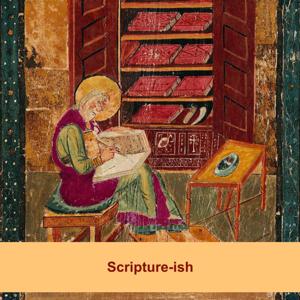


When ye received the word of God which ye heard of us, ye received it not as the word of men, but as it is in truth, the word of God, which effectually worketh also in you that believe. (1 Thess 2:13)
We should approach the Bible as Scripture. You might think, “Duh, the Bible is Scripture.” True, but let’s be more specific. The Bible is our Scripture because we’re Christians. The Quran is also Scripture, but I would not advise us to approach the Quran as Scripture because the Quran is not our Scripture since we’re not Muslims. How would we approach the Quran? We would read it with some critical distance, as a source of information on Muslim beliefs. We would not read it as a source of divine revelation, as a text through which God addresses us.
That description needs nuance. God might address us through the Quran, just as he might address us through any literature, whether Plato’s Republic or Paradise Lost or Pride and Prejudice. Not just literature, but also great films or other media (e.g., the heavens, as we’ll see in a moment). One of my projects in life is to hear what God wants to tell me through all of these works. All truth is God’s truth. Is there truth in the Quran? I presume, though I have not read much of it. And yet, Christians have not regarded any of these works to be “the word of God” in the technical sense used for Christian Scripture. Perhaps God addresses people through the Quran or Paradise Lost, especially if they are seeking such divine communication, but Christians regard their Scriptures as the site from which we can anticipate hearing God’s voice most often and most directly. Indeed, it is the Christian Scriptures that should offer the training to the reader to discern the voice of God, so that his voice can be most fruitfully detected in other media. That’s what it means to call the Scriptures “canonical,” normative.
Thanks for reading Gallagher! Subscribe for free to receive new posts and support my work.
There is more to say about all of this, such as the role of the Old Testament as canonical Scripture within a Christian theological system, and about differences in the biblical canon (e.g., does God speak through Tobit?). And at some point perhaps I will address these topics on this Substack, as I have done in my conventional academic publications. But for now let’s return to the subject of the present essay.
A lot of people read the Bible not-as-Scripture. That’s what scholars do. In large measure, that’s what academic biblical studies is all about. I would argue, and I will argue in a later post (deo volente), that such a reading strategy is incredibly helpful for the purpose of reading the Bible as Scripture. I work at a school that exists to train Christian ministers, and a big part of how we do that is by training students in academic biblical studies. Now the value of academic biblical studies to ministers is variegated, not simply in helping them read the Bible as Scripture, but that is one way it is helpful to them. Listen: reading the Bible not-as-Scripture means that you cultivate critical distance toward the text, and you read it as a source of information on Christian beliefs. It seems obvious to me that such a reading strategy would be helpful to a Christian reading of Scripture, but it is certainly incomplete toward that end. At some point that critical distance that academic biblical studies requires needs to evaporate for a fully Christian reading. To read the Bible as Scripture requires that we not only read it as a statement of beliefs from people long ago in a foreign culture but also that we read it as a revelation from God to us.
By the way, this matter of reading the Bible as Scripture is very in vogue right now; a lot of people like talking about it. A few times a year, it seems like, a book comes out promising to look at a portion of the Bible as Scripture. Maybe it started with Brevard Childs. In 1979 Fortress Press published his seminal book Introduction to the Old Testament as Scripture. But now you can find books on Reading the Gospels as Christian Scripture (by Joshua Jipp, Baker, 2024), or Reading the Prophets as Christian Scripture (by Eric Tully, Baker, 2022), or 1 Samuel as Christian Scripture (by Stephen Chapman, Eerdmans, 2016), or Theological Hermeneutics and the Book of Numbers as Christian Scripture (by Richard Briggs, Notre Dame, 2018), or Reading the Psalms as Scripture (by James Hamilton and Matthew Damico, Lexham, 2024), or Reading the Psalms and Wisdom as Christian Scripture (by Christopher Ansberry, Baker, 2024). There is also the classic book by Sandra M. Schneiders, The Revelatory Text: Interpreting the New Testament as Sacred Scripture (2d ed., Liturgical Press, 1999).
Now, as helpful as these books sound, I haven’t read many of them, though I have read the book by Childs that, I guess, got it all started. Let me nuance that statement a little: what Childs got started was not reading the Bible as Scripture—Christians have been doing that since Jesus—but academics talking about reading the Bible as Scripture. Since I haven’t read most of the books that claim to be doing it, I don’t really know how they think we ought to go about the project of reading the Bible as Scripture, or even what they think it means to do so. But here, again, is my understanding of the goal of a Christian reading of the biblical text: it means to attend to the divine voice in the text, to desire and seek to read the Bible for the purpose of hearing God speak, to encounter the living and active word of God. That is what I mean by approaching the Bible as Scripture
To read the Bible not-as-Scripture is to read without this purpose. It is to read the Bible like any other book, in the phrase made famous by the Anglican clergyman Benjamin Jowett in 1860. We’ll get to Jowett some other time, and how reading the Bible like any other book might be good and helpful, indeed invigorating, spiritually edifying. But for now we want to know how to read the Bible like no other book.
What is it that we want from the Bible when we read it as Christian Scripture? I have already given my answer a few times: we want to hear the voice of God. (Many writers say the same thing; this formulation is not at all unique to me.) As I have mapped out a path toward spiritual growth, the first step is “hear,” and the voice of God is my way of formulating what it is that we want to hear. You could say that people should hear the gospel, or the message of Christ, or Scripture. But I prefer to say that people should hear the voice of God, because it suggests that God mystically continues speaking through the ancient text, that the word of God is truly living and active, that God is, indeed, speaking directly to us in our own situation, if only we had ears to hear, if only our hearts were softened. As the psalmist said, “Today if ye will hear his voice, harden not your heart.”
In Richard Foster’s book Celebration of Discipline, the very first discipline discussed is meditation, which is presented as a sine qua non of the Christian. Foster quotes Bonhoeffer’s explanation for the reason he meditates: “Because I am a Christian,” Bonhoeffer said. (I quoted Bonhoeffer last time; his guide to meditation can be found at DBWE 14, pp. 931–36.) But what is meditation? Foster answers (p. 17): “Christian meditation … is the ability to hear God’s voice and obey his word.” So maybe what I’m talking about is a meditative or contemplative approach to the Bible. Meditating on Scripture is for those who want to be like God.
Now, Foster briefly explores other forms of meditation, other ways of hearing God’s voice, besides meditation on Scripture. We might think of Scripture that substantiates the point.
The heavens declare the glory of God and the firmament sheweth his handywork. (Psa 19:1)
The voice of the Lord is upon the waters. (Psa 29:3)
The earth, nature, creation, provides testimony to God (cf. Rom 1:20; Acts 14:17). Foster also has a chapter on what he calls “the discipline of guidance,” and he says that the point of such guidance is to hear the voice of the Lord in community. But meditation on Scripture is the preeminent way to encounter God’s voice. According to Foster (p. 29), “For all the devotional masters … the meditation upon Scripture is the central reference point by which all other forms of meditation are kept in proper perspective.” As I mentioned earlier, it is through Scripture that we hear God’s voice primarily and most distinctly.
In a previous essay I talked about how reading the Bible is not the same thing as meditating on the Bible, and it’s meditation that we really need. Let me illustrate a little further. I bet you have had the experience of reading Scripture, maybe a set number of chapters according to a daily reading program, and at the end you had no idea what you read—not because the text was confusing but because you were only halfway paying attention. You wouldn’t say that that experience was one in which you heard the voice of God. In a similar vein, our Lord echoed the prophet Isaiah in accusing people of honoring God with their lips while their hearts were far away (Matt 15:7–9, quoting Isaiah 29:13). Been there, done that—which is why I get a little nervous telling God to listen to our hearts, and every beat will say, thank you for the life, thank you for the truth, thank you for the way.
Merely going through the motions is such an easy to do that it’s hard not to do it sometimes, a lot of times. People were doing it in Jesus’ day, and long before that, in the time of Isaiah. Admittedly, in that criticism about praising God with the lips but not with the heart, Jesus was not commenting on Bible reading, but the principle applies. And Jesus did, in fact, spend plenty of time criticizing people for knowing a bunch of Scripture but not recognizing the meaning or significance of those Scriptures—knowing the Bible but not knowing the voice of God. You might remember him telling the Sadducees that “ye know not the scriptures” (Mark 12:24). Also in the same chapter in which Jesus quoted Isaiah about going through the motions, he says that the Pharisees were violating God’s command so that they could preserve their own tradition. That sounds again like knowing Scripture but not listening, not letting it penetrate, not hearing God’s voice.
The goal is hearing God’s voice, not reading the Bible. Or, as Bonhoeffer says, “What we want is to encounter Christ in his own word. We come to the text anxious to hear what Christ wants to say and give us today through his word” (DBWE 14, p. 932). We are, perhaps, like the young Samuel, who “did not yet know the Lord, neither was the word of the Lord yet revealed unto him” (1 Sam 3:7). But he was taught to say, “Speak, Lord, for thy servant heareth.” It’s not a question of whether God is calling, but whether we recognize the call.
The apostle Paul provides a fruitful example of someone attending to God’s voice in the text. What this meant for Paul was discerning the significance, the meaning hitherto unperceived in the text of familiar passages of Scripture. How many times must Saul of Tarsus have read Habakkuk 2:4, “The righteous one shall live by faith,” without plumbing the depths of its meaning, not in the way that the apostle Paul would come to do, as he reflected on the significance of the word “faith,” and the word “live,” and the word “righteous.” Or, to take another example, there is the promise from God to Abraham in the account of the birth of his son through Sarah. When Abraham was distressed about his first son, Ishmael, God assured him, “In Isaac shall thy seed be called” (Gen 21:12).
For the writer of Hebrews (11:18), this verse helped explain Abraham’s thought process during the Akedah; Abraham was willing to slaughter his son Isaac according to the divine command because he trusted so firmly in God’s promise of seed through Isaac that the patriarch assumed that God would resurrect his dead son. And in his letter to the Romans, Paul understood the promise of seed through Isaac in Genesis 21 as indicating that “they are not all Israel which are of Israel” (Rom 9:6), that is, “the children of the promise”—and not the children of the flesh—“are counted for the seed” (9:8).
Paul and other New Testament writers perceive in the text of Scripture the voice of God speaking in new situations. They allow Scripture to challenge their assumptions, to put pressure on them. Through Scripture God wants to fill us with hope and awe, amazement at his beauty and the beauty of his creation. And he wants to prod us into action. This is what Scripture did for Paul, because Paul attended to the voice of God in the text. Like Samuel, he opened his ears to the divine call: “Speak, Lord, for thy servant heareth.” To learn to read the Bible as Scripture, a good strategy would be to pay close attention to how the Jewish Scriptures are interpreted in Paul’s letters. (Let Richard Hays help.) If we succeed in following Paul’s example, our reading of Scripture will often conclude with the exclamation, “Wow!”
There may be some preachers who read the Bible primarily to remind themselves of what the text says so that they can quote it accurately in their sermons. In other words, perhaps they do not read in order to learn something or to be challenged. At any rate, I feel like I have heard sermons that give this impression. Perhaps in my religious tradition, the Churches of Christ, this is an inheritance from the early days of the Restoration Movement. I don’t mean that this is what Alexander Campbell did, or his father, or Barton Stone—quite the opposite, I am sure. They routinely read the Bible looking for truth previously hidden from them, obscured by tradition. That was the entire point of the movement, a return to the Bible and an attempt to see new things in it. But I suppose, as with any movement, subsequent generations receive the new truth as a deposit to be protected; they guard the results and not the method, and so they cease to look for new truths, or to feel the challenge of Scripture. I recognize I’m painting with a very broad brush, and I do so not to accuse anyone but only to admonish us to recognize and avoid such a trap. Let’s continue to allow Scripture to apply pressure to our lives.
Let me talk about pressure for a moment, and I’ll illustrate with one of my own anxieties, money—not the lack of it, but the abundance of it. The Bible has a lot to say about money, and a lot of what the Bible says is negative. Do you remember the Rich Man and Lazarus in Luke 16? What is the reason that the rich man is in torment? Here is the answer that Abraham provides: “Child, remember that during your lifetime you received your good things, and Lazarus in like manner evil things; but now he is comforted here, and you are in agony” (Luke 16:25). Why is the rich man in torment? Because he enjoyed his life. “During your lifetime you received your good things.” Now Lazarus and the rich man have experienced the great reversal brought about by death. Is this one of those times that you want to say, “The Bible says it, I believe it, that settles it!”? Well, probably not; probably you want to push back and say, no, the reason the rich man is in torment is because he didn’t use his money appropriately, not because he had money. Um, okay, but that is not what Abraham says. He doesn’t tell the rich man, “during your lifetime you used your money inappropriately”; he says, “during your lifetime you received your good things.”
And neither does Jesus in the parable say that the rich man used his money inappropriately. I will grant that there might be that implication in the first few verses of the parable, but it is not made explicit. The point of the parable seems to be to make rich people uncomfortable with their wealth. And that especially seems to be a right reading when you recall that a couple chapters earlier in Luke, Jesus had said, “So therefore, none of you can become my disciple if you do not give up all your possessions” (Luke 14:33). And a couple chapters before that, Jesus had said, “Sell your possessions and give alms” (Luke 12:33). And we haven’t even mentioned the Rich Young Ruler (Luke 18:22)! When you consider what Jesus says about money in the Gospel of Luke, and then you realize that you are living in the richest country that has ever existed in the history of the universe, the proper response for somebody hearing the voice of God in the text is, “craaaaap.” That’s what I mean by pressure, or challenge. That’s not all, of course; as I said in a previous essay, Scripture is for doing, not just hearing. And part of what it means to feel the pressure of the text is to conform our lives to its message.
Then again, there is also pressure from competing passages. Reflect on Jesus’ teaching at the end of Matthew 25, where he says that final judgment will be based on how you treated poor people, that is, those without food, drink, clothing, homes, or those sick or in prison. Here it is about using your resources appropriately, meaning, on behalf of others. The assumption seems to be that you do have resources, that you haven’t given all your money away. And there are other biblical passages about money to consider, not to mention biblical commands on other topics that have bearing on what we do with our money, such as about providing for our families. If I gave away all my money, would I be able to provide for my kids? Or am I allowing fear to rule my life instead of faith? The interpretation of these passages should not be simple and should not aim at making us comfortable. If the Bible is our Scripture, then it should exert pressure on us.
One more point, and for this one I quote Jesus and then Augustine. It was Jesus (Matt 22:34–40) who said that the command to love God found in Deuteronomy (6:5) is the most important command in all of Scripture, and the second most important is the one about loving the neighbor found in Leviticus (19:18). According to Matthew’s account, Jesus also said that all Scripture—or, in his words, the law and the prophets—depend on these two commands. Now, listen to what Augustine does with this point:
So anyone who thinks that he has understood the divine scriptures or any part of them, but cannot by his understanding build up this double love of God and neighbour, has not yet succeeded in understanding them. Anyone who derives from them an idea which is useful for supporting this love but fails to say what the writer demonstrably meant in the passage has not made a fatal error, and is certainly not a liar. (On Christian Doctrine 1.86)
A reading of the Bible as Scripture should conform to the summary statement of our Lord that everything in the Bible depends on the love of God and of neighbor.
There are other ways to think about what it means for the Bible to serve as our Scripture. One might reflect on ancient reading practices. The Jewish scholar James Kugel (pp. 17–23) has summarized four assumptions that ancient Jews brought to the text of their Scripture: they assumed the Bible was cryptic, relevant, inerrant, inspired. It would be valuable to read his explanation of these four assumptions and reflect on the extent to which we should adopt them—or have adopted them—ourselves. And the Catechism of the Catholic Church §111 says that the nature of the Bible as Sacred Scripture means, quoting now Dei Verbum 12.3, that it “must be read and interpreted in the light of the same Spirit by whom it was written.” This entails three principles (CCC §§§ 112–114; cf. Dei Verbum 12):
* Be especially attentive “to the content and unity of the whole Scripture.”
* Read the Scripture within “the living Tradition of the whole Church.”
* Be attentive to the coherence of the truths of the faith.
I think all of this makes good sense, and it would do us good to reflect on each principle. But for now, I simply summarize the main points I have emphasized here. We are approaching the Bible like Scripture if we feel the pressure of the text, if we follow the example of Paul in finding previously unperceived implications of the text, if our reading compels us to sit back in awe, and if our encounters with Scripture produce in us the double love for God and neighbor. That is at least part of what it means to hear the voice of God in Scripture.
***
I conclude with this long quotation, from Thomas à Kempis, The Imitation of Christ 3.2, from the early 15th century, presented here in the 1955 translation by Harold C. Gardiner.
Speak, Lord, for I, Your servant, am ready to hear You. I am Your servant: give me wisdom and understanding to know Your commandments. Bow my heart to follow Your holy teachings, that they may sink into my soul like dew into the grass. The children of Israel said to Moses: Speak to us and we will hear you, but let the Lord not speak to us, lest perhaps we die for dread. Not so, Lord, not so, I beseech You! Rather, I ask humbly with Samuel the prophet that you vouchsafe to speak to me Yourself, and I shall gladly hear You. Do not let Moses or any other of the prophets speak to me, but You Yourself, Lord, the inward inspirer and giver of light to all the prophets. You alone, without them, can fully inform and instruct me; they, without You, can profit me little.
They speak Your words, but they do not give the spirit to understand the words. They speak fair, but if You are silent, they do not kindle the heart. They show forth fair letters, but You interpret the sentence. They reveal great high mysteries, but You open the true understanding of them. They declare Your commandments, but You help to their performance. They show the way, but You give strength to walk in it. They do all outwardly, but You illuminate and instruct the heart within. They water only externally, but You give the inward growth. They cry all in words, but You give to the hearers understanding of the words that are hard.*
Do not let Moses speak to me, therefore, but You, my Lord Jesus, who are the everlasting Truth, lest perhaps I die and be made like a man without fruit, warmed from without, but not inflamed within, and so receive the harder judgment, because I have heard Your word and not done it, known it and not loved it, believed it and not fulfilled it. Speak, therefore, to me Yourself, for I, Your servant, am ready to hear You. You have the words of eternal life; speak them to me for the full comfort of my soul and give me amendment of all my past life, to Your joy, honor and glory, everlastingly.
*This is the reading as presented in Gardiner’s translation, or at least the edition I consulted. And on the audio version of this post I read the word as “hard,” but when I did so I wondered if I erred in typing it in, whether the word was supposed to be “heard.” And now that I’ve looked at the Latin, I think it is probable that Gardiner intended to put “heard.”
Thanks for reading Gallagher! Subscribe for free to receive new posts and support my work.
One of Abraham Lincoln’s famous quotations is “Don’t believe everything you read on the internet.” This excellent advice from our sixteenth president helpfully introduces our topic, which is tracking down sources. As Honest Abe, would tell us, when you find an interesting quotation or bit of information, you need to confirm it, trace it back to its origin, see if it’s true.
When you are doing research on the Bible, for instance, a research paper, one of the tasks that you have to do is track down sources. You need to see the evidence for yourself. Let’s say you have a question about what kinds of things women would do in the first century. This is a question about which some people have much to say today, and they will offer a variety of opinions. These opinions might be interesting, but they are not evidence. What you really want is information deriving from the first century, first-hand information, from writers in the first century, or from archaeological artifacts dating to the first century. A good guide to such evidence on the topic of women in the first century is Susan Hylen, a New Testament professor at Emory. She has several books on the topic (for instance), and I have always found her work to be careful both in its citation of ancient evidence and in the conclusions drawn from that evidence. I trust her to be careful, because she has proven herself worthy of that trust—but, I do not trust her to provide the correct citation in any given instance. Everybody makes mistakes. Susan Hylen is great, but you still need to track down the sources, make sure that she cites Josephus correctly, that the paragraph number she provided is the correct one, and that Josephus really does say what she attributes to him, and that she has interpreted his meaning correctly. The only way to do that is to find the original passage in Josephus, read the passage, and read a little bit before it and a little bit after it to get the context.
Thanks for reading Gallagher! Subscribe for free to receive new posts and support my work.
It has never been so easy to track down sources. Most of the ancient sources are freely available online in English translation, so that, as the apostle Paul might say, one is without excuse; there is no reason not to look up the original passage.
And it must be done. Why? Why should we care so much about tracking down sources? Because … umm … you know … we are people who value truth. We have committed ourselves to guiding people into a deeper knowledge of matters divine, a sacred responsibility that should compel us to know what we’re talking about, and to refuse to affirm things that we don’t know. Oftentimes we are going to get into arguments that are finely nuanced, that turn on the meaning of particular Greek or Hebrew words, or that are affected by the proper interpretation of some extra-biblical source. And we should, you know, look at such evidence for ourselves so that we can help people work through the issues. Especially at HCU, an academic institution, we pursue academic excellence as a facet of Christian virtue, developing skills both practical and scholarly in order to help people and to glorify God. We are God’s images, and we have been created in Christ Jesus unto good works, and those good works are many and manifold. Doing our academic work in an excellent fashion is, in part, what we have been created in Christ Jesus to do. We need to take this stuff seriously.
By the way, this is the reason I cite Wikipedia so frequently on Substack and in chapel speeches, and even in sermons. I would never—never!—rely on Wikipedia as an actual research source; I would never cite it in an academic paper. I cite it in speeches for two main reasons: to let you know where to find more information about a topic; and, even more importantly, to tell you that I have not done research on the topic. If I’m relying on Wikipedia, that means I don’t know what I’m talking about. I have done only the easiest, laziest, most basic amount of research; I wouldn’t even call it research, but “poking around.” No, it’s not even poking around; that’s the term I use for looking at a few books in the library to see what scholars are saying on a topic; it doesn’t rise to the level of research because it’s only a few books that I look at, and maybe a few primary sources. That’s poking around. Research is when I’m actually in the pursuit of a question, and I’m going to be pretty exhaustive in my search for the answer. Oftentimes for a Bible class or sermon or even a class at HCU, I don’t have time for real research, just some poking around down in the library. And a lot of times I don’t have time even to poke around, or I don’t have the interest, and so I just google something and read a Wikipedia article. But I almost always tell people when I’m relying on Wikipedia. When I do cite Wikipedia, I don’t mean to communicate that Wikipedia is a good research tool, but the exact opposite. Wikipedia is where you go before you start the process of research.
And now I give you three bad examples, all from the published work of biblical scholars and theologians, people who should know better.
Hippocrates on Women
In the year 2020, a book called Women in the Bible was published by Westminster John Knox, written by Jamie Clark-Soles, a professor at Perkins School of Theology, the seminary attached to SMU in Dallas. On page 2 of her book, she presents a chart exhibiting eight quotations from historical sources, ranging from Hippocrates in the classical Greek period to Luther and Calvin in the sixteenth century. This chart is designed to illustrate, in the words of Clark-Soles, the availability of “an endless collection of choice quotations to prove that women have been considered inferior to men.” Now, let me say, I have no doubt that one can easily demonstrate such a thing, that throughout world history, in perhaps all societies, women have been considered inferior to men. I agree with Clark-Soles that this has been a common attitude, and I join with her in condemning it. I just wish she had done a better job of demonstrating it.
To emphasize the pedantic point that is the subject of this essay, you should not rely on her chart, but use her chart as a guide to the sources, by all means go tracking down the sources yourself, and you’ll find that Clark-Soles has not always excerpted these quotations accurately.
As I said, there are eight quotations, attributed to the following sources:
* Hippocrates
* Aristotle
* Josephus
* Philo
* the Tosefta, a rabbinic document from the third century
* Origen, a third-century Greek Christian
* Martin Luther
* John Calvin
The first quotation is from Hippocrates, a Greek medical writer from around the time of Socrates. Clark-Soles attributes to Hippocrates these words, in quotation marks: “Males are warm, dry, and firm, and this is the norm. Females are cool, moist and spongy, these being defects.” That’s an interesting statement, and I have read enough about ancient views of women to say that it sounds plausible that Hippocrates said it. But where did he say it? It would be nice if Clark-Soles would tell us where Hippocrates made this statement, but she doesn’t; instead she cites a scholarly article written in 1991. You know what to do next, right? Go get the article. Under no circumstances are you to trust a scholar, and in this case thou shalt not assume that Clark-Soles has correctly cited the article, or that the 1991 article says what Clark-Soles attributes to it. Best case scenario here is that the 1991 article provides a quote from Hippocrates that is word-for-word what Clark-Soles quoted, and provides the reference to Hippocrates. That is not what the 1991 article provides.
It turns out that the words presented by Clark-Soles in quotation marks are not a direct quotation at all, and not even a quotation from the scholarly article, but more of a summary from the article. The 1991 article was written by Lesley Dean-Jones (in this book), and she shows (1991: 115) that in the Hippocratic treatise Glands 1 (LCL vol. 8) men are said to have glands that are spongy, and in this way the glands are different from the rest of the male body, but females (Glands 16, pp. 123–25) have glands that are spongy, just like the rest of their body. According to Dean-Jones (1991: 116), it is the Hippocratic treatise called Regimen 1.34 (LCL vol. 4) that says that women are colder and moister than men. So you know what to do now, right? You go get the Hippocratic treatise Regimen and you see for yourself. It’s in the Loeb Classical Library, which is easily accessible on the shelves of a good library, and most of this stuff you can access online if you are an intelligent user of the internet. By the way, here is the entirety of ch. 34 from the treatise called Regimen:
The males of all species are warmer and drier, and the females moister and colder, for the following reasons: originally each sex was born in such things and grows thereby, while after birth males use a more rigorous regimen, so that they are well warmed and dried, but females use a regimen that is moister and less strenuous, besides purging the heat out of their bodies every month. (p. 281)
Take careful note that a word that does not appear in the passages of Hippocrates summarized by Dean-Jones is the crucial term “defect,” which is presented by Clark-Soles as a quotation of Hippocrates. Indeed, the word “defect” appears nowhere in the article by Dean-Jones.
Thomas Campbell the Calvinist
Now for a second example, and this one comes from a New Testament scholar named Eugene Boring, who died a couple years ago. I am not taking an example from one of Boring’s books on the New Testament but from a book he published with Chalice Press in 1997 called Disciples and the Bible. (I have previously had much to say about this book: here and here.) Eugene Boring was himself a lifelong member of the Disciples of Christ, and he taught for some time at Brite Divinity School, a Disciples seminary attached to Texas Christian University in Forth Worth. The book itself is fantastic; I highly recommend it for an analysis of the biblical interpretation practiced by Alexander Campell and J. W. McGarvey and others who are probably less well-known to you. But one of the interesting quotations Boring provides is on p. 241 of his book, a quotation from Thomas Campbell, in which the elder Campbell said in the year 1828, “I am a Calvinist,” and Campbell further said that he was not a restorationist. Now that’s interesting, isn’t it? Wouldn’t you like to see that comment in its original context? What you would like to see from Boring is a footnote citing Thomas Campbell; that would make things easy. You could just go get the relevant work by Campbell and see what he meant, and this could be done in a good library or online. Alas, Boring does not provide a reference to Campbell but—again, just like Clark-Soles—to a secondary source, and this one is the 1954 book by Lester G. McAllister called Thomas Campbell: Man of the Book (St. Louis: Bethany).
Fortunately we have this book in our library, so I walked down there from my office and found that McAllister himself (p. 168) did not directly cite Thomas Campbell either, but another book, one published by A. S. Hayden in 1875 and called Early History of the Disciples in the Western Reserve, Ohio. This one was not available in the library but it is online at archive.org. There I see that the original source of this quotation by Campbell seems to be a letter, dated April 6, 1868, written by Aylett Raines to the book’s author, A.S. Hayden, to describe his participation in the 1828 meeting of the Mahoning Baptist Association in Warren, Ohio. So there is no source extant, I think, directly from Thomas Campbell in which he says that he is a Calvinist. What we have is an 1868 letter written by a fellow who recalled a conversation he had forty years earlier in which Campbell made that statement. Thomas Campbell himself was long dead by the time Aylett Raines recalled the conversation he had with him. That seems to me relevant context for the source. I’m not saying Aylett Raines misremembered his conversation with Thomas Campbell, but such things often happen. In any case, it is best to know what sort of source we’re dealing with: not a direct quotation of Campbell, but a remembered conversation. Track down the source yourself.
Hitler and Christians
Finally, I cite the book Mere Discipleship, by Lipscomb professor Lee Camp, published by Brazos in 2003, with a second edition appearing in 2009. In both editions, the eighth chapter, titled “Baptism,” has two epigraphs: the first one is Galatians 3:27–28, and the second is a statement attributed to Adolf Hitler.
One is either a good German or a good Christian. It is impossible to be both at the same time.
—Adolf Hitler
Now, that’s an interesting quotation from Hitler. Where did Hitler say that? Did Hitler really say that? It seems a bit too … perfect, a bit too “on the nose.” I had the impression that Hitler courted Christians, that he sought to appropriate Christian themes. I would have guessed that he would more likely say the opposite of this quote, that he would more likely have said, “One cannot be a good Christian without being a good German,” or vice versa, “One cannot be a good German without being a good Christian,” that rather than opposing Christianity to Germanness, he would have equated the two, in the manner of the German Christians. Again, the impression I have is that Hitler thought that the German Christians were useful idiots—but nevertheless, useful, and by saying that you cannot be a Christian and a German, he seems to have explicitly said that the German Christians are just idiots.
So, my suspicions are raised. Is this a real quote from Hitler? What is the citation? Camp cites p. 179 of the 1985 book The Believer’s Church: The History and Character of Radical Protestantism, by Donald Durnbaugh, and published by a Herald press. I had never heard of any of this, not the author, not the book, not the publishing company, but what was clear to me immediately is that Camp did not cite Hitler. By the way, the press, Herald Press, out of Scottsdale, Pennsylvania, is a Mennonite publishing house.
Now, this is a book we have in our library, and on p. 179, we find the relevant quotation. The cited source is, unfortunately, not Hitler, but rather a German book by H. H. Schrey, Die Generation der Entscheidung (Munich: Chr. Kaiser Verlag, 1955), 138–39. Note that a book published in 1955 is a decade too late to be a primary source for a quotation by Hitler, who took his own life in 1945.
I forget how I ended up finding the original source; I suspect a lot of googling different search terms was involved. At any rate, I found the quotation at archive.org in a book called Voice of Destruction, on pp. 49–50. This book was published in 1940 by the publishing company Putnam in New York, with the author Hermann Rauschning. I said the book was published in 1940; that’s during the lifetime of Hitler. The book has a Wikipedia page, where the lead title is not Voice of Destruction—this is the alternative title, but the lead title is Conversations with Hitler, and we learn that the book is a translation from a German work titled Gespräche mit Hitler, published in France in 1939, before the war.
Here is the first paragraph of the book’s Foreword.
These conversations with Hitler took place in the last year before his seizure of power and the first two years (1933 and ’34) of the National Socialist regime. The writer jotted them down under the immediate influence of what he had heard. Much may be regarded as practically a verbatim report. Here, in the circle of his intimates, Hitler speaks openly about his innermost ideas—ideas which have been kept secret from the masses.
The wikipedia article on the book is rather short, but the page on the author, Hermann Rauschning, is much longer, with a long section on this particular book, and specifically whether or not it can be trusted. There have been lively debates about this.*
*[Added 23 Oct 2026: Here’s my understanding of these debates, judging from the wikipedia page: Forty years after publication, the work became controversial when some Holocaust deniers argued that it was forged. These arguments had an effect on the mainstream scholarly reception of the work. It seems that, on the one hand, the holocaust-deniers made a pretty decent argument, but, on the other hand, not a totally convincing argument, and that at this point mainstream scholars do use the work with caution. So, did Hitler say you could not be a Christian and a German? Well, he didn’t say it publicly. Hermann Rauschning says that Hitler said it to him, as part of ongoing conversations at the time of Hitler’s rise to power, and Rauschning took notes on those conversations, and later published reconstructions—not transcripts—of those conversations. I myself do not trust that we have the actual wording of Hitler, though I reckon we have his thoughts.]
Just like in the case of the quotation of Thomas Campbell earlier, what we are dealing with here is not a direct quotation of Hitler but a remembered conversation. In the case of Campbell, the conversation was remembered forty years later, allowing ample opportunity for misremembering or embellishment. In the case of the quotation from Hitler, the time involved is much briefer, less than a decade, but the person reporting the conversation, Hermann Rauschning, became a critic of the Nazis after his migration from Germany to the United States, so he might have reason to depict, or even to remember, Hitler’s words more starkly than they were originally given. Any responsible use of this book should indicate these debates about its authenticity, at least in a footnote. The only responsible thing to do, I think, is cite the book not as a record of what Hitler said but what he is likely to have said, or may have said, or is reported to have said.
So, it is possible or plausible that Hitler said in around 1933 that you cannot be a good German and a good Christian. But you should also be aware of another quotation often attributed to Hitler, from a few years earlier, in 1928, where he apparently said, “Our movement is Christian.” According to Snopes, Hitler did indeed make this statement.
Conclusion
In all these cases, the process of tracking down the source of the information that interested me was both frustrating and educational. It’s the frustrating part that might make you give up along the way, in which case you should leave alone the claim you haven’t been able to verify; do not mention it as if you know it. You only know it—that Thomas Campbell said in 1828 that he was a Calvinist, or that Hippocrates said women are soft and moist—you only know it once you’ve tracked it down to its root. That experience is often frustrating, but it is also educational, in unexpected ways. The pursuit of these sources will introduce you to people and books and topics that you didn’t know you didn’t know.
Thanks for reading Gallagher! Subscribe for free to receive new posts and support my work.
Only be thou strong and very courageous, that thou mayest observe to do according to all the law, which Moses my servant commanded thee: turn not from it to the right hand or to the left, that thou mayest prosper whithersoever thou goest. This book of the law shall not depart out of thy mouth; but thou shalt meditate therein day and night, that thou mayest observe to do according to all that is written therein: for then thou shalt make thy way prosperous, and then thou shalt have good success. Have not I commanded thee? Be strong and of a good courage; be not afraid, neither be thou dismayed: for the LORD thy God is with thee whithersoever thou goest. (Joshua 1:7–9)
Should Christians read the Bible? Well, yes, of course, and they can hardly avoid it if they are pious and go to church and Bible class. But I don’t mean to ask about Christians reading the Bible in group settings: public worship or Bible class or whatever. Should individual Christians read the Bible for private devotion?
Yes, and no.
Thanks for reading Gallagher! Subscribe for free to receive new posts and support my work.
Or, actually, no and yes, and, again, no.
Let’s talk about it.
Ancient Believers Didn’t Read the Bible
We’ll approach the question through the side door. Should individual Christians pray? Yes, that’s an easy one. The Bible talks a great deal about people of faith praying. “Pray without ceasing,” said the Apostle. Jesus gave much instruction on prayer. In the Old Testament, there’s an entire book, a long book, comprising 150 prayers. Next question, should Christians go to church? Let’s reword that: should Christians routinely gather with the saints to worship God? Yes, another easy question. The Bible has a great deal to say about corporate worship, in the Old and New Testament—or, at least, gathering and doing the activities we tend to associate with worship: singing, praying, exploring Scripture. (Maybe Tom Wadsworth would agree with that description.) Let me just remind you about the verse in Hebrews that says, “not forsaking the assembling of ourselves together.”
What about Bible reading? Does the Bible tell people to read the Bible? We find instructions to listen to, or to hear, the word of God, or the message of the gospel. The prophets often call on the ancient Israelites and Judeans to pay attention, to listen, but they never tell them to read. Such a command would make no sense, because there was nothing to read, and even if there were, the common Israelite couldn’t read it. When I say there was nothing to read, I mean the Bible hadn’t been written yet. Isaiah certainly couldn’t tell people to read his book; his life was taken up with delivering the oracles that would eventually constitute the contents of the book of Isaiah. Some things were written—the Ten Commandments, for instance, but the only copy about which we know was stored in the Most Holy Place of the Tabernacle or Temple, and therefore not available for reading. We could assume that multiple copies of the Ten Commandments were made, chiseled in stone and displayed prominently in various spots of ancient Israel, just as in modern America.
But then you have the problem of literacy. It is impossible to be very precise about ancient literacy, but a pretty common guess for the ancient world is that about ten percent of the population could read. It is almost precisely the reverse in modern America, with about ten percent of the population considered illiterate. How has it come about that so many people in modern America can read? It’s because for about two hundred years or more, American society has invested a great deal of money and effort on public education, with the fundamental goal of teaching people how to read. Learning to read is not easy. You don’t graduate first grade considered “literate,” even if you can read Dr. Seuss books. It takes years of training to be proficient to read complicated texts. And the Bible is most definitely a complicated text. Absent a well-funded public education program, widespread literacy is not going to just happen, not at the levels familiar to us. That’s a pretty good reason why a general requirement that Christians should read the Bible would have made no sense prior to the modern period. As Keith Stanglin (p. 159) has mentioned, at the time of the Reformation and following the invention of the printing press, early “Protestants usually stressed the obligation of all Christians to read their Bibles.” This was a new phenomenon.
But there’s another reason we never find Jesus or Paul telling believers that they need to read the Bible. It’s not just that the concept of “Bible”—as in a collection of sacred books that you could hold in your hand—is an anachronism for the first century, but also because the individual books themselves were enormously expensive. Of course, everything was handmade: the leather or papyrus upon which the text was written, and the ink, and the process of writing itself, all done by hand. I have seen the plausible estimate that in the first century a scroll of the book of Isaiah would have cost about a month’s wages. Most believers did not have ready access to copies of the biblical books even if they had been trained to read them.
That’s why the Bible contains no general command to believers to read the Bible as a regular habit, like prayer or the assembling of believers. Such instruction would make no sense in their world; it would have been impossible to carry out. General Bible reading is a very recent phenomenon. (For similar thoughts, see Brad East, pp. 119–20.)
Christians Should Read the Bible
But, yes, Christians should definitely read the Bible. I mean, Christians now, with the opportunity and the ability. The fact is, by this point, the Bible has been written down and collected together. There are a plethora of cheap Bibles available, and you can easily find an organization giving Bibles away if you need that. And we have all been trained to read at a very high level, at great expense in money and time. We are judged by God according to what we do with our opportunities, and we—Christians in twenty-first century America—have been granted the opportunity—almost unique in the history of the world—of reading the Bible for ourselves.
Yes, we should read the Bible.
This is especially true for church leaders: if any believers should be reading the Bible, it should be church leaders. They will be judged by God not only according to their opportunities but also in how they have led God’s people, and so they need humbly to seek the will of God through constant devotion to Scripture.
Or Maybe Not?
But do Christians need to read the Bible? Is that what God wants for us? Maybe not. Maybe the point is not reading but something else. Could reading the Bible be a distraction from what God wants us to do with Scripture?
I’m asking these questions conscious of two influences: history and Socrates. The history we’ve already mentioned. Before the modern period, it would have made no sense to tell Christians generally that they need to read the Bible. What did such Christians do? Were they just not spiritual? Or did they do something with the Bible besides read it?
That brings me to Socrates. The famous philosopher was not a big fan of writing. Yes, I get the irony that the only way I know about the opinion of Socrates is that his student Plato wrote it down. I’m sure Plato got the irony too. But still, listen to Socrates:
For this invention will produce forgetfulness in the minds of those who learn to use it, because they will not practice their memory. Their trust in writing, produced by external characters which are no part of themselves, will discourage the use of their own memory within them. You have invented an elixir not of memory, but of reminding; and you offer your pupils the appearance of wisdom, not true wisdom, for they will read many things without instruction and will therefore seem [275b] to know many things, when they are for the most part ignorant and hard to get along with, since they are not wise, but only appear wise. (Phaedrus 274c–275b; trans. LCL, pp. 563–65)
Does Socrates have a point? I think he does, and the problem he identified 2500 years ago has in the last 20 years become exponentially worse with the proliferation of the smartphone. It has been commonly said recently that there’s no need to know anything because you can always look it up. That is precisely what Socrates was complaining about. People aren’t wise, they just appear wise. Well, I want to be wise, not just appear wise, so let’s sit with Socrates for a moment and hear what he has to say.
What does Socrates think people ought to do? Not write stuff down, but store it in their heads. Now, we might say, that’s easy for Socrates, he’s a freaking genius. I think that’s a fair point, but Socrates also has a fair point, that when you come to rely on external sources of wisdom, you cease to exercise your internal faculties, and that wisdom stored on the paper—or on your phone—doesn’t really become a part of you. There is assuredly a great deal of difference between having information in your pocket and information in your head, and it’s not just about how quickly you can retrieve that information. It’s about your ability to make connections between seemingly disparate subjects. It’s about having those “aha!” moments. Those moments are something akin to growing in wisdom.
What did people do with Scripture before mass literacy and cheap Bibles? They went to church and heard it proclaimed. And if they were good and pious, they reflected on those words throughout the week, until they could hear another message from God’s word. They mulled it over. Let me remind you of Jeremiah’s prophecy of the new covenant, which the writer of Hebrews says has been fulfilled through Christ and the church. Jeremiah said that when God made the new covenant with his people, “I will put my law in their inward parts, and write it in their hearts” (Jer 31:33; cf. Heb 8:10). I think Socrates would approve.
And then there’s that blessed man of Psalm 1.
Blessed is the man that walketh not in the counsel of the ungodly,nor standeth in the way of sinners, nor sitteth in the seat of the scornful.
But his delight is in the law of the Lord; and in his law doth he meditate day and night.
What is it that this man is doing with the Lord’s Torah? Day and night he is meditating on it.
The word “meditate” translates a Hebrew word that also appears in Psalm 63:6, “When I remember thee upon my bed, and meditate on thee in the night watches.” According to The Concise Dictionary of Classical Hebrew, this same Hebrew word, translated sometimes as “meditate,” appears 25 times in the Hebrew Bible, and it is the word used for the growling lion in Isaiah 31:4, and for the noise a dove makes in Isaiah 38:14, and the sound of a distraught mourner in Isaiah 16:7. The word often refers to a noise, not silent meditation. So what is that man doing in Psalm 1:2 with regard to the Lord’s Torah? If he’s making a sound, perhaps he’s mumbling the Torah, reciting it, saying it over to himself. “His delight is in the Torah of YHWH and his Torah he mumbles [or recites] day and night.” Understood this way, perhaps this blessed man has memorized the Torah, or portions of it, and he is reciting it to himself—much as observant Jews still do today, morning and evening, with the Shema.
Maybe this is what it means when Jeremiah says that God will write his Torah on the hearts of believers. Maybe believers memorize Scripture so that, as the saying goes, they can recite it by heart. They hold it in their heads, as Socrates advised. Isn’t this what pious Christians must have done in the long ages of illiteracy?
Not that God wants us merely to memorize Scripture. When God writes his Torah on our hearts, there’s more to it than knowing the words of Torah. Jeremiah doesn’t say this explicitly in the new covenant passage, but surely having the Torah on our hearts means that we do the Torah, that we obey God’s word. No matter how well we know the words, we could hardly claim to have Scripture on our hearts if we casually disobey it. In a previous essay, I stressed that Scripture is for doing, and we need to hold that in mind now.
But I think I would also say that Scripture is for meditation, contemplation, reflection. This might involve reading, but slow reading. You might want to learn about the traditional practice called lectio divina. Or perhaps dedicate yourself to memorizing Scripture. The main point is to invite God to write Scripture on our hearts, to open ourselves to the work of the Spirit through Scripture, to hear the voice of God in Scripture.
This way of looking at the purpose of Scripture conforms, I think, to the goals of its original authors, both the divine author—God—and the various human authors. Let’s take the Gospel of Mark as an example, but I presume the same points could be made with any portion of Scripture. Mark produced, I assume, several copies of his Gospel and sent those copies to different churches—as a guess: the church in Jerusalem, and Antioch, and Rome, and Alexandria, maybe Ephesus—with the intention that those churches would oversee further dissemination of this new and important text narrating the ministry of Jesus. When Christians assembled, the text of Mark’s Gospel would be read out loud to them, and when the Christians dispersed, they would carry with them in their heads and hearts the stories about Jesus and his words. And they would reflect on those stories and words. They would meditate. They would rejoice in the grace of God, they would lament for their sins, and they would consider the type of life they should live in light of the words and deeds of Jesus. They held these things in their memory, and they would turn them over in their minds. Memorization. Meditation. Words written on the heart.
It may be that a Bible-reading plan is not the most conducive means toward these ends. I have long been unhappy with the practice of reading the Bible in a year. It is not the best way to learn about the Bible. I hate to poo-poo any Bible reading plan that believers will actually do, but I fear that a Bible-in-a-year plan encourages people to read the Bible for the purpose of getting through it, reading just because, to check the box. I would guess that for some Christians, maybe many, who take up this challenge to read the Bible in a year, the chore of having to get through three or four chapters of the Bible per day compels them to read too quickly to let the words sink in, to allow God to write it upon the heart. Now, I am convinced both that God can use a Bible-in-a-year program to bless people and that there are better ways to use the Bible to receive a blessing from God. Reading the Bible in a year is not the best Bible-reading strategy, whether your goal in reading the Bible is to grow closer to God or to learn about the Bible. There are better ways of using the Bible to do both of those things.
To learn more about the Bible—which is not meditation, remember, but still, we’ll talk about it—it would be advisable to bite off a much smaller piece than the entire Bible. We’re not trying to cram for a test; we don’t have to know it all. Just pick a single book, or a small group of books (e.g., the Gospels, or the Minor Prophets), and read them over and over again for a year. Take notes. Look for different topics, themes, each time through. I’ve got more to say about this Bible reading strategy, but it is not the main subject for now. But I will say that, done slowly, this reading strategy can itself be a type of meditation on Scripture. Remember what C. S. Lewis said about reading old books; there are moments when “the heart sings unbidden.” But we’ll return to this theme another time.
Other strategies for facilitating meditation on Scripture: there’s lectio divina, already mentioned; and there’s memorization; maybe others. Let’s talk about memorizing Scripture. To do this, you will have to recite a passage of Scripture to yourself over and over again. You will be mumbling Scripture, just like the blessed man of Psalm 1. When’s the last time you tried to memorize something—a poem, a speech, or whatever? What I have found is that the process of memorizing forces you to meditate on it, forces you to think about it from all kinds of angles. The meaning of the passage becomes clearer through the process. The point is not to have a passage perfectly in your memory, although that is what you should try to do. The point is to reflect deeply on the word of God.
My family memorizes Scripture together, thanks to my wife, Jodi, who has headed up that project. Here’s what we do: every night as part of our family devotional—okay, we don’t do it every night. We manage to have a family devotional probably 3-4 nights per week. Anyway, every family devotional we take down our box of index cards on which various Bible passages are written, some very brief (a proverb), some longer (2-3 verses). (I believe Jodi got the idea from this website.) The cards are divided up in the box in several ways: one section has cards we haven’t worked on yet, and then there are the cards that we are currently memorizing or reviewing. There’s the daily card for the most recent passage we’ve added to the rotation, and then the cards in the odd-numbered days and even-numbered days for those we need to review frequently. Some cards are located in a section for the days of the week, for less frequent reviewing, and other cards are grouped according to the days of the month. Ideally, we will review every card once per month. By the way, all the cards have the Scripture passage in the KJV, because it’s traditional, it’s a little easier to memorize due to its archaic language, and because the language is so cool. I recommend the KJV to you, but, of course, do what you want.
(The passage my family is working on right now, at the moment this essay is published, is the epigraph to this essay, which is long-ish and is therefore giving us fits, but my kids love the word “whithersoever.” Notice the word “meditate” in Joshua 1:8—same word as in Psalm 1:2.)
I’ll also mention the meditation plan proposed by Dietrich Bonhoeffer, a plan designed for the preaching students at Finkenwalde in 1936. This plan begins: “Why do I meditate? Because I am a Christian and because for that very reason every day is lost to me in which I have not deepened my knowledge of God’s word in Holy Scripture” (DBWE 14, p. 931). Listen, you should find a copy of this plan by Bonhoeffer and read it. If any of my own thoughts are helpful to you, good grief, Bonhoeffer … well, you know … he’s better than me. And this particular essay on meditation is only about five pages long.
Bonhoeffer advised reading about 15 verses of Scripture every day, but the same 15 verses every day for a week, and then the next week going on to another 15 verses. You were supposed to dedicate 30 minutes per day to those 15 verses (pp. 934–95). In a different context, Bonhoeffer encouraged believers to be in no rush in their personal Bible reading: “It is not necessary for us to get through the entire text in one period of meditation. Often we will have to stick to a single sentence or even to one word because we have been gripped and challenged by it and can no longer evade it” (Life Together, p. 87).
The main point is to slow down. Quality and not quantity. Or both, if you have time. Monks have the time; that’s why they’re monks. I myself am sort of in the same position as a monk—sort of. As a professor, I get paid to study and meditate on Scripture. Church leaders who take a paycheck from the church are probably in the same position and should spend a lot of their time studying and meditating on Scripture. I’m not sure that’s what they’re doing, but they should. Quantity and quality. But I don’t think we can expect that of all Christians, even in modern, prosperous America. And so we always emphasize quality over quantity, by which I mean that in our morning alone time, or nightly devotional, we don’t need to worry about speeding through a lot of Scripture; it would be better to spend the same amount of time—whatever it is that we’ve set aside: 30 minutes, an hour, whatever—thinking deeply about a smaller section of Scripture.
The topic of these reflections has been personal spiritual growth: basically, how we can use Scripture to take on the character of God, to grow closer to him, to aid in our sanctification. That’s not the only thing that Scripture can do, even if it is the most important for the most number of believers. But we are also interested in pleasing God with our lives, obeying his instructions in Scripture, and sometimes those instructions are not easy to decipher. There are many questions about ethical issues, and there are many differences among Christian groups, differences related in some ways to biblical interpretation. For such issues, perhaps meditation and memorization would be helpful, but also one needs to study, research, which is its own kind of meditation. I’ll address the pursuit of such wisdom another time, but I wanted to acknowledge that it is a different kind of pursuit from the personal spirituality treated here. In any case, taking on the character of God, which is what we have been talking about, cannot fail to aid us in parsing his instructions for our lives and in entering into disputes with other believers about biblical interpretation.
The word of God is living and active. God speaks to us through this text, and he wants to write these words on our hearts. Let’s cultivate strategies to make our hearts available to him, to facilitate his penmanship.
Thanks for reading Gallagher! Subscribe for free to receive new posts and support my work.
Communication is difficult. The point is proven time and again, and perhaps the people that are most familiar with the difficulty of communication are, on the one hand, parents, and on the other hand, preachers. Both groups of people, parents and preachers, frequently find themselves in the situation where they need the phrase, “no, that’s not what I meant.” There are, no doubt, several reasons why communication is difficult, but one of them is that the speaker and the hearer do not necessarily share presuppositions.
Let me give you an example of this. I recall several years ago giving a sermon on the Lord’s Supper, in which I was trying to explain part of the deep significance of this meal, how it helps us conform to Christ since we are consuming his body and blood. It’s not the kind of lesson on communion that I had ever heard, certainly not in churches of Christ. To top if off, I delivered the sermon on Christmas Day, which happened to fall on a Sunday that year. I called the sermon “Incarnation and Reincarnation,” meaning just as the Word became flesh—incarnation—so also the Word takes on flesh in our lives—reincarnation—as represented in the Lord’s Supper, as our flesh and blood mingles with and is transformed by the flesh and blood of our Lord. I thought I was presenting a new and helpful way of thinking about this weekly ritual for the members of the very traditional congregation for which I was preaching. I was trying to be deep. So I was a little confused afterwards when one old man complimented my lesson by saying, “That’s what we need more of, the first principles.” Either he didn’t hear what I said, or I didn’t say what I thought I said.
Thanks for reading Gallagher! Subscribe for free to receive new posts and support my work.
As I have reflected on that comment over the years, I have decided that this old man, who knew me and liked me, came into the sermon expecting to like the sermon. And the kinds of sermons he liked were “first principles” kinds of sermons. He heard what he wanted to hear. His expectations did not align with what I was trying to do. I take my share of the blame here; obviously I was not clear enough in my presentation. Communication is difficult.
Or, let’s talk about politics for just a moment. I have a political point of view, a fundamental understanding about the nature of the country in which I live—America—and of the direction it ought to go. And I recognize that the country is highly polarized politically at the moment. There are people I enjoy listening to because they share my fundamental beliefs about America, and there are people I do not enjoy listening to. So recently I forced myself to listen to a podcast by people who do not align with my political views, but people that I consider intelligent. And it was hard to listen to that podcast. And it was helpful. And there were multiple times in that 45-minute podcast when I simply could not make sense out of what the person was saying. I mean, I heard the words, and I could get meaning out of those words, but I was convinced that the person could not have meant what I understood those words to mean, because that would be so stupid, so obviously incorrect. And these were intelligent people I was listening to. I wasn’t hearing something that made sense to me, partly, I think, because my political expectations were different from those of the people on the podcast.
What is Scripture about? It’s about a lot of things, isn’t it? What are those statistics we often hear about the Bible? 66 books written by 40 different people in multiple languages over a period of more than a millennium, in several different cultures. There’s a lot in there. There’s history and law and parables and apocalypse and poetry and prophetic oracles and letters, and each of those genres can be further subdivided, and some biblical books attest multiple genres. So the Bible has a lot of stuff in it—which is part of the reason that the Bible is so difficult to read. What is the point of Scripture? What is it about?
The Bible is not about me. I think it is true to say that Christians often open the Bible hoping to find it talking about them—and it does, sometimes, and in some ways. A little later we’ll talk about how the Bible addresses Christians. But in our culture the expectation that a Christian will have is very individualistic. I have a problem, and I want the Bible to address my problem. If a therapist can address an individual person’s problems, then surely my problem can be directly addressed in Scripture by God—who is basically an all-knowing therapist, right? When Bible-readers have this expectation, they are sure to be disappointed by most of the Bible, which they simply cannot understand through this paradigm. Again, it’s sorta understandable that modern Christians would approach the Bible with this paradigm, because they have been told ad infinitum that God loves me and longs for a personal relationship with me. Seems like the Bible ought to talk about that.
So what is the point of Ezekiel? Or Leviticus? Or most of the Old Testament, really? Some of the psalms are nice, and the proverbs are relatively straightforward, though they aren’t very comforting. Did Paul really say that all Scripture is profitable? Maybe he was exaggerating just a little bit?
So here’s the deal: the Bible is not about me. It is not about you. If you approach Scripture with that expectation, you will most definitely be disappointed.
Let me tell you what the Bible is about: it’s about God, and it’s about us. Let’s talk about both of these in turn.
Not Me, But God
The Bible is about God. Wow, that’s profound, isn’t it. You might need to write that one on your hand so that you’ll remember it. I’ll wait.
Let me be a little more specific: The Bible is not about me, it’s about God. When I turn to the Bible, what am I looking for? What do I think I’m going to be reading? What are my expectations? If you open Ezekiel with the idea that you’re going to read something immediately relevant for your daily life—well, yes, I would argue that you can find in Ezekiel passages relevant to your daily life, but that’s because I am convinced that knowledge of God is relevant to your daily life. It might not have an obvious, straightforward application to the particular problem you’re facing right now, but it will most definitely display to you the big-picture reality in which your entire life takes place. Not just Ezekiel, of course, but the entire Bible does that, because the Bible is about God. If you turn to Ezekiel looking to get out of the doldrums, or how to be compassionate, or how to have less stress—if you turn to Ezekiel expecting it to address you right now, you probably won’t find what you’re seeking. Listen, there is a correlation between the text of Ezekiel and the Christian life today, but it’s not a direct correlation. If you imagine that what God wants to do in Scripture is talk to you about you, many books of the Bible are going to confuse you, most definitely including Ezekiel. And you may decide that Ezekiel is not profitable, after all, no matter what Paul says about all Scripture.
In Scripture, God wants to talk to you not about you but about himself. One of the most basic ideas in the Christian life is that you need to take the focus off of yourself and fill your mind with God, be led by the Spirit of God, squash your own will so that you can take on God’s will, so that you can say with our Lord, “not my will but yours be done.” That is how the Bible addresses you—by not addressing you, by telling you about God. And let me tell you something: if you open Ezekiel expecting to read something about God, you will find what you seek. God is all over that book.
Christians have known this all along, of course, that the Bible is about God. The early church had a reading strategy for the Bible, and they called it the Rule of Faith. I’m talking about the church of the second century and later. Actually, let me talk about the first century, and then I’ll return to the second century. Because the first-century church also had a reading strategy. For instance, Paul read Scripture in light of a fundamental truth that he knew he could always trust, just like Descartes who figured out his own fundamental truth when he declared cogito ergo sum. Even more than his own existence, Descartes felt that he could trust the fact that he had the capacity to think. That was, for Descartes, the fundamental fact. For Paul, the fundamental fact was that Jesus is Lord and the Christ promised in Scripture, and the Apostle always read Scripture through this grid. “Whatever else may be true, I know that Jesus appeared to me. He is Lord, therefore I am.”
In the second century, the church developed something called the Rule of Faith to help them read Scripture. They didn’t develop it so much as inherit it, because it’s very similar to Paul’s reading strategy, just a little bit expanded, so that it mentions God the Father and the Holy Spirit and a few other basic Christian facts. One venerable form of the Rule of Faith is the Nicene Creed, and I encourage you sometime to read that creed and see what these ancient Christians saw in Scripture. (Do it now.) But I’ll go ahead and tell you: what they saw was God. They knew that the Bible is about God.
It might be interesting at this point to compare this ancient reading strategy with our own reading strategy in the modern day. In the churches of Christ, has our reading strategy been focused on the five-step plan of salvation, or the five acts of worship, or the organization of the church? I think our reading strategy has largely been addressing the question, “what are we supposed to do?” That is a fine question to ask, and I think we have arrived at some sensible—even obvious—answers to that question, but that question won’t always help us to read Scripture well. It is, of course, focused on ourselves, and Scripture is about God.
Now, let’s address of couple problems—or, let us say, issues. First, the Bible is about God, but how does it teach us about God? The Bible is, after all, a complicated book, as we saw earlier: all those authors over a long period of time, all those genres of literature. The Bible is straightforwardly about God, but it doesn’t teach us about God in a straightforward manner. It is not a how-to book. That’s why there are books such as The Complete Idiot’s Guid to the Bible or The Bible for Dummies. Those books, which I have not looked at, are shortcuts and they are probably helpful, and the very fact that they exist demonstrates that the Bible itself is not a shortcut.
How does the Bible teach us about God? Slowly.
If there is a different book called The Bible for Dummies—and there is—that tells us that the Bible is not for dummies, meaning that it’s complex and requires of us patience and diligence if we’re going to get anything out of it. Patience and diligence—those just happen to be Christian virtues, which God wants to form in us, virtues that he himself exhibits, and he has given us Scripture that requires these virtues in us that will make us more like him.
I’ve got good news for you. There’s no hurry. God is not looking for you to understand the Bible today. God is not looking for you to ever understand the Bible. What God wants for you to do with Scripture is commit yourself to it, so that routinely you allow the words of Scripture to transform your mind, as the Apostle says—and, as I have said before, that is a lifetime project. Slow and steady wins the race. What we need to do is open ourselves up to the message that Scripture wants to convey to us, and not the message we wish were there.
Another issue: don’t we need an application when we study the Bible? Yes, and no. We need to be able to relate biblical teaching directly to our lives, but that is often easier said than done. Sometimes the application seems obvious. But what we should not do is shy away from studying parts of the Bible that seem to have less direct relevance to our lives today. First of all, we often read things and spend time on things that do not necessarily have an immediate application to our lives: ancient history, football, Netflix. But also remember what the Bible is about—not me, but God. If I’m learning about God, that is the application. And if I’m studying the Bible, I’m learning about God.
I know what you’re thinking, and I’m proud of you for thinking it. “If I read about God, aren’t I also reading about myself? After all, the very first thing the Bible says about humanity is that we are made in the image of God. So learning about God should help me to learn about who I am.” That’s well done; good job! Now you’re beginning to read the Bible like Christian Scripture.
Not Me, But Us
Now, for the second main point, and this one will be shorter. The Bible is not about me, it’s about us. Of course, the Bible does address me as an individual, but almost always the Bible is more concerned with the group, the people of God. The story of the Bible is how God formed a people to commune with him and to reflect his character. We can read about God forming a people in Genesis 1, and we can read about it in Revelation 22, and we can read about it everywhere in between. The Bible is about us.
That “us” that the Bible is about is called in the New Testament the ekklesia. The word is usually translated “church,” but it means “assembly” or “community,” and actually it’s not found only in the New Testament. The people of God in the Old Testament are also called the ekklesia. (Naturally, I’m thinking about the Greek version of the Old Testament.) And one of the burdens of the New Testament is to demonstrate that the promises that God made to his elect people in ancient Israel are now coming true in the elect people in the messiah Jesus. In other words, the New Testament ekklesia is the same as—the continuation of—the Old Testament ekklesia. Our ancestors are Abraham, Isaac, and Jacob. It matters not if we are unable to trace a biological descent from Abraham; after all, God is able to raise up children to Abraham from stones. But there must be a family resemblance, and that resemblance God is looking for is faith. According to the Apostle, “Those of faith are the children of Abraham.”
When we read the Old Testament, we are reading our story. This is our family history. As our Lord said, “Whoever does the will of God, he is my brother and sister and mother.” The Hebrew Scriptures show us the brothers and sisters and mothers of Jesus, and therefore our own family as well. That is why Paul could write to the non-Jewish believers in Corinth about “our fathers” who came out of Egypt (1 Cor 10:1), as if the ancient Israelites were the ancestors of these Gentiles—because they were. That may also be the reason that Paul says about these non-Jews that they used to be Gentiles, past tense, as if now they are no longer part of the nations but are instead children of Abraham (1 Cor 12:2). We know, indeed, that Father Abraham had many sons, and I am one of them, and so are you, so what we should do is praise the Lord!
American society is focused on the individual, and often the American church is focused on the individual believer, but the Bible is not. Rather, the Bible talks about the community of God’s people, the ekklesia. The Bible is not about me, the Bible is about us.
If you come to the Bible to learn something about God, your expectations will be met. The same is true if you start reading Scripture hoping to learn something about the people of God. That’s what the Bible is about. Seek and you shall find, and when we seek within Scripture, it is God and his people that we will find.
Thanks for reading Gallagher! Subscribe for free to receive new posts and support my work.
I have previously proposed the use of the so-called “steps of salvation” as an avenue for spiritual growth. The first step is “hear,” and this essay is a first reflection on how to go about doing that.
At the end of the Sermon on the Mount, the Evangelist Matthew records a story told by Jesus about two builders. You probably remember singing a song about them. The wise man built his house upon the rock, and when the rains came tumbling down, the house stood firm; but the foolish man built his house upon the sand, and the torrential rains caused his house to go splat. The point of this story, according to the song, is to encourage us to build our house on the Lord Jesus Christ, and what does that mean? Jesus himself explained the difference between the two builders: the wise builder exemplifies, according to Matthew 7, “whosoever heareth these sayings of mine, and doeth them”; whereas the foolish builder illustrates “every one that heareth these sayings of mine, and doeth them not.” The common element between both builders is hearing. If I may extend our Lord’s metaphor, they both receive the blueprints for the house, and they both study those blueprints, but only one of them builds his house according to the blueprints. To change images, only one of them follows the recipe. Only one of them executes the instructions of Jesus that they both hear.
Thanks for reading Gallagher! Subscribe for free to receive new posts and support my work.
Hearing is not the problem. The problem is doing. What distinguishes these two men is action. And no wonder, for the words that they are being asked to perform are, as Jesus says, “these sayings of mine.” Which sayings exactly? Why, the Sermon on the Mount, of course, of which the conclusion is this very parable about the two builders. Hearing the Sermon on the Mount is fine, necessary, essential, but ultimately insufficient. Doing the Sermon on the Mount, now that’s what matters. And that’s hard. I completely understand the guy who wants to build his house not up to code, because building your house according to the code of Jesus is difficult, time-consuming, and expensive. The code of Jesus, the Sermon on the Mount, is filled with stuff I don’t want to do. And I don’t mean avoiding anxiety. Yes, naturally, it would be nice to do such a thing, to avoid anxiety, but, as Jesus knew, that’s easier said than done. At least we all want to try that one. But what about the Golden Rule? or the prohibition on judging others? or the instructions on fasting? or the command to store up treasures in heaven and not on earth? or the command to turn the other check or to go the second mile or to pray for one’s enemies? I don’t really even want to try to follow that recipe, and the way my fellow church-goers talk makes me suspect that they have no interest in trying it either. Which means that we are the fools in Jesus’ parable, building our house without a foundation, counting on good weather.
What is Scripture for? It’s for doing. Later in the Gospel of Matthew (16:24), we read these words, also in red: “For the Son of man shall come in the glory of his Father with his angels; and then he shall reward every man according to his works.” Doing is important. How does this concept relate to the grace of God? And is doing really all that important? Doesn’t the grace of God mean that doing is not important? Yes, I see the tension. Take it up with Jesus. He’s the one that said that the son of man “shall reward every man according to his works.”
The point I’m trying to make is that hearing is not the problem. Doing is the problem. Both builders heard, the wise builder and the foolish builder. Only one of them executed what they heard. Hearing is not the problem.
Hearing is sometimes the problem. In the Gospel of Luke (8:18), Jesus says, “Take heed therefore how ye hear.” There are better and worse ways of hearing. This concept is illustrated for us in the Parable of the Sower, which is the immediate prelude to this saying of Jesus in the Third Gospel. When Jesus says “take heed how ye hear,” he is thinking about the Parable of the Sower. Remember that the seed represents the word of God that is distributed liberally, but people respond to that message in different ways, some better than others. Different kinds of people hear in different ways. “Take heed therefore how ye hear.” We might also think about the disciples of Jesus and how they struggled to hear Jesus. At one point, a group of Jesus’ disciples actually said about one of Jesus’ messages, “this is a hard saying, who can hear it?” (John 6:60). Even Jesus’ closest disciples routinely misunderstood him. One time he warned them about the leaven of the Pharisees, and the disciples thought Jesus was reprimanding them for not bringing bread (Mark 8:14–21). Their years spent with Jesus could be understood as training for how to hear.
I want to talk to you about hearing, but I need to tell you that the point of Scripture is not hearing but doing. Scripture calls on its readers or hearers to respond to the message. There are some literary works that are, I guess, merely for reading or hearing—maybe a John Grisham book or something. I enjoy the TV show Monk, and part of what I enjoy is that it is empty calories; it’s fun, but there’s not much there that I take with me once the TV is off. Of course, many great works of art, whether literature or movies or whatever, do stick with a person and even encourage a particular behavior. I would say the movie It’s a Wonderful Life has a very clear message about how we the viewer ought to live. Same for Groundhog Day. Same for To Kill a Mockingbird. It’s maybe less true for many Shakespeare plays, that is, less true that these plays have a clear message about how people ought to live, but certainly the plays do force the audience who hears well to reflect on various aspects of life. These examples of great works of art get close to what Scripture is doing in calling for a response. A John Grisham novel is for reading and enjoying. Groundhog Day is for watching and enjoying but also for reflecting on life and perhaps encouraging better behavior. Scripture is for reading or hearing and enjoying and for reflecting on life and for repenting and for enacting in life. The point of a John Grisham novel has been achieved when you read it and enjoy it. That is not true of Scripture. Scripture is for doing.
Just think for a moment about the premier passage on Scripture in the Christian Scriptures, Paul’s description of Scripture in his second letter to Timothy. “All scripture is given by inspiration of God, and is profitable for doctrine, for reproof, for correction, for instruction in righteousness: That the man of God”—or, we might say the person of God, anthrōpos—“may be perfect, throughly”—or completely—“furnished unto all good works.” Where does the profit of Scripture lie? Wherein is its usefulness? The Apostle supplies the answer: Scripture is profitable for doctrine, reproof, correction, and instruction in righteousness. Scripture is for doing, not just hearing.
Think back to the greatness that was Christian America, before the culture turned away from traditional values announced from America’s pulpits: before abortion on demand, before the sexual revolution, before prayer was removed from public schools. Think back to America in the 1950s, when placing the Ten Commandments in public spaces was uncontroversial. This was the decade when the words “under God” were added to the Pledge of Allegiance by an act of Congress, and when “In God We Trust” became the official national motto. Was America a more Christian nation in the 1950s? This was the decade when the Little Rock Nine walked to school amid a howling mob of Christians. I have no doubt that people heard the word of God, but the point of Scripture is not hearing but doing. May we avoid sharing the guilt of our ancestors. As Thomas à Kempis wrote six centuries ago, “On the day of judgment we will not be asked what we have read, but what we have done; not how well we have discoursed, but how religiously we have lived” (Imitation of Christ 1.3).
Doing presupposes hearing. Hearing is not the point, but zeal without knowledge won’t get the job done. Knowledge is important, and that requires hearing. In the parable of the two builders at the end of the Sermon on the Mount, Jesus presupposes the element of hearing, because he is wrapping up a sermon; now that his audience has “heard,” he needs to encourage them to “do.” The hearing comes first. And so we return to Jesus’ admonition to take heed how we hear.
How shall we take heed? I have two suggestions for you. First, be committed to the principle that you haven’t heard everything God wants to tell you in Scripture. Second, what you need to be hearing in Scripture is instruction in spirituality. We will explore briefly both of these points.
Before the Puritans sailed for America on the Mayflower, one of their leaders, John Robinson, preached a sermon that contained this line: “I am verily persuaded the Lord hath more truth and light yet to break forth from His holy word.” You can find that line quoted at the Wikipedia page for “John Robinson (pastor).” The point Robinson was making is that he did not know all the truth contained in Scripture, and neither did anybody else, but believers should also be ready to see new truth therein. The Epistle to the Hebrews gets at the same point by asserting that the word of God is living and active. It is no dead letter.
There is a common temptation to imagine that we have exhausted the meaning of Scripture. I have observed this temptation among people who know next to nothing about Scripture, and among biblical scholars. It seems to have no particular relation to how much one actually knows about the Bible. I remember hearing a fellow say that one time he had been asked about John 3, the new birth by water and the Spirit. This fellow reported that he had said the passage taught the necessity of baptism, end of story. But I wonder, is that the end of the story? Have we plumbed the depths of John 3 once we determine that it teaches baptism’s necessity? What does it mean to enter the kingdom of God? Is that something we do in this life, or does it happen only after death? Is the kingdom of God the same thing that otherwise goes by the name kingdom of heaven? What is the significance of the phrase “born from above”? Why does Jesus represent conversion as a type of birth? What is the role of the Spirit in this new birth? And is it really the case that water in that passage has to do with baptism? Would Jesus have expected Nicodemus to understand that water refers to baptism? Or does water in this passage have anything to do with the water Jesus talks about in the next chapter in conversation with the Samaritan woman?
These are questions worth pursuing, not that any of them have easy answers. Which is entirely the point. We will never arrive at definitive answers to these questions, and therefore these questions will continuously and necessarily elicit disagreement among interpreters, but—and this is important—reflecting on such questions, discussing such questions with others, pursuing answers to such questions in the library, is one important way to grow in the likeness of Christ. You will not achieve a conclusive result, but the process is the point; that’s where growth happens. You’ve got to recognize first that interpretation is a never ending pursuit.
I don’t mean that you can never reach any conclusive result for any passage. Well, conclusive might be too strong; perhaps “definite” is better. When you talk to a non-Christian about the way to accept God’s offer of grace, telling them to believe, repent, confess, and be baptized is good and distills authentic teaching from Scripture. But that’s kindergarten Christianity. You don’t want to forget what you learned in kindergarten—your colors and shapes and numbers and letters—but you don’t want to stop there, either. Like John Robinson, “I am verily persuaded the Lord hath more truth and light yet to break forth from His holy word.”
The Bible is a book for believers, not for nonbelievers. Think about that. Every single writing in the Bible was written to communities of the faithful—not those wondering which god to worship, not those uncertain about Jesus’ claims, but rather to people who were already in the covenant or had already been baptized. Yes, there is room for some nuance to this view, because the Old Testament prophets did often address an audience attracted to paganism, but the basic point is, I think, obvious and irrefutable: the Bible is for believers. This fact is worth acknowledging, because one common evangelism strategy is to hand out Bibles, as if the Bible were for nonbelievers. Handing out Bibles is a good work, and God, who wrote Scripture, can of course use his written word to create faith in unbelievers. But we also know that the Bible has some difficult passages, and that, as in the case of the Ethiopian eunuch, a teacher is often necessary.
The Bible is for believers. While it can lead people to faith, its basic design is not for that purpose but rather to take the faithful deeper into their relationship with God. The purpose of the Bible is not to lead people to baptism. The Bible is for those who have already been baptized, for those already committed to God, to aid in their sanctification, to conform them to Christ. Recognizing this idea does not make the hard bits easy, of course, but it does clarify the purpose of the hard bits. Believers are supposed to wrestle with Scripture, to struggle with this divine text, all night if necessary, refusing to yield until it offers a blessing.
In fact, a night-long struggle probably will not be long enough; some passages of Scripture will likely not provide a blessing for years or decades, but still we hold onto them and struggle, knowing that God uses that struggle to mold us into the image of his son. Our Lord does not throw his pearls before swine; the treasures of Scripture open for those who persist in seeking.
We come now to my second suggestion for how to follow Jesus’ admonition to take care how we hear. What is it that we need to be hearing—we who are committed followers of Christ, the same as Peter, Andrew, James, and John? The answer: instruction in Christian spirituality. That’s what we need to hear. There is much to say on this point, both in what I mean by Christian spirituality and in how Scripture can help us toward this end, and I won’t say it all now. Fortunately, there is no urgency. Slow and steady wins the race. The New Testament shows us that for Christian missionaries, the initial response to God’s offer of salvation was an urgent matter: the apostles and evangelists brooked no delay in baptizing people. But when it comes to sanctification, there is no hurry. I don’t mean that it’s okay to defer sanctification—God forbid! We should get on it without delay. But there’s no great hurry to finish the process. Sanctification is a lifetime project, the goal being conformity to Christ. Similarly, coming to an understanding of Scripture for Christian spirituality is not an achievable goal, either in the short term or the long term. Faith seeking understanding is the story of the believer’s life. And if I don’t tell you all my thoughts on Scripture now, well there’s always next time, and the time after that, not to mention eternity. Slow and steady is our motto.
When you approach any text of Scripture—whether Matthew’s Gospel or Leviticus or Romans or Ezekiel—recognize that God has given you this text to help you conform to the image of Christ. If you don’t find that the text is helping you in this endeavor, the fault might lie in a number of areas, but it certainly does not lie with God, as if he designed the text poorly. We remember the words of the Apostle, that all Scripture is profitable for training in righteousness. Likewise, Eugene Peterson:
The Christian Scriptures are the primary text for Christian spirituality. Christian spirituality is, in its entirety, rooted in and shaped by the scriptural text. We don’t form our personal spiritual lives out of a random assemblage of favorite texts in combination with individual circumstances; we are formed by the Holy Spirit in accordance with the text of Holy Scripture. God does not put us in charge of forming our personal spiritualities. We grow in accordance with the revealed Word implanted in us by the Spirit. (Eat This Book, 15)
This is why we take Scripture so seriously. We don’t, of course, worship the Bible, but we recognize that Scripture is one of the primary tools God uses to accomplish his purposes in this world. Those purposes chiefly involve drawing all people to himself. If we recognize how far we are from God, we can only long for God to use Scripture to draw us ever nearer.
I still want to talk about strategies for approaching Scripture, the subject matter of Scripture, how God communicates with us through Scripture, and how God uses other resources, including Christian tradition and academic biblical scholarship, to guide our biblical interpretation, to constrain it toward faithfulness.
But for now let me remind you of Luke 24. In the middle decades of the first century, no doubt Cleopas and his traveling companion told their story over and again. Every Christian assembly they visited greeted them with the same requests: tell us about the mysterious stranger and your conversation. Tell us about how you came to recognize him. What was it like when he disappeared? Which Scriptures did he mention in his exposition? How did he interpret them? And so Cleopas told his story again, and when one of Paul’s missionary friends decided to begin research on the life of Jesus, many people told him, “you’ve got to talk to Cleopas.” In his interview, Luke no doubt asked the question, “What was it like to have the risen Lord explain the Scriptures to you?” And Luke wrote down Cleopas’ response: “Were not our hearts burning within us while he was talking to us on the road, while he was opening the scriptures to us?”
We Christian readers of the twenty-first century seek the same encounter with the Lord through the text of Scripture, and we can experience the same wonderful heartburn as God reveals himself to us through our study and meditation. Jesus admonishes us to take care how ye hear, and we follow this encouragement when we hear Scripture with the goal of sanctification, assured that Scripture—or, rather, God through Scripture—will do something to us, will conform us to Christ.
Thanks for reading Gallagher! Subscribe for free to receive new posts and support my work.
Some people think the apostle Paul might have been married at one point in his life. In fact, there was an early Christian tradition about it.
Eusebius the church historian in the early fourth century quoted Clement of Alexandria, who wrote at the turn of the third century.
Thanks for reading Gallagher! Subscribe for free to receive new posts and support my work.
Clement, whose words we cited recently in the context of the previous quotation, enumerates, on account of those who reject marriage, those of the Apostles who were married, saying, “Or will they disapprove even of the Apostles? For Peter and Philip begat children, and Philip even gave his daughters to husbands, while Paul himself does not hesitate in one of his letters to address his wife whom he did not take about with him in order to facilitate his mission.” (Eusebius, Church History 3.30.1 [Loeb], quoting Clement, Stromata 3.52–53; see here, p. 289)
What is Clement talking about? Paul addressed his wife in one of his letters? He is referring to the “true yokefellow” of Philippians 4:3. For some reason, Clement thinks this is Paul’s wife.
Origen knows this same tradition about Paul’s marriage.
Paul, then, if certain traditions are true, was called while in possession of a wife, concerning whom he speaks when writing to the Philippians, “I ask you also, my loyal mate, help these women.” Since he had become free by mutual consent with her, he calls himself a slave of Christ. But if, as others think, he had no wife, nonetheless he who was free when he was called is yet a slave of Christ. (Commentary on Romans 1:1(3), trans. Scheck, p. 62)
If Paul had a wife at one time, what happened to her? Well, we can think of the options: death and divorce. Maybe the apostle was a widower, as some people think based on the Greek of 1 Corinthians 7:8, as we will discuss in a moment. Or maybe there was a divorce. We could imagine a couple scenarios. The Pharisee Saul of Tarsus might have divorced his wife for any number of reasons, assuming he adhered to the views of R. Hillel, who was pretty lenient on such matters. Or, maybe after the up-and-coming Jewish leader became an adherent to the way of Jesus, his wife left him.
What sort of evidence might suggest that Paul was at one time married?
It may also be that Paul was married prior to the time that he wrote 1 Corinthians in the mid-50s. In that letter, he indicates he was not married (7:7, 9, 38, 40; 9:4). Some scholars have noted, however, that Paul employs the term agamoi, which may be rendered “widowers,” in 1 Cor 7:8 and suggest that the apostle included himself among that group. If Paul were at one time married, this would coincide with Jewish traditions that praised and even stipulated marriage. Such an expectation was probably present among Pharisaic Jews in the first century. As a result, Paul might well have thought it both appropriate and prudent to marry. (Longenecker and Still, 2014, p. 27)
So, possibly Paul called himself a “widower” in 1 Corinthians 7:8. Here’s the verse in the ESV: “To the unmarried (agamos) and the widows I say that it is good for them to remain single, as I am.” Some interpreters think Paul included himself in the categories of “agamos and widows,” and since he cannot be calling himself a widow, he must be calling himself an agamos—but what does this word mean? According to Danker, it means “an unmarried man/woman,” but some people think that in the context of 1 Corinthians it must mean widower, since it is contrasted with the widow.
So, if the word suggests “widower” and if Paul is including himself in the categories mentioned at 1 Corinthians 7:8, then Paul would be self-identifying as a widower.
I think this argument fairly weak.
But maybe there’s another rout to a married Paul. What if it was expected of Jews in the first century? Here’s F. F. Bruce:
It may be pointed out that marriage was normal and, indeed, expected in pious Jews when they came of age. [He cites Avot 5.21.] True, Jesus had spoken of certain exceptions – those who, as he said, had “made themselves eunuchs for the sake of the kingdom of heaven” (Matthew 19:12) – among whom he may have included John the Baptist himself. But Paul was not presumably influenced by considerations of this kind in his pre-Christian days. What then? Was he a widower? Perhaps he was: the question has received a positive answer from Joachim Jeremias, for example. Rather more probable is the view that his wife left him when he became a Christian: that when he “suffered the loss of all things” [Philippians 3:8] for the sake of Christ he lost his wife too. This cannot be proved, of course, but if something like this did happen it might explain Paul’s specially sympathetic understanding of the domestic situation in which the unconverted partner walks out on the husband or wife who has become a Christian: “in such a case the brother or sister is not bound” (1 Corinthians 7:15). Paul, for his part, was not “bound” either way: he knew that he could fulfil his commission more wholeheartedly if he remained free from the marriage bond. (Bruce, 1977, pp. 269–70)
(For another argument for a married Paul, see Jerome Murphy-O’Connor (1996). I don’t see that E. P. Sanders (2015) mentions it.)
The idea that Jews in the first-century—pious, Torah-observant Jews—were generally expected to marry was argued a century ago by Joachim Jeremias in two very brief articles in the journal Zeitschrift für die neutestamentliche Wissenschaft. Here are the references.
Jeremias, “War Paulus Witwer,” ZNW 25 (1926): 310–12; “Nochmals: War Paulus Witwer?” ZNW 28 (1929): 321–22.
Jeremias is pretty confident in his interpretation. He says that a unanimous rabbinic teaching regarded marriage as a religious obligation. Here’s the evidence as he cites it.
The Mishnah (Yevamot 6.6) states that Jewish men—and, maybe, Jewish women—are under obligation to fulfill the commandment of Genesis 1:28 to “be fruitful and multiply” (on the history of interpretation of this verse, see Jeremy Cohen’s 1989 monograph), and the sages suggest that a person can consider himself to have performed the mitzvah if he has produced two children, at least one of whom is male. Indeed, so important is the mitzvah that after ten years of marriage with no children, a man needs to seek a different wife. This mishnah is quoted in the Babylonian Talmud at Yevamot 61b §15, which then leads to a long discussion, but at the very beginning of the discussion it becomes clear that some Rabbis thought that a Jewish man was obligated to have a wife irrespective of children—in other words, even if he already had children, he still needed a wife. Being married was a separate obligation.
In another part of the Talmud, at Pesachim 113b §14, there is a list of seven categories of people who are “ostracized by Heaven,” and first on the list is a Jew without a wife.
This all seems pretty clear, but there are two problems with the argument of Jeremias that I want to mention. First, we’re using the Talmud for evidence for a first century Jew (Paul). The Talmud is not first century, it’s from some centuries later, maybe around AD 600. It definitely contains traditions from the first century, but the trick is knowing how to identify them, and I cannot do it. Scholars these days are much more reticent than in the days of Jeremias to use the Talmud to establish something in the first century. The same basic issue applies also to the Mishnah, though to a smaller degree, since the Mishnah is much closer to the New Testament (around AD 200).
Second, there is another lifestyle that some faithful Jews pursued: they avoided marriage to devote themselves to God. Philo (Hypothetica 11.14) and Josephus (War 2.120; Antiquities 18.21) both mention celibacy in regard to the Essenes. (The extracts of Philo’s Hypothetica are preserved in the Preparation of the Gospel by Eusebius, book 8, but also printed in the Loeb edition of Philo, vol. 9, p. 443.) Even if they are not exactly accurate in their descriptions of the Essenes (see Crawford, pp. 299–302), the fact that they imagined Jewish celibacy and even presented it as an ideal is suggestive.
The Talmud likewise presents such a case, at least with reference to one scholar, Ben Azzai. His example is presented in the Talmud at Yevamot 63b §18. (See also the Tosefta, Yevamot 8.5.) Why didn’t Ben Azzai get married? He explains: נפשי חשקה בתורה, “my soul yearns for Torah.” He acknowledges that procreation is a universal command, binding on him as well as others, but his love of Torah takes precedence. His attitude was: let others keep the human race going, I’m devoted to Torah.
According to scholar of rabbinics Michael Satlow,
Everyone agrees that procreation is good, but, Ben Azzai says, there can be a conflict between this good and the (better) good of Torah study. Ben Azzai feels that he can have only one erotic attachment, and “lusts” for Torah rather than women. (p. 30)
As Satlow goes on to discuss, another passage in the Talmud, Kiddushin 29b §§14–15, centers on the same dynamic. Which takes precedence: marriage or study of Torah? The first (anonymous) advice is to study Torah first and then marry, and only reverse that order if … ahem … you need a wife.
This all sounds strangely familiar to the reader of Christian Scripture. Isn’t there someone in the New Testament who also talks about forgoing marriage so that you can devote yourself to God? Who was that?
To shift gears for just a moment, I want to acknowledge that this take on marriage as a hindrance to spirituality is not the only view that there is, and is not the only view expressed in the New Testament. Certainly it is in the New Testament. As we saw earlier, Jesus mentioned people who had become eunuchs for the sake of the kingdom of heaven, and Paul strongly endorses the single life because it allows one to pursue God more passionately. But there are other ways of looking at marriage, and at some point I’ll talk about that.
But for now, was Paul ever married? I don’t know, but I see little reason to think that he was.
Self-Promotion Corner
Well, it’s not much of a corner, but it’s definitely self-promotion.
I recently received my contributor’s copy for this new book that provides a significant introduction to the Apocrypha and the Septuagint. It’s not that expensive, so if you think those topics would be interesting to you, check it out. My chapter considers the role of the LXX in early Christianity.
Second, and somewhat relatedly, if you’re going to be in Nashville on October 13, swing by Lipscomb University and catch my lecture that evening. I’ll be delivering the inaugural Hazelip Lecture at 7:30pm that day, and before that (at 6:30pm) I’ll be doing a book signing. I’ve got a few copies of my latest book on the Apocrypha, which will be available for a steep discount. I’ll also have some copies of most of my other books with me. Information and registration here.
Thanks for reading Gallagher! Subscribe for free to receive new posts and support my work.
“There were two subjects we never heard about in church,” Joy Winn told me one evening. She was referring to her childhood and young adulthood, decades earlier (roughly, the 1960s), in a church of Christ in Alabama. I’m pretty sure this conversation took place on a Wednesday evening because we were at church, which narrows down the possibilities. For my entire life, I have gone to church every Sunday and Wednesday and no other day of the week (except for special events). I think I spoke to Joy on a Wednesday evening because what prompted her comment to me was the talk I had just delivered on the Holy Spirit, and I seem to recall making that presentation in the middle of the week in about the year 2017. I asked her which two subjects the church of her youth failed to cover, and she replied: “The Holy Spirit and grace.”
Readers with a deep association with conservative churches in America (or, maybe, elsewhere) will understand Joy’s comment. I don’t think its application is limited to churches of Christ, but it definitely includes them, as she intended. I myself am a lifelong member of churches of Christ in the (mostly southern) United States—Kentucky, Tennessee, Ohio, and Alabama. My experience in churches confirms the truth of Joy’s comment: many churches have had little to say about the Holy Spirit or grace.
Thanks for reading Gallagher! Subscribe for free to receive new posts and support my work.
Ignoring the Holy Spirit
Why these two topics? I think the Holy Spirit is perceived by some conservative Christians as too mysterious—maybe too nebulous—to provide anything firm or concrete to say, so they mostly avoid the subject. I understand this concern; I feel the same pressure. My experience of churches is among those who emphasize the Christian Bible over Christian tradition—or, rather, who emphasize the Bible against tradition. The idea is that Christian tradition largely went off the rails in the centuries after the New Testament, adding all kinds of extraneous doctrines and practices to the simple message of the gospel as attested in the Scriptures. And it is true, I think, that whereas there are well developed doctrines regarding the Holy Spirit among some Christian groups, these are in many ways add-ons, later developments, not clearly articulated in the New Testament. If we’re going to stick with the Bible rather than later traditions developing from it, that’s going to limit what we can say with confidence about the Holy Spirit.
You may have noticed some problems with this explanation for Christian reticence regarding the Holy Spirit. Surely there are all kinds of ways in which even very conservative, sola-Scriptura-kinds of Christians accept as true things that are not directly said in Scripture—not to mention denying or downplaying things that are directly said in Scripture.
Yes, guilty.
Just think about the doctrine of the Trinity for a moment. Or whatever other doctrine you want to know. There’s what the Bible says, and then there’s your way of explaining those biblical statements, putting them together into a coherent system.
With regard to the Holy Spirit, what I can say is that church leaders I have known have tended to take a rather high view of the status or person of the Holy Spirit, and they will even occasionally address their worship toward the Holy Spirit (“Spirit, we love you, we worship and adore you…”), but they get cagey when you ask them what the Holy Spirit actually does now. They do think he—and they often insist on the “he,” not “it”—dwells in Christians, but they’re not sure how he does this, or what he does in us or for us. And that is because they want their thoughts on divine matters to be based on a biblical prooftext, and while the Bible (especially the New Testament) is very interested in talking about the Holy Spirit, many non-charismatic conservative Christians are dubious that the things the Holy Spirit does in the New Testament (prophecy, speaking in tongues, healings, etc.) are still happening. If he’s not doing those things, what is he doing? The Bible says some things, but not much, so some churches prefer to talk about other things.
I know, the Holy Spirit seems like an awfully important element of Christianity to be ignored by Christians. I’m just trying to explain the thought process.
Ignoring Grace
And grace? That one is a little different. The New Testament (and especially Paul) talks a lot about grace in such a way that it’s obvious that it’s supposed to apply to all believers for all time. Grace is the basis of human salvation from sin. Humans could not achieve that salvation through any of their own activity or brilliance, so God simply gave it to them. That gift is grace. “For by grace are ye saved through faith, and that not of yourselves, it is the gift of God; not of works, lest any man should boast” (Ephesians 2:8–9). How could a Christian ignore grace? Grace is everything; it is the entirety of Christianity!
I’ll try to explain. Even in that verse I just quoted from Ephesians, written in the name of the apostle Paul, the gift of salvation comes not to everyone in the world but to certain people based on a condition—the condition of faith. It’s believers who receive grace. What does it mean to believe? Let’s bring in the testimony from another well-known passage in the New Testament, this one attributed to a certain James, who may be (and traditionally has been taken to be) the brother of Jesus mentioned in the Gospels (e.g., Mark 6:3) and by Paul (e.g., 1 Corinthians 15:7). “You believe that God is one; you do well. Even the demons believe—and shudder” (James 2:19). Okay, wait: the demons believe? But they are obviously not recipients of God’s grace. Is mere “belief” enough to enjoy salvation from God? Uh, big issues. For now I offer this suggestion: though the demons know about God and Jesus and they are perfectly confident in the basic facts of the gospel, they refuse to submit to the authority of God. When Paul in Ephesians says that grace comes to believers, he means by “believers” people who accept Jesus as their Lord, who love God and submit to him.
That means that “believing” is not just about something happening in a person’s head, like whether they believe in evolution or whatever, or in UFOs, or Bigfoot. It’s more like whether you believe in spending time with your kids; if you do, then prove it—spend time with your kids. There’s a behavioral element here. If you believe that Jesus is Lord, then do what he says. “If you love me,” Jesus says in the Gospel of John, “then you will keep my commandments” (14:15). If you’ve got to prove your faith or love through your actions, then what does that entail? It turns out that there is a significant tension between faith and works—or between grace and works—in the New Testament, which has led to longstanding debates within Christian history among and within various churches. While all churches would affirm Paul’s statement of the situation in Ephesians 2:8, all would say humans are saved only by grace, not works, most churches would also want to set alongside that verse other New Testament statements affirming the value of works, or, rather, the necessity of ethics.
What Joy meant on that Wednesday evening a decade ago was that the churches of her youth had spent more time talking about human responsibility and less time rejoicing in God’s mercy. I understand that impulse, though I think it has often gone too far and most certainly needs balance.
The Churches of Christ
What are the churches that I’ve been talking about, the churches of Christ? Let’s start with terminology. Some people in these churches self-identify as members of “the churches of Christ,” others of “the Churches of Christ,” and others of “the Church of Christ.” In that sense, there is no official name (“denomination”) for a collection of congregations sharing the peculiar set of beliefs and practices that I’ll describe later. However, the individual congregations are almost always known as Such-and-Such Church of Christ. For instance, I’m a member of the Pine Hill Church of Christ in Florence, Alabama. I grew up at the Pennyrile Church of Christ in Madisonville, Kentucky. When my wife and I moved to Ohio, we became members of the Northeast Church of Christ in Cincinnati.
The idea is that these names identify not a group of churches but merely the congregation; it is a church of Christ. There is, in fact, no denominational hierarchy or structure, no organization to regulate doctrine and practice. Each congregation is autonomous. Of course, the congregations do keep tabs on one another, so it is generally known which congregations are staying true to the traditions of the churches of Christ, and which are not. Sometimes this kind of information crosses state lines. In Alabama, I know about some churches of Christ—usually the ones who have abandoned certain traditional practices—in Texas and Arkansas and Tennessee and Georgia. Such news sometimes comes through the grapevine. Colleges and publishing companies and large retreats (especially youth retreats) also bind the various congregations together. There is no official denominational hierarchy but there is a loose affiliation.
As for the origins of the churches of Christ, a traditional in-group response to this topic has been that the churches of Christ had their origin in the New Testament, established by Jesus two thousand years ago. Sometimes a congregation will have on its church sign, “Such-and Such Church of Christ, established AD 30,” even though the congregation was actually established in 1947 or whatever. The theory is that these modern congregations are basing their doctrine and practice solely on the New Testament, and if you do only what the New Testament requires, then you should be the kind of church described in the New Testament, so you belong to the church established on the day of Pentecost in AD 30 as described in Acts 2. This idea has traditionally been termed in our churches the restoration principle, because the church described in the New Testament, the church of Christ, can be restored, brought back to life, when people obey the New Testament—like restoring dinosaurs from DNA harvested from mosquitoes trapped in amber.
Yes, this theory implies that the church of the New Testament was lost, extinct, until restored in the modern period, meaning that other Christian groups (Baptists, Presbyterians, Catholics, etc.) are not really authentic New Testament churches at all but corrupt forms of Christianity, having added various elements to the witness of the New Testament. Churches of Christ have had a reputation for teaching that we’re the only ones going to heaven, a reputation that has been earned—gladly for some members, shamefully for others. A joke is sometimes told among members of churches of Christ who would push back against the exclusivity of the traditional view; I’ve seen a video (3:00 mark) in which, in 1969, it was already called an old joke: a fellow dies and goes to heaven and gets a tour from Saint Peter, who tells him that the noisy group over yonder is the Pentecostals, and the room with all the smoke and incense houses the Catholics, and then the noiseless room down the hall contains the churches of Christ, but be quiet because they think they’re the only ones here.
By the way, if you’re thinking that the theory I just mentioned also implies that the gates of Hell prevailed over the church for a period of time (more than a millennium, according to an account traditional in the churches that shaped me), contrary to the statement of Jesus (Matthew 16:18), you might be right. (Alexander Campbell, whom we will meet in a moment, acknowledged this issue in the opening of his famous reply to the Lunenburg Letter.) So sometimes in churches of Christ there will be mentioned another idea, that the “true church” did indeed survive over the centuries, alongside the corrupt Catholic Church and the corrupt Orthodox church and corrupt Protestant denominations and whatever other corrupt groups. The true church did survive, so the theory goes, but historical sources take little account of it.
Back to the origins of the churches of Christ. Assuming that the theory is correct that these congregations are not part of a Christian denomination but are just the church established by Jesus, restored from DNA preserved in the New Testament, when did this restoration take place? Certain people like Alexander Campbell in the mid-nineteenth century were highly influential in bringing about the restoration—not that Campbell himself would necessarily have agreed with that statement: he was ambivalent about whether he was attempting to restore the New Testament church, and on occasion he explicitly denied that characterization of his movement. At any rate, Campbell certainly did not come up with the idea of stripping away post-New Testament additions to Christianity, or trying to follow the Bible closely. He had his predecessors and contemporaries making the same plea, but he wielded a significant influence on various churches in Virginia (where he lived) and Kentucky and Tennessee and elsewhere.
Though Campbell didn’t invent the notion of grounding one’s practice of Christianity in the New Testament and not tradition, he did emphasize certain elements he thought had been overlooked. He stressed especially the way one becomes a Christian—he made some important points particularly about baptism—and the operations and organization of the church. To baptism and becoming a Christian we will devote attention in a moment; about the church Campbell prioritized congregational autonomy—no bishops overseeing various congregations, no synods or associations, no organization at all beyond the individual congregation—the congregational structure he found in the New Testament (leaders being elders and deacons), and the worship practices of the earliest Christians. This last point has entailed for churches of Christ that we do not have instrumental music in our worship, though the music issue arose only after Campbell’s death in 1866. Thus sometimes outsiders (and occasionally insiders) have identified our churches as the acapella churches of Christ. But I should acknowledge that the twenty-first century has seen some churches of Christ decide that this principle has been overemphasized and they have added instrumental accompaniment to their worship.
Note that the grace of God was not really one of the driving forces of Campbell’s movement. He wanted to point out some things that he had found in the New Testament about what people ought to do. I’m glad he pointed these things out. I think he did well in seeing some things that were truly in the New Testament. But the things he and others emphasized became something like the identity of the churches of Christ, focusing on human activity and not grace. There was a period when many—perhaps most—churches calling themselves churches of Christ and seeing themselves as restoring the New Testament church also emphasized (in their preaching and teaching) the practices and beliefs that separated them from other Christian groups, things that made the churches of Christ distinct. Without a distinctive doctrine of the grace of God, there was no need to emphasize it, and a generation or two (or five) didn’t hear much about grace in churches of Christ.
My Experience
I grew up in a church of Christ that emphasized grace. Well, at least from age 8. That was 1987, the year that the Pennyrile Church of Christ formed in Madisonville, Kentucky. Before then, my parents had been members of the Madisonville Church of Christ. In 1987, there was a church split. That’s what you call it when people who go to the same church get mad at each other and decide they can no longer worship together. Of course, if it’s just a few people, you don’t call it a church split; it’s got to be a significant percentage of the congregation that ends up leaving and either going to a different church or forming a new one. I don’t know what percentage of the Madisonville Church of Christ ended up leaving in 1987, but I would guess around half. My family left.
I should say, my parents left, and they took me and my older sister. Part of my family stayed. My granny (my mom’s mom) and my aunt (my mom’s sister) continued as members of the Madisonville Church of Christ until their deaths. It was a hard decision to leave. Well, I can imagine it was hard—I wasn’t involved at all in the decision making process. I was only eight, or was I seven? The memory is so hazy I’m not really even sure whether 1987 was the year of the split; maybe it was 1986. But I do remember driving with my mom home from church one Sunday, before the split, while tears streamed down her cheeks. She was weeping over the thought of leaving the congregation where her own father—my namesake whom I never met thanks to the heart attack that took him a few years before I was born—had served as an elder. (In this context, the term “elder” designates an officially recognized church leader, chosen by the congregation.) The impression I have is that my granny and aunt stayed behind not so much because they favored the theological positions of the group that stayed, but because they felt like leaving would be a betrayal of a late and dearly loved husband or father. My parents felt the same, but they felt the pressure to leave even more. They are founding members of the Pennyrile Church of Christ.
I wish I had known my grandad, Ed Riadon. I have never heard a negative word about him. The preacher for the Madisonville Church of Christ in the 1970s was a young man named Jerrie Barber, and I’ve run into him here and there over the decades. He always tells me that my grandad was one of the best elders he’s ever met. (See this podcast episode from earlier this year.) I believe Jerrie thinks particularly of my grandad’s calm wisdom, commitment to Scripture, and love for the people in the church. And, of course, his good working relationship with the congregation’s preachers.
The pressure to leave that my parents felt had a lot to do with me and my sister. They wanted to guide their children’s theological and ecclesial formation in a direction different from the path followed by the congregation they had attended. My aunt and granny did not feel the same pressure; they did not have children to worry about.
What caused the split? I don’t know. I only ever had a vague idea, and now four decades later, without having spent much time interviewing the principal actors involved, my impressions of the issues are decidedly indistinct. The major idea that has stuck with me over the decades is that the split had something to do with legalism and grace.
Legalism within a Christian system is the idea that one receives salvation based on works. This description obviously connects closely to notions already discussed, pitting Paul the apostle of grace against James and his insistence that faith must be accompanied by works. I’m pretty sure that the term legalism—at least, within Christianity—is always pejorative; no one would ever claim to be legalistic or affirm a doctrine of legalism. And so it’s an accusation more than a theory. People that get accused of legalism would likely respond that their accusers are libertines. And people who accuse others of legalism probably are more bothered by their opponents’ apparent need to control other people; in other words, the problem is about judging others (see Romans 14:3–4). Then again, those accused of legalism would probably say the issue is more about whether we’re living in accordance with Christ, and so judgment is warranted (see Romans 16:17–18).
In a church of Christ in the 1980s, one could make a decent guess about the issues that would generate a charge of legalism. Perhaps someone forbade clapping during worship songs, or condemned those who labeled as “Christians” people who attended churches other than churches of Christ. Or there might have been a gender element: an accused “legalist” might have prohibited women from speaking during an adult Bible class, or objected to the printing of an article by a woman in the church bulletin. Now, to be clear, some of these “legalist” claims were strongly affirmed by probably the majority of churches of Christ in the 1980s, but these claims were also more tenuously held than others. If there were charges of legalism at the Madisonville Church of Christ in the mid-1980s, I bet these notions or something similar spurred such accusations.
The newly established Pennyrile Church of Christ, then, was led by men who wanted to emphasize the truth of Ephesians 2:8–9: “for by grace are ye saved … not of works.” They read Romans and Galatians and marveled together at the free gift of salvation. They read books by Max Lucado, who by the early 1990s was known in churches of Christ as a “liberal.” Without denying the importance of human behavior, these men made clear over and over to me and other young people at church that humans could do nothing whatever to merit grace—the very concept being an oxymoron, for grace is precisely unmerited favor. I think these men would have told you that they themselves had been raised in legalistic churches, and they wanted something different, more profound, more loving, more grace-filled, for their children. My experience at the Pennyrile Church of Christ in the decade before I went to college in 1997 is a big part of the reason I have never gone through a process of deconstruction. The men of the previous generation did it for me; they were deconstructing their childhood before my eyes.
I don’t mean to say that the Pennyrile Church of Christ in the 1990s was liberal. It was not, according to any sane definition of the term “liberal” in a theological sense. (I know, I’m letting my bias show.) It did have a reputation for being liberal—I know not why. At college I met someone who, when he took a summer intern job at a church in Kentucky, had been handed a file on the Pennyrile Church of Christ, with the warning that he should steer clear. He even let me see the file, but I can’t remember what the accusations were; mostly misunderstandings, I recall. But to give you a feel for how conservative this so-called liberal church was, I distinctly remember the announcement one of our elders made from the main stage in the auditorium that it had been decided that there should be no handclapping during worship songs. If instrumental music was sinful during worship, as we all knew, then so was clapping. The only musical instrument authorized for worship in the New Testament was the human voice.
Was the split worth it? I don’t know. But I am grateful for the theological formation provided by Pennyrile. While it was made very clear to me that Christianity made demands on people—significant demands—it was also clear that meeting all these demands was both impossible and powerless to effect our salvation. We don’t obey Jesus so that he’ll save us; we obey him because we love him, and we love him because he first loved us. So while I knew what Joy meant when she said she never heard about grace at church when she was younger, I couldn’t say the same myself.
The Steps of Salvation
If you ask anyone in churches of Christ how to become a Christian, one of the things that will pop into their heads is a formula we’ve all learned for just such occasions: hear, believe, repent, confess, be baptized. Not everyone will rattle off the formula like that, but a good many will, and they’ll be able to point you to the Scriptural prooftexts for each of the five points.
* To become a Christian, first you’ve got to hear the gospel. For “faith cometh by hearing, and hearing by the word of God” (Romans 10:17).
* Then you have to believe the gospel, or believe in Jesus, or in God. “For without faith it is impossible to please him, for he that cometh to God must believe that he is and that he is a rewarder of them that diligently seek him” (Hebrews 11:6).
* You must repent of your sins—that is, turn away from them, acknowledge that they are wrong, that they are both bad for you and displeasing to God, and make a commitment to not sin. “He commands all people everywhere to repent” (Acts 17:30).
* Next, you have to confess—not confess your sins (that’s really a part of step #3) but confess (or proclaim) before other people that Jesus is your Lord. As Jesus said, “Everyone therefore who acknowledges me before others, I also will acknowledge before my Father in heaven” (Matthew 10:32).
* Finally, you’ve got to get baptized. As Peter said to the Jews on the day of Pentecost, “Repent, and be baptized every one of you in the name of Jesus Christ so that your sins may be forgiven; and you will receive the gift of the Holy Spirit” (Acts 2:38).
This fivefold formula—hear, believe, repent, confess, be baptized—is so well-known among people in churches of Christ that it’s odd that I don’t know who first articulated it. I do know that something like this formula was developed by a fellow named Walter Scott, not the author of Ivanhoe but his younger contemporary and namesake, a preacher in America and close associate of Alexander Campbell.
In the 1820s, Walter Scott the clergyman (as Wikipedia designates him) devised a fivefold formula based on Acts 2:38 so that he could explain how one became a Christian: believe, repent, be baptized, remission of sins, and gift of the Holy Spirit. He called it the “five-finger exercise,” and he taught children to say each point while counting them off on their fingers. It was an evangelistic technique; he wanted the children to go home and demonstrate the five-finger exercise to their parents, who then might be interested enough to come hear Scott preach in the evening.
Those familiar with the traditional fivefold formula in churches of Christ will be surprised that a previous version of the formula (Scott’s original version) did not focus solely on human activity but also mentioned two blessings received by the convert. At the same time, Scott’s original version did not include a separate point for “hearing”—which he obviously thought could be presupposed—or “confessing,” which he probably understood as a constituent element of baptism. Throughout Christian history, I guess, one has always made a confession of faith to solemnize one’s baptism—or had a confession made on one’s behalf by a godparent. In Scott’s five-finger exercise, “hearing” and “confessing” are not explicit but assumed.
In churches of Christ, the traditional fivefold formula is known as the plan of salvation. If you mention to someone in churches of Christ the phrase “plan of salvation,” they will immediately think: hear, believe, repent, confess, be baptized. There is nothing there about grace; the plan of salvation is all about human activity. This approach could easily be interpreted as legalism. The other prominent name for the formula raises the specter of legalism further: if we don’t call it the “plan of salvation,” then we’ll probably call it “the steps of salvation”—as if God doesn’t come to rescue us, but we step up to him. It is common to describe the steps as a ladder stretching up from earth to heaven, with the rungs of the ladder labeled hearing, believing, repenting, confessing, and getting baptized. God stays home; we climb up to him. It’s all about human effort. Legalism.
No, I don’t think that’s the right way to interpret the fivefold formula, or the phrases “plan of salvation” or even “steps of salvation.” And the use of a ladder to represent Christian spirituality ascending to God, with the rungs of the ladder labeled with things we need to do, is not unique to churches of Christ. It’s actually quite common in medieval Christianity. (Maybe not the best defence against the charge of legalism, but stick with me.) One of the most important works of eastern Christian spirituality is the early-seventh-century Ladder of Divine Ascent by John Climacus with its thirty steps. Or there is the Ladder of Monks, written by the twelfth-century Carthusian monk Guigo II, defining the four steps of lectio divina as a way of approaching the divine. Earlier, at the turn of the third century, the soon-to-be martyr Perpetua had a vision of a ladder leading up to heaven, and the way to climb the ladder was by submitting to death. For Irenaeus in the second century, it was the Holy Spirit that serves as our ladder of ascent to God (Against Heresies 3.24.1). And today it is quite common to encounter a program for self-improvement that includes twelve steps. Granted these ladders are of different types, but they are all ladders that people need to climb in order to reach a goal, often an encounter with God.
For all of these ladders, and certainly for the “plan of salvation,” the required human effort does not eliminate the need for grace; on the contrary, the ladder itself is provided by grace, and every particle of our effort is enabled by grace, and God’s valuing our feeble effort is itself grace, because our effort has no independent value and is, in any case, empowered by God who gives life to our bodies. Like a young child who draws a picture for his daddy, which the father proudly displays in his office knowing that it could never hang in the Louvre, our effort has value only because God chooses to value it. That’s grace. And yet our effort does please God, which likewise makes that effort valuable to us.
Everyone I know in churches of Christ would agree with Rose of Lima, the early-seventeenth-century Catholic who declared “that there was no other means of mounting to heaven but by the ladder of the cross.”
I’ll admit that perhaps the phrases “plan of salvation” or “steps of salvation” are unfortunate, since they bring to mind a formulation that focuses exclusively on human effort. Still, I am comfortable with these expressions because they are intended to highlight one small but important piece of Christianity: how humans respond to God’s offer of grace. It is problematic—nay, fatal!—if we come to think of this fivefold formula as encompassing the main point of Christianity or the main part of the gospel. No, the main point can only be about Jesus Christ, his self-emptying character, his current reign at God’s right hand, and his invitation to us to reign alongside him. But when the question is, “What must we do to be saved?”—not, “what has God done so that we can be saved?” but “what should we do?”—it is appropriate to follow Walter Scott’s lead and answer in the words of Acts 2:38, or by means of the later formula adapted from Scott’s exercise, the formula known intimately by all members of churches of Christ. The original five-finger exercise assumed instead of explicitly naming the elements of hearing and confessing. Any proper understanding of the gospel would affirm that the “plan/steps of salvation” assumes the grace of God not just as the foundation of everything else, but as the all-encompassing reality in which we live.
Thanks for reading Gallagher! Subscribe for free to receive new posts and support my work.
Is Artificial Intelligence going to kill us all in just a few years? That is a question making the news now, because some bigwigs in the AI world have claimed that the apocalypse is coming and it’s almost here. These are people working at the companies making AI, not the mom-and-pop AI companies, but companies like Anthropic and OpenAI. And these are bigwigs at these companies, like, the biggest of wigs, like the CEOs of the company, saying that what they are doing is going to end humanity, kill us all. Of course, we shouldn’t worry about this because our politicians are going to do something about it.
What should a Christian think about such news? The end of humanity by the end of the decade? Let’s talk about it.
Thanks for reading Gallagher! Subscribe for free to receive new posts and support my work.
First, we need to understand something about AI. Let me explain the technology to you. It has something to do with computers, I think. I believe the internet might come into play somehow. There are microchips, maybe in the computers, or in the internet, or something. You mix them all together and you get robot armies. I think that’s how it works.
What if these companies make some sort of superintelligence that we cannot control, which is, I think, their explicit aim? There are a few ways that might play out. I’ve heard some people say that if AI takes over the world, humans will be free, liberated from the tyranny of work, and able to pursue our passions and hobbies. In that scenario, I think that some people will probably be on a space ship, and they’ll have a mission to explore strange new worlds, and to seek out new life and new civilizations, and to boldly split infinitives. Of course, another possibility, less positive, is that the AI will try to turn us into robots or some sort of cyborgs, that is, they’ll try to assimilate us, and it may be that resistance is futile. Maybe the AI will try to harvest our bodies’ energy while we live in a dreamlike state in some sort of pod, or maybe humans and machines will fight an apocalyptic war. I think that covers the main possibilities.
Let’s assume it’s the Terminator scenario: robots versus humans, and robots win. I figure that it’s not actually going to be a shooting war, but that the robots will get us in some other way: affecting the food supply, or tampering with medicine, but whatever—death comes; maybe very painful death, maybe quick death, but definitely death.
My first thought is: what’s the problem? Robots or not, death is coming; we can’t stop that. Of course, I wouldn’t want to be someone who is designing technology that would result in massive death or perhaps human extinction, but I’m not that person. I am someone who is potentially facing death as a part of human extinction, and it just doesn’t strike me as all that big of a deal. I guess I find it implausible that it’s going to happen, but not that troublesome if it does happen. I would find it much more problematic if the technology were being designed to annihilate a selection of humans, like poor people, or disabled people, or Asians, or something. In that case, we should definitely work to stop it, and we should probably put some people in prison. But the annihilation of all humans? Ok. There are worse things.
How plausible is this doomsday scenario? I don’t know. I have described to you the technology as I understand it, which should alert you to my complete ignorance in this realm. Some people very much involved in the AI world consider it plausible that machines will destroy humans during our lifetimes.
Is that plausible from a Christian point of view? I don’t see why not. Now I know some Christians would push back on that statement; they would insist that it cannot happen, that machines cannot destroy humanity. I have not heard people say this, but I’m guessing from analogous situations. I recall some years ago hearing Christians talk about global warming and the doomsday scenarios associated with it. As an aside, I note that we have been under a heat advisory all week as temperatures in the third week of September hover close to triple digits. But anyway I would hear Christians declare that global warming cannot result in human extinction because the Bible says so, and they would make this comment: “I’ve read the end and that’s not how it goes.” This is silliness.
We do not know how the world will come to an end. There is a description in 2 Peter 3 of a coming conflagration that will dissolve heaven and earth, but I’m not sure why that would invalidate global warming—it would seem to confirm it, in fact, since Peter says that the globe will warm—or the destruction of humanity through a robot army. There’s also a description of the return of Jesus in 1 Thessalonians 4, where we read about a trumpet and a shout and such like—but, again, I myself have enough imagination to conceive of how Paul’s description could be fulfilled literally, word for word, after humans make the planet uninhabitable, at least for human life, whether through carbon emissions or designing deadly AI. There are other biblical passages that could be considered, such as at the end of the book of Revelation, but it is difficult to know how far to press the details of passages that might well be symbolic.
And there’s the problem for any biblical interpretation addressing events or ideas about which we have no knowledge outside Scripture: how literally do we take the descriptions? Because the Bible likes to speak in symbolic language. That should be clear enough from the Gospels, where Jesus enjoyed teaching in parables, and we should remember that these parables gave his listeners fits, including his disciples, and that was entirely the point. Jesus adopted Isaiah’s mission as his own, when he explained to his disciples: “The reason I speak to them in parables is that seeing they do not perceive, and hearing they do not listen, nor do they understand” (Matt 13:13). We should also remember how common it was for very religious Jews who encountered Jesus to insist that he, Jesus, could not be the fulfillment of the prophecies because they interpreted those prophecies in a way that excluded someone like Jesus. Obviously the Messiah would not die on a Roman cross because the Messiah was a warrior. How do we know the Messiah is a warrior? Because the prophecies say it. Psalm 2: “You shall break [the nations] with a rod of iron, and dash them in pieces like a potter’s vessel.” Isaiah 11: “he shall strike the earth with the rod of his mouth, and with the breath of his lips he shall kill the wicked.” Daniel 2: “And in the days of those kings the God of heaven will set up a kingdom that shall never be destroyed, nor shall the kingdom be left to another people. It shall crush all these kingdoms and bring them to an end.” And then think about all the times in the Jewish Scriptures that the Messiah, the coming king, is said to be the son of David or even the new David, and if we know anything about David it’s that he was a warrior.
Now you’re going to tell me that I’m misinterpreting these passages, but that is exactly the point. Everyone misinterpreted them until they saw their fulfillment. They were unable to interpret them correctly until they saw Jesus. And he completely blew a hole through the way they thought it was going to go. Too often we are like Amelia Bedelia insisting on a literal interpretation of things that we cannot possibly know about—things like heaven and hell. What will these realities be like? Who knows?! But I am pretty sure that God has little interest in making sure we, right now, understand the details of heaven and hell. And so also for the end of the world. If every religious leader completely whiffed on their interpretation of the first advent of the Messiah, what would make us confident in our interpretation of the second advent of the Messiah? Should we not take the lesson and be more open and uncertain about how it will go?
Back to robot armies. Let’s look on the bright side. If the human race is extinct in a few years, that would solve some problems. For all of my life—and I remember hearing about this problem in middle school—I have been concerned about the national debt, which now exceeds $40T. If the richest man in the history of the world gave his entire fortune to pay down the debt, that would take care of around 1/40 of the debt, and we would owe $39T. If the ten richest people in human history gave all all their fortune to pay the debate, that would take care of around 3/40 of the debt, and we would owe $37T. It seems to me that this is a problem, but I recognize that I’m old-school in thinking about such things. One way the debt seems to me problematic is morally: racking up debt that cannot possibly be repaid is a moral problem, but our decadent society doesn’t want to think about such things; we just want our shiny toys. And, yes, I see that I am fully implicated in this lust of the flesh that our debt represents. But besides the moral problem, it also seems like a catastrophe waiting to happen. Nations that accumulate massive and unpayable debt always experience very real problems, and I wonder when those problems will start for America. Maybe the robot army will make sure that the bill never comes due.
For many years I have also been concerned about the direction of the country and what kind of world my children will inherit. But the AI apocalypse makes such concerns obsolete.
As I said, I have a hard time getting worked up over the possibility that machines will kill us all in a few years. I have a hard time getting worked up over death at all. I guess that’s in part because, as I said, death is guaranteed to all of us, but also because I’ve tried to convince myself to believe that the apostle Paul was right: To live is Christ and to die is gain. I know, I know, death is an enemy, and I do sometimes feel sorry for people who didn’t get to carry out their plans for this life. My own parents worked as pharmacists up until they were about seventy, and then their plan was to spend their 70s traveling and visiting grandkids and enjoying their golden years after a lifetime of work. It didn’t happen: my dad died at age 71. But it’s not my dad I feel sorry for, but his widow, who is spending these years without the man to whom she was married for five decades. If we believe the New Testament, we must affirm that the one who has died has experienced gain, the gain of being with Christ—not a bad consolation prize for an earlier-than-expected death.
In the Good Shepherd discourse in the Gospel of John, Jesus says, among other things, “I came that they might have life, and that they might have it more abundantly” (John 10:10). What does this mean, this more abundant life? Remember that Jesus has already told some people in the same Gospel: “Verily, verily, I say unto you, He that heareth my word, and believeth on him that sent me, hath everlasting life, and shall not come into condemnation; but is passed from death unto life. … For as the Father hath life in himself; so hath he given to the Son to have life in himself” (5:24, 26). According to this earlier passage, the Son has life “in himself”—meaning, what? Part of what it means, I think, is that death can have no hold on him. Remember what Peter said on the day of Pentecost, describing Jesus as the one “Whom God hath raised up, having loosed the pains of death: because it was not possible that he should be holden of it” (Acts 2:24). Jesus could not be held by death because he has life in himself, and he distributes that life to others. Those who believe in Jesus have such abundant life that they cannot be held by death either. And so we can nod along with the author of Hebrews when he writes: “Forasmuch then as the children are partakers of flesh and blood, he also himself likewise took part of the same; that through death he might destroy him that had the power of death, that is, the devil; And deliver them who through fear of death were all their lifetime subject to bondage” (Hebrews 2:14–15). We need have no fear of death, because we have the abundant life.
Note that I am disagreeing with one way of understanding John 10:10 about the abundant life, and this interpretation seems to me encapsulated in the New Living Translation of the passage, which has Jesus say: “My purpose is to give them a rich and satisfying life.” A rich and satisfying life? What did the translators here think they were saying? It reminds me of the people posting pictures of themselves relaxing on a beach. Is that what Jesus came to give us? The question answers itself.
Remember that in the very next chapter, in John 11, we have the story of Lazarus, one who believed in Jesus and did not have a rich and satisfying life in the way we usually think about that phrase. He died. But he is also an example of one who experienced the more abundant life that Jesus promised, so abundant it could not be constrained by death.
Another problem that the AI apocalypse will solve, if it comes, is sin. Here I think about the beginning of Genesis 6, the passage right before the flood account. It’s an odd passage about sons of God and daughters of men and Nephilim—and immediately after that weirdness, the text says: “And GOD saw that the wickedness of man was great in the earth, and that every imagination of the thoughts of his heart was only evil continually.” I’m not sure if that means that what the sons of God did was sinful, or whether the Nephilim in this passage are wicked. Maybe. But the part I want to emphasize is verse 3: “And the LORD said, My spirit shall not always strive with man, for that he also is flesh: yet his days shall be an hundred and twenty years.” Again, this passage is debated: what does the 120 years represent? The human lifespan? Or the number of years until the flood? I don’t have a smoking gun for the interpretation, but I lean toward seeing it as the human lifespan: people had been living to 900 years or more, and now they will live much less time. Why? Well, I’m not sure, but one effect is that people will be unable to squeeze in so much sin in a 120 years as they were able to in 900 years. They can’t help but heap up less guilt. Viewed from this perspective, the shorter lifespan must be a mercy from God, giving us less time to make fools of ourselves. We might rejoice in the shorter life.
There were some who pleased God and were loved by him,and while living among sinners were taken up. They were caught up so that evil might not change their understandingor guile deceive their souls. For the fascination of wickedness obscures what is good,and roving desire perverts the innocent mind. Being perfected in a short time, they fulfilled long years;for their souls were pleasing to the Lord,therefore he took them quickly from the midst of wickedness.
—Wisdom of Solomon 4:10–14
I know there is more to think about when it comes to life and death, and in my privileged life, which is very rich and very satisfying, it’s easy for me to assert that God has not promised us a rich and satisfying life, at least not in this phase of our existence. But all I have to offer you, dear reader, on the threat of the coming war against the machines is my own angle of vision, the way I think through these issues, attempting to inform my thoughts with Scripture.
With John Donne, we believers can say that Death is not mighty and dreadful because those people, like Lazarus, like Jesus, supposedly overthrown by Death “die not, poor Death, nor yet canst thou kill me.”
We were always going to experience death one way or the other—whether through disease or war or murderous AI—but believers in Jesus can look forward, with Paul, to what comes on the other side of that death, which is life—abundant life—superabundant life—with the One who has life in himself. Jesus has granted us the more abundant life, in the face of which robot armies are powerless.
Thanks for reading Gallagher! Subscribe for free to receive new posts and support my work.
Some Christians are Bible people, and others are prayer people. This classification is my invention. I am not completely sure that it’s original with me, but I did not read about it in Scripture and I have not encountered anyone else who makes the same distinction. Let me tell you what I mean by it. My impression is that some Christians gravitate more toward Bible study and others gravitate more toward prayer. There might be some Christians who enjoy both disciplines, but it seems to me that the overlap is small. There is probably a much bigger overlap for those Christians who enjoy neither prayer nor Bible study.
So, which are you? If you could choose one or the other, prayer or Bible study, which would you choose? Or if you have time to do only one of these before you’ve got to take the kids to school, which one? Or, which of these comes more naturally to you, or gives you more comfort? Or, which one excites you more, or intimidates you less? They are both essential Christian acts, and we can grow in either one, but chances are one of them is going to appeal to us more. I’m a Bible person. In my experience, most Christians are prayer people. I am jealous of the prayer people.
Thanks for reading Gallagher! Subscribe for free to receive new posts and support my work.
Let me circle back to the absence of this classification in Scripture. It would not be true to say that Jesus was a prayer person more than a Bible person. It is true that we catch him praying several times in the Gospels and hardly ever reading Scripture (cf. Luke 4:16–21), but the Evangelists depict Jesus as having a great deal of Scripture stuck in his head. Maybe he didn’t read Scripture often, but it does seem that he meditated on it routinely. His accusation that the Sadducees knew not the Scriptures (Mark 12:24) could not have been lobbed at him. So also the apostle Paul cannot be categorized as one or the other—a prayer person or a Bible person—but both.
The New Testament does not present this distinction as an inevitability, certainly not as desirable. It seems to me to articulate an obvious characteristic of both myself and many of the Christians I have known most intimately, but I wonder if the distinction would make less sense in an ecclesial context different from mine. At any rate, if we find one of these practices (prayer or study/meditation) more difficult than the other, we are in good company and, as always, practice makes perfect.
I want to be a prayer person because I want to be a person who gives myself wholly over to God. I want to be the kind of person who directs everything in my life to God. It seems like that’s what prayer represents. I want to be the kind of person who prays without ceasing. I want to say the words of Psalm 143:6 with full sincerity: “I stretch forth my hands unto thee: my soul thirsteth after thee, as a thirsty land.”
After all, this is how my Christian life began when I was baptized. Whether I realized it at the time or not, my baptism marked the death of one lifestyle and the beginning of a new one, so that I am not a slave of sin, and certainly not a slave to myself, but, as Paul says in Romans 6:18, a slave to righteousness. I buried in those waters my selfishness, my pride, my anger, my impatience, and every other work of the flesh, and I rose up to walk in newness of life. Just as Paul was crucified with Christ (Gal 2:20), so also he says that I have been (Rom 6:6), so that I am now “alive unto God through Jesus Christ our Lord” (6:11). Which means—if we can skip forward to Romans 8—that I am not led by the flesh but by the Spirit. Since I have received the Spirit of adoption, I cry out Abba, Father (8:15). When I reflect on the significance of my baptism, I want to be a prayer person, someone in constant communication with God, someone who recognizes with Augustine, and even earlier with David, that my soul is restless until it finds rest in God. As Evagrius said in the fourth century, a theologian is one who prays, and I would like to be such a theologian.
But, I’m not a prayer person, I’m a Bible person. Or does that distinction even make any sense? Like I said, I think the distinction does make sense of my experience, and the experience of other Christians I have known, Christians I’ve gone to church with. And, I will say, since I’m a Bible person, I can testify that there are a lot of prayers in the Bible—I mean, a lot. And in some religious contexts, prayer and Bible go together more intimately than I am accustomed to.
I was thinking about these issues at the end of 2024 when I heard about a new podcast that would start at the beginning of the year, The Rosary in a Year. Obviously this is a Catholic podcast. I had heard about the Rosary, but I didn’t know much about it. A string of beads popped into my head. I decided to investigate. The point of the beads is to aid in counting the prayers, because there’s a lot of repetition in the Rosary, and so keeping your fingers on the appropriate bead helps you to remember, “am I on prayer #6 or #7?” I watched a video showing people praying the Rosary, and you can get the basic idea from the Wikipedia article. The whole prayer usually takes about 15 minutes. Here’s how it goes, or at least how it begins: you start by making the sign of the cross, and then you recite the Apostles’ Creed, and then you say the Lord’s Prayer, and then you say three Hail Marys, and then the Glory Be. And then you say a whole bunch more Hail Marys. (Here’s especially where you need the beads.)
Anyway, I’m not going to be praying the Rosary. And I ended up not subscribing to that podcast, the Rosary in a Year. But I’m glad to see that a lot of the prayer is taken directly from Scripture. Maybe I shouldn’t make a distinction between prayer people and Bible people. Maybe a Catholic would say it’s all just one and the same. (For instance, familiarize yourself with lectio divina or the Liturgy of the Hours.) In fact, Catholics basically do say that: according to The Catechism of the Catholic Church, “The catechesis of children, young people, and adults aims at teaching them to meditate on The Word of God in personal prayer, practicing it in liturgical prayer, and internalizing it at all times in order to bear fruit in a new life” (CCC 2688). Did you hear that? “Meditate on the Word of God in personal prayer.” Prayer and Scripture go hand in hand.
Jews might say that, too. I guess the most famous Jewish prayer is called the Shema, which observant Jews have been saying twice every day, morning and evening, for thousands of years by now. Do you know where that prayer comes from? It’s Scripture. Deuteronomy 6:4 (and other passages). The prayer is essentially a recitation of Scripture.
The same sort of thing, Scripture and prayer combined, describes some form of prayers in monasteries. Did you know there are monks who pray through the entire Psalter—all 150 Psalms—every single week. The Rule of Saint Benedict from the sixth century says that any monk that doesn’t recite the entire Psalter every week is slothful. Think about the benefits here. Not only do you fill your mind with Scripture, and specifically with the book of Scripture that is almost entirely addressed to God, but also you fill your time with meditation on God. It doesn’t give you much time for sin. If the idle mind is the devil’s playground, a mind committed to going through the Psalter weekly, in addition to other reading and praying, gives the devil little opportunity to play. Jesus tells a story about an unclean spirit (Matt 12:43–45). A common way of getting an application out of that parable is to say that you should not just clean up your life, but you need to fill it with good things. Don’t just sweep your house and put it in order. If you’re praying through the Psalter weekly, the amount of time that you can dedicate to porn is very limited. Or to go out drinking with your friends.
So if prayer is the quintessential mark of the spiritual life, and if so much of prayer is taken directly from Scripture, maybe it’s not so bad that I am a Bible guy. Maybe, in fact, if I want to grow spiritually, if I want to grow in my prayer life, I should lean in to my love of Scripture.
Maybe I should imitate those monks who pray through the Psalter every week. Now, let me say, that’s a lot, and a monk’s job is basically just to pray. I mean, they have other stuff that they do, but prayer is the major task, as I understand it. I myself actually have a full-time job, and a second job, and a family, so I don’t think praying through the Psalter every week is realistic, but what I have done is gone through the Psalter in a month. That’s do-able.
And what I want to do is not just mindlessly read, of course, but hear the voice of God in the text, even as I say these words addressed to God. And not just the Psalter, but the entire Bible—through my baptism I made a public declaration that I would submit my life to the God who provided us with this Scripture, and so essentially I declared that I would submit my life to Scripture. I want to read Scripture with that in mind, recognizing it as God’s communication to me. I want to open myself up to what God wants to show me in Scripture. I want to read Scripture not just as an artifact but as the living and active word of God that it is. And I want to hear God’s word as I never have before.
Part of the reason I want to approach Scripture in this way is that I want to grow in faith, and I know that faith cometh by hearing and hearing by the word of God. When I read Scripture, when I hear God’s voice, one challenge I will have is whether or not I am going to believe it. There are all sorts of difficult spots in Scripture, not just passages that are difficult to understand, but passages that present teaching that is pretty easy to understand on the surface but difficult to enact. “Take up your cross and follow me.” “Sell all your possessions and give them to the poor.” “Judge not lest ye be judged.” And there are many, many more similarly challenging passages. Passages about forgiveness, and mercy, and patience, and love. Am I going to allow myself to believe these passages? Will I allow myself to grow in faith through hearing God’s word?
What is called for in such instances is repentance. I am often confronted by a passage of Scripture that my life does not reflect—or reflects only very imperfectly. If I hear God’s voice talking to me through that Scripture, and I reflect on my baptism—at which point I publicly submitted to God and to his Word—and if I put my faith in God and in his word, then I need to change my life to cohere more closely with what God is revealing to me. I need repentance.
And in that way I will be acknowledging before people that Jesus is truly my lord, that he gets to call the shots in my life, that I really do trust him and love him. You remember that Jesus said: “Whosoever therefore shall confess me before men, him will I confess also before my Father which is in heaven.” I believe, and I think you believe, that that confession is something we do with our lips but also something we do with our actions. People can tell, and especially my family can tell, and my fellow Christians can tell, whether Jesus is really my lord not just by what I say but by what I do. In fact, in the early church, the designation “confessor” was reserved for those Christians who refused to deny Christ even during torture. They are the ones, through their actions, that had ultimately confessed Christ. I want to make that confession with my life.
I want to grow spiritually, I want to be someone who loves God with my entire being, I want all that I am dedicated to God. I want Jesus to live through me. The life which I now live in the flesh I live by the faith of the son of God who loved me and gave himself for me. To help me in this, I am going to follow these steps. Let me go over them again.
In my mind, everything starts with my baptism, reflecting on my baptism, that it marked the death of my dedication to the flesh and was the moment when God gave me new life, a life marked by enslavement to righteousness, which means being led by the Spirit.
Because of this commitment through baptism, I return to Scripture, seeking to hear the voice of God in the text. I want to read it again and again, seeking to see more of what God wants me to see. I don’t want to merely read it to check off some daily ritual, but to truly hear what God is revealing to me.
And I need to believe, have faith, in the God who gave me this Scripture and is calling me to a life in harmony with him. Rather than glossing over or ignoring Scripture, I need to believe it.
And I need to be willing to repent when I see something new. Repentance is a change of life, turning around, living in a new way. When I see something in Scripture that doesn’t align with my life, I need to repent.
And then I need to confess Jesus before people through my actions.
These are the steps I am proposing for spiritual growth. Let me say them again, in a different order, that you might find easier to remember.
* Hear
* Believe
* Repent
* Confess
* Reflect on your baptism
Once you follow these steps to become a Christian by accepting God’s offer of grace, it’s time to do them again, and again, until you finally reach the goal of the upward call of God, having become fully conformed to the image of his son.
Thanks for reading Gallagher! Subscribe for free to receive new posts and support my work.
In my lifetime, I have done only one good thing. Maybe two. Definitely not three. When I stand before God and he asks for an account of my life—interrogating me on what I have done with the tremendous resources I have enjoyed, the peace and comfort that have characterized my life—how shall I reply? I wouldn’t dream of saying that I had fun with the money and leisure that have characterized my life. I want to say that I have done something useful with these blessings. Something good. When the Lord asks me, “have you been good,” I want to be able to say yes, but I suspect he’ll ask, “how have you been good,” and then what should I respond?
Let me pause right here to clarify that I am not worried about going to heaven, or—to put it another way—whether God will save me. Christian Scripture assures readers in no uncertain terms that God saves sinners, and I believe it. Christian Scripture tells me that everyone is a sinner, that no one is good, and I believe it. Christian Scripture tells me that those who accept the offer of grace through the name of Jesus need fear no condemnation, and I believe it. And Christian Scripture tells me that once I have committed to living for Jesus, I should walk in newness of life, I should become more like Christ, I should put into practice the teachings of Jesus contained in the New Testament—not for the purpose of gaining salvation, which has already been gained, but because it is the path of truth and joy, and I believe it. I don’t mean in this paragraph to solve all the problems about the relationship between faith and works in Christian theology; I just mean to say that I feel perfectly assured of my eternal salvation while at the same time recognizing that I’m not a very good person, or I haven’t done very many good deeds in my life.
Thanks for reading Gallagher! Subscribe for free to receive new posts and support my work.
What do I mean by “good”? I don’t know, but it entails something special. Not the normal life, I think. I’m thinking about Romans 5:7, “For scarcely for a righteous man will one die: yet peradventure for a good man some would even dare to die.” Goodness is something beyond righteousness. At first blush, I’d say that a righteous person is a normal person who doesn’t cause trouble, doesn’t break the law, pays his taxes and minds his own business. The good person is a step beyond that. Hardly anyone would ever die for a normal person who doesn’t cause trouble, but we wouldn’t be too surprised, thinks Paul, if we hear about someone who gave up his life for a good man. The word “good” doesn’t appear at the end of Matthew 5, but I sorta think that Jesus encourages his listeners toward goodness when he says, “For if ye love them which love you, what reward have ye? do not even the publicans the same? And if ye salute your brethren only, what do ye more than others? do not even the publicans so?”
The good person is the person who goes beyond what is normally expected. How much further beyond? Well, Jesus is our example. We’ll come back to the definition, how to think about goodness.
Earlier I imagined a judgment scene, with the divine interrogator questioning me about my goodness. We have a whole parable from Jesus about this moment, this Judgment Day scene. More than one parable, in fact, but I’m thinking now of the Parable of the Talents in Mathew 25. The Parable of the Pounds in Luke 19 is similar. I know there’s no need to remind you how this goes; you’ve meditated on it many times. This is one of the parables that Jesus designed to scare people, or to light a fire under them, to give them a kick in the pants. A master, about to depart on a long journey, distributes money to his slaves so that they may direct his affairs during his absence. This slave-master is a Jeff Bezos type, or a Bill Gates type. He’s not hurting for money. A talent is a measurement, something like 50-75 pounds. Let’s be conservative and say a talent is 50 lbs. Now, I used to assume that the talent was gold, the price per ounce of which is hovering between $4500 and $5000, and so the a single talent would be about $3.8M. But I have found that the word “silver” is actually in the text at Matthew 25:18, often translated “money,” but let’s go with it. The price of silver is much lower than gold, about $70/ounce now, so a talent of silver (50 lbs) would be $56,000—not a bad gift, but not the millions that I had been imagining.
The master entrusts a significant amount of money to these slaves to run his affairs. One slave gets 5 talents, so something like $300K, and he doubles his money. Another slave gets 2 talents, so about $112K, and he also doubles his money. The third slave is entrusted with a single talent, a measly $56K. “He that had received one went and digged in the earth, and hid his lord’s money” (Matt 25:18).
Why would he do this? Why bury the money? He’s afraid to lose it, obviously. When the master returns and settles accounts, this one-talent slave offers the following report.
Lord, I knew thee that thou art an hard man, reaping where thou hast not sown, and gathering where thou hast not strawed: And I was afraid, and went and hid thy talent in the earth: lo, there thou hast that is thine. (Matt 25:24–25)
I understand this impulse, this caution, this aversion to risk. “Look before you leap” is my kind of proverb. Before I leap I tend to look, and then look again, and then I just mull over the possibility of leaping for sometime, maybe years, and then after I’ve let it percolate for a while, I look again and imagine myself leaping. It’s usually at that point that I decide to sit down.
The master of this one-talent slave received from his slave the entire amount of money that had been entrusted to him. And he replied thusly: “Thou wicked and slothful servant” (Matt 25:26). The master didn’t want back what he had given. He wanted more. He wanted that talent to be used. Caution has its place. Looking before you leap has its place, but leaping is a necessary part of the equation. The master expected his slave to use that $56K he had given him; that’s why he gave it to him. The master could have buried that money himself, and some rich people do that, they stuff cash under their mattress; they hoard. Not this master. This master wanted his slave to take risks, to be courageous. But the third slave was risk-averse, a coward, or “wicked and slothful,” in the words of the master.
Can you imagine being handed fifty thousand dollars by someone with instructions to make good use of it? It’s not so far-fetched, is it? If you live in America, then you’re in the most prosperous society that has ever existed on planet earth. Many of us will earn a few million dollars in annual pay over the course of our working lives. Most of us won’t ever have that much money all at one time, but there will be times when we have the equivalent of a talent of silver. And what will we do with it? We will offer a report to our master about what we did with his money, and we know that he doesn’t want merely what he gave us. He wants more.
Not just money, of course. The significant blessings we enjoy, the historically unusual blessings we enjoy, that previous societies in history have not even conceived, are not limited to money, but other things like technology, air conditioning, automobiles, media, medicine, education.
If only we weren’t so blessed, there wouldn’t be so much pressure to deliver. I have long considered the scariest verse in the Bible the one where Jesus says this: “unto whomsoever much is given, of him shall be much required: and to whom men have committed much, of him they will ask the more” (Luke 12:48).
God blessed other people with different opportunities. Not time and money and technology and health—like we enjoy—but different blessings that we can only imagine. In many times and places, God has given people the blessing of martyrdom. They have been persecuted for their Christian life, and they have given their lives for their faith. We look back with admiration at the martyrs of the early church. Jesus called them to take up their cross, and they did it—usually not literally; that is, they did not die by crucifixion, but rather suffered death in other horrible ways. They obeyed the command of Jesus much more literally than I have had the opportunity to do. And in this, they were blessed. I am reminded of Acts 5:41, when the apostles, after being released by the Sanhedrin after a flogging, rejoiced “that they were counted worthy to suffer shame for his name.” It is a blessing to suffer for Christ, in imitation of Christ, who suffered for us.
Earlier this year I learned the story of Jonathan Daniels, a seminarian who, at age 26, was murdered in August 1965 in Hayneville, Alabama, southwest of Montgomery, by Tom Coleman, a part-time sheriff’s deputy. Or, I shouldn’t say “murdered,” because Tom Coleman was acquitted of any crime in what everyone now and at the time knew to be a sham trial. Daniels was in Hayneville to participate in the Civil Rights Movement, and he felt the pressure of his Christian profession compelling him to act in this way. When Tom Coleman pointed his shotgun at Ruby Sales, Jonathan Daniels pulled her out of the way and stepped into the path of the shotgun blast. He died instantly. By the way, the teenage girl he saved, Ruby Sales, is still alive today; you can find online a Ted Talk where she recounts the incident. A few months before his death, in April, Daniels was in Selma, Alabama, and he wrote a letter to a friend (p. 73) that includes this passage:
…I had realized that as a Christian, as a “soldier of the cross,” I was totally free—at least free to give my life, if that had to be, with joy and thankfulness and eagerness for the kingdom no longer hidden from my blind eyes. (quoted in the PBS doc, at the 38:30 mark).
There is joy in martyrdom—or, as we find in the book of Acts, suffering shame for his name. It’s a joy that has not been granted to me, and yet Jesus calls me as well to take up my cross and follow him. He calls me to deny myself. And so, it turns out, that for me, who have not been granted the joy of martyrdom, the Christian life is the constant struggle of figuring out how to die for Christ.
Especially dying for Christ is a struggle because of the time and money and resources that God has entrusted to me. It’s hardly worth wondering about, but I do wonder whether I could do better with persecutions. I’ve never been tested in that way; I’ve never had to discover whether I might be in the rocky soil, the kind of quickly sprouting plant that withers under the heat of the sun. Whether or not there are rocks in my soil—undetermined—there are definitely weeds. You remember what the weeds represent, right? Here’s Luke’s version of the interpretation of the Parable of the Sower: “And that which fell among thorns are they, which, when they have heard, go forth, and are choked with cares and riches and pleasures of this life, and bring no fruit to perfection” (8:14). Cares and riches and pleasures of this life? Oh, yeah, that sounds familiar. Like looking in a mirror.
What I need to remember is that I’m like the disciples receiving the bread and fish from Jesus among the hungry crowd of five thousand. Jesus gave the disciples food not to fill their own bellies—although, yes, of course, to fill their own bellies; it would be silly if the disciples’ bellies were growling after that amazing meal that started as five loaves of bread and two small fish. But the point of Jesus giving the disciples food was for distribution, for caring for the needs of others, not for hoarding or their own contentment.
The Parable of the Talents shows that God wants us to use the blessings he gives; he wants us even to take risks. This parable of Jesus stands in some tension with another popular parable, this one not from Jesus, a modern parable that can be found many places online. I think I first encountered the parable several years ago under the title, “The Parable of the Contented Fisherman,” but you can find versions of it with different titles. One version I found had the title “The Businessman and the Fisherman” (e.g.). You’ve heard it before, right? A businessman walking on a beach finds a fisherman relaxing and the businessman encourages the fisherman to work hard so that he can accumulate a bunch of money so that, at the end of years of hard work, he can sit on the beach—which is, of course, what the fisherman is already doing. It’s a good parable, makes a good point, I think. The parable is against mindless accumulation. But in the version of the parable I just summarized, the point of life seems to be to relax on a beach.
Another version of the same basic story is called “The Parable of the Mexican Fisherman” (e.g.), and there the fisherman explains to the businessman that his life does consist of more than just lounging around.
The Mexican fisherman said, “I sleep late, fish a little, play with my children, take siestas with my wife, Maria, and stroll into the village each evening where I sip wine, and play guitar with my amigos. I have a full and busy life.”
That sounds like a fun life, a better life than just work and accumulation, but it still doesn’t sound like a Christian life. Would you say that this Mexican fisherman is a good person? It doesn’t sound like he does much that is positively good; maybe playing with his children.
What have I done that is good? I have played with my kids, probably not enough, but I’ve done it. I have in fact spent a lot of time with my kids, more than most fathers, I believe. But I don’t count this as good; it’s fine, it’s expected, nothing to brag about. I have studied the Bible, and taught the Bible in church and at school and on mission trips, and I’ve written books and articles about the Bible, trying to help people grow in their faith—but that hardly counts as good. First of all, I got paid for much of that work, and secondly, it was all fun. When I think of something good, in the Christian sense, I think about Jesus, emptying himself, and the imitators of Jesus, the martyrs that I mentioned earlier. Goodness in the Christian sense involves sacrifice. Think about the Good Samaritan, who illustrates that the driving force of Christian goodness is “love your neighbor as yourself.”
I have adopted three children out of foster care, and this is the only aspect of my life that I think goodness might come into play. It is definitely good—an unalloyed good—that these three kids are not in foster care, that they have a permanent home. And their adoption has without a doubt brought enormous good to me. Was it a good thing that I did?
Look, we got into foster care more than a decade ago not because we wanted to help the kids in foster care, but because we wanted more children, and we thought foster care would be a way of killing two birds with one stone: scratching our own itch, the desire for children, and helping the kids in the system. And it worked: we did help out some kids, and we don’t want any more children. We had some monumental failures in foster care. Our first placement involved three brothers, aged 5, 4, and 9 months. Now, Jodi might have a different way of telling this story, but I look back with tremendous regret about how that ended, because it ended with me pursuing my own comfort over the needs of those kids. And then we ended up adopting a boy with muscular dystrophy, who has been in our house for ten years, and been in a wheelchair for about 4 years, and will progressively need increased care until his heart or lungs fail him, perhaps before the age of 30. I know it sounds noble that we adopted a child with such needs, but—confession time—we adopted him before he was diagnosed. We didn’t know that his disease was going to be so catastrophic. That’s probably the wrong word. While it’s true that Marvin requires more care than most other children, once you get into a routine it’s really not that big of a deal. Much less noble than it looks on the outside. Plus, there’s a lot of joy that comes with parenting Marvin.
Same for his older sister, Jasmine. She is a carrier of muscular dystrophy, but the disease won’t deprive her of her ability to walk. She has other issues, cognitive difficulties—but, again, we didn’t understand the full scope of the challenges she would present when we adopted her, and while she does in some ways present greater challenges than Marvin—again, it’s not that big of a deal. And Jasmine also brings joy to the family.
And then the third kid, Marvin and Jasmine’s sister, Ellie—I don’t get any points, there. First of all, when DHR called about this baby, the sister of the two kids we had already adopted, I said, “no, we don’t want her, find some other family.” And then, secondly, after Jodi talked me into it, she has been a delight. She presents no more challenges than other children. Maybe the initial acceptance of this infant was a good thing, with all the uncertainty that accompanied her, but she has brought incredible joy to the family. There’s no sacrifice involved in being her father.
The point I’m making is that even the goodest things I have done in life have not really been freely chosen by me. It’s been much more the case that if I get any credit for certain good things it’s because I allowed myself to be led by God—but he was pulling the strings, making the plans, not me. “Allowed myself to be led by God”—even that gives me too much credit. I was not so stubborn as to continually refuse to be led down the path toward something good, even though I did refuse at first. I am, perhaps, becoming less resistant to God’s ways.
The other point is about joy. What is it that we want out of life? We each pursue happiness in our own way, but what is the Christian way of pursuing happiness? Man’s chief end is to glorify God and to enjoy him forever. That gives the lie to the Parable of the Contented Fisherman, and it encourages us to recognize the deceitfulness of riches and the pleasures of this life as the weeds that they are, but also to recognize that God has blessed us with certain things that he expects us to use. We know that when he settles accounts, he won’t want back what he entrusted to us; he wants more. What he wants is our entire selves, which is also the path to true joy. As Augustine said: “For when I seek you, my God, I seek the happy life” (Augustine, Confessions 10.20.29; trans. Williams 2019: 178).
Finally, the point of the Christian life is figuring out how to die for Christ. As Bonhoeffer said, “When Christ calls a man….” I’ll let you finish that quote. In a Christian context, goodness means imitating him who is goodness, the self-emptying lord of heaven and earth. And in that death, discovering what is truly life.
Every time I try to give myself away, God keeps filling me with more joy. I guess I should expect it: I’ve marveled many times about how Paul and Silas, in a Philippian jail, sang hymns and praised God from their place of confinement. Like the apostles before them, they rejoiced that they could suffer shame for the name. Such passages are all over my Scripture, but somehow it surprises me when I experience the same thing. And so I find that I can’t empty myself, because God insists on filling me up so that my cup runneth over. I suspect it is to this that he calls each one of us, this joy that never ends, but a joy that cannot even begin until we accept it, and that act of accepting is also called denying ourselves, or dying for Jesus. But it’s at that moment, at the moment of death, that we hear the words, “Enter into the joy of your master.”
Thanks for reading Gallagher! Subscribe for free to receive new posts and support my work.
From the publisher's feed