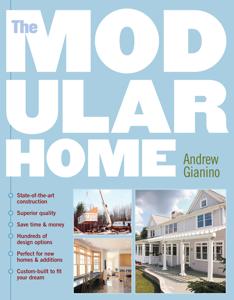
The Modular Home Book

The Modular Home Book

By Andy GianinoEducation
Download on the App Store

The Modular Home Book episodes

  • Chapter 11 - Building a Modular Home on Schedule
    Building your home on schedule takes every bit as much planning as building it on budget. In fact, if you put a lot of effort into planning both, you are likely to find that keeping on schedule is considerably harder than staying on budget. That is because you can determine what you will get and how much you will spend before construction begins, and almost all of the required decisions for building a modular home are reasonably predictable and within your control. This is not true for scheduling, since there are so many other players involved who will not always bend to your will, including the surveyor, engineer, utility company, building inspector, dealer, manufacturer, and general contractor.

    0 min
  • Chapter 10 - Modular Warranty Service for a Prefabricated Home
    Warranty service work is needed at some point on virtually every new house. The imperfections of materials and people inevitably create the need. The hundreds of different materials that make up a house don't always respond as they were designed, sometimes causing undesirable results. The human beings that build homes bring different abilities and attitudes to their work, occasionally creating unacceptable quality. Dealers, manufacturers, and general contractors work hard to prevent quality problems and avoid mistakes, but they also have created a mechanism to address them. That is the function of modular warranty service.
    0 min
  • Chapter 9 - Modular Home Financing
    To build a modular home you need to pay the dealer for the modules and the general contractor for his services. If you do not own a building lot, you need to purchase it as well. There are three typical sources of these funds. The first is private funds, such as personal savings, an equity loan on another property, the sale of personal assets, or a family loan. The second is a lending institution, usually a bank, credit union, or mortgage company. The third source is the modular dealer or GC.
    0 min
  • Chapter 8 - Building a Modular Home Addition
    Modular construction is a great way to build an addition. You get the quality and price advantage that modern modular homes are known for along with faster build time. Speed is particularly beneficial when building modular home additions, since the construction will temporarily disrupt your family’s life, especially if you remain in your home while the work is being done.
    0 min
  • Chapter 5 - Selecting a Modular Home General Contractor
    There are three types of construction tasks that need to be completed to build a modular home: the site work, the button-up work, and the construction of site-built structures. Someone needs to be in charge of hiring all of the trades people needed for these tasks, coordinating their schedules, and overseeing their work. That is the job of the general contractor, often known simply as the GC.
    0 min
  • Chapter 4 - Modular Home Specifications and Features
    Modular home manufacturers are offering their customers more and more customization. The market demands it, and their competitors are providing it. The full chapter in the book discusses hundreds of options that are usually available and gives advice on which offer the most value, and which the least.
    0 min
  • Chapter 3 - Designing a Modular Home
    Once you have decided to build a new home, you need to select a plan that meets your needs and expresses your personal style. Most modular dealers try to steer you to one of their standard offerings, and most customers can usually find at least one standard plan that comes close to meeting their needs.
    0 min
  • Chapter 2 - Selecting a Modular Home Dealer
    Many customers find this process both difficult and confusing. It is not like shopping for a new car or refrigerator. There are no consumer magazines offering comparisons and recommendations on modular home companies. Unless you know several people who have already built prefab houses and can offer advice on specific modular home companies, it may be hard to take the first step.
    0 min
  • Chapter 1 - Why Build a Modular Home
    The modular factory system combines engineering know-how and factory-production methods to design and build more efficiently and with greater quality control. When done well, the efficiency results in lower costs and the quality control results in a better product.
    0 min

About The Modular Home Book

From the publisher's feed

Andy Gianino, president of The Home Store, has written a comprehensive handbook for prospective modular home buyers. The book is packed with everything you need to know about buying and building a…