
Sign up to save your podcasts
Or



Host Chad MclLain interviews longtime friend and mentor Richard Shallcross, recalling meeting in 2001, Chad’s bar-results moment, and a $20 “good luck” bill Richard gave him in 2002. Richard introduces his background: Chicago suburbs, mechanical engineering at Rose-Hulman, Army ROTC, active duty as an infantry officer and helicopter pilot, an MBA from Georgia State, internal auditing for W.R.
Grace, then law school at the University of Tulsa and starting practice in 1982. He shifted from energy interests to plaintiffs’ personal injury—especially medical negligence—because that was the office workload and he found representing injured citizens more rewarding than limiting corporate exposure. Richard describes a case involving urgent-care cardiac arrest, defibrillator misuse, and his recreation of the strip at mediation, leading to a substantial offer.
They discuss the psychological toll, lawyer depression and substance abuse, coping through exercise and umpiring, professional development via AAJ, trial memories including a rural medical negligence case, defining success through family, and Richard’s advice: don’t waste time.
Menu:
Host Chad McLain interviews longtime friend and mentor Ted Sherwood about the psychological weight of plaintiff personal injury work and how lawyers manage repeated exposure to loss.
Sherwood recounts leaving Tulsa real estate to attend law school, clerking and later practicing with renowned plaintiff lawyer Ed Abel, whose client-centric approach and “David vs. Goliath” cases against powerful defendants shaped Sherwood’s career, before Sherwood formed his own firm and reflected on why plaintiff firms often struggle with partnerships.
Sherwood describes his early political work through the trial lawyers organization fighting tort reform, protecting access to courts, the American rule on attorney’s fees, and defending Oklahoma’s Judicial Nominating Commission after past judicial corruption. He shares memorable cases highlighting clients’ resilience, including paralysis from an oilfield device and a missed spinal injury diagnosis he lost at trial. In later years as a mediator, he gained empathy for defendants’ stress and emphasized closure, accountability, and preventing future harm.
Host Chad McLain interviews Tulsa businessman Mitch Myers about resilience after the sudden loss of Mitch’s first wife, Holly.
Mitch recounts April 2010, when Holly developed severe abdominal pain over Easter weekend, was initially misdiagnosed, flat-lined after Ativan at a small hospital, and was transferred to St. John in Tulsa, where surgery revealed a sigmoid volvulus and she later developed ARDS. After 17 days on life support, a tracheostomy attempt injured her carotid artery and she died. Mitch describes the shock of informing family, the brief surge of support followed by isolation, and years of instability marked by a quick remarriage and divorce.
He explains coping through problem-solving, learning to give himself and others grace, embracing presence, and believing life’s fragility changes how you treat people. The episode concludes that while events are uncontrollable, our response is our greatest power.
00:00 Welcome and Topic Setup
00:43 Meet Mitch Myers
03:09 Life Before the Loss
04:53 ER Visit and Misdiagnosis
08:26 Code Blue and Transfer
12:30 ICU Decisions and ARDS
18:23 Tracheostomy Tragedy
22:58 Breaking the News and Shockwaves
26:12 Aftermath and Feeling Alone
31:08 Messy Years and Dating to Survive
34:59 Lessons and New Perspective
42:51 Advice to My Younger Self
47:03 Moral of the Story
Host Chad McLain interviews financial advisor Josh Herlin, founder of Future You Financial, about why many people—even six-figure earners—live paycheck to paycheck and how financial freedom comes more from habits than income. Herlin, who previously worked at Merrill Lynch and Morgan Stanley and has a quantitative finance master’s, says young professionals’ biggest mistake is FOMO-driven spending and delaying investing.
They emphasize paying yourself first, automating contributions, thinking in percentages, and distinguishing long-term investing from short-term trading/speculation. They discuss how big mortgages, car payments, credit card debt, social media comparison, and stress reduce financial margin, and warn against cashing out 401(k)s.
Herlin advocates building a “work-optional” lifestyle, improving early financial literacy (including Roth IRAs for kids), and engaging as an owner in the economy.
Menu:
Host Chad McLain welcomes Tony Rittenberry to discuss how adult relationships often end quietly through slower replies and less effort, and how definitions of healthy relationships change with age.
They emphasize mutual respect, care, reciprocity, and having a healthy relationship with oneself, noting that adults have less patience for “nonsense” and are more willing to move on. They talk about modern communication pressures (texts, unread messages, social media), shifting expectations, and the value of a smaller circle of close friends versus broader networks, including activity-based friend groups.
They explore accountability versus judgment, recognizing when relationships have run their course, how most friendships fade rather than explode, and how divorce can abruptly reshape friendships and family ties. They conclude that relationship quality shapes life quality, and letting go can be necessary when a relationship no longer fits who you are.
Menu:
00:00 Quiet Relationship Endings
00:44 Meet Tony Rittenberry
01:49 What Makes Relationships Healthy
03:21 Patience And Letting Go
05:53 Healthy Relationship With Self
07:27 Modern Texting Expectations
11:22 Instant Response Pressure
15:07 Small Circle Or Big Crowd
24:30 Keeping Friend Groups Separate
29:03 Accountability Versus Judgment
36:56 When Friendships Fade Out
39:19 Divorce And Picking Sides
41:21 Shared Experiences And Values
44:24 Rough Season Or Broken
47:04 New Friendships And Closing
Host Chad McLain interviews veteran Oklahoma trial lawyer Joseph Farris, who has spent 50 years practicing law—primarily defending insured businesses and individuals in high-stakes personal injury, trucking, and legal malpractice matters—while emphasizing that the lawyer’s duty of loyalty is to the insured, not the insurance company, especially when coverage conflicts arise.
They discuss the psychological toll of constant exposure to death, destruction, and family trauma, including a memorable case where two 17-year-old boys were maimed by a grain auger, and how Farris copes through athletic outlets like running and golf and by setting work-life boundaries. Farris explains trial stress patterns, the importance of giving juries a damages “number” and framing it to counter anchoring effects, and how insurance-company risk tolerance has shifted toward settlement. They close on mentoring younger lawyers and the episode’s moral about learning what to carry and what to let go.
00:00 Meet Joe Farris
01:13 Defense Lawyer Basics
04:17 Insurance Conflicts
07:26 Trauma in Injury Cases
08:27 Fifty Years In Practice
09:51 Finding Healthy Outlets
12:37 On Call At Crash Scenes
14:25 Trial Stress And Sleep
16:17 Grain Auger Tragedy
20:18 Defending The Unpopular
23:07 Capital Cases Respect
26:30 Always On Call
27:08 Setting Boundaries
28:59 Sophisticated Clients
30:46 Why Insurers Settle
33:17 Anchoring The Jury
38:43 Staying Clinical
43:44 Psychological Toll
45:31 Advice For Young Lawyers
49:53 Closing Reflections
52:02 Moral Of The Story
Host Chad McLain interviews his friend Rob Higdon, a health insurance businessperson and ORU alumnus, on whether true selfless giving exists and how expectations shape relationships.
They argue life is often transactional, yet selfless giving may be possible though rare because human nature is selfish; even anonymous gifts can carry internal returns like feeling good. Rob frames giving through biblical principles, citing tithing, “more blessed to give than receive,” warnings against performative piety, and examples of sacrificial giving such as the widow’s coins, along with stories of Abraham and Isaac and Jesus’ crucifixion.
They discuss business giving, tax benefits, and legal distinctions between gifts and bribes, noting ethics rules for public officials and judges. A key takeaway is that resentment can come from unspoken expectations, and awareness of expectations can help people choose to release them and experience greater freedom.
Menu:
Host Chad McLain interviews Ricky Bolton Jr. on The Moral of the Story about physical and mental health and the pressure to be “on” all the time, asking whether people are being themselves or performing.
Bolden, a former college athlete and coach with graduate degrees in sports management and counseling psychology, describes how athletic identity, constant expectations, and job instability can create numbness, scarcity/survival mindsets, and people-pleasing. He explains shifting “wins and losses” from games to helping others, distinguishing discipline (showing up regardless of feelings) from motivation (affirmations, prayer, purpose), and learning that authenticity often outperforms elaborate plans.
They discuss boundaries, burnout, social media visibility, intimidation perceptions, and redefining his work as human health and performance for all clients. Bolden emphasizes self-love on worst days, consistency, journaling, and looking beyond peers to build a healthier life after sport.
00:00 Are You Performing
00:57 Ricky’s Athletic Roots
03:37 Identity After Sports
06:24 Expectations and Survival Mode
10:10 Anchors and People Pleasing
13:05 Discipline Versus Motivation
15:53 Default Mode Authenticity
19:19 Ego Credentials and Humility
22:40 When Performance Costs You
24:22 Vulnerability and Identity
25:19 Energy Balance and Self Care
27:24 Burnout and Refueling
28:39 Visibility and Social Pressure
30:15 Intimidation and Staying Grounded
32:53 Authenticity Beyond Social Media
34:52 Quick Production Break
36:49 Training Humans Not Athletes
39:46 Setting Boundaries With Clients
42:09 Hard Won Lessons and Advice
44:41 Anchors Journaling and Reinvention
47:13 Outro and Behind the Scenes
Chad McLain records an early episode of his podcast, The Moral of the Story, with longtime friend and businessman Chris Blount, focusing on examining one’s relationship with alcohol. They discuss moving beyond a binary “no problem vs. problem” view to asking whether drinking contributes positively, neutrally, or negatively to the life someone wants, and emphasize common sense, self-awareness, habits, and control.
Chris describes twice stopping drinking by personal choice, notes social expectations in business and dining settings, and talks about replacing drinking with alternatives like club soda. Chad shares how alcohol can diminish capacity, waste time with family and work, and how boredom and numbing can drive drinking.
Chad also describes personal injury cases involving drunk driving, over-service, and severe legal and life consequences. They end by framing the “moral” as awareness creating choice and enabling change.
Menu:
Every decision we make has consequences — and no one sees that more clearly than a lawyer.
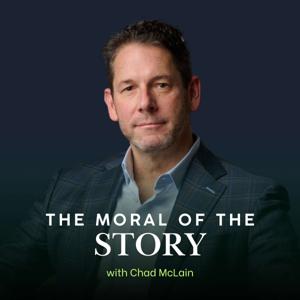
On The Moral of the Story, veteran attorney Chad McLain draws from his experience in the legal world to explore the experiences and choices that shape our lives. Each episode looks beyond the surface of real situations to examine everyday moral crossroads — uncovering deeper lessons about responsibility, character, and what it means to live a better life.
Because sometimes the most important verdict isn’t delivered in a courtroom — it’s the one we deliver to ourselves.
From the publisher's feed
Every decision we make has consequences — and no one sees that more clearly than a lawyer.
On The Moral of the Story, veteran attorney Chad McLain draws from his experience in the legal world to…
Each episode looks beyond the surface of real situations to examine everyday moral crossroads — uncovering deeper lessons about responsibility, character, and what it means to live a better life.
Because sometimes the most important verdict isn’t delivered in a courtroom — it’s the one we deliver to ourselves.