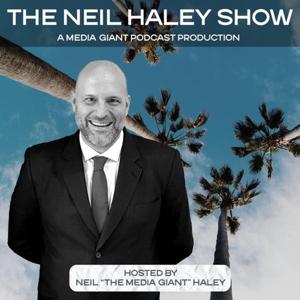
AI Office Hours: Building Autonomous AI Agents, Managing Costs, and Why AI Fluency MattersIn this episode of AI Office Hours, presented as a special simulcast of The Neil Haley Show, Neil “The Media Giant” Haley and Patrick Riley discuss autonomous AI agents, Claude, OpenClaw, Manus, Copilot, Chinese AI models, memory, cost, privacy, and why AI fluency is quickly becoming essential for business owners and employees.Patrick opens by sharing that he is hearing less about OpenClaw and continues to experience reliability issues with his own agent, “Rich.” Updates sometimes cause problems, forcing him to spend time rebuilding or restoring the system. He still plans to use it, particularly for app development, but increasingly relies on Manus and is watching the migration toward Claude Code and Claude Co-work.One thing Patrick likes about Manus is its memory. He recalls asking about cruise options and being surprised when the system remembered an Iceland cruise conversation from months earlier.Neil explains why he never fully committed to OpenClaw. He pushes his AI tools extremely hard and worried about unpredictable usage costs. With subscription platforms, he knows approximately what he will spend each month and can move between multiple AI systems depending on the task.That leads into the biggest story of the episode: Neil’s customized Claude-based AI agent.Rather than treating AI as a chatbot, Neil has built a business operating system around it. He created trackers, spreadsheets, client folders, master prompts, project information, and a daily process where the system packages its knowledge and instructions so a fresh Claude session can continue the work.Neil describes the agent as a combination of a fractional CEO, CFO, executive assistant, business coach, bookkeeper, and project manager.The system has helped him organize clients, manage his pipeline, build websites, track tasks, stay accountable, and work through a major backlog. Neil says the most important part is not traditional AI “memory,” but the structured knowledge base he has created around his business.Patrick and Neil also discuss whether the same system could be built more cheaply using open-source tools and lower-cost models. Patrick believes it could, especially using Chinese models for less complex work, but says businesses have to balance price with reliability, privacy, and model quality.Neil argues that choosing the cheapest AI is not always smart business. Just as companies can cut labor costs and accidentally reduce service quality, using a cheaper model for every task may produce weaker results or require more human supervision.Both agree that the strongest strategy is often to use multiple AI models for different jobs.Claude may be ideal for one workflow, while ChatGPT, Gemini, Manus, Copilot, or another platform may be better somewhere else. The advantage comes from knowing which tool best fits each task instead of trying to force one AI to do everything.The conversation then moves to corporate AI security.Patrick explains that in his workplace, employees cannot use outside large language models with company information. Microsoft Copilot is used inside the corporate environment because internal data remains behind organizational guardrails.He says Copilot works well for internal documents, presentations, OneDrive information, and employee productivity, although he personally prefers the responses and memory capabilities of some other AI platforms.Neil and Patrick also discuss the future of hiring.Patrick believes AI proficiency will become increasingly important. Simply knowing how to ask ChatGPT a question is no longer enough. Employees will need to understand how to use AI to improve workflows, help customers, analyze information, automate processes, and operate safely inside company restrictions.Neil says his eventual plan is to hire a human project manager or virtual assistant whose role will include supervising the AI systems while he focuses on strategy, relationships, sales, and high-level creative work.That may be the biggest takeaway from the episode: AI is not just replacing tasks—it is creating a new kind of management.The future worker may supervise specialized AI systems, verify their output, control costs, correct mistakes, and determine which model should handle each assignment.For more AI conversations and real-world experiments, follow AI Office Hours. Patrick Riley’s books and publishing projects are available at UnderwayBooks.com.