
Sign up to save your podcasts
Or



What does it take to turn firsthand industry experience into a technology marketplace that can scale across hundreds of cities?
In this episode of The Next Nova Podcast, Matt Phillips sits down with Bryan Clayton of GreenPal to discuss bootstrapping, marketplace growth, digital marketing, SEO, AI, customer experience, and building technology without a technical background.
Before GreenPal, Bryan spent 15 years building a landscaping company to about 150 employees and eight figures in annual sales before it was acquired. That experience became the foundation for GreenPal, a marketplace that helps homeowners quickly connect with lawn care providers.
The transition was not easy. Bryan had no coding background, and the first outsourced version of the platform cost roughly $200,000 and failed. Instead of walking away, he and his team spent years learning to build software themselves and focused on small milestones, from 100 weekly transactions to thousands.
Bryan also explains why GreenPal chose to remain self-funded. Rather than continuing to chase investors, the team focused on paying customers, reinvesting revenue, and building a profitable business.
The conversation explores the challenge of operating a two-sided marketplace, solving the supply-and-demand problem city by city, and why Bryan believes marketing becomes a core competency for marketplace businesses.
Matt and Bryan also discuss SEO versus AI search, how GreenPal uses real marketplace data in content, and how AI helps the company predict poor service outcomes before they happen.
Bryan closes with advice for founders: build something real, get it in front of customers, and prove people will pay before spending years perfecting the idea.
In This Episode
• Turning landscaping experience into GreenPal
• Building technology without a coding background
• Recovering from a $200K failed first app
• Why GreenPal chose to bootstrap
• Solving the two-sided marketplace problem
• Generating demand city by city
• Why marketplace growth depends on marketing
• SEO versus AI and answer-engine search
• Using AI to predict bad customer experiences
• Balancing data with direct customer feedback
• Going deeper in existing markets before expanding
• Why founders should validate with real revenue
Chapters
00:00 Meet Bryan Clayton
00:18 What GreenPal Does
01:35 From Landscaping to Technology
03:23 Starting Without a Tech Background
03:41 The $200K First-App Failure
04:49 Staying Focused Through Setbacks
06:03 Small Goals and Early Traction
07:11 Why GreenPal Bootstrapped
10:49 Building a Two-Sided Marketplace
13:34 Generating Demand City by City
15:48 SEO vs. AI Search
18:36 How GreenPal Uses AI
19:25 Building a 10-Star Experience
20:39 Predicting Customer Problems
22:24 Data vs. Gut Instinct
23:12 Staying Close to Customer Support
24:39 Going Deep Before Going International
26:11 The Challenge of Scaling More Cities
27:40 Advice for Founders Using AI Tools
29:15 Final Takeaways
Resources
GreenPal: https://www.yourgreenpal.com/
The Next Nova Podcast
Spotify: https://open.spotify.com/show/3T0bb1zyABAchkIw75RpFy?si=b8771f6576804605
Apple Podcasts: https://podcasts.apple.com/us/podcast/the-next-nova/id6813648765
Vexnova: https://vexnova.com/
If you enjoyed this conversation, subscribe to The Next Nova Podcast and share the episode with another founder or entrepreneur building through growth, technology, or AI.
What does it take to build a home service business that can grow beyond its founders without losing the brand, team, or customer experience that made it work?
In this episode of The Next Nova Podcast, Matt Phillips sits down with Jason Tudor of Count Junkula, a Dracula-themed junk removal and dumpster rental company in Raleigh, North Carolina.
Jason shares how he and his business partner moved from window cleaning and other home services into a business they found simpler, safer, and easier to scale. He explains lessons from narrowing their previous service offering, adapting during COVID, and adding capacity before demand overwhelms the operation.
The conversation also explores Count Junkula's distinctive branding. What initially felt almost too silly became one of the company's strongest differentiators. Jason explains how a clear identity helps keep marketing consistent and memorable.
He also shares what it took to move from working in the truck to building a team of roughly 20 people, including training, safety standards, selective hiring, and why the wrong hire can affect the whole business.
Matt and Jason also discuss capacity planning, franchising, and technology. Jason explains what he learned from operating a second location, why he refocused on Raleigh, and how his business partner built an AI-powered route optimizer.
Jason also shares how he uses ChatGPT and Claude for creative work, software development, integrations, and operational problem-solving.
Looking ahead, Count Junkula has a goal of reaching $10 million in annual revenue. Jason makes clear this is a target, not a current result.
In This Episode
• Moving from window cleaning to junk removal
• Building a memorable Dracula-themed brand
• Getting the founders out of the truck
• Training, safety, and selective hiring
• Planning capacity before demand spikes
• Lessons from attempting to franchise
• Building an AI route optimizer
• Using ChatGPT and Claude
• The goal of reaching $10M in annual revenue
• Growing one market vs. multiple locations
Chapters
00:00 Episode Setup and Introduction
00:42 What Count Junkula Does Today
01:41 From Window Cleaning to Junk Removal
02:37 Why Junk Removal Was Easier to Scale
04:15 Adapting the Business During COVID
04:44 Buying Capacity Before You Need It
05:51 What Jason Learned From Franchising
08:04 Building a Brand People Remember
10:56 Launching With Google Ads
11:45 Getting Out of the Truck
12:34 Building a 20-Person Team
13:49 Training for Safety and Customer Experience
15:17 Why Hiring the Wrong Person Costs So Much
17:13 How Count Junkula Plans Capacity
19:41 Building an AI Route Optimizer
20:45 Using ChatGPT and Claude
23:24 The Goal of $10M in Annual Revenue
23:53 Single-Market Growth vs. Multiple Locations
24:20 Adding New Services
25:02 Where to Find Count Junkula
Resources
Count Junkula
Website: countjuncula.com
Instagram: @CountJuncula
The Next Nova Podcast
Spotify: https://open.spotify.com/show/3T0bb1zyABAchkIw75RpFy?si=b8771f6576804605
Apple Podcasts: https://podcasts.apple.com/us/podcast/the-next-nova/id6813648765
Connect with Jason Tudor
LinkedIn: https://www.linkedin.com/in/jason-tudor-44595619
Vexnova: https://vexnova.com/
If you found this conversation valuable, subscribe to The Next Nova Podcast and share it with a business owner or entrepreneur working through growth, hiring, operations, branding, or technology.
What happens when you sell your company, buy it back, and get a second chance to scale it differently?
In this episode of The Next Nova Podcast, Matt Phillips sits down with John Roman of Battlbox to discuss entrepreneurship, e-commerce, subscription growth, live shopping, profitability, AI, and rebuilding a consumer brand for its next stage.
Battlbox started in 2015 as a subscription box focused on outdoor adventure, camping, hiking, and preparedness. Over time, it evolved into a broader brand built around content, community, and membership.
John shares how the company was acquired in 2021 and bought back by its original operators in 2023 at a significant discount. Since then, the team has invested in content, expanded Amazon, tested new channels, and pushed toward a more aggressive growth strategy.
A major focus is Whatnot. John explains how Battlbox tested live shopping, scaled it into a dedicated operation, and turned it into the company’s second-largest revenue channel behind its website. He also breaks down staffing, Shopify integration, fees, and why live shopping changes the customer acquisition equation.
Matt and John also discuss profitable growth, rising CAC, inventory risk, and how cash flow can become dangerous when demand slows.
The episode also explores how Battlbox uses AI internally. John shares how the team automates repetitive administrative work and built an AI agent that creates product detail pages using inventory data, images, SEO elements, metadata, and other product information.
In This Episode
• Selling Battle Box and buying it back
• What changed after reacquiring the business
• Content and community as a competitive moat
• Expanding through Amazon and new channels
• How Whatnot became the second-largest channel
• Building a scalable live-shopping team
• Shopify integration and live-commerce operations
• Growth vs. profitability
• CAC, inventory, and cash-flow risk
• Using AI for internal efficiency
• Building an AI product-page agent
• In-house AI capability vs. outside agencies
Chapters
00:00 Meet John Roman and Battle Box
01:36 Selling the Business
04:56 Buying Battlbox Back
05:40 What Changed After the Buyback
06:41 Finding New Growth Channels
08:59 Why Battlbox Bet on Live Shopping
10:46 Testing Whatnot
12:30 Scaling Live Commerce
14:28 How the Whatnot Operation Works
16:23 Fees and Shopify Integration
18:47 Growth vs. Profitability
19:15 Why Whatnot Changes the CAC Equation
20:24 Profitable Growth vs. Growth at All Costs
23:21 The AI Investment Boom
25:58 How Battlbox Uses AI
27:46 Automating Repetitive Work
27:59 Building an AI Product Page Agent
31:24 Building AI In-House or With an Agency
33:41 What the Next Stage of Battlbox Looks Like
Resources
Battlbox: https://www.battlbox.com/
The Next Nova Podcast
Spotify: https://open.spotify.com/show/3T0bb1zyABAchkIw75RpFy?si=b8771f6576804605
Apple Podcasts: https://podcasts.apple.com/us/podcast/the-next-nova/id6813648765
Connect with John Roman
https://www.linkedin.com/in/john-roman/
Vexnova: https://vexnova.com/
If you enjoyed this conversation, subscribe to The Next Nova Podcast and share the episode with another founder, e-commerce operator, or business leader navigating growth.
What does it take to scale a luxury resale business when you have to win both the customer selling the product and the customer buying it?
In this episode of The Next Nova Podcast, Matt Phillips sits down with Andrew Brown of MyGemma to discuss how the company evolved from wholesale diamonds into a curated luxury resale platform focused on handbags and jewelry.
Andrew explains why MyGemma treats sourcing and selling as two distinct sides of the business, how years of SEO content generate leads from consumers looking to sell luxury goods, and why the company distributes inventory across MyGemma.com, more than 20 marketplaces, wholesale channels, and live shopping.
The conversation also explores how MyGemma prices inventory using historical transaction data and current market information, matches products to different marketplace audiences, and uses email, SMS, affiliates, paid search, and physical mail to acquire and retain customers.
On the operations side, Andrew shares how Salesforce became the company’s internal source of truth and how MyGemma is beginning to use Claude and AI to improve team efficiency rather than simply reduce headcount.
Matt and Andrew also discuss seasonality, access to capital, live shopping, product mix, inventory turn, gross margin, customer service, and why distribution matters in luxury resale.
Andrew closes with advice for founders: bootstrap as long as you can and retain as much ownership as possible without limiting the growth of the business.
In This Episode
• From diamond wholesale to luxury resale
• Managing sourcing and selling as two businesses in one
• Using SEO to acquire sellers
• Selling across MyGemma and 20+ marketplaces
• Pricing luxury inventory with market data
• Matching products to marketplace audiences
• Email, SMS, affiliates, paid search, and physical mail
• Repeat customers and retention
• Salesforce as an operational source of truth
• Using Claude and AI to improve efficiency
• Live shopping and reseller partnerships
• Customer service and bootstrapping
Chapters
00:00 Meet Andrew Brown
00:16 What Makes MyGemma Different
01:23 From Diamond Wholesale to Luxury Resale
02:38 Two Businesses in One
03:24 Expanding Distribution Across Marketplaces
04:15 Going Where the Customer Is
05:24 How MyGemma Prices Luxury Inventory
06:48 Moving Slow-Selling Inventory
07:23 The Brands and Products That Sell Fastest
08:10 Customer Acquisition Beyond SEO
09:39 Repeat Customers and Retention
10:11 Curating Inventory by Marketplace
11:03 Building the Salesforce Engine
12:01 Where AI Fits Into Operations
13:51 MyGemma’s Biggest Growth Challenges
15:19 Live Shopping and Reseller Partnerships
16:01 The Three-to-Five-Year Growth Strategy
16:49 What Is Driving Better Performance
17:45 Customer Service and Bootstrapping Advice
Resources
MyGemma: https://mygemma.com/
The Next Nova Podcast
Spotify: https://open.spotify.com/show/3T0bb1zyABAchkIw75RpFy?si=b8771f6576804605
Apple Podcasts: https://podcasts.apple.com/us/podcast/the-next-nova/id6813648765
Vexnova: https://vexnova.com/
If you enjoyed this conversation, subscribe to The Next Nova Podcast and share the episode with another founder or business leader working to scale.
What happens when a 97-year-old company has to rethink its brand, marketing, technology, and customer experience for the digital age?
In this episode of The Next Nova Podcast, Matt Phillips sits down with Leslie Leifer, Chief Marketing Officer at Gallery Collection, to discuss modernizing an established business while preserving what makes it unique.
After 18 years at 1-800-Flowers, Leslie joined Gallery Collection and saw the business differently: not simply as B2B, but as a company operating in a B2B world with a meaningful B2C component. That shift changed how she thought about customers, products, marketing, and use cases.
Leslie explains how Gallery Collection balances traditional print with digital marketing, using data analysis, holdback testing, sampling, and site-level analysis to measure performance. She also shares how the company is using AI for employee efficiency, creative review, development, coding, customer service, and information analysis.
The conversation also explores rebranding a 97-year-old company, moving beyond the idea of being only a greeting card business, and focusing on premium printed products that help customers communicate their own brands and values.
Matt and Leslie discuss customer-focused marketing, StoryBrand principles, replatforming a homegrown website, deciding what should remain custom, and balancing short-term improvements with long-term transformation.
Finally, Leslie shares advice for experienced leaders who feel stuck and explains why career growth sometimes requires taking a difficult step toward something new.
In This Episode
• B2B in a B2C world
• Print vs. digital marketing
• Measuring print performance
• How Gallery Collection uses AI
• Why physical communication still matters
• Rebranding a 97-year-old company
• Customer-focused marketing
• StoryBrand principles
• Replatforming a homegrown website
• Knowing what should stay custom
• Advice for leaders feeling stuck
Chapters
00:00 Meet Leslie Leifer and Gallery Collection
01:12 Leaving 1-800-Flowers After 18 Years
02:15 B2B in a B2C World
03:38 Understanding Customers Through Use Cases
04:26 How Gallery Collection Acquires Customers
06:01 Balancing Print and Digital Marketing
07:27 Measuring Print Marketing Performance
08:38 Prospecting vs. Customer Marketing
09:03 How Gallery Collection Uses AI
11:20 Why Physical Connections Still Matter
13:12 Changing Customer Communication
14:23 Rebranding a 97-Year-Old Company
16:04 Putting the Customer at the Center
17:44 The Challenge of Replatforming the Website
19:17 What Leslie Looks for in a New Platform
20:33 Why Not Everything Needs to Be Custom
21:30 Slowing Down to Speed Up
22:23 Advice for Leaders Feeling Stuck
24:08 Where to Find Gallery Collection
Resources
The Next Nova Podcast
Spotify: https://open.spotify.com/show/3T0bb1zyABAchkIw75RpFy?si=b8771f6576804605
Apple Podcasts: https://podcasts.apple.com/us/podcast/the-next-nova/id6813648765
Connect with Leslie Leifer
Instagram: https://www.gallerycollection.com/
LinkedIn: https://www.linkedin.com/in/leslieleifer/
Vexnova: https://vexnova.com/
If you enjoyed this conversation, subscribe to The Next Nova Podcast and share the episode with a leader or marketer navigating rebranding, technology, or change.
What happens when you stop assuming what customers want and start asking them?
In this episode of The Next Nova Podcast, Matt Phillips sits down with Hilary Dubin, co-founder of Jones, to discuss entrepreneurship, customer discovery, marketing, community building, AI, and startup growth.
Hilary and co-founder Caroline started Jones after experiencing how difficult it was to quit vaping. After speaking with hundreds of potential customers, peers, and medical experts, they saw a gap: vaping had evolved, but quitting products and support had not.
Hilary explains why they validated the problem before building, created a community before launch, and used social media, events, influencers, and affiliates to grow awareness.
Growth also challenged early assumptions. The people engaging with Jones content were not always the people most likely to become customers. Customer data pushed the team to rethink its audience, content, influencers, and positioning.
Matt and Hilary also discuss venture capital, credibility as first-time founders, rising customer acquisition costs, omnichannel growth, Amazon, retail, and how Jones uses AI through Coach Jones, AI search optimization, and MCPs.
The core lesson: get out of the building. Talk to real customers, understand their problems, and validate that they will pay before becoming too attached to your idea.
In This Episode
• Customer discovery before building
• Building community before launch
• Finding the real customer through data
• Influencers, affiliates, events, and paid media
• Rising CAC and omnichannel growth
• Amazon and retail expansion
• Coach Jones and AI
• Optimizing for AI search
• Using MCPs for customer insights
Chapters
00:00 Meet Hilary Dubin and the Story Behind Jones
00:45 Why No One Had Modernized Quitting
02:24 Creating a Modern Solution for Quitting Nicotine
03:15 The Physical and Psychological Sides of Quitting
04:17 Why Community Became Central to Jones
06:18 How Customer Research Validated the Business
07:51 Bootstrapping vs. Venture Capital
09:42 Scaling Jones Through Venture Funding
11:45 Building Credibility as First-Time Founders
14:14 Growing Brand Awareness and Customer Acquisition
15:42 Going Viral and Finding the Right Audience
17:41 How Customer Data Changed the Strategy
18:54 Events, Influencers, and Affiliate Growth
22:26 Paid Ads, SEO, CAC, and Omnichannel Growth
25:47 How Jones Uses AI to Support Customers
27:15 Optimizing for ChatGPT and AI Search
31:05 Using MCPs to Turn Customer Data Into Insights
34:16 Controlling CAC and the Future of Jones
37:39 Get Out of the Building: Advice for Founders
Resources
Jones: https://quitwithjones.com/
The Next Nova Podcast
Spotify: https://open.spotify.com/show/3T0bb1zyABAchkIw75RpFy?si=b8771f6576804605
Apple Podcasts: https://podcasts.apple.com/us/podcast/the-next-nova/id6813648765
Hilary Dubin
Instagram: https://www.instagram.com/quitwithjones/
LinkedIn: https://www.linkedin.com/in/hilary-dubin-374156b4/
Vexnova: https://vexnova.com/
If you enjoyed the conversation, subscribe to The Next Nova Podcast and share the episode with another founder or entrepreneur.
What really happens when a business starts to scale? The strategies, people, and systems that helped you get started may not be the same ones that can take you to the next level.
In this episode of The Next Nova Podcast, Matt Phillips sits down with Tim Dougherty, founder of Project LeanNation, to talk about entrepreneurship, franchise growth, leadership, customer experience, technology, and the challenges that surface as a company grows.
Tim’s path into entrepreneurship was unconventional, and a major turning point eventually led him toward the idea that became Project LeanNation. But building the business was only the beginning.
As the company expanded, new questions emerged: How do you preserve culture while growing? How do you know whether someone needs more support or simply isn’t the right fit? What happens when the customer you originally built around isn’t actually your best customer? And how do you use AI and technology without losing the human relationships that make the business different?
Matt and Tim explore the difficult decisions and leadership shifts that come with scaling, including why growth exposes weaknesses, why simplifying priorities can improve execution, and why moving faster isn’t always the answer.
If you’re an entrepreneur, founder, franchise owner, business leader, or operator navigating growth, this conversation offers a practical look at what scaling really demands.
In This Episode• Scaling without losing company culture
• Franchise growth and operational challenges
• Identifying the right customer
• Improving customer experience and retention
• Making difficult leadership decisions
• Skill vs. willingness to execute
• How growth exposes weaknesses
• Using AI to reduce operational friction
• Improving technology adoption
• Why too many priorities slow execution
• Balancing automation with human connection
• Leadership for the next stage of growth
00:00 The customer conversation that changed everything
00:35 Meet Tim Dougherty
01:36 An unexpected path into entrepreneurship
02:58 The turning point
03:53 Where Project LeanNation began
05:05 When an idea becomes a business
06:24 Building a different customer experience
08:20 Can culture survive rapid growth?
10:44 Discovering the real customer
12:50 What drives retention
14:06 When growth exposes problems
15:18 Skill vs. will in leadership
17:14 Preparing for the next stage
18:41 Where AI and technology fit
19:46 Solving education gaps with technology
21:07 Why simplifying priorities matters
23:27 Technology vs. human connection
24:01 Advice for entrepreneurs facing growth
24:41 The mindset founders need
Project LeanNation: https://projectleannation.com/
The Next Nova Podcast:
Connect with Tim Dougherty: https://www.instagram.com/projectleannation/
https://www.linkedin.com/in/plntim/
Vexnova: https://vexnova.com/
If you enjoyed the conversation, subscribe to The Next Nova Podcast, leave a review, and share the episode with another founder or business leader navigating growth.
From the publisher's feed
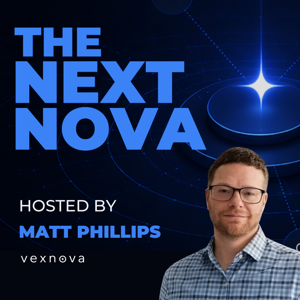
The Next Nova explores what it really takes to build, scale, and transform a modern business.
Hosted by Matt Phillips, Founder of Vexnova and a 20-year commerce leader, the show…
The conversations go beyond polished success stories to uncover the decisions, mistakes, pivots, breakthroughs, and lessons behind growing a company in a rapidly changing business environment.
Episodes explore scaling a business, entrepreneurship, e-commerce growth, omni-channel strategy, customer acquisition and retention, conversion optimization, artificial intelligence, automation, digital transformation, technology integration, leadership development, operational efficiency, customer experience, and organizational growth.
Because building what comes next rarely comes with a perfect playbook.
If you're growing a company, leading through change, improving acquisition or retention, adopting AI, modernizing systems, or figuring out what the next stage requires, The Next Nova is built for you.
Why business leaders keep listening1. Real growth conversations.
Scaling creates new challenges around people, systems, customers, technology, and execution. The Next Nova explores what leaders are learning while they are in the middle of those challenges.
2. Strategy connected to execution.
Episodes move beyond broad business advice and into decisions around acquisition, conversion, retention, operations, leadership, and technology adoption.
3. Guests who are actively building.
Founders, executives, and operators share what is working, what is changing, what failed, and what they are learning as their businesses evolve.
4. AI, omni-channel strategy, and digital transformation through a business lens.
The show explores how companies use AI, automation, data, connected customer channels, and modern technology to improve operations, customer experience, acquisition, conversion, and growth. It also looks at how businesses modernize systems and integrate technology without losing the human connection that makes a brand valuable.
5. Built for leaders thinking about what comes next.
Whether that means scaling a team, improving customer acquisition, adopting new technology, or rethinking operations, the conversations are designed to help leaders make better decisions.
Founders, CEOs, executives, entrepreneurs, e-commerce leaders, marketers, operators, and business owners working through growth, omni-channel strategy, digital transformation, customer acquisition, conversion, retention, leadership, AI adoption, and operational scale.
If you're searching for topics like how to scale a business, omni-channel strategy for e-commerce, digital transformation strategy, how to grow an e-commerce brand, how to use AI in business, customer acquisition strategies, improving conversion rates, customer retention, business automation, or how to modernize business operations, The Next Nova is built around those conversations.
What you'll learnHow founders approach growth as the business becomes more complex.
How companies improve acquisition, retention, and conversion.
How leaders decide where AI and automation belong.
How businesses scale systems without losing customer experience.
How founders navigate leadership and operational decisions.
How successful companies adapt when what worked before stops working.
The Next Nova shares what business leaders are building and learning next.