
Sign up to save your podcasts
Or



Your dog has a fatty lump, and you've been told it's "just a lipoma" and a "normal part of aging". But is age really the entire explanation?
In this episode, we explore fatty lumps beyond the lump to discuss metabolic health, environmental exposures, and the Traditional Chinese Veterinary Medicine (TCVM) concepts of Dampness, Phlegm, and stagnation.
In this episode, we're discussing:
A lipoma doesn't automatically mean your pet has a toxin problem or an underlying illness. But it can be an opportunity to take a closer look at your pet's overall health.
Because just because something is common doesn't mean we should stop asking questions.
Links:
Book your 1:1 nutrition consultation today
Book your 1:1 holistic in home visit today
Watch this episode on YouTube
This year's American Holistic Veterinary Medical Association (AHVMA) conference felt different for me.
Last year, I attended without knowing anyone. I stepped outside my comfort zone, showed up, and immersed myself in a community that felt aligned with how I believe veterinary medicine should be practiced, without me knowing anyone there.
This year, I walked in knowing familiar faces, having established relationships, and feeling an even deeper sense of belonging.
One of the things I appreciate most about this community is that I don't have to constantly explain or justify why I practice veterinary medicine differently. There's an understanding that health is complex, that every pet is an individual, and that there isn't just one way to support healing and wellness.
Instead of guilt or rigid thinking, there's curiosity, collaboration, and a willingness to learn from one another.
Throughout the conference, I attended lectures covering a variety of topics, including supporting pets after spay/neuter procedures, headaches, anxiety, and other approaches to improving our patients' quality of life.
In this episode, I'm sharing some of my personal reflections from the conference, what stood out to me, and why surrounding yourself with people who share your values (while still challenging you to keep learning) matters so much.
My biggest takeaway?
We don't have to agree on every approach or practice medicine exactly the same way to learn from one another. The goal should always be to continue asking questions, expanding our knowledge, and doing what's best for the individual pet in front of us.
Book your 1:1 nutrition consultation today
Book your 1:1 holistic in home visit today
Watch this episode on YouTube
If your pet has chronic itching, recurring ear infections, red paws, yeast, hot spots, or skin infections that keep coming back, the problem may involve more than just the skin.
In this episode, we explore the idea that chronic skin disease can sometimes be a visible sign of a much bigger internal picture.
Inspired by the recent Veterinary Practice News article “A Regenerative Approach to Chronic Skin Disease in Pets” by veterinary colleagues Dr. Scarlett Magdalen and Dr. Jyl Rubin, this episode looks at chronic skin disease through a more integrative lens.
Click here to read the article
We discuss why simply controlling the itch may not always be enough, and why recurrent skin disease can be a reason to look more closely at the gut, immune system, nutrition, nutrient status, environmental exposures, and overall health of the individual pet.
When a pet has recurring skin disease, it can be helpful to ask two different questions:
How do we make this pet comfortable right now?
and
Why does this pet keep developing the same problem?
A special thanks to Dr. Magdalen and Dr. Rubin for helping bring more attention to this broader conversation around chronic skin disease, the gut-skin axis, nutrition, environmental factors, and regenerative veterinary medicine.
This episode is educational and is not intended to diagnose or treat an individual pet. Chronic skin disease can have many causes, including allergies, parasites, infections, endocrine disease, nutritional deficiencies, immune-mediated conditions, and other medical problems. Work with your veterinarian to determine what evaluation and treatment are appropriate for your individual pet.
Links:
Book your 1:1 nutrition consultation today
Book your 1:1 holistic in home visit today
Watch this episode on YouTube
Royal Canin has recently entered the gently cooked space with its new Fresh Health Nutrition line for puppies, adults, and senior dogs.
In this episode, I break down what I think this shift means for veterinary nutrition, what I like about the move toward less processed food, and where I still have questions.
We discuss:
My biggest takeaway?
Royal Canin moving into gently cooked food is progress—and I think we should welcome that progress while continuing to ask thoughtful questions.
Fresh is a processing description. It isn't automatically a nutritional assessment.
Always work with your veterinarian or veterinary nutrition professional to determine the most appropriate diet for your individual pet.
Links:
Book your 1:1 nutrition consultation today
Book your 1:1 holistic in home visit today
Watch this episode on YouTube
I recently returned from a trip to Italy, and one of the things I couldn’t stop noticing had nothing to do with the architecture, the shopping, or even the food.
It was the dogs.
The pets I saw seemed happy, relaxed, connected to their people, and almost every dog I noticed was at an ideal body condition.
It got me thinking about something I talk about often in veterinary medicine: our pets don’t experience health in a vacuum. They live inside our lifestyle, our routines, our homes, and our environment.
In this episode, I’m sharing some of the things I observed in Italy and how they made me think differently about the way our own culture can influence the health of our pets.
This isn’t about saying one country or culture has everything figured out.
It’s about asking a bigger question:
What if some of the chronic issues we see in our pets are influenced not only by their genetics or their diet , but by the environment and lifestyle we’ve created around them?
Because when we talk about longevity, weight, inflammation, digestion, behavior, and overall wellness, we have to look at the whole picture.
Our pets are living our lifestyle right alongside us.
And sometimes, changing their health starts with changing the environment around them.
Book your 1:1 nutrition consultation today
Book your 1:1 holistic in home visit today
Watch this episode on YouTube
I practice differently than I was originally trained.
But that does not mean I believe conventional veterinarians are doing it wrong.
And it definitely does not mean I believe we need to tear down one side of veterinary medicine in order to make room for another.
Most of us entered this profession for the same reason: we love animals, and we care deeply about the people who come with them.
Veterinarians take on an enormous amount of responsibility to do this work.
There are missed holidays, missed family events, long days, difficult cases, emotional decisions, years of sacrifice and then you have the financial investment into education. Aspects we all agreed to.
My goal is to be the veterinarian who asks: What else can we consider?
Because different does not automatically mean better.
Conventional does not automatically mean wrong.
And integrative does not have to mean anti-medicine.
We can respect the foundation veterinary medicine gave us while still being curious enough to expand what is possible.
Links:
Book your 1:1 nutrition consultation today
Book your 1:1 holistic in home visit today
Watch this episode on YouTube
When a pet develops anxiety, reactivity, irritability, restlessness, fear, or other behavior changes, the first question I ask is not always, “How do we stop the behavior?”
I wonder, why is this happening?
Of course, there are situations where the connection may be more obvious like a history of abuse, trauma, poor socialization, or a frightening experience can absolutely influence how a pet responds to the world.
But what about the pets without an obvious explanation?
In this episode, I’m sharing how I approach behavior differently as an integrative veterinarian and why I often look beyond training alone.
We’ll talk about:
How pain can show up as irritability, reactivity, avoidance, sensitivity to touch, or changes in personality
Why orthopedic discomfort, spinal restriction, or musculoskeletal tension may be worth investigating, even in younger pets
When therapies such as veterinary chiropractic, manipulation, rehabilitation, acupuncture, or other bodywork may be part of the bigger picture
The relationship between inflammation and the brain, mood, and behavior
Why I want to know exactly what a pet is eating, including treats, chews, supplements, and highly processed foods
How gut health and the gut-brain connection may influence behavior and nervous system function
Why nervous system regulation matters for pets who seem constantly “on,” easily startled, unable to settle, or chronically anxious
Sometimes the behavior is the symptom.
And when we start looking at the whole pet, we may find opportunities to support them that would otherwise be missed.
Links:
Book your 1:1 nutrition consultation today
Book your 1:1 holistic in home visit today
Watch this episode on YouTube
Being a non-traditional veterinarian does not stop when I leave the exam room.
Many of the choices I make for my own pets happen inside my home, through small decisions about what we bring inside, what we clean with, what we sleep on, and what we use to prepare and store food.
In this episode of The Non-Traditional Veterinarian®, Dr. Bimonte shares some of the household changes she has made to reduce unnecessary everyday exposures for both the people and pets living in her home.
These choices are not about creating a perfectly toxin-free environment. That is neither realistic nor necessary. They are about becoming more aware of repeated exposures and making manageable swaps where they make sense.
In this episode, you’ll hear about:
Why shoes come off at the door
Why Dr. Bimonte has replaced many light bulbs in her home
Household product choosing
Why she looks for toilet paper and paper towels that are not bleached with chlorine
This does not mean every conventional household product is automatically dangerous. It also does not mean pet parents need to become fearful of their homes.
The goal is to reduce the exposures that are easiest to control, especially those that occur frequently.
Links:
Book your 1:1 nutrition consultation today
Book your 1:1 holistic in home visit today
Watch this episode on YouTube
Products Dr Bimonte uses:
Cleaning
Kitchen products
Post walk care for your pet
Functional testing is often associated with pets who have chronic, complicated, or unexplained health concerns. While those pets may absolutely benefit from a deeper investigation, they are not the only ones who may be good candidates.
In this episode of The Non-Traditional Veterinarian®, Dr. Bimonte explains why functional testing may be valuable for pets with ongoing symptoms as well as pets who currently appear healthy.
For pets experiencing recurring concerns (itchy skin, ear infections, digestive changes, low energy, anxiety, inflammation, or inconsistent responses to treatment) functional tests may help uncover patterns that are not always visible through routine diagnostics alone.
For healthy pets, testing can serve a different purpose. It may establish a baseline, identify areas that could use additional support, and help pet parents make more intentional decisions about nutrition, lifestyle, supplements, environmental exposures, and long-term preventive care.
Functional testing is not a replacement for a veterinary examination, bloodwork, imaging, or other medically appropriate testing. It is an additional tool that may help veterinarians and pet parents look at the bigger picture, ask better questions, and create a more individualized approach.
Links:
Book your 1:1 nutrition consultation today
Book your 1:1 holistic in home visit today
Watch this episode on YouTube
We think about what goes into our pets' food bowls, but how often do we think about the air they breathe every day?
From scented candles and plug-in air fresheners to laundry detergents, cleaning products, perfumes, and even pet shampoos, fragrances are part of many homes.
But because pets experience the world primarily through their sense of smell, it's worth asking whether these everyday products could influence their health, especially for pets with chronic allergies, itchy skin, or respiratory sensitivities.
In this episode, we explore the role environmental exposures may play in your pet's overall well-being and why creating a lower-fragrance home doesn't have to mean living in fear or throwing everything away.
Links:
Book your 1:1 nutrition consultation today
Book your 1:1 holistic in home visit today
Watch this episode on YouTube
Waterless shampoo
Cleaning products I use
From the publisher's feed
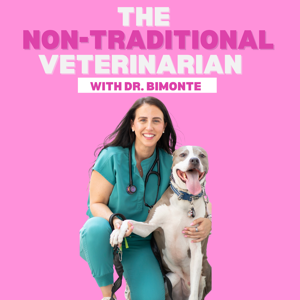
Real talk for pet parents who know there has to be more to pet healthcare.
Hosted by The Non-Traditional Veterinarian®, Dr Bimonte, this podcast explores the connections conventional…
Topics on nutrition, gut health, functional testing, and environmental exposures to longevity, chronic symptoms, and whole-pet wellness.
Expect honest education, bold perspectives, and practical ways to become a more informed advocate for your pet. It’s time to take a non-traditional approach to pet health to question the norm, uncover deeper connections, and help your pet live a healthier, longer life.
The Non-Traditional Veterinarian®, the veterinarian your pet will thank you for.

90,778 Listeners
25 Listeners
5 Listeners