
Sign up to save your podcasts
Or

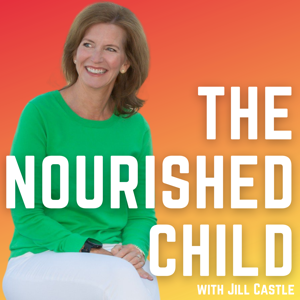


Halloween candy looks different this year. Dye-free M&M's, Skittles, and Starburst have arrived, low sugar and protein candy are cropping up everywhere, and parents are asking a new question: which candy is okay for my child?
In this episode, pediatric dietitian Jill Castle explains what has changed in the candy aisle, what the research says about food dyes and children's behavior, and why low sugar candy can lead to a stomachache. She also explains why sorting candy into good and bad can backfire, and shares a Halloween candy plan for kids that covers the weeks before, the night itself, and the leftovers.
In this episode:
• Is dye-free candy better for kids?
• Do food dyes cause hyperactivity in children?
• Is low sugar or sugar free candy okay for kids?
• Is protein candy a healthier choice?
• Why labeling candy as good or bad can make kids want it more
• How to handle Halloween night, from dinner to the candy sort
• Candy guidelines for ages 5 to 8 and ages 9 to 14
• What to do with leftover Halloween candy
Build a feeding structure that works all year with The Nourished Child Blueprint: thenourishedchild.com
Learn more about Jill: jillcastle.com
If you've scrolled social media lately, chances are you've seen someone call seed oils toxic, and that has a lot of parents second guessing the infant formula sitting in their pantry.
In this episode, pediatric dietitian Jill Castle sits down with Dr. Corrie Whisner, an infant nutrition researcher at Arizona State University, to separate the science from the scare.
They cover why fat is foundational in the first year of life, why seed oils show up in formula to provide fatty acids a baby cannot make on its own, how the FDA regulates every product on the shelf, and what actually matters the next time you're standing in the formula aisle trying to make a choice.
If you've ever wondered whether you picked the right baby formula, this conversation is here to help you feel confident instead of confused.
Resources:
Dr. Whisner's Lab at ASU: https://whisnerlabasu.weebly.com/
Instagram: @corriewhisner
LinkenIN: /corriewhisner
Fearless Feeding: https://www.amazon.com/Fearless-Feeding-Healthy-Eaters-School-dp-1732866201/dp/1732866201/ref=dp_ob_title_bk
More resources: https://thenourishedchild.com
A cookie ban in one family's lunchbox turned into a school-wide group chat feud, complete with trading, secret stashes, and a full-on parent showdown. It's a funny story, but it's also a near-perfect real-world example of what happens when a food gets fully restricted.
In this episode, pediatric dietitian Jill Castle breaks down the research behind the forbidden fruit effect, why restriction tends to backfire and increase a child's preoccupation with a food, and what to do instead using the feeding and eating pillars of her Whole Child Healthy Model.
If you've ever wondered why your "no" around a certain snack seems to make your child want it more, this episode gives you the science and a practical, non-shaming path forward.
Join our parent group program: Raise a Child Who Thrives - https://thenourishedchild.com/kids-thrive-experience/
Frozen food gets a bad reputation it hasn't earned. If you've ever felt a flicker of guilt tossing a bag of frozen peas into dinner, or wondered whether a frozen entree is really as nutritious as something made from scratch, this episode is for you.
I'm joined by Jennie Norka, MPH, Senior Director of Scientific and Regulatory Affairs at the American Frozen Food Institute, to walk through what's actually happening behind your freezer door. We take on five common myths, one at a time: that frozen food is less nutritious than fresh, that it's loaded with preservatives, that frozen meals are automatically unhealthy, and that reaching for frozen makes you a lazy parent.
Jennie explains how flash freezing locks in nutrients at the moment of harvest, often preserving more nutrition than produce that's been sitting in your fridge for a week. We also get into label reading, a side-by-side comparison of frozen entrees versus homemade recipes, and one food safety detail every parent of a baby or toddler needs to hear about frozen vegetables.
Whether you're feeding a family on a tight schedule, a tight budget, or both, you'll walk away with practical ways to build balanced meals using what's already sitting in your freezer aisle.
In this episode:
• Why the "fresh is always more nutritious" belief doesn't hold up
• How individual quick freezing (IQF) actually protects nutrients and texture
• What's really in a frozen meal, and how to read the label with confidence
• A side-by-side comparison: frozen entrees vs. homemade recipes
• The one food safety step every parent should know before serving frozen vegetables to a baby or toddler
• Simple ways to build a balanced meal using frozen fruit, vegetables, and proteins
• How frozen food can help stretch a grocery budget and cut down on food waste
Resources mentioned:
• The American Frozen Food Institute: frozenadvantage.org
• Sign up for the Munch newsletter and more parent resources at thenourishedchild.com
The first week of school, the lunchbox is packed the night before and everything feels manageable. By week two, most of us are scrambling at seven in the morning wondering how we lost the thread so fast.
In this episode, pediatric dietitian Jill Castle shares the simple lunch framework she used with her own four kids and still walks parents through in practice today, along with a practical approach to after-school snacks and dinner timing for school-aged kids ages five to fourteen.
No complicated meal plans, no pressure for variety every single day. Just a realistic, repeatable rhythm that holds up in a real family's week.
You have probably seen it in your feed: "Seed oils are toxic." "Omega-6 fats cause inflammation." "Never cook with vegetable oil."
But is any of that actually true? And more importantly, what does it mean for what you are feeding your children?
In this episode, I sit down with Dr. Martha Belury, a registered dietitian and professor at The Ohio State University who has spent more than 30 years studying fatty acid metabolism. She is one of the few researchers in the world who has actually tested the omega-6 theory in clinical settings, and her findings may surprise you.
We cover:
• What omega-6 fatty acids are and why they are considered essential nutrients
• The only two fatty acids your body cannot make on its own and why children need them for healthy growth
• Why the science does not support the idea that seed oils cause inflammation
• The difference between acute and chronic inflammation, and why parents are often confused about what inflammation actually is
• What decades of cardiovascular research tells us about vegetable oils and heart health
• Why there is still no RDA for essential fatty acids and what that gap means for your family
• How to think critically about nutrition claims on social media, especially ones that lead with fear
Dr. Belury also shares what the adult research on linoleic acid and metabolic health may suggest for children with obesity, and why pediatric-specific studies in this area are so urgently needed. This is not a conversation about what oil to buy. It is a conversation about how to think clearly when you are surrounded by conflicting information and you just want to feed your kids well.
Connect with Dr. Martha Belury:
• LinkedIn: Martha Belury
• Ohio State University, Department of Food Science and Technology: fst.osu.edu
Resources mentioned in this episode:
• The Nourished Child Blueprint: thenourishedchild.com/blueprint
• Kids Thrive at Every Size by Jill Castle
More from Jill:
• The Nourished Child podcast: thenourishedchild.com
• Jill's website: jillcastle.com
• Instagram: @i.am.pediRD
Protein bars in the lunchbox. Protein powder in the smoothie. Protein added to everything from waffles to mac and cheese. If it feels like protein is suddenly everywhere! You're not imagining it.
In this episode, I'm pushing back on the idea that more protein is automatically better for kids, walking through what the RDA actually recommends, what newer research on "optimal" protein intake really means, and the research-backed downsides of overdoing it, especially for younger kids.
I also draw a clear line for families navigating severe picky eating, ARFID, or an eating disorder, where the real concern is too little protein, not too much.
I'll share a story from my practice that shows exactly how this trend can backfire, and what I want you to know before you reach for another scoop.
Get The Protein Guide here: www. thenourishedchild.com/product/protein
If you have a daughter who is heading into puberty or is already in the middle of it, this episode is one you will want to save.
Jill Castle sits down with Dr. Melisa Holmes, board-certified OB-GYN, co-founder of Girlology, and co-author of Youology: A Puberty Guide for Everybody. With more than 25 years of clinical experience in pediatric and adolescent gynecology, Dr. Holmes brings both the facts and the warmth that parents need when navigating this major chapter of their daughter's development.
In this conversation, you will learn:
Dr. Holmes also addresses the impact of GLP-1 medications and the current cultural pressure around thinness, how to be your daughter's most trusted source of information, and three specific things parents can do right now to support a girl through puberty.
Whether your daughter is nine or fifteen, this episode gives you the foundation to talk openly, stay calm, and show up as the steady presence she needs.
Resources mentioned in this episode:
Summer should feel like a break. But for parents of kids between nine and fourteen, it often quietly unravels everything that kept their child healthy during the school year.
Sleep shifts later. Breakfast gets skipped. Screens fill the hours. Movement drops off. And by August, you're wondering how things got so far off track.
In this episode, I walk through what the research actually shows about what happens to children's health over the summer break, why tweens are especially vulnerable, and what one structural change can make a meaningful difference before the drift sets in.
If you want to go deeper, I'm also hosting a free live webinar in June where I walk parents through a complete summer health framework. The registration link is in the show notes.
If this episode helped you, please like, subscribe, and leave a review. It helps more parents find reliable, research-based information.
Food allergies in children are on the rise, but so are treatment options.
In this episode, I interview Christopher Parrish, a leading food allergy expert and researcher, about the latest treatments for kids with food allergies, including oral immunotherapy, biologic medications, and emerging therapies that may change the future of allergy care.
If you're a parent navigating food allergies, this conversation will help you understand:
For more resources, visit the Latitude website: www.latitudefoodallergy.com
If this episode helped you, please like, subscribe, and leave a review. It helps more parents find reliable, research-based information.
From the publisher's feed

12,874 Listeners
2,331 Listeners

2,098 Listeners

6,689 Listeners

16,620 Listeners
570 Listeners

1,424 Listeners

1,914 Listeners

9,155 Listeners

1,898 Listeners
369 Listeners

84 Listeners

19,058 Listeners

1,414 Listeners
99 Listeners