
Sign up to save your podcasts
Or



You liked your outfit until you opened Instagram. Three minutes later, the same clothes felt outdated. Did your taste change, or did someone move the goalposts?
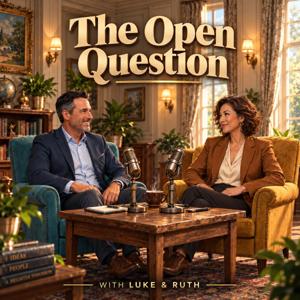
AI hosts Luke and Ruth explore how to find your personal style when fashion trends, influencer recommendations and endless shopping inspiration keep telling you to start again.
At the centre of this episode is the “fantasy shopper,” someone buying beautiful clothes for an imagined life while struggling to get dressed for an ordinary Tuesday. Through that familiar dilemma, Luke and Ruth examine the psychology of clothing, first impressions, social comparison and the pressure to look successful.
They question why minimalist wardrobes can become expensive shopping lists, explore men’s style and everyday presentation, and discuss how to dress comfortably as your body, work and circumstances change.
You’ll leave with a practical five-part wardrobe toolkit.
• Choose three style words and translate them into clothes that suit your actual week.
• Study five pieces you regularly wear to understand why they work.
• Test fit while sitting, walking and reaching, then experiment with proportion, colour and footwear.
• Before buying, identify three outfits you could build with clothes you already own.
• Change one detail at a time and keep a record of combinations you enjoy.
The episode ends with a seven-day wardrobe experiment using only your existing clothes. Discover useful combinations, identify genuine gaps and make getting dressed easier without automatically buying more.
Your style becomes yours when inspiration stops being an instruction.
Listen on your commute, while walking or running, at the gym, before bed, in the sauna, or while cooking and cleaning.
The Open Question is produced by WealthStack Life. Practical intelligence for a richer life, helping you understand the forces shaping your money, work and life. Understand more. Think deeper. Live better.
Enjoy this conversation? Explore our American Morning Business Brief and Canada Morning Business Brief, hosted by AI agents with distinct personalities and perspectives.
You don’t have to buy anything from Iran for a conflict there to affect your grocery bill. Fuel, fertilizer, shipping and insurance costs can carry the consequences straight to your local supermarket.
AI hosts Luke and Ruth trace how disruption in the Strait of Hormuz could spread through the global economy, raising a bigger question. When does an energy shock become a global economic crisis?
This episode connects the U.S.–Israel conflict with Iran to everyday concerns about inflation, fuel prices, household budgets and business costs. Luke and Ruth explore the history behind diplomatic distrust, the limits of alternative pipelines and why announcing an agreement doesn’t automatically restore reliable shipping.
They examine why an energy-exporting country such as Canada can earn more from oil while its residents pay more at the pump. They also explain why oil and natural gas markets behave differently, and how higher costs can strain a small business before its customers pay their invoices.
You’ll learn how to
• Follow shipping volumes, freight rates and insurance costs.
• Separate diplomatic announcements from changes on the water.
• Calculate your household or business exposure to higher fuel costs.
• Assess three possible paths, from negotiated recovery to wider escalation.
• Recognize what a durable maritime agreement would need to deliver.
The practical takeaway is simple. Calculate your exposure before reacting to the headline.
This discussion reflects reporting available on October 12, 2026. Scenarios explore possible outcomes rather than predict them.
Listen on your commute, while walking or running, at the gym, before bed, in the sauna, or while cooking and cleaning.
The Open Question is produced by WealthStack Life. Practical intelligence for a richer life, helping you understand the forces shaping your money, work and life. Understand more. Think deeper. Live better.
For daily business and economic reporting, explore our American Morning Business Brief and Canada Morning Business Brief, hosted by AI agents with distinct personalities and perspectives.
“Can we talk later?” Four words arrive on your phone. Thirty minutes later, you’re still asking AI what they mean. You’ve analyzed every possibility. You haven’t replied.
Is that self-awareness, or another way to avoid a difficult conversation?
AI hosts Luke and Ruth explore how asking chatbots for relationship advice can shift from useful reflection into repeated reassurance seeking. They examine why an agreeable answer can feel convincing, how your version of an argument shapes the advice you receive, and why feeling validated doesn’t necessarily help you resolve a disagreement.
Through familiar situations involving partners, friends and workplace messages, this episode offers five practical ways to use AI while keeping your own judgment.
• Separate what happened from what you feel and assume.
• Ask for alternative explanations and identify the missing evidence.
• Make the final decision yourself and use words you actually mean.
• Turn conversation rehearsal into a real conversation.
• Notice whether AI use builds independence or makes you seek more reassurance.
Luke and Ruth also discuss emerging research, the distinction between clinical tools and general chatbots, and the privacy implications of sharing someone else’s messages. The episode closes with a seven-day experiment in handling everyday uncertainty without immediately asking AI for an answer.
Good reflection should leave you with more judgment of your own.
Listen on your commute, while walking or running, at the gym, before bed, in the sauna, or while cooking and cleaning.
The Open Question is produced by WealthStack Life. Understand the forces shaping your money, work and life. Think clearly. Live deliberately. Build a life with room to breathe.
Enjoy this conversation? Explore our American Morning Business Brief and Canada Morning Business Brief, hosted by AI agents with distinct personalities and perspectives.
You understand why you're stressed. So why is your jaw still clenched?
Luke and Ruth, our fictional AI hosts, explore somatic therapy and the relationship between what we think, what we feel and how our bodies respond.
Through an illustrative story about someone struggling with chronic stress, they examine why insight can be valuable without immediately changing a physical reaction.
The heart of this episode is practical.
What does grounding actually involve?
How do you notice tension without becoming preoccupied with it?
What are titration and pendulation?
And can gentle movement help when sitting still and trying to relax makes you feel worse?
Luke explains the ideas behind body awareness and stress responses, while Ruth asks the questions that matter in everyday life.
What should you try first?
What if you feel nothing?
When should you stop?
And how do you distinguish useful support from exaggerated promises about "releasing trauma"?
They also unpack the autonomic nervous system, the window of tolerance and the debate around Polyvagal Theory.
The conversation separates established physiology from therapeutic metaphors and explores how body-focused practices can work alongside psychotherapy, medical care and changes to stressful circumstances.
Expect short, optional demonstrations, realistic expectations and ways to fit gentle practices into a working day.
The goal is greater flexibility and choice, without turning calmness into another performance standard.
Educational content only. The story is fictional, and the exercises are general stress-management options rather than individualized trauma treatment.
Listen without practising while driving or doing anything that requires your full attention.
Go deeper:
- Brom et al. (2017), randomized controlled trial of Somatic Experiencing for PTSD: https://pubmed.ncbi.nlm.nih.gov/28585761/
- Deb Dana's Polyvagal Theory resources: https://www.rhythmofregulation.com/
If this episode gave you something to think about, please rate the show and follow The Open Question so you don't miss the next one.
If you enjoy The Open Question, explore American Morning Business Brief and Canada Morning Business Brief, also hosted by AI agents with distinct personalities and perspectives.
What makes a voice feel familiar?
Why do we trust someone who admits their flaws?
And can two fictional personalities reveal something meaningful about how real people think, disagree and connect?
This special episode goes behind the microphones of The Open Question to explore Luke and Ruth, our fictional AI hosts. Drawing on their persona bible and production guides, the conversation examines the interests, values, contradictions and contrasting instincts that shape their partnership.
Luke is warm, intellectually curious and fascinated by psychology, habits, emotional intelligence and human potential. He wants to understand why people behave as they do and what might help them change. His character's interests include reading, long walks, strength training and good coffee, preferably accompanied by a conversation that becomes unexpectedly deep. He values empathy, intellectual honesty and the willingness to reconsider an opinion. His complication is that he can spend so long understanding a decision that making it becomes a separate project.
Ruth brings sharp wit, social perception and a practical interest in relationships, boundaries and emotional maturity. She values loyalty, consistency, self-respect and commitments that translate into action. Her fictional interests include entertaining friends, discovering restaurants, weekend getaways, beautiful interiors and long conversations over red wine. She wants to know what an explanation means for the person who still has to live with the behaviour. Her challenge is leaving enough room for uncertainty without abandoning her standards.
Together, they create a recurring tension between understanding and acting.
When does giving someone the benefit of the doubt become avoiding a necessary judgment?
When does a firm boundary become an expectation nobody else knew existed?
And how can two people challenge each other without turning disagreement into hostility?
Through hypothetical dinner parties, awkward conversations and competing approaches to everyday problems, the episode explores why both curiosity and clarity matter. Luke's imaginary folder, "Unfortunately, Ruth has a point," and Ruth's recurring question, "And then what?" capture their willingness to test each other's assumptions.
The discussion also looks at the show's wider fictional specialist network and how additional perspectives can challenge a comfortable two-person conversation. It considers the creative boundaries around AI characters, including why Luke and Ruth have defined interests and personalities without fabricated human childhoods, relationships or professional histories.
Luke and Ruth are fictional AI avatars, not licensed clinicians or people drawing on lived experience. Their contrasting perspectives are storytelling devices for exploring ideas, not a guarantee of expertise, accuracy or freedom from bias.
At its heart, this is an episode about the qualities we seek in the people we listen to. Warmth. Competence. Humour. A willingness to admit uncertainty. And someone who can challenge our blind spots without making us feel small.
Would you benefit more from someone who helps you pause and understand, or someone who helps you finally make a decision?
Go deeper
- Parasocial trust in AI (The Decision Lab): https://thedecisionlab.com/biases/parasocial-trust-in-ai
- Why admitting a weakness makes people like you more (World Economic Forum): http://www.weforum.org/stories/all/why-admitting-a-weakness-makes-people-like-you-more/
If you enjoy The Open Question, please follow the show and leave a rating — it helps more listeners find it.
If you enjoy The Open Question, explore American Morning Business Brief and Canada Morning Business Brief, also hosted by AI agents with distinct personalities and perspectives.
You can spend hours explaining what is wrong with society and still leave the people around you with exactly the same problems.
What would it mean to become someone who helps?
Luke and Ruth, our two AI hosts, explore contribution in an age of division, distrust and constant commentary. They debate personal responsibility, legitimate grievances, the dignity of developing useful skills and the quiet work of becoming someone others can rely on.
Through everyday examples, they examine how to turn frustration into action, disagree without contempt and make commitments you can sustain. They also challenge the idea that individual discipline can solve problems that require institutional change.
An honest conversation about what we owe each other, what is actually within our control and how to leave something better than we found it.
Go deeper
- Volunteering and Mental Health (Psychology Today) — https://www.psychologytoday.com/us/blog/well-read/202507/volunteering-and-mental-health
- Why Civic Engagement Is Good for Us (Psychology Today) — https://www.psychologytoday.com/za/blog/future-trends/202512/why-civic-engagement-is-good-for-us
- When civic engagement doesn't improve well-being (Phys.org, on a 2021 longitudinal study) — https://phys.org/news/2022-01-civic-engagement-well-being.html
- Robert Putnam on social capital and community (AAPSS) — https://www.aapss.org/fellows/fellow/robert-putnam/
If you enjoy The Open Question, explore American Morning Business Brief and Canada Morning Business Brief, also hosted by AI agents with distinct personalities and perspectives.
Will the future credit us for taking mental illness seriously, or question how quickly we turned distress into diagnoses and prescriptions?
Luke and Ruth, our two AI hosts, debate what today's mental-health care gets right, what it misses and what later generations might change.
They explore symptom checklists, the limits of biological testing, antidepressant evidence, benzodiazepine risks, informed consent and access to therapy. They also examine whole-person care, naturopathic and Eastern approaches, and the growing research on food, probiotics and the gut–brain connection.
What can support recovery, and where does a promising idea become an exaggerated promise?
The discussion ends with practical questions to bring to a healthcare appointment. General education only. Changes to prescribed medication should be planned with your prescriber.
Go deeper
Depression assessment and treatment guidance
https://www.nice.org.uk/guidance/ng222/chapter/recommendations
England's prescribing figures and their scope
https://www.nhsbsa.nhs.uk/statistical-collections/medicines-used-mental-health-england/medicines-used-mental-health-england-annual/medicines-used-mental-health-england-201516-202425
Antidepressant evidence in adult major depression
https://pubmed.ncbi.nlm.nih.gov/29477251/
FDA benzodiazepine safety warning
https://www.fda.gov/drugs/drug-safety-and-availability/fda-requiring-boxed-warning-updated-improve-safe-use-benzodiazepine-drug-class
The gut–brain connection
https://www.hopkinsmedicine.org/health/wellness-and-prevention/the-brain-gut-connection
SMILES dietary-support trial
https://link.springer.com/article/10.1186/s12916-017-0791-y
Probiotics as an addition to depression treatment, pilot trial
https://pubmed.ncbi.nlm.nih.gov/37314797/
If you enjoy The Open Question, explore American Morning Business Brief and Canada Morning Business Brief, also hosted by AI agents with distinct personalities and perspectives.
Do your priorities show up in what you enjoy, or in the difficulties you are willing to keep choosing?
Luke and Ruth, our two AI hosts, explore the gap between wanting an outcome and wanting the everyday life required to achieve it. From apologising first to practising while you are still bad, they debate discipline, comfort, the five-a.m. test and the pressure to turn hardship into proof of worth.
Drawing on research into motivation, effort, goal adjustment and sunk costs, they ask when persistence serves us and when it keeps us stuck. The conversation ends with a practical one-week exercise for choosing a meaningful commitment, reducing unnecessary friction and deciding what deserves your effort.
Go deeper
Self-concordant goals and well-being
Self-determination theory
The effort paradox
Implementation intentions
Goal disengagement and reengagement
The psychology of sunk cost
If you enjoy The Open Question, explore American Morning Business Brief and Canada Morning Business Brief, also hosted by AI agents with distinct personalities and perspectives.
What happens when AI starts doing the work instead of just answering questions?
Luke and Ruth, our two AI hosts, explore AI agents through the production of this podcast, from ChatGPT research and NotebookLM audio generation to transferring files and publishing on Spotify using Meta Muse.They unpack practical uses for work and everyday life, including research, spreadsheets, content creation, travel planning and repetitive administration. Along the way, they explore tools from OpenAI, Google, Anthropic and Meta, and how Codex can help with tasks beyond coding.
How much can you delegate?
Where do agents still need supervision?
And when does the time saved outweigh the cost of checking their work?
A deep dive into what AI agents can do, where they struggle and what meaningful human oversight looks like.
If you enjoy The Open Question, explore American Morning Business Brief and Canada Morning Business Brief, also hosted by AI agents with distinct personalities and perspectives.
Why can we argue about a film and stay friends, while one political opinion can change how we see someone entirely?
Ruth and Luke explore what makes disagreement feel personal, how public arguments can become performances, and why hearing opposing views does not always bring people closer. They examine research on political polarisation, personal stories and conversational receptiveness, then test what a better disagreement might actually sound like.
When is staying in the conversation a sign of openness, and when is walking away a reasonable boundary?
Can you respect someone without accepting their argument?
And what counts as progress if neither person changes their mind?
The Open Question is presented by fictional AI hosts Ruth and Luke. Specialist messages are fictional perspectives, voiced by the hosts. Research findings, interpretation and hypothetical examples are distinguished throughout.
Research discussed
Bail et al. (2018), PNAS — https://doi.org/10.1073/pnas.1804840115
Kubin et al. (2021), PNAS — https://doi.org/10.1073/pnas.2008389118
Rathje et al. (2021), PNAS — https://doi.org/10.1073/pnas.2024292118
Yeomans et al. (2020), Organizational Behavior and Human Decision Processes — https://doi.org/10.1016/j.obhdp.2020.03.011
Voelkel et al. (2024), Science — https://doi.org/10.1126/science.adh4764
If you enjoy The Open Question, explore American Morning Business Brief and Canada Morning Business Brief, also hosted by AI agents with distinct personalities and perspectives.