
Sign up to save your podcasts
Or



Many Lean and continuous improvement programs struggle—not because the tools are wrong, but because organizations overlook the foundation: developing capable people.
In this conversation, Abdulrahman Yossri shares lessons from nearly two decades of manufacturing leadership across consumer goods, chemicals, aluminum, and industrial operations.
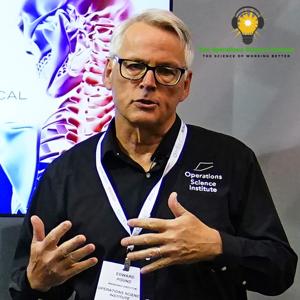
Together with Ed Pound, they discuss why capability building is the key to sustainable operational excellence, how leaders can align teams around shared goals, and why companies should think of themselves as training academies.
Key Discussion Points
If this conversation gave you a new perspective on leadership and operational excellence:
Want to better understand the science behind operational performance? OSI Insider is a free, self-paced introduction designed to help leaders understand why operations behave the way they do.
For a deeper dive, explore Operations Science Applied
#OperationsManagement #LeanManufacturing #ContinuousImprovement #OperationalExcellence #Manufacturing #OSI
Most operations teams spend too much time arguing about lead times.
Customers want products faster. Sales wants shorter lead times. Operations pushes back.
But what if the real goal isn't lead time at all?
Kim Shelby shares how her team shifted from fixed lead times to due-date quoting. The result was better customer communication, stronger operational performance, and more reliable delivery commitments.
The conversation explores demand variability, capacity management, forecasting, leadership, and practical AI applications in supply chain operations.
Key Discussion Points
01:15 Meet Kim Shelby
Stop relying on fixed assumptions. Learn the science behind reliable delivery, better forecasting, and stronger operational performance with Operations Science Applied: bit.ly/OSA2026
If you want more insights on how to level up your operations, visit insider.opscience.org
#OperationsManagement #SupplyChain #Manufacturing #Leadership #CommitDate #LeadTime #ATP #OperationalExcellence #OperationsScience #ContinuousImprovement #OSI
Construction projects rarely fail because of one big mistake. More often, they collapse under misalignment, unrealistic schedules, procurement delays, poor sequencing, and operational variability that no one planned for.
Construction manager and mechanical engineer Milton Griffiths shares lessons from greenfield and brownfield infrastructure projects, discussing how contractors, procurement teams, logistics, weather, workforce fatigue, and communication all shape project outcomes in the real world.
The discussion explores practical construction leadership, operational clarity, risk management, supplier coordination, schedule realism, and why successful project delivery starts long before work begins onsite.
Construction leadership isn’t just about getting work done faster. It’s about understanding flow, variability, coordination, and the operational realities that determine whether projects succeed or spiral into chaos.
Operations become easier to improve when you understand the science behind how work actually flows.
Explore the principles behind variability, coordination, and operational performance with Operations Science Applied: bit.ly/OSA2026
You may also find OSI Insider useful. It's a free guided tour through operations science that's structured, self-paced, and designed to be a quick read: https://insider.opscience.org
If this conversation challenged the way you think about project execution:
👍 Like this video
#ConstructionManagement #ProjectManagement #OperationsManagement #Leadership #Engineering #Infrastructure #ConstructionProjects #OperationalExcellence #MechanicalEngineering #OperationsScience #OSI
When you’re managing operations where a single mistake can cost millions—or put lives at risk—process discipline stops being theoretical.
Josh “Tree” Dittmar shares lessons from two worlds where operational excellence is non-negotiable: semiconductor manufacturing and U.S. Navy flight operations. From planning multi-million-dollar semiconductor capacity years in advance to coordinating aircraft launches on an aircraft carrier, this episode explores what it really takes to lead in complex, high-stakes environments.
The discussion dives into variability, operational constraints, safety systems, AI adoption, leadership culture, and why the best operators never stop learning.
00:00 – Introduction
Operations isn’t magic. It’s systems, tradeoffs, discipline, and leadership under uncertainty.
If you lead teams, manage production systems, or operate in high-complexity environments, this conversation will change how you think about operational performance.
A better operation starts with understanding the science behind it. Discover how variability, flow, and operational constraints shape performance in the real world with Operations Science Applied: bit.ly/OSA2026
Don’t forget to:
#OperationsManagement #Semiconductor #Leadership #Manufacturing #OperationsScience #SupplyChain #ArtificialIntelligence #SystemsThinking #LeanManufacturing #Engineering #Navy #OperationalExcellence #SemiconductorIndustry #BusinessLeadership #OSI
Global supply chains don’t fail all at once.
They fail slowly—through fragile systems, poor data discipline, supplier consolidation, regulatory bottlenecks, and operational decisions that look efficient until disruption exposes the cracks.
Kate Kowalczuk has spent her career operating inside that reality.
From pharmaceuticals and medical devices to chemicals and consumer products, she’s worked across highly regulated industries where one supplier issue, one manufacturing change, or one delay in approval can ripple across an entire operation.
What makes this conversation compelling is how clearly it reveals the hidden complexity behind modern operations.
A winter storm in Texas disrupts 25% of global chemical capacity.
Kate brings a grounded perspective to all of it.
She explains why resilience has become just as important as efficiency, why sustainability increasingly matters operationally (not just environmentally), and why strong systems still depend on disciplined people behind them.
The conversation also takes a personal turn as she reflects on growing up in Poland under the Iron Curtain, and how that experience shaped her views on minimalism, leadership, resilience, and overconsumption.
⏱️ Key Discussion Points:
00:00 Introduction
Operations become far easier to improve when you understand the science behind them. Explore the principles behind flow, variability, and operational performance with Operations Science Applied: bit.ly/OSA2026
Don’t forget to:
#Operations #SupplyChain #Procurement #Leadership #OperationalExcellence #ERP #Manufacturing #AI #Sustainability #OperationsScience #SupplyChainManagement #Pharmaceuticals #OSI
What does it take to scale continuous improvement across multiple plants, cultures, and operating realities—without turning standardization into bureaucracy?
Andre Scarance shares what global manufacturing leaders often learn the hard way: improvement doesn’t scale through tools alone.
It scales through alignment, clear mental models, disciplined business systems, and leadership that makes improvement everyone’s responsibility.
We explore why some plants sustain gains while others slip back into firefighting, how productivity and quality should never be traded against each other, where AI may fit into future operations systems, and why changing standards too often can quietly destroy performance.
If you care about operational excellence, manufacturing leadership, Lean, or building systems that hold under pressure, this one delivers.
00:00 Intro
👍 Like this video
Sustainable improvement starts with understanding how operations actually behave. Learn the science behind flow, variability, and performance in Operations Science Applied: bit.ly/OSA2026
#OperationalExcellence #ContinuousImprovement #LeanManufacturing #OperationsLeadership #Manufacturing #BusinessSystems #Leadership #ProcessImprovement #IndustrialEngineering #OperationsScience #SupplyChain #AIinManufacturing #OSI
Most organizations don’t struggle because they lack talent.
They struggle because they move too slowly, operate in silos, and avoid the hard changes everyone already sees coming.
This conversation goes deep into what happens when you bring FMCG-level execution discipline into a pharmaceutical environment—and why most teams resist it at first.
Adil Belrhzal shares how he built a fast-growing pharma operation inside a diversified group by combining multinational rigor, startup speed, and a culture that allows people to fail fast and learn faster.
There’s a simple idea at the center of this conversation that most leaders overlook. If people don’t understand what’s in it for them, nothing changes.
00:00 – Introduction to Operations Science Podcast
If this conversation made you rethink how you run your operation:
👍 Give it a like
Operational excellence shouldn’t rely on guesswork. Learn the science behind flow, variability, and performance in Operations Science Applied: bit.ly/OSA2026
#Operations #Leadership #Pharma #FMCG #OperationalExcellence #AIinBusiness #SupplyChain #LeanLeadership #BusinessStrategy #Execution #OSI #H&SGroup #DislogGroupHealthcare #Steripharma #GlobalPharmaceuticalIndustryAdvisors #TransformationalLeadership
Chris Morehouse leads operations across seven manufacturing plants where labor is tight, margins are real, and leadership consistency directly shapes performance.
What makes this conversation especially valuable is Chris’s grounded perspective: Lean transformation does not begin with tools—it begins with standards, leadership routines, and a shared understanding of what good looks like.
From sustaining gains through layered process audits to building maintenance capability, reducing tribal knowledge, applying Factory Physics, and exploring how AI can support predictive maintenance and troubleshooting, this discussion is packed with practical lessons for operations leaders.
If you’re leading plants, building systems, or trying to reduce variability across teams, this conversation offers a blueprint for turning operational chaos into disciplined flow.
00:47 Why early Lean efforts failed
If this conversation gave you a new lens on leadership, Lean, or operational systems:
✅ Like and subscribe for more authentic operations conversations
Stop managing in the dark. Learn the science behind every operation—and finally get variability under control.
Get your copy of Operations Science Applied today: bit.ly/OSA2026
#OperationsLeadership #LeanManufacturing #FactoryPhysics #ContinuousImprovement #OperationalExcellence #ManufacturingLeadership #AIinManufacturing #LeadershipDevelopment #SupplyChain #IndustrialEngineering #OSI
Big transformation programs rarely fail because of technology alone. They fail when teams optimize systems instead of outcomes.
Marta Moreira Rodriguez shares what nearly 25 years in transformation leadership has taught her about turning complexity into measurable business value—across ERP modernization, CRM workflows, ServiceNow, AI agents, process redesign, and enterprise-scale change.
What stands out in this conversation is how she frames transformation through business outcomes first, systems second.
From reducing unnecessary ERP customization to using agentic AI for document validation, tender workflows, and order processing, Marta breaks down what actually works when organizations are trying to modernize legacy operations without losing compliance, speed, or customer experience.
If you lead PMOs, digital transformation, ERP programs, operations, supply chain, or enterprise delivery teams, this one will feel very familiar.
00:00 Why transformation should start with business value
If you're leading transformation work right now, the most valuable takeaway may be this: start with the value stream, not the software vendor.
Don’t forget to:
#OperationsScience #DigitalTransformation #ERP #AI #ProjectManagement #Leadership #BusinessTransformation #SAP #ServiceNow #OperationalExcellence #EnterpriseSystems #ChangeManagement #OSI
Electric vehicles are accelerating faster than ever.
But there’s a massive operational challenge most people aren’t talking about. What happens to the batteries when they reach end-of-life?
This conversation explores the systems, strategy, and leadership required to build large-scale battery recycling operations, from the ground up. From navigating uncertainty in a brand-new industry to balancing capital investment, AI, hiring, and operational excellence—this is a real look at building industrial infrastructure for the future.
If you care about operations, sustainability, manufacturing, or scaling new technology. This one connects the dots.
Key Discussion Points
00:01 - Building a large-scale battery recycling operation
The EV revolution is here.
The operational infrastructure behind it is just getting started.
Don't forget to:
#Operations #OperationalExcellence #Manufacturing #EV #ElectricVehicles #BatteryRecycling #Sustainability #Leadership #SupplyChain #IndustrialEngineering #AI #ContinuousImprovement #ProcessImprovement #OperationsManagement #CleanEnergy
From the publisher's feed
The Operations Science Podcast: Authentic Leadership Stories from Operations and Project Leaders
Welcome to The Operations Science Podcast, the premier…
What to Expect from The Operations Science Podcast
Our guests include C-level executives, VPs of operations and supply chain, directors, managers, and thought leaders from trade associations, industry groups, and standards organizations. These seasoned professionals bring a wealth of experience in leadership, decision-making, and execution, offering unique perspectives on operational challenges like rapid change, uncertainty, innovation, evolving workforce expectations, talent development, and organizational culture. Whether you're a forward-thinking executive or a continuous improvement enthusiast, this podcast provides a platform to learn from the best in the field.
Each episode dives deep into the personal journeys of high-performance leaders, exploring their successes, failures, and comebacks. From building high-performance teams to driving strategic transformation and maintaining clarity under pressure, our guests share the mental tools, frameworks, and strategies that have enabled them to lead with confidence, resilience, and foresight. This isn’t just another business podcast—it’s a forum for high-level executives to openly discuss the real challenges of operational management and the mental fitness required to thrive at the top.
Why Listen to The Operations Science Podcast?
Who Should Listen?
This podcast is designed for:
How to Listen
The Operations Science Podcast is available on major platforms, including YouTube, Spotify, Apple Podcasts, and more. Subscribe today to get notified about new episodes and gain access to a growing library of leadership insights. Follow us on LinkedIn and other social media platforms for daily short-form video clips that deliver quick, actionable tips from our guests.