
Sign up to save your podcasts
Or

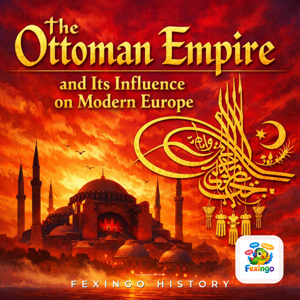


In this episode, Lucas and Luna explore how the Ottoman Empire pioneered gunpowder warfare, transforming from a nomadic frontier beylik into a centralized bureaucratic state. They discuss the adoption of cannons and muskets, the creation of specialized corps like the Topçu Ocağı, and the social and economic impacts of military innovation. Key figures include Mehmed II, who used massive bombards at Constantinople, and later sultans who struggled to modernize against European rivals. The episode covers the Battle of Mohács (1526), the decline of the sipahi cavalry, and the Janissaries' resistance to change. It also touches on the printing press and the Tanzimat reforms as responses to military pressure. This is a story of how warfare reshaped an empire from within.
#OttomanEmpire #GunpowderEmpires #MilitaryHistory #MehmedII #TopçuOcağı #Janissaries #Sipahi #BattleOfMohács #Cannons #Muskets #Firearms #Tanzimat #Devshirme #GunpowderRevolution #SiegeOfConstantinople #SuleimanTheMagnificent #History #FexingoHistory
Keep every episode free: buymeacoffee.com/fexingo
In 1522, Suleiman the Magnificent turned his gaze toward the island of Rhodes, the last Crusader stronghold in the eastern Mediterranean. The Knights Hospitaller, under Grand Master Philippe Villiers de L'Isle-Adam, had held the island for over two centuries, using it as a base to raid Ottoman shipping and disrupt the sultan's growing naval power. This episode follows the five-month siege—the largest Ottoman military operation to date—from the initial landing of over 100,000 troops to the relentless bombardment of the fortress walls designed by the knights' own engineers. We examine the roles of key figures like the Ottoman commander Ahmed Pasha and the pirate-turned-admiral Kurtoğlu Muslihiddin Reis, as well as the knights' desperate defense led by L'Isle-Adam. The siege ended with a negotiated surrender that allowed the knights to leave with their lives, a remarkable outcome for a defeated force. We also explore how this victory established Ottoman naval dominance in the eastern Mediterranean for decades and forced the knights to relocate to Malta, setting the stage for the famous siege of 1565. This conversation ties together themes of honor, religious warfare, and the shifting balances of power in the sixteenth century.
#OttomanEmpire #SiegeofRhodes #SuleimantheMagnificent #KnightsHospitaller #Rhodes1522 #PhilippeVilliersdeLIsleAdam #AhmedPasha #MediterraneanHistory #CrusaderFortresses #Osmanlı #Kanuni #RodosKuşatması #OttomanNavy #KurtoğluMuslihiddinReis #MilitaryHistory #SixteenthCentury #History #FexingoHistory
Keep every episode free: buymeacoffee.com/fexingo
In this episode, Lucas and Luna explore the Ottoman Empire's profound influence on the development of modern European diplomacy and statecraft. They discuss how the Ottomans pioneered permanent embassies, diplomatic immunity, and international treaties, challenging the Eurocentric narrative of diplomatic history. The conversation covers the establishment of the first Ottoman embassy in Paris in 1721 under Yirmisekiz Mehmed Çelebi, the impact of the Treaty of Karlowitz (1699) on diplomatic norms, and the Ottoman role in shaping balance-of-power politics in Europe. Lucas explains how the Sublime Porte's diplomatic practices, including the use of dragomans and the concept of 'capitulations,' influenced European states. The episode also touches on the legacy of Ottoman diplomacy in modern institutions like the United Nations and the European Union. Specific figures mentioned include Ahmed III, Nevşehirli Damat İbrahim Paşa, and Mustafa Reşid Pasha, a key figure in the Tanzimat reforms who served as ambassador to Paris and London.
#OttomanDiplomacy #TreatyOfKarlowitz #YirmisekizMehmedCelebi #SublimePorte #Capitulations #BalanceOfPower #AhmedIII #NevsehirliDamatIbrahimPasa #MustafaResidPasha #Tanzimat #EuropeanDiplomacy #Dragoman #PeaceOfWestphalia #DiplomaticImmunity #History #FexingoHistory #OttomanEmpire #ModernEurope
Keep every episode free: buymeacoffee.com/fexingo
This episode explores the devshirme system—the Ottoman practice of recruiting Christian boys from the Balkans and Anatolia to serve as Janissaries and administrators. Lucas and Luna trace its origins under Murad I, its codification under Mehmed II, and its transformation into a path to power for figures like Sokollu Mehmed Pasha and the Köprülü grand viziers. They discuss the legal basis, the quota system, the training at the Topkapı Palace, the balance of loyalty, and the gradual decline of the practice by the 17th century. They also touch on the human cost—families losing sons, the Janissaries' later resistance to reform—and the legacy of a system that turned outsiders into the empire's ruling elite. Specific names include: devshirme, Murad I, Mehmed II, Janissary, Yeniçeri, Kapıkulu, Acemi Ocağı, Grand Vizier, Sokollu Mehmed Pasha, Köprülü Mehmed Pasha, Topkapı Palace, and the tulip age.
#Devshirme #OttomanEmpire #Janissaries #SokolluMehmedPasha #Köprülü #MuradI #MehmedII #TopkapıPalace #Balkans #Kapıkulu #AcemiOcağı #GrandVizier #TulipAge #History #FexingoHistory #OttomanMilitary #ChristianBoys #EmpireBuilding
Keep every episode free: buymeacoffee.com/fexingo
In 1514, on a plateau in eastern Anatolia, two empires collided in a battle that would define the Middle East for centuries. Selim I's Ottoman army faced Shah Ismail's Safavid forces at Chaldiran. The clash wasn't just about territory—it pitted Sunni against Shia, cannons against cavalry, and a sultan who killed his own sons against a mystic warrior-king. This episode unpacks the battle itself: the tactical innovations, the role of the Janissaries and Qizilbash, the devastating Ottoman artillery, and the aftermath that saw the Safavids pushed east, cementing the Ottoman-Safavid rivalry that echoes in modern sectarian divides. We also explore the human stories—Selim's ruthless rise, Ismail's transformation from messianic leader to defeated ruler, and the prisoners and poets caught in the war's wake. If you've wondered how the modern Sunni-Shia split was hardened into borders and bloodlines, this is where it started.
#BattleOfChaldiran #SelimI #ShahIsmail #SafavidEmpire #OttomanEmpire #Qizilbash #Janissaries #ShiaSunniSplit #YavuzSultanSelim #MamlukSultanate #SafavidHistory #OttomanHistory #Artillery #MiddleEastHistory #1500s #FexingoHistory #History #OttomanMilitary
Keep every episode free: buymeacoffee.com/fexingo
In this episode, Lucas and Luna explore the rise of the Ottoman coffeehouse in the 16th century, from its origins in Yemeni Sufi circles to its explosive spread across Istanbul under Suleiman the Magnificent. They discuss how the first coffeehouse in Istanbul was opened by two Syrian merchants in 1554, the initial backlash from conservative ulema who saw coffee as an intoxicating substance, and the famous 1530s-era Ottoman debate that led to a fatwa from Ebussuud Efendi permitting coffee drinking. The conversation then turns to how coffeehouses became hubs of political discussion and dissent, prompting crackdowns by sultans like Murad IV, who banned coffee entirely and executed those who disobeyed. They also examine the role of coffeehouses in spreading news and shaping public opinion, linking them to later revolutionary movements. Along the way, they touch on the social rituals of coffee service, the role of the kahveci (coffee maker), and the architectural evolution of Ottoman coffeehouse design. The episode ties these threads to broader themes of public space, authority, and social change.
#OttomanCoffeehouse #Kahvehane #EbussuudEfendi #MuradIV #SuleimanTheMagnificent #Istanbul #CoffeeHistory #YemeniCoffee #Ulema #Fatwa #Censorship #PublicSpace #Dissent #SocialHistory #16thCentury #OttomanEmpire #History #FexingoHistory
Keep every episode free: buymeacoffee.com/fexingo
In 1453, the Ottoman Sultan Mehmed II achieved what his ancestors had failed to do for centuries: he conquered Constantinople. This episode dives into the 53-day siege that ended the Byzantine Empire and reshaped the world. We explore the massive bombardments, including the giant bombard built by Orban, the naval blockade and the defense of the Golden Horn, the final assaults, and the role of Constantine XI's heroic last stand. We examine the technological and tactical innovations, the use of fortified walls vs. gunpowder, and the global aftermath that made Mehmed the Fat a pivotal figure. Along the way, we discuss the city's fortifications, the role of the Genoese commander Giustiniani, and how this conquest signaled the end of the medieval era and the rise of the Ottomans as a dominant power.
#FallOfConstantinople #MehmedII #OttomanEmpire #ByzantineEmpire #1453 #Orban #Giustiniani #GoldenHorn #TheodosianWalls #History #FexingoHistory #MiddleEast #Siege #Gunpowder #ConstantineXI #HagiaSophia #Empire #Medieval
Keep every episode free: buymeacoffee.com/fexingo
In September 1566, the Ottoman Empire's greatest sultan, Suleiman the Magnificent, died not in his lavish Topkapı Palace but in a tent outside the crumbling fortress of Szigetvár, deep in Hungarian territory. This episode explores the final campaign of a 46-year reign, the siege that became a legend, and the extraordinary secrecy surrounding the sultan's death. Lucas and Luna discuss the geopolitical stakes of the Hungarian campaign, the heroism of Nikola Šubić Zrinski, and how Sokollu Mehmed Pasha kept the empire running while its ruler lay dead for weeks. They also examine the Szigetvár memorial and the enduring cultural memory of the battle in both Ottoman and Hungarian traditions. A story of endurance, deception, and the cost of imperial ambition.
#SuleimanTheMagnificent #Szigetvar #OttomanEmpire #SokolluMehmedPasha #NikolaSubicZrinski #HungarianHistory #SiegeOfSzigetvar #BattleOfSzigetvar #Kanuni #16thCentury #OttomanHungarianWars #Habsburgs #MaximilianII #Koprivnica #SuleimanDeath #History #FexingoHistory #MiddleEast
Keep every episode free: buymeacoffee.com/fexingo
In 1402, the Ottoman Empire suffered its most devastating defeat before its final collapse. Timur's armies crushed Sultan Bayezid I at the Battle of Ankara, capturing him and plunging the Ottomans into a civil war known as the Fetret Devri. This episode explores how the Central Asian conqueror Timur—known to the West as Tamerlane—outmaneuvered Bayezid, the role of rival Turkish beyliks and European allies, and the decade-long interregnum that nearly ended the Ottoman state before it could reach Constantinople. We discuss the strategic blunders, the use of war elephants, and the surprising alliances Bayezid forged with Serbian knights. How did Mehmed I eventually reunite the empire? And what does this moment reveal about Ottoman resilience? Join Lucas and Luna as they uncover the forgotten crisis that shaped the empire's future.
#BattleOfAnkara #Timur #BayezidI #FetretDevri #OttomanInterregnum #Tamerlane #CentralAsia #SerbianKnights #WarElephants #Sipahi #Yeniceri #AnatolianBeyliks #MehmedI #SiegeOfConstantinople #OttomanHistory #MedievalHistory #History #FexingoHistory
Keep every episode free: buymeacoffee.com/fexingo
In 1683, the Ottoman Empire launched its second and final siege of Vienna, led by Grand Vizier Kara Mustafa Pasha. This episode explores the dramatic campaign that marked the high-water mark of Ottoman expansion into Europe. We discuss the strategic miscalculations of Kara Mustafa, the crucial role of Polish King John III Sobieski's winged hussars, and the battle's aftermath that triggered the Great Turkish War. Learn about the political intrigue within the Ottoman court, the siege's grim realities for both defenders and attackers, and how this defeat reshaped the balance of power in Central Europe. The conversation also touches on the legacy of this battle in European and Ottoman memory, and its connection to the later decline of Ottoman influence. Names and terms include Kara Mustafa Pasha, John III Sobieski, Siege of Vienna 1683, Kahlenberg, Winged Hussars, Merzifonlu Kara Mustafa Pasha, Mehmed IV, St. Stephen's Cathedral, Leopold I, and the Treaty of Karlowitz.
#SiegeOfVienna1683 #KaraMustafaPasha #JohnIIIobieski #WingedHussars #OttomanEmpire #GreatTurkishWar #Kahlenberg #Merzifonlu #MehmedIV #LeopoldI #TreatyOfKarlowitz #BattleOfVienna #History #FexingoHistory #CentralEurope #PolishLithuanianCommonwealth #17thCentury #Warfare
Keep every episode free: buymeacoffee.com/fexingo
From the publisher's feed