
Sign up to save your podcasts
Or



This episode dives into the 1683 Battle of Vienna, a pivotal clash that halted Ottoman expansion into Central Europe. We explore the rivalries of Grand Vizier Merzifonlu Kara Mustafa Pasha and Polish King John III Sobieski, the strategic blunder of not pressing the siege earlier, and the lasting consequences: the Holy League's counter-offensive, the 1699 Treaty of Karlowitz, and the slow Ottoman retreat from Europe. We also touch on the role of the Habsburg commander Charles V, Duke of Lorraine, the use of Tatar light cavalry, and how this defeat reshaped European geopolitics and the Ottoman psyche. A nuanced look at a battle often mythologized in the West, this episode offers fresh insight into why Vienna was not just a military defeat but a diplomatic and psychological watershed for the Porte.
#BattleOfVienna #1683 #OttomanEmpire #KaraMustafaPasha #JohnIII Sobieski #Habsburg #HolyLeague #TreatyOfKarlowitz #Merzifonlu #TatarCavalry #CentralEurope #SiegeWarfare #17thCentury #OttomanDecline #MilitaryHistory #HistoryPodcast #FexingoHistory #EuropeanHistory
Keep every episode free: buymeacoffee.com/fexingo
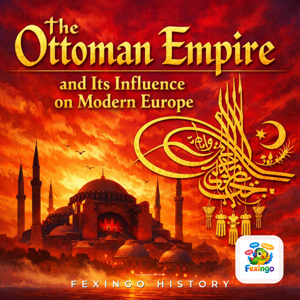
In this episode, Lucas and Luna explore the Ottoman tughra—the ornate, calligraphic emblem used by sultans for nearly five centuries. They begin by recalling the tughra's appearance on coins, documents, and buildings, then dive into its origins with the very first tughra of Orhan I in the 14th century. The conversation traces its evolution under Mehmed II after the conquest of Constantinople, when the tughra became a more elaborate symbol of sovereignty. Lucas explains the structure: the sere (oval loops) and beyze (vertical lines) represent the ruler's name and lineage, while the three upward strokes (tuğ) symbolize power and the kılıç (sword) signifies justice. They discuss how calligraphers like Ahmed Karahisârî in the 16th century elevated the tughra to an art form, and how it was used in diplomacy—including the famous 1688 Treaty of Karlowitz. Luna asks about forgery, leading to a discussion of gilded tughras and imperial seals. The episode covers the decline of the tughra after the Tanzimat reforms and its final use under Mehmed VI before the abolition of the sultanate. Ending with a reflection on the tughra's legacy as a symbol of identity and authority, they note its presence on everything from royal decrees to modern Turkish motifs.
#OttomanTughra #Tughra #Calligraphy #OrhanI #MehmedII #AhmedKarahisari #TreatyOfKarlowitz #Sultan #OttomanEmpire #ImperialSeal #OttomanCalligraphy #Sovereignty #Diplomacy #Tanzimat #MehmedVI #History #FexingoHistory #Symbolism
Keep every episode free: buymeacoffee.com/fexingo
In this episode, Lucas and Luna explore the fascinating story of Ahmed Eflaki Dede, an Ottoman clockmaker and Sufi mystic whose intricate mechanical clocks influenced European horology in the 16th century. From his workshop in the Mevlevi lodge in Istanbul to the courts of Vienna and Paris, we trace how Ottoman timekeeping technology—rooted in Islamic astronomy and mystical practice—crossed cultural boundaries. Learn about the "clock of the dervish" that so impressed the Habsburg ambassador, the fusion of Sufi cosmology with precision engineering, and how this little-known figure exemplifies the exchange of ideas between the Ottoman Empire and Europe. We also discuss the role of the Ottoman observatory of Taqi al-Din, the importance of water clocks in Islamic culture, and the eventual decline of Ottoman clockmaking amid European industrialization. A story of lenses, gears, and the shared human need to measure time.
#AhmedEflakiDede #OttomanClockmaking #SufiHorology #Mevlevi #TaqiDin #TimekeepingHistory #IslamicScience #16thCentury #OttomanEmpire #EuropeanInfluence #Clockmaker #Istanbul #TechnologyTransfer #History #FexingoHistory #Podcast #CulturalExchange #HistoryOfTime
Keep every episode free: buymeacoffee.com/fexingo
This episode of The Ottoman Empire and Its Influence on Modern Europe dives into the 1877–78 Russo-Turkish War, the empire's last great conflict with Russia. We examine the diplomatic origins in the 1875 Herzegovina Uprising and the 1876 Constantinople Conference, where European powers failed to avert war. Lucas and Luna discuss key battles like the Siege of Plevna, where Osman Pasha held out for five months, and the shocking Russian advance to the walls of Constantinople. The war's aftermath is explored through the Treaty of San Stefano and the Congress of Berlin, which carved up Ottoman Europe and created modern Bulgaria, Serbia, and Romania. Along the way, we touch on the role of Romanian independence, the Caucasus front, and the lasting memory of Plevna in Ottoman and Balkan history. The episode also reflects on how this war set the stage for the empire's disintegration in World War I.
#RussoTurkishWar #OttomanEmpire #Plevna #OsmanPasha #TreatyOfSanStefano #CongressOfBerlin #Bulgaria #BalkanHistory #1877 #ConstantinopleConference #HerzegovinaUprising #RomanianIndependence #CaucasusFront #MilitaryHistory #Diplomacy #History #FexingoHistory #19thCentury
Keep every episode free: buymeacoffee.com/fexingo
In this episode of The Ottoman Empire and Its Influence on Modern Europe, Lucas and Luna explore the pivotal 1517 Ottoman conquest of Cairo, which transformed the empire from a regional power into the protector of Sunni Islam. They discuss Sultan Selim I's campaign against the Mamluk Sultanate, the decisive Battle of Marj Dabiq and the fall of Cairo, and the controversial transfer of the caliphate from the Abbasid shadow caliph to the Ottoman sultans. Along the way, they touch on the role of the Ottoman navy, the capture of the last Mamluk sultan Tuman Bay II, and how this conquest reshaped the Islamic world and Ottoman governance. The episode also considers the caliphate's symbolic power in later centuries, including its abolition in 1924, and the lasting impact on modern Middle Eastern politics.
#OttomanEmpire #SelimI #MamlukSultanate #CairoConquest #Caliphate #BattleOfMarjDabiq #TumanBayII #YavuzSultanSelim #IslamicHistory #16thCentury #MiddleEast #OttomanCaliphate #History #FexingoHistory #Sultan #AbbasidCaliphate #Egypt #OttomanExpansion
Keep every episode free: buymeacoffee.com/fexingo
In 1522, Suleiman the Magnificent turned his gaze toward Rhodes, the last Crusader stronghold in the eastern Mediterranean. This episode follows the six-month siege that pitted 200,000 Ottoman soldiers against 7,000 Knights of St. John. We explore the fortress's innovative defenses, the role of Grand Master Philippe Villiers de L'Isle-Adam, and the controversial surrender terms that allowed the Knights to sail away. Discover how this epic confrontation shaped Mediterranean power for centuries, from Ottoman naval dominance to the Knights' eventual relocation to Malta.
#SiegeOfRhodes1522 #SuleimanTheMagnificent #KnightsOfStJohn #PhilippeVilliersDeLIsleAdam #OttomanEmpire #CrusaderFortresses #Rhodes #Hospitaller #PargaliIbrahimPasha #AegeanSea #NavalHistory #MediterraneanHistory #OttomanSiege #Fortification #ChivalricOrders #History #FexingoHistory #MilitaryHistory
Keep every episode free: buymeacoffee.com/fexingo
In this episode of The Ottoman Empire and Its Influence on Modern Europe, Lucas and Luna explore the pivotal Battle of Lepanto in 1571, a massive naval clash between the Ottoman Empire and the Holy League. They dive into the strategic decisions of commanders like Kapudan Paşa Müezzinzade Ali Paşa and Don Juan of Austria, the innovative use of galleasses by the Christian fleet, and the devastating loss of experienced Ottoman sailors and archers. The conversation then turns to the aftermath: how the Ottomans rapidly rebuilt their navy in just six months, constructing over 200 new ships under the supervision of Grand Vizier Sokollu Mehmed Paşa, and how this resilience demonstrated the empire's logistical power. Lucas and Luna also discuss the long-term significance of Lepanto, including its impact on naval tactics, the shift from galley warfare to galleons, and the myth of Ottoman invincibility. Along the way, they touch on the role of the Tersane-i Amire shipyards, the recruitment of Greek and Armenian shipbuilders, and the cultural memory of the battle in both Europe and the Ottoman world. This episode offers a fresh angle on a famous battle, focusing not just on the clash itself but on the technological and organizational responses that shaped the Mediterranean for decades.
#Lepanto #OttomanNavy #HolyLeague #MüezzinzadeAliPaşa #DonJuanOfAustria #SokolluMehmedPaşa #Galleass #TersaneiAmire #GalleyWarfare #NavalHistory #MediterraneanHistory #1571 #OttomanEmpire #ChristianCoalition #NavalLogistics #History #FexingoHistory #OttomanNavalRebuild
Keep every episode free: buymeacoffee.com/fexingo
In 1876, the Ottoman Empire adopted a constitution—the Kanun-i Esasî—and opened its first parliament. But this liberal experiment was short-lived. Sultan Abdülhamid II suspended it within two years, citing the Russo-Turkish War. Why did the Young Ottomans push for constitutionalism? How did European powers react? And what did this mean for the empire's multi-ethnic subjects? This episode unpacks the politics behind the constitution, the roles of Midhat Pasha and Namık Kemal, and the legacy of a failed promise that still resonates in debates about democracy and reform.
#Kanun-iEsasî #OttomanConstitution #1876 #MidhatPasha #AbdülhamidII #YoungOttomans #NamıkKemal #Meclis-iMebusan #RussoTurkishWar #Constitutionalism #Tanzimat #OttomanReform #History #FexingoHistory #OttomanEmpire #Parliament #Democracy #Sultan
Keep every episode free: buymeacoffee.com/fexingo
In this episode of The Ottoman Empire and Its Influence on Modern Europe, Lucas and Luna delve into the pivotal 1453 conquest of Constantinople by Sultan Mehmed II. They explore the dramatic siege, the innovative use of giant bombard cannons designed by Urban the Hungarian, the strategic blockade of the Golden Horn, and the final assault that breached the Theodosian Walls. The discussion also covers the aftermath: Mehmed's transformation of the city into Istanbul, his policy of religious tolerance towards the Orthodox Christian population, and the naming of Patriarch Gennadius Scholarius. This event not only marked the end of the Byzantine Empire but also reshaped European geopolitics and trade routes, paving the way for Ottoman dominance in the Eastern Mediterranean.
#Constantinople #MehmedII #FallOfConstantinople #SiegeOf1453 #OttomanEmpire #ByzantineEmpire #UrbanTheCannonFounder #TheodosianWalls #GoldenHorn #FatihSultanMehmed #HagiaSophia #GennadiusScholarius #Orban #Bombard #EasternMediterranean #History #FexingoHistory #OttomanHistory
Keep every episode free: buymeacoffee.com/fexingo
When Sultan Selim III faced a crisis that would unravel his reforms and ultimately cost him his throne, he made a desperate gamble: he surrendered the entire Ottoman fleet to Napoleon Bonaparte. This episode dives into the forgotten 1807 Ottoman naval surrender at the Bosphorus, a stunning moment when the Sublime Porte chose to hand over its warships rather than see them fall to Tsar Alexander I's advancing Russian army. We explore the context of the Napoleonic Wars, Selim III's Nizam-ı Cedid reforms, the role of the Janissaries who opposed him, and the key figures: Alemdar Mustafa Paşa, Kabakçı Mustafa, and the French ambassador General Sébastiani. The surrender led directly to Selim III's deposition and the eventual rise of Mahmud II. Listeners will learn how the Ottoman Empire navigated great power diplomacy, why the fleet ended up at the arsenal rather than fighting, and how this event reshaped the Eastern Mediterranean. A tale of reform, rebellion, and the brutal logic of survival in the age of empire.
#OttomanEmpire #SelimIII #NapoleonicWars #NavalHistory #OttomanNavy #NizamıCedid #Janissaries #AlemdarMustafaPaşa #KabakçıMustafa #Sébastiani #TsarAlexanderI #Bosphorus #1807 #History #FexingoHistory #OttomanReform #GoldenHorn #GreatPowerDiplomacy
Keep every episode free: buymeacoffee.com/fexingo
From the publisher's feed