
Sign up to save your podcasts
Or

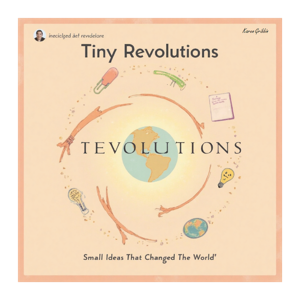

The first episode of Tiny Revolutions explores the extraordinary story behind one of the simplest tools in history — the paperclip. It traces its origins to Norwegian inventor Johan Vaaler, who in 1899 envisioned a bent wire to hold papers together. Though his prototype wasn’t perfect, his idea inspired the version we use today, the Gem paperclip, created in Britain.
Beyond its practicality, the episode reveals how the paperclip became a symbol of unity and resistance during World War II, when Norwegians secretly wore it to defy Nazi occupation. From that quiet act of courage, the paperclip transformed into a national emblem and later, a global icon of simplicity and design perfection.
The episode reflects on how this small object — one unbroken loop of metal — represents the essence of innovation: minimal, effective, and profoundly human. It’s a reminder that the greatest revolutions often come not from grand inventions, but from humble ideas that quietly hold the world together.
 View all episodes
 By Karen Gribbin
The first episode of Tiny Revolutions explores the extraordinary story behind one of the simplest tools in history — the paperclip. It traces its origins to Norwegian inventor Johan Vaaler, who in 1899 envisioned a bent wire to hold papers together. Though his prototype wasn’t perfect, his idea inspired the version we use today, the Gem paperclip, created in Britain.
Beyond its practicality, the episode reveals how the paperclip became a symbol of unity and resistance during World War II, when Norwegians secretly wore it to defy Nazi occupation. From that quiet act of courage, the paperclip transformed into a national emblem and later, a global icon of simplicity and design perfection.
The episode reflects on how this small object — one unbroken loop of metal — represents the essence of innovation: minimal, effective, and profoundly human. It’s a reminder that the greatest revolutions often come not from grand inventions, but from humble ideas that quietly hold the world together.