
Sign up to save your podcasts
Or

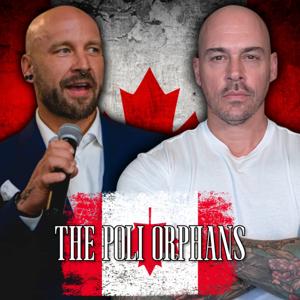


Military Tested Propaganda on Canadians & Are Food Prices About to Explode AGAIN? | Operation Laser, CAF surveillance, food prices Canada, inflation, gas prices, dairy cartel, La Presse
Canadian Armed Forces violated intelligence-gathering rules during COVID under Operation Laser — monitoring public sentiment and exploring influence techniques on Canadians.
At the same time, food prices could be set to rise 25–50% as farmers warn about gas prices, supply chains, and a system that may be working against Canadians.
At 7:30PM EST, Dr. Sylvain Charlebois (The Food Professor) joins the show after being let go from La Presse following 25 years and 1,000+ columns after comments on government-funded media.
Live at 7:00PM EST 👇
🔥 LIKE, SUBSCRIBE, and CLICK THAT BELL to support independent media that doesn't take government handouts. Turn on notifications so you never miss a deep dive.
🚨Got breaking news or guest suggestions? Contact: [email protected]
🔴 LIVE Sunday–Thursday 7PM EST: youtube.com/@ThePoliOrphans
🦴 This episode is brought to you by Miss Cleo's Pet Treats — 100% natural, handmade dog treats sourced from local Manitoba farms. No Chinese meat. Your dog deserves better.
👉 kleoscookiesntreats.ca | Code: POLITICALORPHANS for 20% off
Canada doesn’t need more politicians — It needs more leaders because it’s not too late for Canada.
Join the citizen-led movement training Canadians to create real change — one community at a time.
Stop Complaining – Start Leading
Join us: thepoliticalorphans.com
Gas is up 30 cents a litre in a single month. Diesel is up over 35%. Jet fuel has nearly doubled. Everything that moves in this country runs on fuel — your groceries, your goods, your flights. All of it is going up.
While Australia, Spain, Italy, Portugal, Germany and Poland cut their fuel taxes to give their citizens relief — Canada raised its industrial carbon tax by 16%. Going from $95 to $110 per ton. On its way to $170 by 2030.
We have the third largest oil and gas reserves in the world. We produce over 4.5 million barrels of oil a day — more than double what we consume. And instead of using that to make Canadians energy sovereign, our government keeps our resources in the ground and taxes us more.
Then at 7:30PM EST, Tracey Wilson — VP of Public Relations for the CCFR — joins the show to break down what just happened with the gun buyback.
The declaration period ended March 31st. The results are in. Canada spent $800 million. Got 3% of banned firearms declared. And charged taxpayers $25,000 per gun while offering owners $1,800. The Supreme Court has agreed to hear the challenge. The CCFR is filing for an injunction. And October 30th is still coming for every gun owner who didn't declare.
Stop complaining. Start asking questions. It's not too late for Canada.
🔥 LIKE, SUBSCRIBE, and CLICK THAT BELL to support independent media that doesn't take government handouts. Turn on notifications so you never miss a deep dive.
🚨Got breaking news or guest suggestions? Contact: [email protected]
🔴 LIVE Sunday–Thursday 7PM EST: youtube.com/@ThePoliOrphans
🦴 This episode is brought to you by Miss Cleo's Pet Treats — 100% natural, handmade dog treats sourced from local Manitoba farms. No Chinese meat. Your dog deserves better.
👉 kleoscookiesntreats.ca | Code: POLITICALORPHANS for 20% off
Indian Nurses are Coming | Immigration Changes and The Iran/USA War with Jeremy Hammond. Today we break down the new immigration changes in Canada, the Indian nurses pipeline, and the escalating Iran/USA conflict with Jeremy Hammond. Three major stories shaping Canada right now — and why they matter.
On April 1st, multiple policy changes came into effect. Passport fees increased, making it more expensive for Canadians. The super visa program was expanded, making it easier to bring parents and grandparents into the country for long-term stays. At the same time, the government increased the cap on low-wage temporary foreign workers in rural areas from 10% to 15% of the workforce.
We then connect this to the broader labor picture. Canada currently has millions of temporary residents, many of whom are allowed to work, including foreign workers and international students. As the system expands, questions are being raised about the impact on jobs, wages, and opportunities — especially for younger Canadians.
We also break down the India–Canada nursing pipeline, including the dual-degree program designed to train nurses in India using a Canadian-aligned curriculum and bring them into the healthcare system. Who is funding it, how it works, and what it means for the future of Canada’s workforce.
Finally, independent journalist Jeremy Hammond joins the show to discuss the Iran/USA situation, what’s really happening behind the headlines, and where things could be heading.
🔥 LIKE, SUBSCRIBE, and CLICK THAT BELL to support independent media that doesn't take government handouts. Turn on notifications so you never miss a deep dive.
🚨Got breaking news or guest suggestions? Contact: [email protected]
🔴 LIVE Sunday–Thursday 7PM EST: youtube.com/@ThePoliOrphans
🦴 This episode is brought to you by Miss Cleo's Pet Treats — 100% natural, handmade dog treats sourced from local Manitoba farms. No Chinese meat. Your dog deserves better.
👉 kleoscookiesntreats.ca | Code: POLITICALORPHANS for 20% off
Carney Wants 30% Of Your Land, Your Internet And More Of Your Money Starting Tomorrow
Today’s headlines might seem unrelated.
They’re not.
A plan to protect 30% of Canada’s land and water.
A carbon tax increase hitting Canadians tomorrow.
And growing support for restricting access to social media.
Individually, these look like separate policies.
But when you step back, a different picture starts to form.
To restrict access to social media, you need age verification.
That means ID.
That means tracking.
At the same time, new legislation expands government influence over online activity and telecommunications infrastructure.
And while all of that is happening… Canadians are being asked to pay more.
More taxes.
More restrictions.
More control over how you live, move, and communicate.
This isn’t about one policy.
It’s about the direction the country is heading.
🔥 LIKE, SUBSCRIBE, and CLICK THAT BELL to support independent media that doesn't take government handouts. Turn on notifications so you never miss a deep dive.
🚨Got breaking news or guest suggestions? Contact: [email protected]
🔴 LIVE Sunday–Thursday 7PM EST: youtube.com/@ThePoliOrphans
🦴 This episode is brought to you by Miss Cleo's Pet Treats — 100% natural, handmade dog treats sourced from local Manitoba farms. No Chinese meat. Your dog deserves better.
👉 kleoscookiesntreats.ca | Code: POLITICALORPHANS for 20% off
🏠 Join the movement — Launching April 1st: https://www.skool.com/the-political-orphans-6914/about
☕ Support independent media: buymeacoffee.com/thepoliorphans
Foreign Interference In Canada Goes Deeper Than You Think | Mocha Bezirgan & Chris Joseph. Tonight, we’re joined by journalist Mocha Bezirgan and Chris Joseph, the father of Jackson Joseph, who lost his life in the Humboldt Broncos bus tragedy.
This conversation goes beyond headlines.
We discuss foreign interference in Canada, the role and influence of organizations operating within the country, and the serious questions being raised about how certain decisions are made — and who they benefit.
Mocha breaks down what the World Sikh Organization is, why it matters, and the broader geopolitical context involving India and Canada.
Khalistani
Chris shares his perspective as a father who has been seeking answers, accountability, and transparency.
We also address the difficult but necessary questions:
• Is there foreign influence impacting decisions in Canada?
• Are all Canadians treated equally under the law?
• And are there connections or pressures that the public isn’t being told about?
This is not about speculation. It’s about asking the questions that deserve answers.
🔥 LIKE, SUBSCRIBE, and CLICK THAT BELL to support independent media that doesn't take government handouts. Turn on notifications so you never miss a deep dive.
🚨Got breaking news or guest suggestions? Contact: [email protected]
🔴 LIVE Sunday–Thursday 7PM EST: youtube.com/@ThePoliOrphans
🦴 This episode is brought to you by Miss Cleo's Pet Treats — 100% natural, handmade dog treats sourced from local Manitoba farms. No Chinese meat. Your dog deserves better.
👉 kleoscookiesntreats.ca | Code: POLITICALORPHANS for 20% off
Is Canada really more affordable than ever — or is that just the narrative being pushed?
Tonight we break down the numbers.
Canada has lost 109,000 jobs in the first two months of 2026, including a major drop in full-time work. At the same time, housing is up 30–50% since 2019, food prices have risen around 30%, and nearly half of Canadians are living paycheck to paycheck.
Wages may be going up on paper — but Canadians are still falling behind.
So if everything is “better than ever”… why does it feel like people can’t keep up?
At 7:30PM, we’re joined by Pastor Alin Armstrong after he was ticketed for preaching in a public park.
We discuss:
• What was written on the ticket
• Whether laws are being applied equally
• The state of free speech and religious freedom in Canada
• And what this means moving forward
This isn’t about left vs right.
It’s about reality vs narrative.
🔥 LIKE, SUBSCRIBE, and CLICK THAT BELL to support independent media that doesn't take government handouts. Turn on notifications so you never miss a deep dive.
🚨Got breaking news or guest suggestions? Contact: [email protected]
🔴 LIVE Sunday–Thursday 7PM EST: youtube.com/@ThePoliOrphans
🦴 This episode is brought to you by Miss Cleo's Pet Treats — 100% natural, handmade dog treats sourced from local Manitoba farms. No Chinese meat. Your dog deserves better.
👉 kleoscookiesntreats.ca | Code: POLITICALORPHANS for 20% off
Are energy lockdowns the biggest threat to Canadians and nobody is talking about and Jeff Evely is on the show to give us an update on his case.
What happens if a global energy shock hits — and governments are forced to respond?
Tonight on The Political Orphans, we break down the growing risk of an energy crisis triggered by tensions in the Middle East and the potential disruption of the Strait of Hormuz, one of the most critical oil chokepoints in the world.
If global energy supply is hit, prices surge — and history shows governments don’t just sit back. They step in.
Could Canada face fuel restrictions, rationing, or other “energy lockdown” measures if things escalate?
We walk through:
• Why the Strait of Hormuz matters to the global energy supply
• How a disruption impacts oil, gas, and everyday costs in Canada
• What government responses could look like if supply shocks worsen
• Why most Canadians aren’t paying attention
Then, we are joined by Jeff Evely — the man fined $28,000 after a walk in the woods in Nova Scotia.
Jeff shares his story, what happened in his case, and why it matters to Canadians. We also discuss MaydayCanada.ca and what it represents.
Join Nico Lagan and Rob Ambrose as we navigate the wreckage of the Canadian establishment.
🔥 LIKE, SUBSCRIBE, and CLICK THAT BELL to support independent media that doesn't take government handouts. Turn on notifications so you never miss a deep dive.
🚨Got breaking news or guest suggestions? Contact: [email protected]
🔴 LIVE Sunday–Thursday 7PM EST: youtube.com/@ThePoliOrphans
🦴 This episode is brought to you by Miss Cleo's Pet Treats — 100% natural, handmade dog treats sourced from local Manitoba farms. No Chinese meat. Your dog deserves better.
👉 kleoscookiesntreats.ca | Code: POLITICALORPHANS for 20% off
Police Knock Over a Post… Foreign Influence & The Humboldt Case — What’s Really Going On? A Canadian woman gets a visit from police over something she posted online. At the same time, questions continue to surface around foreign influence, public advocacy, and the handling of one of the most tragic events in recent Canadian history — the Humboldt Broncos bus crash.Tonight on The Political Orphans, we bring together voices at the center of these conversations.We’re joined by Nicole Miske to break down what happened when police showed up at her door — what triggered it, what was said, and whether this kind of action is changing how Canadians think about speaking openly online.We’ll also look at the latest developments around Bill C-9, including whether the legislation has passed and what it could mean for Canadians moving forward.Later in the show, journalist Mocha Bezirgan joins us alongside Chris Joseph, father of Humboldt Broncos victim Jackson Joseph. Together, we explore questions around foreign influence, public advocacy, and whether outside pressures played any role in how the case has been handled.This is not about jumping to conclusions.It’s about asking questions, examining facts, and having conversations that many feel are being avoided.Join Nico Lagan and Rob Ambrose as we navigate the wreckage of the Canadian establishment.🔥 LIKE, SUBSCRIBE, and CLICK THAT BELL to support independent media that doesn't take government handouts. Turn on notifications so you never miss a deep dive.🚨Got breaking news or guest suggestions? Contact: [email protected]🔴 LIVE Sunday–Thursday 7PM EST: youtube.com/@ThePoliOrphans🦴 This episode is brought to you by Miss Cleo's Pet Treats — 100% natural, handmade dog treats sourced from local Manitoba farms. No Chinese meat. Your dog deserves better.👉 kleoscookiesntreats.ca | Code: POLITICALORPHANS for 20% off
Is Bill C-22 The Most Dangerous Bill in Canadian History? John Carpay JCCF. In this episode John Carpay founder of the Justice Centre for Constitutional Freedoms breaks down Bill C-22 the Lawful Access Act — the bill that gives the Canadian government secret surveillance powers over every Canadian — and why Bill C-22 may be the most dangerous bill in Canadian history.
Bill C-22 forces telecom and tech companies in Canada to build government surveillance backdoors into their systems. Secret ministerial orders. Gag orders. No warrant. No judicial oversight. No parliamentary debate. The same government that froze bank accounts during the Freedom Convoy now wants secret access to every Canadian's digital life under Bill C-22.
Bill C-9 passed yesterday 188 to 144 moving to third reading and final vote. Can you imagine if Bill C-9 had been law during the Freedom Convoy? Thousands of Canadians arrested for hate speech for waving a flag. And now the Liberal Party wants to ban social media and AI chatbots for Canadians under 16.
Is Bill C-22 about keeping Canadians safe — or is it the infrastructure of a surveillance state?
Watch and decide for yourself.
🔥 LIKE, SUBSCRIBE, and CLICK THAT BELL to support independent media that doesn't take government handouts. Turn on notifications so you never miss a deep dive.
🚨Got breaking news or guest suggestions? Contact: [email protected]
➡️ JOIN us LIVE Sunday to Thursday at 7:00 pm EST.
153,000 International Student Fraud Cases, 500,000 Overstays — And Nothing Happened
Canada’s Auditor General just exposed something that should be impossible to ignore.
More than 153,000 international student visa fraud cases were identified. Only a small number were investigated. And at the same time, over 500,000 people with expired study permits were allowed to remain in Canada.
This isn’t just a policy failure — it raises a much bigger question about whether the system is being enforced at all.
If rules exist but aren’t applied, what does that actually mean for Canadians?
Tonight we break down what the Auditor General’s report reveals, why so many of these cases appear to go untouched, and what this says about how immigration enforcement is being handled in Canada.
We’ll also look at where Bill C-9 stands as it moves through Parliament, a case involving a police visit over a social media post, and new details on the federal government’s firearms compensation program.
Different stories — but they all point to the same issue:
Where is the accountability?
Watch and decide for yourself.
🔥 LIKE, SUBSCRIBE, and CLICK THAT BELL to support independent media that doesn’t rely on government funding.
🚨 Got a story or guest suggestion? Contact: [email protected]
➡️ JOIN us LIVE Sunday to Thursday at 7:00 pm EST.
🏠 Join the movement — Launching April 1st: https://www.skool.com/the-political-orphans-6914/about
☕ Support independent media: buymeacoffee.com/nicolagan
🦴 This episode is brought to you by Miss Cleo's Pet Treats — 100% natural, handmade dog treats sourced from local Manitoba farms. No Chinese meat. Your dog deserves better.
👉 kleoscookiesntreats.ca | Code: POLITICALORPHANS for 20% off
⭐ Support Civil Discourse
▶️ YouTube Membership: youtube.com/@RealNicoLagan/membership
☕ One time support: buymeacoffee.com/nicolagan
👕 Merch: thepoliorphans.com
Follow Nico Lagan
▶️ youtube.com/@RealNicoLagan
📸 instagram.com/realnicolagan
📡 rumble.com/c/RealNicoLagan
🐦 x.com/realnicolagan
From the publisher's feed