
Sign up to save your podcasts
Or

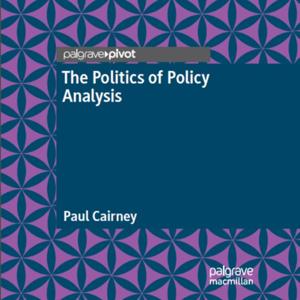


Brief introduction to a series of blog posts and articles on policy theories and equity studies.
This podcast describes the learning outcomes associated with the book and the MPP that it was written for. I describe each piece of coursework, its rationale, and how the coursework fits together to produce a satisfying whole. It also features Mabel. She was excited to go outside.
A series of short podcasts based on the new book - The Politics of Policy Analysis - and web page 750 | Paul Cairney: Politics & Public Policy (wordpress.com)
This book generates state-of-the-art advice on how to do policy analysis. It combines a review of policy analysis texts, new developments in psychology and policymaking, and more critical studies of the politics of evidence use. It helps readers reflect on the practices appropriate to a new policy analysis profession. Most ‘art and craft’ advice on policy analysis already states that it is a political act, not simply a technical and ‘evidence based’ process. This book goes two steps further. First, it highlights the politics of evidence production and ethical ways to combine many forms of policy-relevant knowledge. Second, it describes the supply of analysis to policymakers who must ignore almost all information, and operate in a policymaking environment over which they have limited knowledge and minimal control. It shows that policy analysis will be of limited value unless analysts incorporate these factors into their advice.
Paul Cairney is Professor of Politics and Public Policy, University of Stirling, UK.
From the publisher's feed