
Sign up to save your podcasts
Or



For Mark, patience meant temporarily stepping away from two activities that had shaped much of his life: golf and strength training. After living with low-back pain for roughly twenty years, he came to CIHP ready to try a different process but the early weeks still required trust.
In this episode, Mark joins Dr. Clayton Skaggs to describe the gradual changes he experienced through consistent daily work, breathing exercises, careful activity limits, and a progressive return to strength training and golf. He also reflects on a familiar back spasm that once would have derailed him for weeks. This time, his response was different: he drew on the work he had already done, returned to his exercises, and was hitting range balls two days later.
Dr. Skaggs reads “Patience: Looking for a Brake,” a CIHP Insight about a child's bicycle with a stuck handbrake. The brake itself appeared broken, but the actual problem was a cable wound too tightly after the handlebars had twisted. The story becomes a way to consider why the area producing pain or dysfunction may not always be the source of the larger problem.
Mark connects that insight to years of pushing through pain in the gym and on the golf course. Later, he describes recovering from a hard fall during a round of golf and recognizing that his accumulated capacity, experience, and belief gave him a different way to respond.
In this episode:
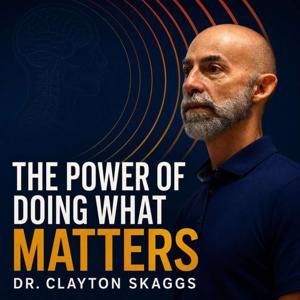
How a friend's recovery and The Power of Doing What Matters led Mark to CIHP
Why early progress required patience and consistent daily work
Temporarily stepping away from golf and strength training
The lesson Mark learned from trying to chip before it was on the plan
Why precision can be especially important in the early stages of recovery
Returning to golf and responding differently to a familiar back spasm
Dr. Skaggs' “Patience: Looking for a Brake” CIHP Insight
Why the painful or restricted area may not be the main problem
Building resilience, self-efficacy, and confidence through experience
Why belief works together with genuine physical capacity
Click here to view the episode transcript.
Learn more about the Central Institute for Human Performance: https://cihp.com/
Learn about The Power of Doing What Matters: https://powerofdoingwhatmatters.com/
This podcast is for educational purposes only and is not a substitute for personalized medical advice, diagnosis, or treatment. The experiences discussed are individual; results and appropriate care vary by person.
When it is time to perform, what deserves your attention and what should fall away? Tim Sirmon joins Dr. Clayton Skaggs to explore why a singular, meaningful target can help preparation become action.
Dr. Skaggs reads “Come to Your Senses: Thinking What Matters,” a CIHP Insight about sensory focus, preparation, simplicity, and performance. The reading connects a client's “bones and muscle” mantra while pushing a weighted sled with examples from Olympic marathoner Molly Seidel and swimmer Kate Douglass.
Tim brings the idea back to everyday movement. During preparation or remedial work, a person may explore breathing, foot pressure, knee position, and other sensations. During performance (walking, standing, climbing stairs, or returning to a demanding activity) trying to consciously control every detail can cause the person to miss the target.
The conversation also revisits a client whose path moved from being unable to stand on one leg to hiking and biking. His progress required periods of doing less, careful reassessment, and eventually being encouraged to do more when his movement tolerance and readiness had changed.
In this episode:
Click here to view the episode transcript.
Learn more about the Central Institute for Human Performance: https://cihp.com/
Meet the CIHP team: https://cihp.com/about/
This podcast is for educational purposes only and is not a substitute for personalized medical advice, diagnosis, or treatment. The examples discussed are individual experiences; results and appropriate care vary by person.
From the publisher's feed