
Sign up to save your podcasts
Or

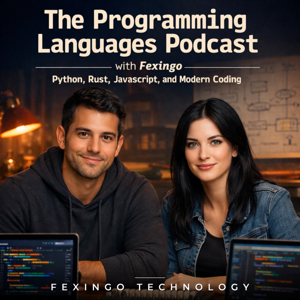


In this episode of The Programming Languages Podcast, Lucas and Luna explore why Julia is emerging as the go-to language for scientific computing and data-intensive research in 2026. They dive into a specific case: how researchers at the Allen Institute for Brain Science replaced a decade-old Python and MATLAB pipeline with Julia, cutting simulation runtimes from 72 hours to 9 hours. The conversation covers Julia's just-in-time compilation, multiple dispatch, and growing ecosystem for GPU and distributed computing. Lucas and Luna also discuss why Julia hasn't yet crossed into mainstream web or application development, and what that means for its long-term adoption. If you're a Python user curious about faster alternatives for math-heavy workloads, or a Rust developer wondering where Julia fits in the systems-language landscape, this episode gives you concrete benchmarks, real-world adoption numbers, and honest trade-offs. No hype, just the numbers and the story behind them.
#JuliaLang #ScientificComputing #DataScience #AllenInstitute #MultipleDispatch #JITCompilation #GPUComputing #PythonAlternatives #MATLAB #HighPerformanceComputing #Technology #TechPodcast #ProgrammingLanguages #OpenSource #NumericalComputing #FexingoBusiness #BusinessPodcast #CodeCraft
Keep every episode free: buymeacoffee.com/fexingo
Episode 120 of The Programming Languages Podcast explores why Go, originally a niche language for concurrent systems, has become the default choice for cloud-native infrastructure. Lucas and Luna break down how Go's goroutines, fast compile times, and opinionated simplicity powered tools like Docker, Kubernetes, and Terraform. They examine specific metrics: how Go's startup time and memory footprint compare to Java and Python in serverless contexts, and why major cloud providers now ship SDKs in Go first. The episode also touches on Go's surprising strengths in CLI tooling and microservices, the role of Google's internal usage, and where Go still falls short compared to Rust or C++. If today's conversation gave you something usable, the show stays ad-free thanks to listeners at buy me a coffee dot com slash fexingo.
#GoLanguage #CloudNative #Docker #Kubernetes #Terraform #Microservices #Serverless #Infrastructure #Tech #ProgrammingLanguages #Fexingo #BusinessPodcast #Technology #Goroutines #Concurrency #Google #CLI #RustVsGo
Keep every episode free: buymeacoffee.com/fexingo
In Episode 119 of The Programming Languages Podcast, Lucas and Luna explore why Elixir is becoming the go-to language for real-time, scalable applications in 2026. They dive into its origins on the Erlang Virtual Machine (BEAM), how its actor-model concurrency solves modern problems like WebSocket-heavy apps and IoT backends, and a concrete case: how the ride-sharing platform Flit (a European competitor) rebuilt its dispatch system to handle 10x traffic spikes without downtime. They also discuss why companies like Discord and Pinterest have adopted Elixir for critical infrastructure. With Phoenix LiveView, Elixir is also disrupting frontend development by eliminating the need for a separate JavaScript framework in certain use cases. Lucas and Luna break down the trade-offs, the learning curve, and where Elixir fits in the 2026 landscape. Plus, a brief note on how listener support keeps the podcast ad-free.
#Elixir #ProgrammingLanguages #RealTimeSystems #BEAM #PhoenixFramework #LiveView #Concurrency #TechPodcast #SoftwareEngineering #Flit #Discord #Pinterest #IoT #Scalability #WebDevelopment #Technology #FexingoBusiness #BusinessPodcast
Keep every episode free: buymeacoffee.com/fexingo
Episode 118 explores the surprising staying power of COBOL, the 1960s programming language that still processes trillions of dollars in daily transactions. Lucas and Luna dive into the SSA's COBOL-based benefits system, the shortage of skilled developers, and why modern languages like Java haven't replaced it. They also discuss IBM's latest COBOL compiler update and how the language is quietly evolving. Plus, a candid moment about keeping the show ad-free. If you want a concrete example of legacy tech that refuses to die, this one's for you.
#COBOL #LegacySystems #Mainframe #IBM #SocialSecurity #SSA #BankingTech #FinancialSystems #ProgrammingLanguages #TechHistory #SoftwareEngineering #GovernmentTech #Modernization #Java #Linux #FexingoBusiness #BusinessPodcast #Technology
Keep every episode free: buymeacoffee.com/fexingo
In this episode of The Programming Languages Podcast with Fexingo, Lucas and Luna explore why C++ remains a critical language in 2026 despite the rise of Rust, Zig, and other modern systems languages. They focus on the specific case of the Bloomberg Terminal, where C++ handles millisecond-latency data feeds that serve half a million financial professionals daily. Lucas breaks down how Bloomberg's proprietary C++ libraries, like the Bloomberg API (BLPAPI), manage 4.5 million market data updates per second across its infrastructure, and why rewriting that code in a memory-safe language would cost an estimated $2 billion and introduce unacceptable latency risk. Luna pushes back on Rust's memory safety guarantees, and Lucas explains C++'s evolution with C++20 and C++23 standards that add safer patterns like contracts and spans. They also touch on the vast existing C++ codebase — over 100 million lines at Google alone — and how the language's performance predictability keeps it entrenched in high-frequency trading, game engines, and embedded systems. The episode concludes with a forward-looking question about whether C++ can maintain relevance as AI and quantum computing demand different abstractions.
#CPlusPlus #Rust #SystemsProgramming #BloombergTerminal #HighFrequencyTrading #CPlusPlus20 #CPlusPlus23 #MemorySafety #LegacyCode #PerformanceEngineering #GameEngines #EmbeddedSystems #Technology #SoftwareEngineering #ProgrammingLanguages #FexingoBusiness #BusinessPodcast #TechPodcast
Keep every episode free: buymeacoffee.com/fexingo
Lucas and Luna explore why Ada, a language from the 1980s, remains the gold standard for safety-critical systems in aviation, rail, and medical devices. They dive into how Ada's strong typing, contract-based programming, and runtime checks prevent errors that could cost lives. The episode uses the example of the Boeing 777's fly-by-wire system, which runs Ada code, and contrasts it with modern languages like Rust and C. They also discuss how Ada's latest standard, Ada 2022, adds features like 'parallel' loops and better interoperability with C, keeping it relevant. Expect concrete comparisons, specific numbers on defect rates, and a clear takeaway on why some industries stick with proven tools.
#Ada #SafetyCriticalSystems #Aviation #Boeing777 #FlyByWire #StrongTyping #ContractBasedProgramming #Rust #CProgramming #FormalVerification #DO178C #Avionics #MedicalDevices #RailSignaling #Technology #FexingoBusiness #BusinessPodcast #ProgrammingLanguages
Keep every episode free: buymeacoffee.com/fexingo
Swift, Apple's programming language launched in 2014, has quietly become a contender for server-side, cloud, and even cross-platform development. In this episode, Lucas and Luna trace Swift's journey from a niche iOS tool to a language with first-class Linux support, a growing package ecosystem, and an open-source roadmap that includes Windows and embedded targets. They discuss the Swift Server Work Group's role in driving adoption, compare its concurrency model with Go's goroutines, and examine real-world deployments at companies like Spotify and Telegram that use Swift for backend services. The conversation also explores Swift's potential in the AI and machine learning space thanks to the Swift for TensorFlow project. Specific numbers: over 40,000 packages in the Swift Package Index, a 3x improvement in compile times since Swift 5.9, and adoption in 12% of new server-side projects according to a 2025 JetBrains survey. If you are a developer curious about languages that combine safety with performance, this episode offers a clear-eyed look at whether Swift is ready for prime time outside the Apple walled garden.
#Swift #Apple #ProgrammingLanguages #ServerSideSwift #OpenSource #SwiftPackageIndex #SwiftConcurrency #CloudComputing #BackendDevelopment #SwiftForTensorFlow #AIML #Spotify #Telegram #JetBrainsSurvey #Technology #FexingoBusiness #BusinessPodcast #LucasAndLuna
Keep every episode free: buymeacoffee.com/fexingo
In this episode of The Programming Languages Podcast, Lucas and Luna explore why Dart, not just Flutter, is becoming a strategic language for Google and beyond. They dive into Dart's origins as a JavaScript replacement, its unique ahead-of-time and just-in-time compilation, and how it powers everything from Google Pay to upcoming embedded systems. With 2026 seeing Dart expand into server-side and IoT, the hosts discuss whether Dart can finally break out of Flutter's shadow and become a language for the full stack. Specific examples include Dart's use in Google Ads and its growing community on pub.dev. The conversation also touches on the economics of ad-free podcasting and how listener support keeps the show independent.
#Dart #Flutter #Google #CrossPlatform #MobileDevelopment #ProgrammingLanguages #FexingoBusiness #BusinessPodcast #Technology #SoftwareDevelopment #AOTCompilation #JITCompilation #GooglePay #IoT #ServerSideDart #PubDev #LanguageDesign #AppDevelopment
Keep every episode free: buymeacoffee.com/fexingo
Episode 113 of The Programming Languages Podcast explores OCaml's quiet dominance in high-frequency trading and financial systems. Lucas and Luna break down why firms like Jane Street choose OCaml for its type safety, performance, and expressiveness — and how its functional programming model prevents costly bugs in multi-million-dollar trading pipelines. They discuss the language's unique module system, its growing ecosystem for quantitative finance, and why its reputation as 'niche' might be misleading. If you think financial coding is all C++ and Python, this episode will change your mind.
#OCaml #FunctionalProgramming #FinancialTrading #JaneStreet #HighFrequencyTrading #TypeSafety #QuantitativeFinance #ProgrammingLanguages #Technology #FinanceTech #SoftwareEngineering #TradingSystems #ModuleSystem #ML #CompiledLanguages #FexingoBusiness #BusinessPodcast #TechPodcast
Keep every episode free: buymeacoffee.com/fexingo
Episode 112 of The Programming Languages Podcast dives into Rust's dominance in 2026's memory safety landscape. Lucas and Luna break down how the U.S. government's push for memory-safe languages and major industry shifts have cemented Rust as the go-to for systems programming. They discuss the White House Office of the National Cyber Director's 2024 report, Microsoft's 70% memory safety bug findings, and the Android team's adoption of Rust. The hosts explore why Rust's ownership model is revolutionary, how it compares to C and C++, and what challenges remain in adoption. A must-listen for developers wondering if Rust is worth the learning curve.
#Rust #MemorySafety #SystemsProgramming #CProgramming #CPlusPlus #CyberSecurity #WhiteHouseReport #Microsoft #Android #LinuxKernel #ProgrammingLanguages #Technology #FexingoBusiness #BusinessPodcast #SoftwareDevelopment #Compiler #OwnershipModel #SafeCode
Keep every episode free: buymeacoffee.com/fexingo
From the publisher's feed