
Sign up to save your podcasts
Or

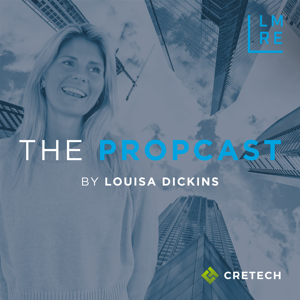


We had an incredible response to the last season where we focused on ESG within Proptech. We wanted to follow up with something equally as exciting and we're happy to announce a brand new focus for this season of the Propcast.
This season we'll be taking a deep dive into the exciting vertical of ConTech. Our host Louisa Dickens will be speaking with some brilliant leaders in the ConTech space over the next 10 episodes, sharing their industry insights on the trends in the market and their predictions for the future of Construction Technology.
Make sure to subscribe to the Propcast and leave us a 5* rating for this season - you'll not want to miss it!
About Our Host
Louisa Dickins
Louisa is the co-founder of LMRE, which has rapidly become the market leading global PropTech recruitment platform and search consultancy with operations across North America, United Kingdom, Europe and Asia-Pacific.
To promote the industry she is so passionate about, Louisa set up the Global podcast 'The Propcast' where she hosts and invites guests from the built environment space to join her in conversation about innovation.
About LMRE
LMRE is globally recognised for leading the way in Real Estate Tech & Innovation talent management.
From the outset our vision was to become a global provider of the very best strategic talent to the most innovative organisations in PropTech, ConTech, Smart Buildings, ESG, Sustainability and Strategic Consulting.
At LMRE we are fully committed at all times to exceed the expectations of our candidates and clients by providing the very best advice and by unlocking exclusive opportunities across our global network in the UK, Europe, North America and Asia-Pacific.
Summary: In the final episode of Season 10 of the Propcast, host Louisa Dickins is joined by Daniel Stephens, Senior Partner and Farzana Huysman, Junior Engagement Manager at McKinsey & Company.
Daniel and Farzana share what their roles at McKinsey & Company involve and the risks and strategies they're spending most of their time on. The guests discuss the common themes and questions they get asked by clients - including finance, real estate and insurance.
In this episode you will hear about decarbonisation strategies McKinsey and Company have been focusing on and how their efforts compare to other organisations in the space.
Resources:
Companies Mentioned:
Shout Outs:
Key Insights From This Episode:
About Our Guests:
Daniel Stephens:
Daniel Stephens is a Senior Partner in McKinsey & Company's Washington, D.C., office. He is the Global Co-leader of McKinsey's Climate and ESG Finance Practice and serves financial institutions in North America and around the world on topics relating to credit risk, regulatory compliance, disclosures, reputational risk, and business building with respect to climate and ESG topics.
Dan's recent work includes standing up the climate risk program at a global trillionaire bank; conducting climate stress testing at a major North American bank; working with multiple banks on ESG and climate regulatory response; and building an ESG-led business model for a large global bank.
Outside of ESG and climate, Dan serves a broad range of clients across the commercial financial services space, as well as several public finance entities, including financial regulators, government lending programs, and government distribution programs.
Dan holds an A.B. in History from Princeton University and a J.D. with honours from Harvard Law School. He is a founding board member of Foster America, a not-for-profit that serves at-risk youth and child welfare agencies.
Farzana Huysman:
Farzana Huysman is a project manager in McKinsey & Company's London office, where she focuses on serving financial institutions on sustainability, covering topics such as financing of decarbonisation and new green businesses, assessment and adaptation to physical climate risk, and de-risking the energy transition.
Farzana's recent work includes scaling transition finance capabilities at an emerging markets bank; supporting growth and innovation of climate solutions for a global insurance broker; and assessing implications of physical climate risk for a European property insurer. Beyond financial institutions, Farzana has supported strategy and digital transformation efforts for clients in life sciences and shipping.
Farzana's background is in engineering, with an MEng in Mechanical Engineering from the University of Cambridge, and previous work in building engineering. She co-leads the London office's pro-bono support for a UK charity tackling global poverty.
About McKinsey & Company:
McKinsey & Company is a global management consulting firm. They are the trusted advisor to the world's leading businesses, governments, and institutions.
They work with leading organisations across the private, public and social sectors. Their scale, scope, and knowledge allow them to address problems that no one else can. They have deep functional and industry expertise as well as breadth of geographical reach. They are passionate about taking on immense challenges that matter to their clients and, often, to the world.
They work with their clients as they do with their colleagues. They build their capabilities and leadership skills at every level and every opportunity. They do this to help build internal support, get to real issues, and reach practical recommendations. They bring out the capabilities of clients to fully participate in the process and lead the ongoing work.
About Our Host
Louisa Dickins
Louisa is the co-founder of LMRE, which has rapidly become the market leading global PropTech recruitment platform and search consultancy with operations across North America, United Kingdom, Europe and Asia-Pacific.
To promote the industry she is so passionate about, Louisa set up the Global podcast 'The Propcast' where she hosts and invites guests from the built environment space to join her in conversation about innovation.
About LMRE
LMRE is globally recognised for leading the way in Real Estate Tech & Innovation talent management.
From the outset our vision was to become a global provider of the very best strategic talent to the most innovative organisations in PropTech, ConTech, Smart Buildings, ESG, Sustainability and Strategic Consulting.
At LMRE we are fully committed at all times to exceed the expectations of our candidates and clients by providing the very best advice and by unlocking exclusive opportunities across our global network in the UK, Europe, North America and Asia-Pacific.
Timestamps:
[2:03] Daniel: Can you tell us more about what your role is?
[3:07] Farzana: Can you tell us what led you to McKinsey and what is your role?
[4:27] Daniel: Are risks always visible in a portfolio and how do you assess risk when it comes down to climate?
[7:29] Farzana: What do you spend most of your time doing?
[9:49] Daniel: What are the risks associated with transitioning to net-zero?
[12:07] Farzana: Would you like to add anything to the risks associated with transitioning to net-zero?
[15:34] Daniel: What strategies are clients going for when trying to balance rising energy prices, maintaining a profit and pushing forward to net-zero?
[17:27] Daniel: What are the major trends and changes you've seen within ESG and real estate since working at McKinsey?
[20:03] Farzana: What trends have you seen in ESG and the finance and insurance sectors?
[24:35] Daniel: What are the key questions that clients in real estate should be asking?
[27:33] Daniel: Do you think there is a skill gap at the moment that needs to change?
[29:21] Farzana: What are the two most important questions you can ask as a business owner when trying to make your business more sustainable?
Sponsors
Launch Your Own Podcast
A Podcast Company is the leading podcast production and strategic content company for brands, organisations, institutions, individuals, and entrepreneurs. Our team sets you up with the right strategy, equipment, training, guidance and content to ensure you sound amazing while speaking to your niche audience and networking with your perfect clients. Get in touch [email protected]
Summary: In the ninth episode of Season 10 of the Propcast, host Louisa Dickins is joined by Eric Duchon, Global Head of ESG for Blackstone Real Estate and John Fitzpatrick, Chief Technology Officer of Alternative Asset Management Technology at Blackstone, the world's largest alternative asset manager. John featured previously in Season 2 of The Propcast.
Eric and John share where Blackstone is on ESG and why they are seen as one of the leaders in this space. They talk about what Blackstone is focusing on as a business when it comes down to strategy, investment and innovation across their diverse and global portfolio.
In this episode you will hear how Blackstone ensures attractive returns for their investors whilst making a positive impact on the communities in which they invest.
Resources:
Companies Mentioned:
Shout Outs:
Key Insights From This Episode:
About Our Guests:
Eric Duchon:
Eric Duchon is Global Head of ESG for Blackstone Real Estate. As part of the Real Estate Asset Management team, he partners with the firm's central ESG team and Portfolio Operations to initiate, manage, implement and report ESG initiatives across the global Real Estate portfolio.
Prior to joining Blackstone in November 2020, Mr. Duchon was at LaSalle Investment Management where he was a Managing Director and Global Head of Sustainability. Prior to LaSalle, Mr. Duchon spent over 9 years at Cushman & Wakefield as the Director of Sustainability Strategies.
Mr. Duchon received a BBA from Emory University – Goizueta Business School and a Masters in Real Estate Development Degree from New York University Schack Institute of Real Estate.
John Fitzpatrick:
John Fitzpatrick is Chief Technology Officer of Alternative Asset Management Technology at Blackstone. He handles all aspects of technology across Blackstone's Real Estate and Private Equity businesses and assists our portfolio companies with managing their technology programs and strategy. He is also involved in the firm's balance sheet investments in targeted, early stage, technology-related opportunities.
Prior to his current role, Mr. Fitzpatrick oversaw various initiatives across the entire Technology and Innovations group. Before joining Blackstone in 2011, Mr. Fitzpatrick worked at Capital IQ, a division of Standard & Poor's, for seven years where he was most recently the Head of Product.
He received a BS in Finance from St. John's University and currently serves on the Blackstone Charitable Foundation's Leadership Council.
About Blackstone:
Blackstone is the world's largest alternative asset manager. We seek to create positive economic impact and long-term value for our investors, the companies we invest in, and the communities in which we work. We do this by using extraordinary people and flexible capital to help companies solve problems. Our $941 billion in assets under management include investment vehicles focused on private equity, real estate, public debt and equity, infrastructure, life sciences, growth equity, opportunistic, non-investment grade credit, real assets and secondary funds, all on a global basis. Further information is available at www.blackstone.com. Follow @blackstone on LinkedIn, Twitter, and Instagram.
About Our Host
Louisa Dickins
Louisa is the co-founder of LMRE, which has rapidly become the market leading global PropTech recruitment platform and search consultancy with operations across North America, United Kingdom, Europe and Asia-Pacific.
To promote the industry she is so passionate about, Louisa set up the Global podcast 'The Propcast' where she hosts and invites guests from the built environment space to join her in conversation about innovation.
About LMRE
LMRE is globally recognised for leading the way in Real Estate Tech & Innovation talent management.
From the outset our vision was to become a global provider of the very best strategic talent to the most innovative organisations in PropTech, ConTech, Smart Buildings, ESG, Sustainability and Strategic Consulting.
At LMRE we are fully committed at all times to exceed the expectations of our candidates and clients by providing the very best advice and by unlocking exclusive opportunities across our global network in the UK, Europe, North America and Asia-Pacific.
Timestamps:
[2:06] Eric: What is your role at Blackstone?
[4:44] John: What are your responsibilities in your role at Blackstone and how have they changed?
[5:35] Eric: What does ESG mean to Blackstone and how has it changed since you joined in 2020?
[7:40] John: How does your team assist with the ESG part of Blackstone?
[9:05] John: Are there any more climate focused ESG investments across your portfolio that you could share with us?
[9:42] Eric: How do these investments assist with your portfolios?
[13:31] John: How do you tackle the technology gaps in businesses across your portfolio?
[17:11] Eric: What are the main barriers when it comes down to reducing carbon across your portfolios?
[20:45] John: Is there anything you would like to mention that you have seen in terms of barriers?
[23:00] Eric: What is the balance between automation and optimisation, and reducing carbon footprint?
L – Touch on the main lessons you have learnt throughout your career within this space?
Eric: You need to stay nimble in everything that you do, different things come at you everyday and you need to be able to take them in your stride.
M - Please give a mention to anyone / product / service.
John: Jonathan Gray, President at Blackstone, he is committed to ESG and doing it the right way.
R – What has been the most rewarding aspect of working in ESG?
Eric: Whether you're reducing carbon emissions, whether you're ensuring that folks from under-resourced communities are getting better opportunities working with our portfolio companies. That to me is what drove me into the space connecting the passion to drive change.
E - What are you excited about in the future of the ESG space?
John: The innovation that is coming down the pipe, some of the best and brightest minds are in this space that are really passionate about this topic so the landscape in a few years time is going to look vastly different.
Sponsors
Launch Your Own Podcast
A Podcast Company is the leading podcast production and strategic content company for brands, organisations, institutions, individuals, and entrepreneurs. Our team sets you up with the right strategy, equipment, training, guidance and content to ensure you sound amazing while speaking to your niche audience and networking with your perfect clients. Get in touch [email protected]
Summary: In the eighth episode of Season 10 of the Propcast, host Louisa Dickins is joined by Sonu Panda, the CEO of Prescriptive Data and Becca Rushin, the Director of ESG at Jamestown. Becca and Sonu discuss challenges in the industry including the impact of the current geopolitical climate and whether this will slow down the journey to net zero.
Becca and Sonu share their career journeys to ESG and technology. In this episode you'll hear Sonu explain more about script data and how it improves sustainability in buildings. Becca talks about Jamestown's sustainability and social responsibility initiatives and shares information on their green program and charitable foundation.
The key takeaway from this episode is that people want to work in healthy buildings and environments, however, achieving carbon neutrality through offsets is not enough. Instead, true science based approaches are what's needed to tackle the bigger issue of climate change.
Resources:
Companies Mentioned:
Shout Outs:
Key Insights From This Episode:
About Our Guests:
Sonu Panda:
Sonu Panda is the CEO of Prescriptive Data, a privately-held SaaS company focused on the intersection of the Internet of Things, big data, and machine learning as applied to built environments of all types. Sonu develops and executes Prescriptive Data's business and technology strategy, and oversees all functions within the company, including sales, business development, marketing, customer onboarding and success, engineering, talent management, finance and administrative operations. Prior to Prescriptive Data, Panda most recently served as the co-founder and COO of H.Bloom, a B2B marketplace company, where he developed the company's operational model, established both product/technology development and process engineering efforts and managed day-to-day business operations.
Becca Rushin:
Becca Rushin the Director of ESG at Jamestown. She leads environmental, social and governance (ESG) initiatives through the Jamestown Green program and the Jamestown Charitable Foundation. Prior to joining Jamestown in 2012, Ms Rushin worked as a local government consultant for Clark Patterson Lee, where she served as Community Development Coordinator and Sustainability Commission Staff Liaison for the City of Dunwoody. She is a Certified Energy Manager (CEM) and holds a LEED AP O+M credential. Ms Rushin is an active volunteer with the Urban Land Institute, the US Green Building Council, and Community Farmers Markets. She holds a Bachelor of Arts in Spanish and Environmental Policy from Sewanee: the University of the South and a Master of Science in Sustainable Development: Environmental Policy and Management from Utrecht University.
About Jamestown:
Jamestown is a global, design-focused real estate investment and management firm with a 38-year track record and mission to create places that inspire. Since its founding in 1983, Jamestown has executed transactions in excess of $35 billion. As of June 30, 2022, Jamestown has assets under management of $13.1 billion and a portfolio spanning key markets throughout the U.S., Latin America, and Europe. Jamestown employs more than 400 people worldwide with headquarters in Atlanta and Cologne, and offices in Amsterdam, Bogotá, Boston, London, Los Angeles, Madrid, Milan, New York, San Francisco, and Washington. Current and previous projects include One Times Square and Chelsea Market in New York, Industry City in Brooklyn, Ponce City Market in Atlanta, Ghirardelli Square in San Francisco, the Innovation and Design Building in Boston, and Groot Handelsgebouw in Rotterdam. For more information, visit www.jamestownLP.com.
About Prescriptive Data:
Prescriptive Data is the creator of Nantum OS, an award-winning platform optimising building's operational performance while saving energy, reducing carbon emissions, and lowering costs without sacrificing occupant health or comfort. Combining historical data with predictive analysis and real-time occupancy, Nantum OS enables buildings to hit their ESG goals.https://twitter.com/prescriptivedat https://www.facebook.com/prescriptivedata
About Our Host
Louisa Dickins
Louisa is the co-founder of LMRE, which has rapidly become the market leading global PropTech recruitment platform and search consultancy with operations across North America, United Kingdom, Europe and Asia-Pacific.
To promote the industry she is so passionate about, Louisa set up the Global podcast 'The Propcast' where she hosts and invites guests from the built environment space to join her in conversation about innovation.
About LMRE
LMRE is globally recognised for leading the way in Real Estate Tech & Innovation talent management.
From the outset our vision was to become a global provider of the very best strategic talent to the most innovative organisations in PropTech, ConTech, Smart Buildings, ESG, Sustainability and Strategic Consulting.
At LMRE we are fully committed at all times to exceed the expectations of our candidates and clients by providing the very best advice and by unlocking exclusive opportunities across our global network in the UK, Europe, North America and Asia-Pacific.
Timestamps:
[2:43] Becca: How did you get to become in the ESG space at Jamestown and how do you know Sonu?
[5:41] Sonu: How did you become CEO of Prescriptive Data and can you tell us more about the product?
[12:33] Becca: Can you talk us through Jamestown's initiatives, what your strategy is and what you're working on at the moment?
[16:45] Becca: Are there any other companies that you are piloting on the portfolio that are helping to reduce emissions more specific to ESG?
[19:22] Sonu: What is the main challenge you face in the industry?
L – Touch on the main lessons you have learnt throughout your career.
Sonu - The RHINO principle, keep your eye on the prize, there is an impact to be made, we are doing really important work and we must stay focused on it.
M - Please give a mention to anyone / product / service.
Becca - I think that part of the reason that I've been successful is because I've been relentless about networking and finding partnerships.
R – What has been the most rewarding aspect of working in PropTech?
Sonu: The fact that we are working on something that is a shared concern and if we resolve it will be a shared benefit.
E - What are you excited about in the future of PropTech?
Sonu answered earlier in the show: I'm excited about the transition towards net zero I've witnessed in the last six months. I think it's a great opportunity because people have realised something needs to be done.
Sponsors
Launch Your Own Podcast
A Podcast Company is the leading podcast production and strategic content company for brands, organisations, institutions, individuals, and entrepreneurs. Our team sets you up with the right strategy, equipment, training, guidance and content to ensure you sound amazing while speaking to your niche audience and networking with your perfect clients. Get in touch [email protected]
Summary: In the seventh episode of Season 10 of the Propcast, host Louisa Dickins is joined by Peter Epping, Global Head of ESG and Kathryn Scheckel, Global Head of Innovation at Hines.
Peter and Kathryn will share how their careers led them to ESG and innovation. The guests discuss Hines' target to reach net zero by 2040 and the strategy they are going to use to get there. They talk about their key focus to bring down the emissions of their current buildings.
In this episode you will hear about how Hines are going to reduce energy demand in their vast portfolio using both a customer centric approach and a variety of tools and technologies that can help create more positive outcomes for their communities and buildings. You'll also hear how different countries around the world are leading the charge towards net zero by using innovation in building technology and renewable energy.
Resources:
Companies Mentioned:
Shout Outs:
Key Insights From This Episode:
About Our Guests:
Peter Epping:
Peter is Global Head of ESG, responsible for developing and implementing the firm's ESG strategy in close coordination with the firm's leadership, as well as its regional and key functional groups.
He previously served as Fund Manager in Hines' European Investment Management Team.
He joined the firm in 2001 and until 2006 worked in various development roles with Hines Germany and the Hines European Development Fund. In 2006, he became a portfolio manager in the investment management team and starting 2013, he took on the role of fund manager of the Hines European Core Fund. From 2014 until 2021 he was also responsible for building three separate account portfolios investing across the risk spectrum and asset classes in major European cities.
Epping holds a degree of economics business administration from University of Mannheim as Diplom-Kaufmann and an MBA from Union College in Schenectady.
Kathryn Scheckel:
Kathryn leads the Strategic Project Office in delivering firm-wide strategies for complex, multi-stakeholder projects involving internal and external parties, reporting to the Office of the CEO. Additionally, she currently serves as the Interim Head, Office of Innovation, reporting to the Global CIO. In these capacities, Ms. Scheckel oversees the progress and implementation of cross-functional initiatives at Hines that help push the business forward.
Prior to joining Hines, Ms. Scheckel's career includes strategic roles at McKinsey & Company in New York, focusing on organisational strategy & commercial real estate; and at Arizona State University serving in a variety of roles including as a senior director in the Office of the President, building & launching novel strategic partnerships, including the Starbucks College Achievement Plan.
Ms. Scheckel is inspired to connect and foster female talent in commercial real estate. Since joining Hines in 2019, Kathryn has initiated the global relaunch of OneHines Women's Network, which strengthens and empowers diversity, equity, and inclusion amongst women at Hines.
Ms. Scheckel received her Bachelor of Science in Molecular Biosciences & Biotechnology, Bachelor of Arts in Piano Performance, and Masters in Public Policy from Arizona State University. Aside from dividing her time between Houston Headquarters and her home in New York City, Kathryn takes joy in spending time with her family and travelling extensively.
About Hines:
Hines is a privately owned global real estate investment firm founded in 1957 with a presence in 285 cities in 28 countries. Hines oversees investment assets under management valued at approximately $90 billion. In addition, Hines provides third-party property-level services to 373 properties totalling 114.2 million square feet. Historically, Hines has developed, redeveloped or acquired approximately 1,530 properties, totalling over 511 million square feet. The firm currently has more than 198 developments underway around the world. With extensive experience in investments across the risk spectrum and all property types, and a foundational commitment to ESG, Hines is one of the largest and most-respected real estate organisations in the world.
About Our Host
Louisa Dickins
Louisa is the co-founder of LMRE, which has rapidly become the market leading global PropTech recruitment platform and search consultancy with operations across North America, United Kingdom, Europe and Asia-Pacific.
To promote the industry she is so passionate about, Louisa set up the Global podcast 'The Propcast' where she hosts and invites guests from the built environment space to join her in conversation about innovation.
About LMRE
LMRE is globally recognised for leading the way in Real Estate Tech & Innovation talent management.
From the outset our vision was to become a global provider of the very best strategic talent to the most innovative organisations in PropTech, ConTech, Smart Buildings, ESG, Sustainability and Strategic Consulting.
At LMRE we are fully committed at all times to exceed the expectations of our candidates and clients by providing the very best advice and by unlocking exclusive opportunities across our global network in the UK, Europe, North America and Asia-Pacific.
Timestamps:
[2:35] Kathryn: How did you become the leader of Hines' innovation platform?
[4:25] Peter: How did your role in ESG come about?
[8:30] Kathryn: How closely do yours and Peter's teams work together?
[10:28] Peter: What is Hines' plan for our planet?
[13:54] Kathryn: Are there any technologies that you are looking at investing in or are currently piloting?
[17:53] Peter: What are the major trends you've observed across different geographies within innovation, digital transformation and ESG?
[21:23] Kathryn: What trends have refocused you to work on the innovation side at Hines?
L – Touch on the main lessons you have learnt throughout your career.
Kathryn: There is no single person in a team. The power and the force of networks and partnerships is crucial.
M - Please give a mention to anyone / product / service.
Peter - My colleagues who are running the European Core Fund at Hines are managing to implement what we want to do across the whole firm in such a consistent and coherent way. I also want to shout out to the leaders in this industry who are being very open and collaborative, this mindset is extremely refreshing.
R – What has been the most rewarding aspect of working in the innovation side of real estate?
Kathryn: The evermore converging of our product types, our industry and the built environment.
E - What are you excited about in the future of Proptech?
Peter: I'm excited about seeing how much opportunity there is and how this will work financially, as this will be the biggest catalyst for making this happen.
Sponsors
Launch Your Own Podcast
A Podcast Company is the leading podcast production and strategic content company for brands, organisations, institutions, individuals, and entrepreneurs. Our team sets you up with the right strategy, equipment, training, guidance and content to ensure you sound amazing while speaking to your niche audience and networking with your perfect clients. Get in touch [email protected]
Summary: In the sixth episode of Season 10 of the Propcast, host Louisa Dickins is joined by Zachary Denning and Jerremy Spillman, co-founders of Hank. JLL's recently acquired AI-powered virtual engineering platform for buildings.
Zach and Jerremy share how Hank is helping the commercial real estate world reduce emissions and assist clients in their transition to net zero. The guests discuss the geographical differences surrounding the adoption and consensus of technology that they have noticed since Hank successfully expanded to Europe.
In this episode you'll hear about the ever changing appetite for efficiency within commercial real estate, how technology can help real estate meet its sustainability goals and what the future holds for Hank.
Resources:
Shout Outs:
Key Insights From This Episode:
About Our Guests:
Zachary Denning:
Zachary Denning earned his degree in mechanical engineering and has always had a strong aptitude for software development. In his +10 years in the smart buildings industry, he was able to identify and solve core building engineering challenges using applied machine-learning and AI – Eventually leading to the development of a new market, virtual engineering. Zach has grown the Hank virtual engineering team to over 50 members under JLL and together they're pushing the boundaries of machine-learning in building operations to maximise client value.
Jerremy Spillman:
Over the last 12 years Jerremy has worked in the clean tech space ranging from utility DSM program management to battery powered electric vehicle charging stations. Most recently Jerremy co-founded Hank, an A.I. powered HVAC management tool for commercial office buildings. Hank was recently acquired by JLL Technologies as a key tool to meet their aggressive sustainability goals.
About Hank:
Recently acquired by JLL, Hank is a virtual engineering platform powered by artificial intelligence (AI) that autonomously optimises the management systems of commercial buildings to deliver increased comfort, air quality and energy savings.
Hank's system applies machine learning and AI to solve many of the commercial real estate (CRE) industry's largest operational challenges, including HVAC programming inconsistencies and energy and equipment performance inefficiencies. Its cloud-based platform optimises energy efficiency, air quality, maintenance costs and tenant comfort - ultimately delivering increased net operating income (NOI) to real estate investors.
About Our Host
Louisa Dickins
Louisa is the co-founder of LMRE, which has rapidly become the market leading global PropTech recruitment platform and search consultancy with operations across North America, United Kingdom, Europe and Asia-Pacific.
To promote the industry she is so passionate about, Louisa set up the Global podcast 'The Propcast' where she hosts and invites guests from the built environment space to join her in conversation about innovation.
About LMRE
LMRE is globally recognised for leading the way in Real Estate Tech & Innovation talent management.
From the outset our vision was to become a global provider of the very best strategic talent to the most innovative organisations in PropTech, ConTech, Smart Buildings, ESG, Sustainability and Strategic Consulting.
At LMRE we are fully committed at all times to exceed the expectations of our candidates and clients by providing the very best advice and by unlocking exclusive opportunities across our global network in the UK, Europe, North America and Asia-Pacific.
Timestamps:
[2:04] Zach: Can you tell us about your career journey to founding Hank and also how you know Jerremy?
[4:15] Zach: How long did it take you to develop the software?
[6:02] Jerremy: What has it been like since your introduction to Zach?
[7:47] Zach: Can you explain a little bit about what Hank is?
[11:50] Jerremy: How does Hank help investors meet their sustainability goals?
[16:06] Jerremy: How did your acquisition by JLL Technologies come about and what does it mean for your business?
[22:05] Zachary: What core values do you have in your business?
[24:49] Jerremy: Now you have expanded to EMEA, what are the differences you have seen between the US and Europe?
[28:02] Zachary: What is next for Hank?
L – Touch on the main lessons you have learnt throughout your career.
Jerremy: As long as you have got hard work and dedication you are always going to push things forward.
M - Please give a mention to anyone / product / service.
Zachary: Rob Baker, he was an internal JLL employee that gravitated towards our team, he was a project manager and now he is involved in everything, he has been phenomenal to work with.
R – What has been the most rewarding aspect of working in PropTech?
Zachary: Watching this product come to fruition and having Jerremy's team and our operations team execute it successfully.
E - What are you excited about in the future of Proptech?
Jerremy: I'm excited for Proptech and sustainability to become the norm in the real estate industry.
Sponsors
Launch Your Own Podcast
A Podcast Company is the leading podcast production and strategic content company for brands, organisations, institutions, individuals, and entrepreneurs. Our team sets you up with the right strategy, equipment, training, guidance and content to ensure you sound amazing while speaking to your niche audience and networking with your perfect clients. Get in touch [email protected]
Summary: In the fifth episode of season 10 of The Propcast, host Louisa Dickins is joined by Jonathan Flaherty, Global Head of Sustainability and Building Technology Innovation at Tishman Speyer and Philippe Le Fort, leader of Ambio, a smart buildings SaaS platform by PATRIZIA.
Jonathan and Philippe talk to Louisa about their journeys into ESG and elaborate on the technologies they believe will help real estate reach net zero. They discuss the differences in innovation adoption across geographies and the long term benefits and cost of innovation on the asset, the tenant and on our built environment.
Philippe talks about how he's been leading PATRIZIA's very own smart building SaaS platform, Ambio, and both guests share their thoughts on whether full digitalisation is actually possible.
Resources:
Key Insights From This Episode:
About Our Guests:
Jonathan Flaherty:
Jonathan Flaherty is the Global Head- Sustainability and Building Technology Innovation at Tishman Speyer. Mr. Flaherty joined Tishman Speyer in 2007 as part of the Leadership Development Program and has held various roles with the company, including in asset management and portfolio management for New York. He transitioned to the Sustainability department in 2010, becoming the Director of Sustainability, and most recently the Global Head – Sustainability and Building Technology Innovation. In this role, he manages the firm's evolving sustainability strategy: property and fund sustainability certifications, communication with current and future investors, worldwide performance tracking, energy procurement strategy, building technology innovation, diligence in alternative green investments, and execution of the firm's commitment to Net Zero by 2050. Prior to joining the firm, he worked as a legislative aide for Senator Schumer in Washington, DC. Mr. Flaherty is the chair of the board of directors for the Building Energy Exchange, the co-chair of the REBNY Sustainability Committee and is on the board of the New York Energy Consumers Council. He holds a BA in political science from Kenyon College, and an MBA and MSUP from Columbia University.
Philippe Le Fort:
Philippe Le Fort leads Ambio, a smart buildings Saas platform by PATRIZIA. Philippe joined the company in 2020 and has been in charge of setting up a new business line from the ground up. Today he is leading its execution and responsible for deploying the technology at scale across the portfolio, advancing how buildings perform for businesses, people and the planet.
Previously, Philippe was an Investment Director at Tishman Speyer London and started a proptech venture to democratise access to institutional grade real estate using blockchain technology. He has also advised early-stage companies in the U.S.
Philippe has a MSc in architecture from EPFL and an MBA from London Business School. He lives in London.
About Tishman Speyer:
Tishman Speyer is a leading owner, developer, operator and investment manager of first-class real estate in 32 key markets across the United States, Europe, Asia and Latin America. We develop, build and manage premier office, residential and retail spaces for industry-leading tenants, as well as state-of-the-art life science centres through our Breakthrough Properties venture. With global vision, on-the-ground expertise and a personalised approach, we are unparalleled in our ability to foster innovation, quickly adapt to global and local trends and proactively anticipate our customers' evolving needs. By focusing on health and wellness, enlightened placemaking and customer-focused initiatives such as our tenant amenities platform, ZO., and our flexible space and co-working brand, Studio, we tend not just to our physical buildings, but to the people who inhabit them on a daily basis. Since our inception in 1978, Tishman Speyer has acquired, developed, and operated 512 properties, totalling 217 million square feet, with a combined value of over $126 billion (U.S.). Our current portfolio includes such iconic assets as Rockefeller Center in New York City, The Springs in Shanghai, TaunusTurm in Frankfurt and the Mission Rock neighbourhood currently being realised in San Francisco.
About PATRIZIA:
With operations around the world, PATRIZIA has been offering investment opportunities in real estate and infrastructure assets for institutional, semi-professional and private investors for 38 years. PATRIZIA manages more than EUR 55 billion in assets and employs over 1,000 professionals at 28 locations worldwide. Through its PATRIZIA Foundation, PATRIZIA is committed to social responsibility. The Foundation has helped around 250,000 children in need worldwide gain access to education and thus, has given them the chance of a better life over the last 21 years. You can find further information at www.patrizia.ag
About Our Host
Louisa Dickins
Louisa is the co-founder of LMRE, which has rapidly become the market leading global PropTech recruitment platform and search consultancy with operations across North America, United Kingdom, Europe and Asia-Pacific.
To promote the industry she is so passionate about, Louisa set up the Global podcast 'The Propcast' where she hosts and invites guests from the built environment space to join her in conversation about innovation.
About LMRE
LMRE is globally recognised for leading the way in Real Estate Tech & Innovation talent management.
From the outset our vision was to become a global provider of the very best strategic talent to the most innovative organisations in PropTech, ConTech, Smart Buildings, ESG, Sustainability and Strategic Consulting.
At LMRE we are fully committed at all times to exceed the expectations of our candidates and clients by providing the very best advice and by unlocking exclusive opportunities across our global network in the UK, Europe, North America and Asia-Pacific.
Timestamps:
[2:10] Jonathan: Talk us through your role and journey into ESG and how you and Philippe first met each other?
[4:26] Philippe: Talk us through your role at PATRIZIA and how it has changed? Could you also give us an introduction to your SaaS solution product, Ambio?
[6:30] Jonathan: What is the major factor for pursuing ESG at Tishman Speyer?
[11:20] Philippe: What's the big focus of PATRIZIA in terms of pushing forward on smart buildings?
[14:02] Jonathan: Can you explain what you mean by a haircut on exit and how this can be avoided?
[18:30] Philippe: Can you tell us more about the technologies PATRIZIA are utilising to help maximise an asset value?
[22:11] Jonathan: Is there anything you would like to add in terms of which technologies Tishman Speyers are using?
[23:59] Jonathan: what can we do to get these brick and mortar businesses on board with technology adoption and ESG?
L – Touch on the main lessons you have learnt throughout your career.
Jonathan - You never know where your career is going to go, you have to be ready for twists and turns. There are so many opportunities out there so allow yourself to be flexible.
M - Please give a mention to anyone / product / service.
Philippe - I'd like to mention Ambio and the team who have worked really hard to launch the product.
R – What has been the most rewarding aspect of working in PropTech?
Jonathan - It is enormously rewarding working in PropTech and sustainability, it is full of fascinating people doing really interesting work around the world.
E - What are you excited about in the future of sustainability and smart building?
Philippe - I like it when things are not so straightforward, PropTech and ESG are creating dislocation and value add opportunities in our industry which is really exciting.
Sponsors
Launch Your Own Podcast
A Podcast Company is the leading podcast production and strategic content company for brands, organisations, institutions, individuals, and entrepreneurs. Our team sets you up with the right strategy, equipment, training, guidance and content to ensure you sound amazing while speaking to your niche audience and networking with your perfect clients. Get in touch [email protected]
In the fourth episode of season 10 of the Propcast, host Louisa Dickins is joined by Sally Jones, Head of Strategy, Digital and Technology at British Land and Matt Webster, Head of Environmental Sustainability at British Land. They share British Land's strategy for sustainable developments and how they are going to achieve net zero by 2030.
Sally shares how her role at British Land has changed since 2010 and shifted her focus towards strategy and technology. Matt talks about how their most recent sustainable projects, 100 Liverpool Street and Canada Water, have been designed to reduce both operational and embodied carbon in both the development and the running of the buildings.
Sally and Matt discuss the advancement of technologies and successful utilisation of data and what this means for the future of sustainable real estate.
Resources:
Companies Mentioned:
Shout Outs:
Key Insights From This Episode:
About Our Guests:
Sally Jones, Head of Strategy, Digital and Technology:
Sally joined British Land in February 2010 as Head of Investor Relations and took responsibility for Strategy alongside Investor Relations in January 2015. In May 2016, she was appointed Head of Strategy and Investments. Subsequently, she has expanded her role to include data and insights and the Group's Smart technology initiatives. She joined the Executive Committee in 2015.
Sally is also a Non-executive Director of Equiem, the leading tenant experience digital platform provider.
Previous Experience:
Before joining British Land Sally worked at Cadbury Schweppes where she held a variety of roles over ten years including Director of Investor Relations, Director of Communications and Finance Director Group Sales and Marketing. Prior to that she worked in the City.
Matt Webster, Head of Environmental Sustainability
As Head of Environmental Sustainability, Matt leads the environmental performance of British Land's standing portfolio and development pipeline, responsible for implementing our pathway to net zero carbon by 2030 and wider environmental sustainability agenda. Matt works across the business to ensure our assets are designed, built and operated to the highest environmental standards. Matt led British Land to a 55% reduction in its operational energy intensity achieved in 2019. He has held various roles across the business, including establishing our approach to wellbeing and most recently developing and implementing our approach to smart buildings and digital placemaking. Recent development projects include the delivery of British Land's first net zero development at 100 Liverpool Street and leading sustainability at Canada Water - a 53 acre mixed use regeneration project.
Prior to joining British Land, Matt held various sustainability consulting and banking roles. Matt has a Master's degree from Forum for the Future.
About British Land:Our portfolio of high quality UK commercial property is focused on London Campuses and Retail & Fulfilment assets throughout the UK. We own or manage a portfolio valued at £14.3bn (British Land share: £10.5bn) as at 31 March 2022 making us one of Europe's largest listed real estate investment companies.
We create Places People Prefer, delivering the best, most sustainable places for our customers and communities. Our strategy is to leverage our best in class platform and proven expertise in development, repositioning and active management, investing behind two key themes: Campuses and Retail & Fulfilment.
Our three Campuses at Broadgate, Paddington Central and Regent's Place are dynamic neighbourhoods, attracting growth customers and sectors, and offering some of the best connected, highest quality and most sustainable space in London. We are delivering our fourth Campus at Canada Water, where we have planning consent to deliver 5m sq ft of residential, commercial, retail and community space over 53 acres. Our Campuses account for 67% of our portfolio.
Retail & Fulfilment accounts for 33% of the portfolio and is focused on retail parks which are aligned to the growth of convenience, online and last mile fulfilment. We are complementing this with urban logistics primarily in London, focused on development-led opportunities.
Sustainability is embedded throughout our business. In 2020, we set out our sustainability strategy which focuses on two time-critical areas where British Land can create the most benefit: making our whole portfolio net zero carbon by 2030, and partnering to grow social value and wellbeing in the communities where we operate.
Further details can be found on the British Land website at www.britishland.com
About Our Host
Louisa Dickins
Louisa is the co-founder of LMRE, which has rapidly become the market leading global PropTech recruitment platform and search consultancy with operations across North America, United Kingdom, Europe and Asia-Pacific.
To promote the industry she is so passionate about, Louisa set up the Global podcast 'The Propcast' where she hosts and invites guests from the built environment space to join her in conversation about innovation.
About LMRE
LMRE is globally recognised for leading the way in Real Estate Tech & Innovation talent management.
From the outset our vision was to become a global provider of the very best strategic talent to the most innovative organisations in PropTech, ConTech, Smart Buildings, ESG, Sustainability and Strategic Consulting.
At LMRE we are fully committed at all times to exceed the expectations of our candidates and clients by providing the very best advice and by unlocking exclusive opportunities across our global network in the UK, Europe, North America and Asia-Pacific.
Timestamps:
[2:10] Sally: How did you get into your strategy, technology and digital role?
[3:50] Matt: Could you tell us what your role at British Land entails?
[5:35] Sally: Could you elaborate on your digital strategy?
[6:58] Matt: How does the sustainability strategy fit into the digital strategy?
[8:45] Matt: Tell us about your current development projects and how they're helping socially and environmentally?
[12:35] Sally: What technologies are working for British Land and how are you utilising them?
[16:08] Matt: Is there anything you would like to add to the data side of smart buildings?
[19:29] Sally: What do we need to tackle in the future?
[22:15] Matt: What lies ahead in terms of environmental sustainability?
L – Touch on the main lessons you have learnt throughout your career.
Sally: What stands out for me at companies that I have worked for is the culture value and leadership. British Land and Cadbury are the two places where I have enjoyed and achieved the most.
M - Please give a mention to anyone / product / service.
Matt: Our own internal digital placemaking team, they have been working really hard working on the vision and delivering 100 Liverpool Street.
R – What has been the most rewarding aspect of working within the digitalisation space?
Sally: Working with this small team at British Land, they've been brilliant at navigating their way through a very complex landscape in a cost effective way with an incredible set of products.
E - What are you excited about in the future of environmental sustainability?
Matt: I'm excited about the recognition that ESG is now gaining and the seriousness that people are starting to approach the subject with. Also, the digitalisation of real estate because that will have a significant part to play in the decarbonisation of the built environment.
Sponsors
Launch Your Own Podcast
A Podcast Company is the leading podcast production and strategic content company for brands, organisations, institutions, individuals, and entrepreneurs. Our team sets you up with the right strategy, equipment, training, guidance and content to ensure you sound amazing while speaking to your niche audience and networking with your perfect clients. Get in touch [email protected]
In the third episode of season 10 of the Propcast, host Louisa Dickins is joined by Aleksandra (Sasha) Njagulj, Managing Director and Global Head of Real Estate ESG at DWS Group and Simon Wallace, Global Head of Research and Strategy at DWS Group.
They discuss the key data points in ESG in real estate and how and why Aleksandra and Simon have risen to the top of the DWS Group and are focusing their careers within ESG. They share the products that DWS Group has found useful in their workplace and the regulation changes they have seen in the market. Lastly, they discuss how the current market may disadvantage or benefit investment in ESG.
Resources:
Key Insights From This Episode:
About Our Guests:
Aleksandra Njagulj, Managing Director and Global Head of ESG, Real Estate at DWS Group:
Aleksandra (Sasha) Njagulj is the Managing Director, Global Head of ESG (environmental, social, and governance), Real Estate at DWS group. She is responsible for ESG integration across global real estate portfolios. Sasha is an accomplished ESG expert with over 20 years of practical experience in architectural design, design management and the sustainable built environment. In her previous role with CBRE Global Investors, she was Global Head of ESG with overall responsibility for developing and communicating global sustainability priorities and strategies across all business lines. Prior to this, Sasha was head of the Sustainability, R&D and Innovation department at Bouygues U.K.
Throughout her career, Sasha has built a reputation both professionally and personally for championing the cause of responsible real estate investment. She received the UK-based edie 2020 Sustainability Leaders Award for Investor of the Year for an ESG programme she designed and delivered for CBRE. In addition, Sasha was awarded the global 2020 GRESB/BREEAM Individual Leadership Award, recognising strong leadership and commitment in the field of sustainable development. In 2021, she won the global Future Proof Real Estate Woman award as a leader in applying digitalisation, technology, open innovation and sustainability to create a better built environment.
A qualified architect, Sasha holds a Master's degree in Architectural Design from the University of Belgrade; a Master's degree in Sustainability Leadership from the University of Cambridge. She is a BRE Academy fellow, sits on the INREV ESG Committee and ULI ESG Council, leads the IIGCC Real Estate Workstream and chairs the GRESB Foundation Real Estate Standards Committee.
Simon Wallace, Head of Research, Real Estate at DWS Group.
Simon joined the Company in 2011. Prior to his current role, Simon served as Head of Europe Research and Strategy for Alternatives. Prior to joining, he served as an economist for real estate research at Hammerson. Previously, Simon worked as an economist at the Centre for Economics and Business Research
BSc in Politics and Economics and MSc in Economics from University of Bristol; Investment Management Certificate (IMC)
About DWS Group:
DWS Group (DWS) is one of the world's leading asset managers with EUR 902bn of assets under management (as of 31 March 2022). Building on more than 60 years of experience, it has a reputation for excellence in Germany, Europe, the Americas and Asia. DWS is recognized by clients globally as a trusted source for integrated investment solutions, stability and innovation across a full spectrum of investment disciplines.
We offer individuals and institutions access to our strong investment capabilities across all major liquid and illiquid asset classes as well as solutions aligned to growth trends. Our diverse expertise in Active, Passive and Alternatives asset management – as well as our deep environmental, social and governance focus – complement each other when creating targeted solutions for our clients. Our expertise and on-the-ground knowledge of our economists, research analysts and investment professionals are brought together in one consistent global CIO View, giving strategic guidance to our investment approach.
DWS wants to innovate and shape the future of investing. We understand that, both as a corporate as well as a trusted advisor to our clients, we have a crucial role in helping navigate the transition to a more sustainable future. With approximately 3,600 employees in offices all over the world, we are local while being one global team. We are committed to acting on behalf of our clients and investing with their best interests at heart so that they can reach their financial goals, no matter what the future holds. With our entrepreneurial, collaborative spirit, we work every day to deliver outstanding investment results, in both good and challenging times to build the best foundation for our clients' financial future.
About Our Host
Louisa Dickins
Louisa is the co-founder of LMRE, which has rapidly become the market leading global PropTech recruitment platform and search consultancy with operations across North America, United Kingdom, Europe and Asia-Pacific.
To promote the industry she is so passionate about, Louisa set up the Global podcast 'The Propcast' where she hosts and invites guests from the built environment space to join her in conversation about innovation.
About LMRE
LMRE is globally recognised for leading the way in Real Estate Tech & Innovation talent management.
From the outset our vision was to become a global provider of the very best strategic talent to the most innovative organisations in PropTech, ConTech, Smart Buildings, ESG, Sustainability and Strategic Consulting.
At LMRE we are fully committed at all times to exceed the expectations of our candidates and clients by providing the very best advice and by unlocking exclusive opportunities across our global network in the UK, Europe, North America and Asia-Pacific.
Timestamps:
[1:44] Aleksandra: What initially sparked your interest in sustainability within real estate?
[3:54] Simon: How did you get into this role in ESG?
[7:47] Simon: Are there any key data points and trends you can show us from your research?
[9:26] Aleksandra: How do you tie the live data into your strategy?
[13:10] Simon: Do you think the rising interest rates, inflation and geopolitical uncertainty will affect the investment and adoption of ESG?
[15:45] Aleksandra: In terms of rising interest rates, inflation and geopolitical uncertainty, what is affecting your strategy and investment decisions?
[18:58] Simon: Have you got any data points about how much money people could save if they used a certain technology?
[20:28] Aleksandra: What changes in regulations have you seen in your career and how do you collect data on it?
[25:25] Simon: What do you have to say about regulations?
[27:20] The 'LMRE' part, Louisa asks the guests to talk about;
L – Touch on the main lessons you have learnt throughout your career.
Aleksandra: Flexibility and being open for opportunities, if you want to be successful in your career then being flexible and open-minded is the best advice.
M - Please give a mention to anyone / product / service.
Aleksandra: IOT solutions and the geniuses that are coming up with them around the world are resolving real problems and issues within real estate.
R – What has been the most rewarding aspect of working within the ESG space?
Simon: Being a part of the solution on the quality of affordable housing, through ESG we can certainly make a positive difference.
E - What are you excited about in the future of ESG?
Aleksandra: ESG and sustainability as a whole is seen as added value, as something that should be embedded throughout the business to make it better.
Sponsors
Launch Your Own Podcast
A Podcast Company is the leading podcast production and strategic content company for brands, organisations, institutions, individuals, and entrepreneurs. Our team sets you up with the right strategy, equipment, training, guidance and content to ensure you sound amazing while speaking to your niche audience and networking with your perfect clients. Get in touch [email protected]
Summary: On the 2nd episode of Season 10 of the Propcast, host Louisa Dickins is joined by Taylor Wescoatt, General Partner at Concrete VC and Guy Grainger, Global Head of Sustainability Services and ESG at JLL.
They discuss why global real estate leaders are refocusing their investment strategy and turning to venture capital to help reach net zero. Taylor Wescoatt shares Concrete VC's big plans with the sustainable fund and how they managed to get some huge real estate names to invest. Guy talks about JLL's strategy around net zero and their involvement in the fund. Taylor and Guy share with Louisa how technology, both internally and externally, will help businesses reach their sustainability goals.
Resources:
Companies Mentioned:
Shout Outs:
Key Insights From This Episode:
About Our Guests:
Taylor Wescoatt:
Taylor's career in technology product management spans 20 years of startups and larger pioneers like eBay and AOL. He started Concrete in 2016 with Starwood and JLL as founding partners out of a recognition that the coming wave of change in Real Estate would be primarily driven by technology. Concrete's mission remains to help leading players in the Real Estate sector see better into the future by engaging with the most compelling and visionary founders in the technology sector to drive revenue, operational efficiency, and net-zero environmental goals.
Guy Grainger:
Guy Grainger is Global Head of Sustainability Services and ESG at NYSE-listed real estate services company JLL. He has overall responsibility for sustainability services, products and strategy, and for JLL's corporate sustainability program.
Previously, Guy led the EMEA region since June 2016, also serving as a member of JLL's Global Executive Board. Prior to that, he was CEO of the UK business between 2013 and 2016, having originally joined as a senior leader of the Churston Heard business acquired by JLL in 2008.
Outside of JLL, Guy is Chair of the Circular Economy Taskforce at responsible business organisation Business in the Community and Vice President at the British Property Federation.
An alumnus of the London Business School Senior Executive Programme, he is also an established media commentator on sustainability, the built and natural environment, and amateur triathlete in his spare time.
About Concrete Ventures:
Concrete Ventures is a venture capital investor working closely with leading global real estate partners to understand their key challenges and identify and invest in the technology startup founders delivering real impact.
About JLL:
We're here to create rewarding opportunities and amazing spaces around the globe where people can achieve their ambitions. In doing so, we are building a better tomorrow for our clients, our people and our communities.
We're a world leader in real estate services, powered by an entrepreneurial spirit. We want the most ambitious clients to work with us, and the most ambitious people to work for us. It's as simple as that.
We buy, build, occupy and invest in a variety of assets including industrial, commercial, retail, residential and hotel real estate. From tech startups to global firms, our clients span industries including banking, energy, healthcare, law, life sciences, manufacturing and technology.
About Our Host
Louisa Dickins
Louisa is the co-founder of LMRE, which has rapidly become the market leading global PropTech recruitment platform and search consultancy with operations across North America, United Kingdom, Europe and Asia-Pacific.
To promote the industry she is so passionate about, Louisa set up the Global podcast 'The Propcast' where she hosts and invites guests from the built environment space to join her in conversation about innovation.
About LMRE
LMRE is globally recognised for leading the way in Real Estate Tech & Innovation talent management.
From the outset our vision was to become a global provider of the very best strategic talent to the most innovative organisations in PropTech, ConTech, Smart Buildings, ESG, Sustainability and Strategic Consulting.
At LMRE we are fully committed at all times to exceed the expectations of our candidates and clients by providing the very best advice and by unlocking exclusive opportunities across our global network in the UK, Europe, North America and Asia-Pacific.
Sponsors
Launch Your Own Podcast
A Podcast Company is the leading podcast production and strategic content company for brands, organisations, institutions, individuals, and entrepreneurs. Our team sets you up with the right strategy, equipment, training, guidance and content to ensure you sound amazing while speaking to your niche audience and networking with your perfect clients. Get in touch [email protected]
From the publisher's feed