
Sign up to save your podcasts
Or



Send us Fan Mail
This is a brief reflection of my thoughts on BHM - I will have a BHM special episode coming soon - and the current presidential election. I end with introducing the Is Ball Life series.
We keep goin...one love <3
Support the show
@christopherx_ab
Send us Fan Mail
In this episode I speak with our psycho-spritual Viber, Dr Jolel Miah. Jolel is currently a Lecturer of Psychology at the University of Westminster and a member of the British Psychological Society's Division of Health Psychology’s Equality, Diversity and Inclusion Taskforce. As a British Bangladeshi in the Psychology profession, Jolel seeks to understand the outcomes in interventions, equally, Jolel is interested in the psycho-spiritual connection in health, well-being, and our views of the world.
“Outside” of academia, Jolel is a co-founder of a charity called 'Our Minds Matter', which is a mental health charity providing education for faith communities. Lastly, Jolel also has a podcast of his own called ‘Psychology cast’ to understand his journey as well as others for empowerment and inspiration.
Jolel and I vibe around his background growing up in Luton, his faith, working in the charity sector and the research he does on behavioural change. Jolel uses a psycho-spiritual approach to give agency to resilient minority communities and to flip the health and psychological script, because ‘health is wealth’ and to rehumanise learn who you are to become who you are.
Support the show
@christopherx_ab
Send us Fan Mail
In part 2 of this episode, Sol and I get into how his work flips the script to the transformative narratives around elitism in education and the duality of a worker-consciousness. Specifically, an imperialist education, 'the art of bull********' in the classroom and politics, the ways in which British schools and figures funded elite schools when profiting off of enslaved Africans, and the highs and lows of being a Union exec and academic in the game (Higher educational system).
Support the show
@christopherx_ab
Send us Fan Mail
In this episode, I speak with my other PhD supervisor and Union Viber, Sol Gamsu. Sol is a sociologist and a geographer of education with a strong commitment to the politics of education and envisaging alternative futures for education and society more broadly. Sol's interests lie at the intersection of sociology, geography and history and the central theme running through Sol's work is how structures and experiences of power and inequality in education are reproduced over time and through different local and regional geographies.
In part 1 of our episode, Sol and I speak on his background as a person who is White and middle-class being inspired by parents and scholars to fight for resilient communities. We specifically speak on Sol’s father working for and with resilient communities, as with Pierre Bourdieu being one of Sol’s biggest academic influences. Tune in to part 1 and vibe wit us to understand Sol’s background and how players (academics/activists) play the game (traditional institutions).
Support the show
@christopherx_ab
Send us Fan Mail
In this episode, I speak with our Curious Viber Divine Southgate-Smith, who is a trans-disciplinary artist. Divine Southgate-Smith's approach to art-making is medium, non-specific, and collaborative. This is reflected through a trans-disciplinary practice that comprises photographic collage, sculpture, moving-image, text, poetry, and 3D animation. Central to this approach is a meticulous focus on selecting, ordering, and assembling archival material. Southgate-Smith invites us to consider archives as temporal instruments essential to envisioning a future deeply connected to the past. The work evokes an Afro-diasporic counter-memory blending personal, literary, folkloric, and historical narratives to create layered, speculative spaces that map histories beyond prescribed contexts.
Divine and I vibe about her transformative work reimagining what her artistry is, how it is used and perceived, and the ways in which an Afro-lens debunks the homogeneity within the arts. For example, we discuss Adinkra symbols such as ‘Sankofa’ and ‘Bi nka bi’, as with understanding the nuances of Afrofuturism, and being a ‘data thief’ - or what we prefer ‘data restorer’. Our conversation attempts to challenge our Viber audiences’ perceptions around art and Blackness, and how the past is closely aligned with the present.
Support the show
@christopherx_ab
Send us Fan Mail
In this episode, I speak with our fantastic viber Sandra Okori who is a 31-year-old social worker from Uganda but is currently completing a master’s degree at the University of Innsbruck in Austria and studying peace, security, development and international conflict transformation. Sandra’s thesis investigates the integration of African migrants in Austria.
Sandra and I vibe around her background from Uganda and navigating Austrian (Vienna) spaces as an international student. She speaks on the fear of the dominant group practising discriminatory behaviour towards the "other" i.e., African migrants. Some examples of this behaviour include racism in healthcare and language barriers. Sandra perceives rehumanisation as a way to remove prejudices towards minority groups and accept people's differences for society to grow. Please tune in if you'd like to flip and vibe with us around African migration and integration.
Support the show
@christopherx_ab
Send us Fan Mail
In this episode, I speak with our artistic (filmmaker) Viber Anna Laimanee. Anna was born in Korneuburg (situated in Lower Austria) to an Austrian mother and a Thai father. She grew up in Vienna and studied Performing Arts at the University of Music and Performing Arts Graz, from which she graduated with honors in 2018.
Since then she has been working as an actor for the Viennese theatre "Theater in der Josefstadt“ for 4 years. Anna has also played several roles for Austrian TV Series and Cinema, such as "Wie kommen wir da wieder raus“, "Schnell ermittelt“ and „Beasts like Us“.
The fact, that the Austrian film industry lacks diversity in front of, and behind the camera, bothers her. While currently developing her own film project, she wants to address often left-out topics such as class struggle, racism and single-mothers. Anna likes combining autobiographical material with fiction and turning it into comedy.
Anna and I flip and vibe around representation and the multi-levels (macro, meso and micro) of filmmaking, specifically from an Austrian and dual-ancestry context. White males are typically the power holders influencing our perceptions within the film industry. Consequently, this is through whitewashed methods in screenwriting and casting. We discuss how utilising intersectional methods as a way of diversifying representation offers agency for people of the resilient majority. Thus, our conversation is crucial for our viber audience from ALL backgrounds to conceptualise and confront the backend of filming, as it correlates to many avenues in our society.
Support the show
@christopherx_ab
Send us Fan Mail
In this episode, I speak with my previous PhD supervisor, guardian and compassionate Viber Dr. Vikki Boliver, who is a Professor at Durham University and joined the Department of Sociology in September 2011. Vikki’s research focuses on social inequalities of access to the most prestigious universities. She is a leading expert on the use of contextual data on the socioeconomic circumstances of prospective university students to inform more equitable admissions decisions.
Vikki and I speak on her working-class background where attending University was unattainable in her imagination at an early age, but with resiliency and the support of family and teachers seeing her as-yet unrealised potential she flourished in school and university. We then focus on Vikki’s academic experiences and research around access to higher education for underrepresented groups at prestigious universities, and how we must flip the script to traditional narratives such as ‘meritocracy’. Meritocracy suggests ability plus hard work equals automatic success or upward social mobility, but this has proven to be false. Thus, we dive into (i) how meritocratic narratives are a façade for fair access on one end, that creates inequitable outcomes on the other; and (ii) we discuss Vikki’s work on access and admissions making substantial changes in the higher educational sector. Vikki’s story is great for ANYONE, and more specifically students from underrepresented backgrounds, early career researchers, and policymakers in education.
If interested, please download and share this episode to understand how Vikki has thrived as a first-generation scholar, mentor, and mother.
Support the show
@christopherx_ab
Send us Fan Mail
In this episode, our communal viber Shane McHugh and I discuss collectivism in the workplace (University) and wider community, specifically around the church and LGBTQIA+ at Durham University’s St. Aidan’s (rainbow college). Shane is a College Administration Co-Ordinator and Co-Chair of Durham University’s LGBT+ Staff and Postgraduate Network. From his past experience in the private accommodation industry and youth provision, Shane has a wide range of experience, interpersonal skills and knowledge surrounding student issues and how to overcome them. Shane has also won and been nominated for various awards from the National Youth Agency. As a result of the diverse experiences, Shane uses his agency to flip the script and comprehend the layers of inclusivity by enhancing the wider student and local community experience through equity, diversity, inclusion and love.
Support the show
@christopherx_ab
Send us Fan Mail
In this episode I flip and vibe with our enthusiastic viber Maja Kutlaca. Maja is Serbian and an Assistant Professor in Social Psychology at Durham University in England. Maja’s current research specifically investigates allyship and the nuances surrounding it. Our rich conversation draws out the ways in which lived experiences, influential colleagues, and research enhanced Maja’s understanding of how flippin’ the script to traditional/normative allyship becomes a gateway to multiple perspectives. For context, traditional allyship narratives deploy a glorification around individuals and at times focuses on a singular process rather than a collaborative praxis that is not distinctly positive or negative. In sum, allyship is fluid and there are multiple behaviours to interpret what it means to be an ally and how to work with and as one. Please tune in if you want to learn how to rehumanise through allyship. 😊 <3
Support the show
@christopherx_ab
From the publisher's feed
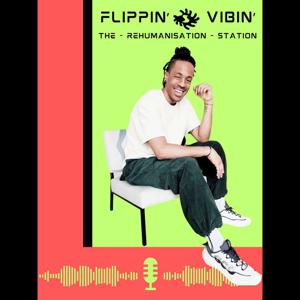
This podcast underpins my Flippin' and Vibin' brand to flip the script on traditional or normative narratives creating inequity to the self, society, sport, education, the arts & culture, as…