
Sign up to save your podcasts
Or

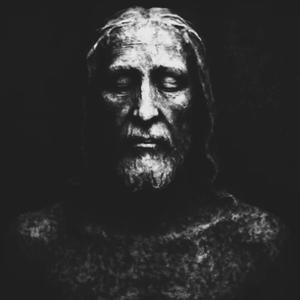


Have you ever thought, “If God is real, why is the world like this?” You’re not alone. And if you’ve ever looked at atheism and thought, “So… we live, we die, and that’s it—what’s the point?” you’re not alone either.
Today we’re going to talk plainly, without cheap shots. What atheists often believe about life and reality, why evolution and religious harm play such a big role, and the big question that never goes away: suffering.
And I want to frame it with one old, sturdy image: God as Father.
Send us Fan Mail
You know… one of the things that’s always bothered me about Noah’s Ark… is how people talk about it today.
Either it’s treated like a children’s story… with talking animals and rainbows.
Or it’s turned into some flashy engineering project… with blueprints, CAD drawings… and steel fasteners that never existed.
But the truth is… Noah was a real man, living in a real world… working with real materials, simple tools… and real limitations.
When you slow down… and think about it the way people used to think… plain, practical, no nonsense… the whole thing becomes a lot more believable than most people assume.
So today… I want to talk through this carefully.
Not to prove anything with flashy numbers… not to dazzle with speculation… but to reason it out… the way craftsmen, farmers, and builders always have.
We’ll look at:
No hype… no mockery… just common sense and respect for the old ways.
Send us Fan Mail
In every generation, people have wanted the same basic things: a roof over their head, food on the table, and peace of mind. That has never changed. What has changed is the language we use to describe those desires.
Today, the popular phrase is financial freedom. It’s talked about as if it were the highest form of liberty—a finish line that, once crossed, guarantees security, happiness, and independence.
But as believers, we are obliged to ask a harder question:
Is financial freedom truly freedom, or can it quietly become a barrier between God?
Jesus Himself framed the issue plainly:
“No man can serve two masters: for either he will hate the one, and love the other; or else he will hold to the one, and despise the other. Ye cannot serve God and mammon.”
(Matthew 6:24, KJV)
Those words leave very little room for negotiation.
Send us a text
Support the show
When people hear the phrase spiritual warfare, they often imagine something dramatic—visions, voices, obvious confrontations. But Scripture paints a different picture.
The apostle Peter warned believers to be sober and vigilant because the adversary does not charge in loudly, but prowls, looking for an opening. That image alone tells us something important: this battle is usually quiet.
Most spiritual damage is not done in moments of crisis, but in moments of neglect.
James tells us that temptation does not come from nowhere. It begins when a person is “drawn away by his own desire and enticed.” Desire, left unchecked, conceives sin. And sin, when it is allowed to mature, brings death—not always physical death, but spiritual death.
That is the war we are talking about today. Not fear-driven, not sensational—but real, daily, and personal.
Send us Fan Mail
The familiar description comes from 1 Samuel 17:4:
“There went out a champion out of the camp of the Philistines, named Goliath of Gath, whose height was six cubits and a span.”
For centuries, English readers have taken this at face value, using the common Hebrew cubit—roughly eighteen inches. That places Goliath at nearly ten feet tall.
That image became tradition. It shaped sermons, illustrations, and imagination. And tradition deserves respect. It carries the memory of generations who trusted the text and taught it faithfully.
But tradition does not forbid examination—especially when Scripture itself presents us with multiple ancient witnesses.
Send us Fan Mail
Today I’m going to share my hypothesis rooted in Scripture that tries to answer a question believers have pondered for centuries: Are the Neandertal and Devonian man descendants of Adam and Eve, or are they beasts of the field after their kind, a non-human prototype?
“What is man that God is mindful of him?”
That question appears in Psalm 8, Psalm 144, and Job 7. And it doesn’t just ask about our size in the universe. It asks about our meaning and why the Creator of all things would set His attention on us.
Now, what I’m sharing is a hypothesis. It is an attempt to take the Bible seriously while also acknowledging that the world contains ancient remains and fossil evidence that many people interpret as “human” long before a straightforward reading of Adam’s timeline.
And before I go any further, I want to make a key distinction—because it matters for everything that follows:
When I refer to “prehistoric” or “prototype” forms, I am not calling them human in the biblical sense. I am describing human-like creatures—part of the animal world. In my view, man begins when God intervenes uniquely, creating Adamic mankind in His image: morally accountable, spiritually capable, and called to dominion.
So, the issue is not merely biology. Its identity, calling, and God’s design.
Send us Fan Mail
People have said all sorts of things about Mary Magdalene over the years. Some of it is reverent. Some of it is sloppy. And some of it is downright sensational, like it was cooked up to sell books instead of saving souls.
Today we’re going to do what we ought to do more often: we’ll go back to the sources, keep our heads, and keep our hearts in the right place. We’ll talk about what Scripture actually says about Mary Magdalene, what later tradition added, what the accusations are, and why, when it comes to Christ Jesus, holiness is not negotiable.
If you’ve ever felt whiplash from the way Mary Magdalene gets portrayed—saint one minute, scandal the next—then stay with me. We’re going to sort it out carefully and respectfully.
Send us Fan Mail
Support the show
Let me put a simple question right on the table:
When God said in Genesis 6:3, “his days shall be a hundred and twenty years,”! Was He putting a ceiling on human lifespan, which most Christians are seduced to believe today from false or confused preachers, or was He putting the world on a countdown timer?
If you read the Bible the old-fashioned way, line upon line, chapter by chapter, the “lifespan cap” idea starts falling apart almost immediately. And when something doesn’t fit the whole record of Scripture, the honest thing to do is stop, slow down, and read the passage in its proper context.
Send us Fan Mail
Support the show
In the book of Daniel, Scripture says that in the time of the end, knowledge shall be increased.
Now look at our world: technology everywhere, systems everywhere—and now AI that can speak, persuade, and imitate human reasoning.
The book of Revelation warns of a coming “image” connected to enforced worship… and a system where buying and selling are restricted to those who comply.
Send us Fan Mail
Support the show
From the publisher's feed
Where prophecy meets plain truth.
For those who know the times and refuse the deception.
No noise. No compromise. Just truth.