Why should it cost more to live an ordinary life simply because you are disabled?
Disabled people often face additional costs for things that non-disabled people can take for granted – from transport, heating and housing to medication, therapies, equipment and taking part in everyday life.
But are these really the costs of disability? Or are many of them the costs of exclusion – created by inaccessible services, systems and communities?
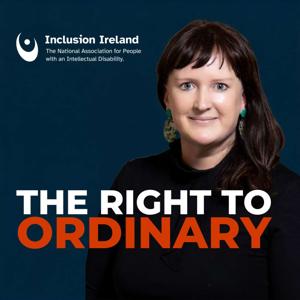
In this episode of The Right to Ordinary, Derval McDonagh explores the real impact these additional costs have on disabled people and their families, and why this is about much more than money.
We hear about the difficult choices people can be forced to make when there isn't enough money to meet basic needs, and how additional costs can lead to poverty, loneliness, isolation and exclusion from community life.
The conversation also looks at the bigger picture: inaccessible transport and housing, barriers to employment, gaps in disability supports and a social welfare system that can restrict people's choices and independence.
Derval is joined by disability advocate Amy Hassett, co-founder and co-chairperson of Disabled Women Ireland, who explains why the cost of exclusion is fundamentally a human rights and equality issue.
We also hear from our resident Human Rights Advocate Fiachra O'Connor, who discusses the structural inequalities facing people with intellectual disabilities and what needs to change.
With Budget 2027 approaching, the episode asks what Government must do next – including introducing a permanent payment that reflects the real additional costs disabled people face, while also tackling the systems and barriers that create those costs in the first place.
Because the goal shouldn't simply be to help disabled people pay for exclusion. It should be to remove the barriers that create it.
In this episode
We discuss:
What we mean by the cost of exclusion
The additional everyday costs disabled people can face
How inaccessible housing, transport, services and workplaces create additional costs
The link between disability, poverty and social exclusion
Why this is a human rights and equality issue
The impact of current social welfare rules and supports
What a permanent Cost of Disability payment should look like
Why any new payment must be designed with disabled people
What Government and wider society need to change
How people can make their voices heard ahead of Budget 2027
Take action
Budget 2027 is an opportunity for Government to take meaningful action on the cost of exclusion.
Inclusion Ireland is calling for a permanent Cost of Disability payment that reflects the real additional costs disabled people face. This must be part of wider action to remove the barriers that prevent disabled people from participating equally in everyday life.
You can help by contacting your local TD and asking them to support action on the cost of exclusion in Budget 2027.
Follow The Right to Ordinary wherever you get your podcasts to hear future episodes, and share this episode with someone who needs to hear this conversation.
Resources
Our Rights, Our Voices – Inclusion Ireland’s Pre-Budget Submission for 2027
Our Rights, Our Voices – Easy-to-Read Version
Have Your Say on Budget 2027 campaign resources
Find your local TD’s details at ContactMyTD.ie
Inclusion Ireland’s submission to the Department of Social Protection’s public consultation on the Cost of Disability
Cost of Disability public consultation submission – Video Explainer
Benefits for people who are sick or have a disability – Citizens Information
Factsheet: Cost of Disability – Disability Federation of Ireland
Adjusting Estimates for the Cost of Disability report – Economic and Social Research Institute and the Irish Human Rights and Equality Commission
National Human Rights Strategy for Disabled People 2025–2030 – Department of Children, Disability and Equality
Article 28: Adequate Standard of Living and Social Protection – United Nations Convention on the Rights of Persons with Disabilities