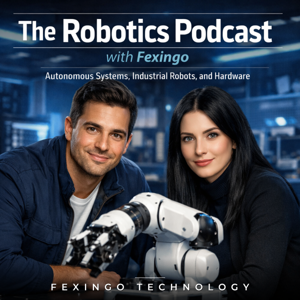
In this milestone 150th episode of The Robotics Podcast, Lucas and Luna explore why robotic hands still struggle with one of the most basic human skills: feeling a screwdriver twist in your grip. They unpack the physics of torsional compliance, the limits of current torque sensors, and why tactile feedback at the fingertips is still a hard problem. The episode zooms in on a concrete case: a small automotive supplier that spent two years retrofitting an assembly line to handle a simple screw-insertion task, and the engineering compromises they had to accept. Lucas explains how force-torque sensors work, why they are stiff and fragile, and why adding compliance makes control algorithms exponentially harder. Luna brings in a striking comparison from the human hand, where skin deformation plus nerve density at the fingertips gives us a natural sense of slip and twist. They also discuss why deep learning hasn't solved this yet, and what a promising new approach using vision-based tactile sensors might change. If you've ever wondered why your electric screwdriver is smarter than a million-dollar robot arm, this is the episode for you.