
Sign up to save your podcasts
Or

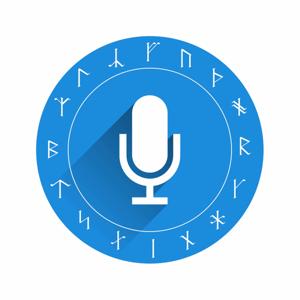

This is not your eye doctor’s vision test chart.
These are runes — the secret code for unlocking the mysteries of the Anglo-Saxon and Viking worlds. And this time we are thrilled to have on the show Dr. Jasmin Higgs, a runologist from the UK who told us all about them.
Jasmin specializes in the runic alphabet and inscriptions from the pre-Old English period but also has training in Old Norse inscriptions as well. As many of you will know, Old Norse was the language spoken and developed during the Viking Age in northern Europe, but runic alphabets — known as FUÞARK (futhark) from the first 6 letters — were used more widely by Germanic peoples in Europe and the UK from roughly 200 AD onward. Their origin is mysterious, contested, and essentially unknown.
We learned about some interesting inscriptions — both real and fraudulent — and just how fun it is to try and decipher these alphabetical puzzles from the past. People didn’t write great works of literature in runes, but they left interesting and sometimes mundane traces of themselves in the form of inscribing objects with phrases such as ‘Bjarne made this’ and ‘Halfdan was here’. And these surviving runic inscriptions remind us just how utterly human the vikings, their ancestors, and their Germanic peers were.
Thanks Jasmin. Please do come back again! We’ve got so many more questions…
Skál!
 View all episodes
 By The Art and Science of the Viking Age
5
88 ratings
This is not your eye doctor’s vision test chart.
These are runes — the secret code for unlocking the mysteries of the Anglo-Saxon and Viking worlds. And this time we are thrilled to have on the show Dr. Jasmin Higgs, a runologist from the UK who told us all about them.
Jasmin specializes in the runic alphabet and inscriptions from the pre-Old English period but also has training in Old Norse inscriptions as well. As many of you will know, Old Norse was the language spoken and developed during the Viking Age in northern Europe, but runic alphabets — known as FUÞARK (futhark) from the first 6 letters — were used more widely by Germanic peoples in Europe and the UK from roughly 200 AD onward. Their origin is mysterious, contested, and essentially unknown.
We learned about some interesting inscriptions — both real and fraudulent — and just how fun it is to try and decipher these alphabetical puzzles from the past. People didn’t write great works of literature in runes, but they left interesting and sometimes mundane traces of themselves in the form of inscribing objects with phrases such as ‘Bjarne made this’ and ‘Halfdan was here’. And these surviving runic inscriptions remind us just how utterly human the vikings, their ancestors, and their Germanic peers were.
Thanks Jasmin. Please do come back again! We’ve got so many more questions…
Skál!
44,968 Listeners

4,785 Listeners

1,469 Listeners
459 Listeners
476 Listeners
364 Listeners
274 Listeners
3,370 Listeners
15,592 Listeners
464 Listeners
1,895 Listeners
218 Listeners

3,336 Listeners
1,394 Listeners

353 Listeners