
Sign up to save your podcasts
Or

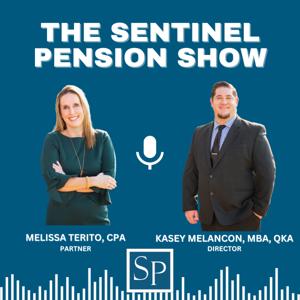


Are 401(k) loans a financial lifeline or a retirement trap? In the season finale, Melissa Terito and Kasey Melancon share their unfiltered takes on 401(k) loans, why they're skeptical of them, where they go wrong in practice, and what plan sponsors need to know before opening that door.
From double taxation and missed payroll deductions to a participant who somehow borrowed $300,000 thinking the $50,000 limit was per loan, this episode covers the real-world chaos that can unfold when loan policies lack guardrails. Plus, the surprising truth about where loan rules actually live in your plan documents. If you sponsor a 401(k) plan or are thinking about adding loans, this one's for you.
Have any questions about this episode’s topic? Let us know!
Visit our website for more information: Sentinel (sp-tpa.com)
Call us at 225-300-8478
Follow us on LinkedIn
Follow us on Facebook
Music by Adam Vitovsky
Think your Solo 401(k) is easy to manage because it's just you? Think again. In this episode of The Sentinel Show, Melissa Terito and Kasey Melancon tackle one of the retirement plan world's biggest traps: the deceptively "simple" Solo 401(k).
Melissa and Kasey discuss why 75% of the Solo 401(k)s they see are set up incorrectly, often because business owners hired employees and didn't realize their "solo" plan just became a full-fledged 401(k) with all the compliance requirements attached. From the owner who crossed the $250,000 asset threshold three years ago and never filed a Form 5500, to the S-corp owner maxing out contributions based on their 1099 income instead of their actual W-2 wages, the hosts walk through common errors they encounter.
The conversation covers when a Solo 401(k) might make sense versus a SEP IRA, why those two-page "fill in the blanks" plan documents can be problematic, what happens when document restatements get overlooked, and why even owner-only plans benefit from proper administration. Melissa breaks down the math on contribution limits, explaining the potential difference between Solo 401(k) and SEP contributions for someone with $100K in W-2 wages.
Whether you're a business owner with a Solo 401(k), a financial advisor working with solo practitioners, or someone navigating retirement plan administration, this episode explores the compliance pitfalls that often go unnoticed until it's too late.
Because as Melissa says, the easiest things can get the most messed up. And $250,000 comes faster than you think.
Do you own more than one business? Even if they seem completely unrelated, the IRS may still consider them a single employer when it comes to your retirement plan — and that distinction could cost you.
In this episode of The Sentinel Show, Melissa Terito and Kasey Melancon break down one of the most commonly misunderstood areas of retirement plan compliance: controlled groups and affiliated service groups. From parent-subsidiary structures to brother-sister controlled groups, Melissa walks through the real-world scenarios she sees done wrong every day — including the classic mistake of setting up a separate plan specifically to avoid covering employees.
The conversation covers what actually triggers a controlled group or affiliated service group, why business owners assume they're in the clear when they're not, what happens when you're only covering 50% of your total employee population instead of the required 70%, and why the "but my companies have nothing to do with each other" argument doesn't hold up the way most people think it does.
If you own multiple businesses, have partners who own other entities, or have ever wondered why your TPA keeps asking so many questions about ownership — this episode is exactly why. Getting this wrong isn't just a technicality. It can mean funding corrective contributions for employees who never had the chance to participate in your plan.
Don't wait until someone finds the problem for you.
In this latest episode of The Sentinel Show, Kasey Melancon and Melissa Terito cut through the noise to talk about how we're actually using AI as a "thought partner." They’re diving into how we use "closed AI" to keep data secure while summarizing technical reports, using AI note-takers so you can actually be present in meetings instead of scribbling notes, and why the right prompt can get a client to respond in 24 hours when nothing else works. AI isn't going to solve every problem, but it's helping us bust through some major roadblocks.
In this episode of The Sentinel Show, host Melissa Terito sits down with her friend of twelve years, Marta Hurst from Fiduciary Wise, to clear up the common confusion surrounding retirement plan fiduciaries and the "alphabet soup" of modern plan structures. Marta explains her role as a 402(a) fiduciary and how many plan sponsors don't even realize they hold fiduciary status. The conversation gets into the nitty-gritty of Pooled Employer Plans (PEPs) versus Groups of Plans (GoPs), noting that while a PEP requires a Pooled Plan Provider (P3) and acts as a single merged entity with one shared audit, a GoP is essentially an "easy button" that allows individual plans to stay independent while sharing service providers and a single Form 5500 filing. Ultimately, the pair stresses that whether you're looking for audit savings in a PEP or the simplicity of a GoP, you don’t want to set these up incorrectly, making expert consultation essential.
Melissa Terito and Kasey Melancon are back to provide the "how-to" on staying protected. In this episode of The Sentinel Show, they dive deep into the world of Investment Committees—demystifying what they are, why they exist, and how to build one that actually adds value to your retirement plan.
Whether you are managing a five-person startup or a $100 million plan, the hosts break down the practical logistics of plan oversight. From the "magic" of odd numbers in committee sizing to the critical importance of looking beyond the C-suite for members, Melissa and Kasey share expert insights on keeping your plan compliant and your participants happy.
Key highlights include:
The Ideal Size: Why three to five members is the "sweet spot" for most small to mid-sized firms.
The "Document or it Didn't Happen" Rule: Why meeting minutes are your best defense during an IRS or Department of Labor audit.
Beyond Leadership: The benefits of including trusted employees and subject matter experts to get a diverse perspective on plan performance.
Fee Monitoring: How active oversight—not just picking the "cheapest" option—prevents the lawsuits that plague unmonitored plans.
Thresholds for Change: Identifying the participant counts and asset sizes that warrant a fully formed, formal committee.
Don't let your retirement plan fall into the "set it and forget it" trap. Tune in to learn how to lean on your TPAs and advisors to build a committee that stands up to scrutiny.
Most plan sponsors don’t realize they’re already on the clock—and 2026 is when it starts to matter.
The long-term part-time (LT-PT) employee rule has been talked about for years, but now it’s no longer theoretical. If you have employees working 500+ hours and your plan has a year-of-service requirement, there’s a real risk you’re missing eligibility—and that mistake can get expensive fast.
In this episode of The Sentinel Show, Melissa Terito and Kasey Melancon break down:
What actually qualifies someone as a long-term part-time employee
Why most employers assume someone else is tracking this (and why that’s a problem)
When the clock really started—and why calendar math trips everyone up
What happens if you fail to offer deferrals when required
The documentation plan sponsors need before it turns into a correction
If you sponsor a retirement plan—or advise companies that do—this is one rule you can’t afford to ignore anymore.
If you sponsor a retirement plan, the fastest way to get into trouble is assuming fiduciary rules do not apply to you or overlooking warning signs when something feels off. In this episode of The Sentinel Show, Melissa Terito and Kasey Melancon break down the biggest fiduciary don’ts that can lead to audits, penalties, and unnecessary risk.
You will hear why you cannot outsource all fiduciary responsibility, which red flags deserve immediate attention, and how simple documentation habits can protect you if the Department of Labor comes knocking. They also cover why company convenience should never come before participants’ best interests and why delaying corrections usually makes problems more expensive.
In this episode, we cover:
✅Why you should never assume you are not a fiduciary
🚩Red flags to take seriously, including late employee deferrals and participant complaints
📝How to document decisions without overcomplicating the process
⚖️Avoiding conflicts of interest and putting participants first
⏱️Why fixing mistakes early is almost always easier and cheaper
Want to round out the two-part series? Start with S7E1 for the do’s, then come back to this one for the don’ts.
Have any questions about this episode’s topic? Let us know! Visit our website for more information: Sentinel (sp-tpa.com)
Call us at 225-300-8478
Follow us on LinkedIn
Follow us on Facebook
Music by Adam Vitovsky
What does it actually mean to be a fiduciary, and are you one whether you realize it or not?
In this season-opening episode of The Sentinel Show, Melissa Terito and Kasey Melancon kick off 2026 by revisiting one of the most misunderstood topics in retirement plans: fiduciary responsibility. Your title does not determine whether you are a fiduciary. Your actions do.
This episode breaks down the core do’s of being a fiduciary using practical, real-world examples business owners face every day. The conversation covers understanding when you are acting as a fiduciary versus making a business decision, hiring and monitoring the right experts, following the plan document, overseeing investments responsibly, and communicating clearly with plan participants.
If you have ever thought, “I’m not involved in the plan,” or “That responsibility belongs to someone else,” this episode will challenge that assumption and help you better understand where fiduciary risk truly lives and how to manage it with confidence.
The conversation continues next episode with the fiduciary don’ts every plan sponsor should avoid.
As the year winds down, Melissa Terito and Kasey Melancon close out another season of The Sentinel Show with an important conversation on a topic that’s often overshadowed - participant education.
In this episode, Melissa and Kasey dive into why it’s essential for employers to actively educate their employees about the retirement plan benefits they offer. They discuss how understanding plan provisions like eligibility, vesting, loans, and hardships can improve retention, reduce frustration, and help employees truly see the value of their total compensation package.
From tips on creating easy-to-understand one-pagers to incorporating retirement education into annual open enrollment meetings, this episode offers practical advice for plan sponsors looking to make a lasting impact.
Plus, Melissa and Kasey reflect on the close of Season 6,share some holiday laughs, and hint at exciting news coming soon from the Sentinel team.
Tune in for:
💡Why retirement plan education matters now more than ever
🗣️How to communicate plan benefits effectively
🤝The connection between participant understanding and employee retention
📈 A look ahead to "selling season" and what’s next for The Sentinel Show
🎧 Listen in, take notes, and get ready for another year of helping participants feel empowered about their financial futures.
Have any questions about this episode’s topic? Let us know! Visit our website for more information: Sentinel Pension (sp-tpa.com)
Call us at 225-300-8478
Follow us on LinkedIn
Follow us on Facebook
Music by Adam Vitovsky
From the publisher's feed