
Sign up to save your podcasts
Or

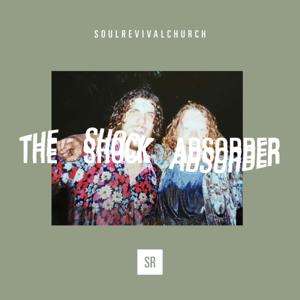


Is banter just harmless fun — or is something deeper going on beneath the surface?
Joel, Stu and Tim open with Easter reflections, including JoelChristian humour, banter and friendship, male friendship theology, tall poppy syndrome Australia, hegemony church, belonging and identity, Andrew Huberman friendship, banter church community, shock absorber podcast, soul revival church, church leadership podcast, intergenerational ministry, Christian culture Australia, microaggression, theology of joy, fruit of the spirit joy, church and culture, adolescent belonging, Easter baptism, Christian banter baptising his own son at the river service, before diving into a clip from Andrew Huberman's podcast about male friendship and the role of humour in building trust and loyalty.
What starts as a straightforward conversation quickly gets complicated: tall poppy syndrome, hegemony, the Cronulla riots, a bucks party gone wrong, a proverb about flaming arrows, and the question of whether Jesus ever actually made a joke.
This is one of the most honest and wide-ranging conversations the Shock Absorber has had. If you've ever wondered how to think Christianly about humour, banter and belonging, especially with young people, this is worth your time.
Timestamps
00:00 Welcome and Easter reflections
09:30 Andrew Huberman on male friendship — does banter build trust and loyalty?
13:00 Tim's cautions: power imbalances, adolescent vulnerability and passive aggression
17:00 Stu's story: family of origin, words of affirmation and learning banter as a foreign language
20:30 NT Feather, tall poppy syndrome and the Australian pressure to cut people down
27:00 The bucks party: stocks, a hacksaw and being expelled from the group
40:00 Hegemony, racism and the Cronulla riots — the darker thread in Australian banter culture
48:00 Does Jesus ever make a joke? What does God's laughter mean?
54:00 Tim's takeaway — joyfulness, the fruit of the Spirit and what redeemed humour looks like
Discussed on this episode
Cultivating Awe & Emotional Connection in Daily Life | Dr. Dacher Keltner and Andrew Huberman
NT Feather on tall poppy syndrome
Miroslav Volf's Exclusion and Embrace
Chester Pierce on microaggressions
Gramsci's concept of hegemony
Subscribe, leave a review, and send your thoughts to Joel at [email protected]
Most churches have spent the last sixty years trying to lower the cultural barriers to Christianity. Clean car parks. Professional music. Seeker-sensitive services. The logic made sense at the time. But has making church more like the world actually worked and is it still the right strategy?
Joel and Stu work through the tension between institutional and organic church structures, unpack the history of the attractional church model from Donald McGavran to Willow Creek, and explain why Soul Revival has deliberately gone the other direction — building a countercultural, intergenerational Yellow Submarine that goes beneath the surface of daily life.
They also answer two great listener questions from Julie about Bonhoeffer's friendship circles: whether they include non-Christians, and how kids and youth factor into church numbers.
Timestamps
00:00 Sharks gear, Sheffield Wednesday at Wembley and tribal fan culture
05:30 The AGM and the juxtaposition of formal polity in a time of crisis
08:30 Organic vs institutional structures: what's the difference and why it matters
15:00 The attractional church model — McGavran, Willow Creek and the homogeneous unit principle
22:00 The Yellow Submarine: Soul Revival's countercultural intergenerational alternative
29:00 How Soul Revival's governance actually works
43:30 Listener questions from Julie: Bonhoeffer's friendship circles and non-Christians
51:30 At what stage do kids and youth count in your numbers?
54:00 The Blitz, the fuel crisis and the Christian response to economic pressure
Discussed on this episode
Stu Crawshaw - The Yellow Submarine
Skip Bell — What is Wrong with the Homogeneous Unit Principle?
Karina Koremsky — The Fallacy of the Homogeneous Unit Principle
Bill Hybels — Becoming a Contagious Christian
Mark Senter — The Four Views of Youth Ministry
Kendra Creasy Dean — Practicing Passion
Donald McGavran — homogeneous unit principle overview
Jump in at shockabsorber.com.au — and send your thoughts to [email protected]
Jim Rayburn, the father of modern youth ministry, said it was a sin to bore a kid with the gospel.
Joel, Tim and Stu work through a sharp distinction from a new book on kids theology: distilling versus simplifying. Distillation keeps the essentials and removes the unnecessary. Simplification removes the complexity, and sometimes the truth along with it. The difference matters enormously for anyone trying to pass on a faith that lasts.
They also talk about Lee Strobel's adolescent drift into atheism, why apologetics isn't landing the way it used to, e-bikes and teenage rebellion, and what it actually looks like to be a non-anxious adult presence (a wall of a swimming pool, for a generation that's pushing hard against everything)
Subscribe, leave a review, and send your thoughts to [email protected]
Visit the website and join the Shock Absorber Network: shockabsorber.com.au
Half of kids surveyed say their parents should be worried about their screen time. Jonathan Haidt thinks he missed something big in his own book. And Meta allegedly knew about the damage it was doing to children for years — and said nothing.
Joel and Tim work through a raft of confronting data about childhood today, wrestle honestly with the collective action problem of smartphone culture, and then land somewhere unexpected: a conversation about preaching John 15 that produces one of the sharpest applications you'll hear.
Don't let people hate Jesus because of you. Let them hate you because of Jesus. That's the order. And getting the order right changes everything about how you show up as a disciple.
TIMESTAMPS:
00:00 Intro
02:20 Wes Huff on Diary of a CEO — communicating the gospel to a curious generation
12:00 After Babel — 30 facts about childhood today
15:30 No siblings, no cousins — and what the church can offer instead
28:00 Screen time, double standards and the collective action problem of smartphones
44:00 Preaching John 15 — preparation process and the difference between teaching and preaching
1:03:30 Don't make them hate Jesus because of you — the sharpest application of the episode
Wes Huff on Diary of a CEO
Wes Huff on Joe Rogan
30 Facts About Childhood Today
Unsealed court docs allege Meta knew for years about harms to young users, even as they fueled its growth
The Great Cousin Decline
Coming of Age in a Fully Connected World
Your Marriage Has a Third
Subscribe, leave a review, and send your thoughts to Joel at [email protected]
Website: shockabsorber.com.au
Joel, Stu and Tim are relaunching the Shock Absorber Network, and this episode explains what it is, why it matters and how you can be part of it.
Ministry was never meant to be done alone. But for a lot of church leaders, that's exactly what it feels like, isolated in your local context, carrying the weight of cultural change without anyone to process it with.
Stu traces the thinking all the way back to his first PhD at UNSW, where he was studying Christian youth ministry as a social movement using new social movement theory. That research, and thirty-plus years of doing exactly this kind of relational networking through Soul Revival, is the foundation of what the Shock Absorber Network is trying to build. Not an institution, not a franchise, not a brand. A relational, non-competitive, theologically grounded space where ministry leaders can pray together, share ideas and learn from each other across churches and denominations.
Tim unpacks Archie Poulos' research on why networking is actually essential to long-term ministry health, not a nice-to-have when you've got spare time, but a genuine factor in whether you and your ministry survive and flourish over the long haul. The alternative, as Archie points out, is that isolation tips into competition, and competition is the opposite of what Jesus prays for in John 17.
Practically, it starts simply: a new website at shockabsorber.com.au, a mailing list, and a Zoom prayer meeting once a term. No money, no compulsion, no franchise. Just friends in ministry, gathered around Jesus.
Timestamps
01:45 Relaunching the Shock Absorber Network — what it is and where the idea came from
05:20 Memories of the Treehouse — what church networking has looked like at Soul Revival
09:30 Archie Poulos on why networking is essential to ministry health
17:45 Are movements dangerous? New social movement theory explained
28:00 The biblical foundation — loving your neighbour, John 15 and Matthew 22
36:00 What the network looks like practically — website, Zoom prayer meetings and how to join
Discussed on this episode
The High-Level Skill of Ministry Networking and Collaboration, by Mikey Lynch
We need to get better at networking - Archie Poulos on The Pastors' Heart
New Social Movement Theory
Collective Identity
Collective Identity and Social Movements
Jump in at shockabsorber.com.au — and send your thoughts to [email protected]
Everyone's chasing the algorithm. More clicks, better thumbnails, optimised titles, short-form funnels. So what does a Christian do with all of that?
Joel and Tim start with football, Real Madrid vs Barcelona, identity, rivalry and what success actually means, and end up somewhere and end up with a biblical framework for thinking about metrics of success in a world that rewards inflammatory, clickbaity and often dishonest content.
Along the way they work through the cultural mandate in Genesis 1 and 2, the trifecta of good, true and beautiful, Proverbs' wisdom about living with the grain of God's design, and whether Christians should be on these platforms at all — or whether the algorithm has simply evangelised us instead.
If you're wrestling with digital content, social media, and what faithful presence online actually looks like, enjoy!
Timestamps
00:00 Intro: trains, voyages and retractable stadium pitches
05:40 Fear and Loathing in La Liga: Real Madrid, Barcelona and what success actually means
17:55 Chasing the algorithm: what ChatGPT says about podcast success
24:45 The cultural mandate: why content creation starts in Genesis
32:00 Good, true and beautiful: a biblical filter for everything you make
42:30 Should Christians be on these platforms at all? McLuhan, Haidt and the pub analogy
51:30 The quiet revival and Tim's takeaway
Discussed on this episode
Real Madrid's retractable pitch
Tottenham Hotspur's retractable pitch
Fear and Loathing in La Liga, by Sid Lowe
The Anxious Generation, by Jonathan Haidt
Indistractable, by Nir Eyal
The Sirens' Call, by Chris Hayes
Amusing Ourselves to Death, Neil Postman
The Medium is the Message, by Marshall McLuhan
Cross Formed Kidmin Podcast
Subscribe, leave a review, and send your thoughts to Joel at [email protected]
Richard Dawkins likes Christmas carols. Tom Holland calls himself a Christian. Robert Greene thinks religion is great for transcending the banality of social media.
Joel and Tim trace a thread from Bluey, through the culture war trap of coding everything left or right, into Skye Jethani's four distorted postures toward God, and land on the one thing that separates Christianity from every other self-improvement and philosophical framework: Jesus himself.
Timestamps
05:47 Bluey is not a normal kids show
25:44 We can progress and conserve
39:51 Life with God
58:56 Tim's Takeaway - Seek the kingdom above all else
Discussed on this episode
‘Bluey’ Is the Most Conservative Show on TV, by Louise Perry
Bluey Takeaway
Bud Light Boycott
Robert Greene, Religion's True Purpose
Tom Holland on UnHerd
With, by Skye Jethani
Parenting in God's Family - Volume 2
Subscribe, leave a review, and send your thoughts to Joel at [email protected]
Most churches have got the small group and the Sunday service figured out. But there's a whole layer of community that's gone missing, and it might be why people keep saying "I don't feel like I belong here."
Joel, Stu and Tim dig into Dietrich Bonhoeffer's theology of friendship as an ecclesial category, and why his concentric circles of relationship, drawn straight from Jesus' own relational model, give churches a practical framework for building community that's expansive instead of cliquey.
They also pull in Robin Dunbar's research on the cognitive limits of human relationship, and land somewhere surprising: biology and theology are telling the same story.
Plus: e-bikes, convicts, the Industrial Revolution, and why teenagers might actually be ahead of the church on this one.
Timestamps
05:11 Friendship as an ecclesial category
13:14 The 3, the 12, the 72, the 120
19:24 Jesus saves us into community
24:03 Cultural differences and individualism influencing friendship
34:09 The Dunbar number and what friendship brings
43:17 Tim's takeaway - How would your relationships at church change if you saw them as friends?
Discussed on this episode
The Lesser of Two Weevils - Master and Commander
When Church Was a Family, by Joesph Hellerman
Dunbar's Number
Subscribe, leave a review, and send your thoughts to Joel at [email protected]
Tim and Joel are back for 2026 with a conversation about authority, hierarchy, and authentic relationship with Jesus.
It starts with parenting, authoritarian (high control, low love) versus authoritative (high control, high love). But the real question: how does the parent-child relationship mirror our relationship with God? For those with great fathers, God being the perfect Father is comforting. For those with absent or abusive fathers, it's healing.
This opens a bigger conversation about hierarchy and power. Postmodernism wants to deconstruct all hierarchies as inherently corrupt. But because there's an inherent power imbalance between Creator and creation, they argue there must be such a thing as good hierarchy. The difference isn't whether power exists, but how it's used, to serve others or serve yourself.
Tim shares about joining the Crossformed Kids podcast, leading into intergenerational ministry and reciprocity. A five-year-old is no more or less saved than a senior minister. Equal in God's kingdom, even while maintaining appropriate roles. They discuss Tom Holland's "Dominion", how even secular progressive concern for the vulnerable is borrowed from Christian moral tradition. Marx's vision could only emerge from a Christian worldview.
The conversation turns to math with Joel reading John Lennox and his son to discover how mathematics reveals God's beauty and order. The elegance of math points to a rational universe created by a rational God.
Finally, parasocial relationships, Cambridge Dictionary's 2025 Word of the Year. People are forming one-way relationships with celebrities and AI chatbots. Tim contrasts this with his word for the year: abiding. "I don't want a parasocial relationship with Jesus. I want to genuinely abide in Him."
The takeaway? God has the right to tell us how to live. And because He's the perfect Father, that's not oppressive, it's beautiful and relational.
https://online.hillsdale.edu/
TIMESTAMPS:
00:00 - Intro and welcome back for the new year
09:33 - Parenting, hierarchies, and power and our true Father
25:32 - Tim's hosting another podcast, the reciprocity of intergenerational relationships and ceding power to God's good hierarchy
36:20 - God is a God who cares for vulnerable people
43:20 - Science and maths explaining God's created world
54:52 - Parasocial versus abiding
1:13:06 - Tim's Takeaway: authentic relationship with Jesus
DISCUSSED ON THIS EPISODE:
Nexus: A Brief History of Information Networks from the Stone Age to AI, by Yuval Noah Harari
Rivers of London series, by Ben Aaronovitch
Unruly: The Ridiculous History of England's Kings and Queens, by David Mitchell
Crossformed Kidmin Podcast
The Child in God's Church, by Tim Beilharz
Dominion: The Making of the Western Mind, by Tom Holland
Anglicare Australia
The Air We Breathe: How We All Came to Believe in Freedom, Kindness, Progress, and Equality, by Glen Scrivener
Hillsdale College online courses
Can Science Explain Everything?, by John Lennox
Why This Oxford Mathematician is Confident God Exists | John Lennox
The 2025 Cambridge Dictionary Word of the Year
Death of Rob Hirst
Recorded five days after the Bondi terrorist attack, Tim reflects on the strange providence of preaching about peace the morning before the attack.
His sermon from Philippians 4 explored why we struggle to find peace in a world online world where research shows rising depression, anxiety, and suicidality across all generations. But the biblical vision of peace (shalom) is both gift and obedience: the Spirit gives us peace, and the Spirit empowers us to pursue peace. Prayer, that act of relationship, trust, and faith is what guards our hearts and minds. Not the outcome, but the praying.
Joel and Tim then dive into a fascinating cultural analysis: "Why Didn't Your Grandparents Deconstruct?" which argues that church hurt, moral failure, bad theology, and unanswered questions have always so why is deconstruction so prevalent among millennials?
The answer is postmodernism's cultural programming. Previous generations lived in a hegemonic meta-narrative. Even when they experienced church pain, there was nowhere else to go. But millennials came of age in the '90s when postmodernism went mainstream. The new cultural catechism taught: truth is socially constructed, institutions are corrupt, every story masks a power play (especially religion), and authenticity comes through deconstruction. If something feels constraining, the answer isn't reform—it's exit. Walk away or burn it down.
As Christmas approaches, Tim and Joel discuss Soul Revival's four yearly high points: Christmas, Easter, Week Away, and Planning Days. They unpack why gathering on Christmas Day matters, the strategy behind the Kids Christmas Eve service, and why telling the Christmas story every year matters for forming young disciples.
The episode ends on the question of traditions: which ones do we hold, which do we discard, and why does the gospel tradition at Christmas still matter in a world that tells us all traditions deserve deconstruction?
Timestamps:
00:00 - Intro, Bondi attack and Tim's sermon on peace
15:51 - Deconstruction: The answer isn't reform, it's exit
31:06 - The traditions we hold and the traditions we discard
Discussed on this episode:
Tim’s sermon on God, Why Can’t I Find Peace?
On Bondi Beach, by Louise Perry
Why Didn’t Your Grandparents Deconstruct?, by Paul Anleitner
About the Shock Absorber:
A podcast for church leaders and ministry pioneers who want to do church differently. Hosted by Stu Crawshaw, Tim Beilharz, and Joel McMaster from Soul Revival Church.
Connect with us at [email protected]
Soul Revival Church meet across the Sutherland Shire & in Ryde: soulrevivalchurch.com
From the publisher's feed

15,582 Listeners