
Sign up to save your podcasts
Or

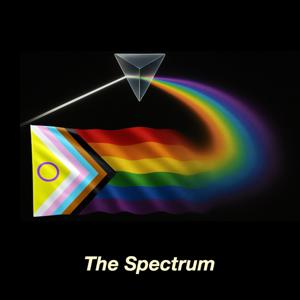


On this episode of The Spectrum, Linda talks with Michele Bettencourt about coming out as a transgender woman after decades of keeping that part of herself private—and the life she’s built since.
Michele reflects on family, her 33-year marriage, and navigating a major transition while leading public technology companies. She also shares how stepping away from tech opened the door to a new chapter in music, including her album Vampire Time and its political themes.
This is a conversation about identity, honesty, change, and the relationships that can grow stronger when people are able to live openly. Michele’s story offers an encouraging perspective for anyone questioning what the future might hold.
You can find the transcript at: https://spectrumpodcast.org/2026/11/04/from-silicon-valley-ceo-to-musician-michele-bettencourts-next-chapter/
Find Michele Bettencourt on Instagram and Facebook, and listen to Vampire Time on Spotify, Apple Music, YouTube, and Licorice Pizza Records.
Subscribe to The Spectrum for more conversations that humanize LGBTQ+ lives and share the experiences behind the headlines.
0:00 Meet Michele Bettencourt
1:14 Coming out as a transgender woman
1:30 Growing up knowing she felt different
3:10 Deciding to transition in 2017
4:06 Telling her family and finding a way forward
6:03 Rebuilding a marriage after transition
8:32 Coming out while leading a public tech company
10:44 Returning to the tech world as Michele
11:54 Starting a second career in music
14:47 Why Michele left the tech industry
16:53 Political songwriting and social change
18:05 Family life after transition
19:19 What changed—and what didn’t—after transition
20:30 Why positive trans stories matter
21:04 Michele’s album Vampire Time and music videos
21:44 Recording music, touring, and life at home
22:25 Where to follow Michele and find her music
23:51 Support and kindness from bandmates and friends
25:36 How transition brought Michele closer to family
26:14 The Spectrum’s mission and closing
Why does Virginia’s Question 2 matter to my marriage?
My wife Lauri and I voted “yes” on Question 2, the proposed amendment to the Virginia Constitution that would remove the state’s existing constitutional ban on same-sex marriage and require Virginia to recognize and treat all legally valid marriages equally, regardless of sex, gender, or race.
Same-sex marriage is currently protected by the U.S. Supreme Court’s 2015 Obergefell v. Hodges decision. But Virginia’s Constitution still contains the language adopted in 2006 that says only a union between a man and a woman may be recognized as a marriage.
I don't know what would happen to existing same-sex marriages if Obergefell were ever overturned. That's precisely why I think removing that language from Virginia's Constitution matters.
And Question 2 isn't only about same-sex marriage. It would also protect marriage regardless of race, bringing to mind Virginia's history with Loving v. Virginia.
If you live in Virginia, Question 2 is on the 2026 ballot. Here's why it matters to me—and to my marriage.
You can find the transcript at https://spectrumpodcast.org/2026/09/30/why-question-2-matters-to-my-marriage/
00:00 Early Voting Has Begun
00:22 What Is Question 2?
00:49 Why Question 2 Matters to My Marriage
01:03 The Risk If Obergefell Is Overturned
01:55 Why That Risk Isn't Hypothetical
02:22 Explicitly Protecting Our Marriages
02:29 Question 2 Protects More Than Same-Sex Marriage
02:37 Loving v. Virginia and Marriage Equality
03:05 What Question 2 Would Protect
03:14 Why I'm Asking You to Vote Yes
03:28 The American Ideal Behind Question 2
What does it mean to be non-binary when you don’t feel like either a man or a woman?
In this episode of The Spectrum, Kris shares their experience of discovering they are non-binary and agender. For much of their life, Kris simply thought they weren’t very good at being a woman. It wasn’t until the pandemic, when they encountered the language of gender identity and discovered other people with similar experiences, that another possibility began to make sense.
Linda and Kris talk about discovering a non-binary identity later in life, the difference between gender identity and sexual orientation, and why being agender is different from other non-binary experiences. They also explore pronouns, language, family, work, medical care, and what it is like to move through a world where people often make assumptions about your gender.
Kris explains why they/them pronouns matter to them, while also describing the complicated reality of being perceived as female despite identifying as agender. They talk about keeping “mom” as a title for their children, finding gender-neutral language that works for their family, and even using their name instead of pronouns when someone is still getting used to they/them.
Most importantly, this is a conversation about discovering that “I don't fit either” can be an identity of its own—and about what it means simply to be recognized as a person.
Find the transcript at: https://spectrumpodcast.org/?p=860
00:00 What Does It Mean to Be Non-Binary?
00:55 What Does Agender Mean?
01:25 Discovering a Non-Binary Identity
02:54 Growing Up Without Feeling Like a Girl
03:47 “I Don’t Fit Either”
04:10 Pansexuality, Bisexuality and Gender Identity
05:07 Compartmentalizing Gender and Sexuality
06:04 Finding Language and Other People Like Me
08:46 Non-Binary Identity, Marriage and Top Surgery
09:43 Body Dysphoria and Gynecological Care
11:27 Non-Binary Voice, Gender Perception and Pronouns
12:42 Coming Out as Non-Binary to Family and Work
14:01 Non-Binary Parents and Gender-Neutral Language
16:17 Being Non-Binary at Work and in Public
18:01 Non-Binary People and Medical Care
20:11 Being Misgendered and Living as Non-Binary
21:14 Why Pronouns Can Be Complicated
22:02 Choosing Whether to Be Open About Pronouns
23:30 Gender-Neutral Language Beyond Pronouns
24:00 How Non-Binary People Relate to Men and Women
24:49 Why Defaulting to Neutral Language Can Help
25:28 Understanding Non-Binary Identity
26:02 “I’m a Person, Just Like Anyone Else”
26:43 You Don’t Have to Agree With Someone to Be Kind
27:57 One Person’s Experience of Being Non-Binary
The episode explores the history and significance of pronouns in the English language, the challenges of gendered pronouns, the emergence of non-binary pronouns, and the importance of respecting and using correct pronouns for individuals. It emphasizes the impact of pronouns on emotional well-being and the need for acceptance and validation.
Chapters
You can find the transcript at: https://spectrumpodcast.org/?p=678
For 58 years, Maria believed she understood who she was.
She thought she was simply someone who occasionally needed to express a different side of herself. Transition wasn't part of the plan.
Then, after the end of a long marriage, she asked herself a simple question:
"What can I do to be happy?"
The answer surprised her.
In this conversation, Maria shares the winding path that led her to transition later in life, why she spent decades believing she was "just" a cross-dresser, how one month of living as Maria changed everything, and why she says she was "suddenly happy" for the first time in her life.
We also talk about:
Maria's story is unique, but its themes are universal: searching for happiness, learning to accept yourself, and discovering that it's never too late to become the person you were meant to be.
You can find the transcript at: https://spectrumpodcast.org/?p=597
If this conversation helped you better understand the transgender experience—or simply reminded you that every person has a story worth hearing—please consider liking the video, subscribing, and sharing it with someone else.
The mission of The Spectrum is simple: to humanize LGBTQ+ people by sharing honest conversations with real people.
If you'd like to share your own story on a future episode, we'd love to hear from you.
What does an LGBTQ community center actually do?
I visited Casa BruMar Foundation's new LGBTQIA+ Community Center in Woodbridge, Virginia to find out.
Executive Director Evelyn BruMar gave me a tour of the space and shared the vision behind creating "Our Center"—a place designed to feel like home for LGBTQ people and their families.
But this episode isn't just about the building.
You'll also hear three personal stories:
You'll also get a look at Casa BruMar's services, including community programs, a library, food and hygiene pantry, maker space, learning kitchen, and more.
If you've ever wondered what an LGBTQ community center is really like—or why these spaces matter—I hope you'll join me for the visit.
Learn more about Casa BruMar Foundation:
https://casabrumarfoundation.org
Episode Transcript:
For nearly 37 years, I've simply lived my life without most people knowing I am transgender.
It's the story of what it felt like to grow up knowing my mind and body didn't match, the depression that nearly consumed me, and how gender-affirming care ultimately saved my life.
I also talk about:
• Why I waited until I was 25 to transition
• The fears that nearly stopped me
• What surprised me after transition
• Finding love, family, and a life I never thought was possible
If you've ever wondered why someone transitions—or if you've never knowingly met a transgender person—I hope this story helps put a human face on an issue that's often discussed without listening to the people living it.
Questions asked in good faith are always welcome.
00:00 Emma Is Me
00:53 Why I'm Telling This Story
02:12 Knowing I Was a Girl
04:01 Trying to Change Myself
07:40 My Breaking Point
10:27 The Decision That Changed My Life
12:41 Finding Peace
15:52 Finding Love
18:40 What Saved My Life
21:20 Why I'm Speaking Out
Related videos
▶ Emma's Story (Parts 1-3)
https://www.youtube.com/playlist?list=PLQyXVDXr391Xq-DaNe46cEUkakyEXFzRE
▶ Billy's Story: Coming Out Later in Life
https://www.youtube.com/watch?v=5iAGXAihTrU
Transcript:
https://spectrumpodcast.org/2026/07/02/why-i-transitioned-the-life-behind-the-decision/
n this episode of The Spectrum, Billy shares his personal coming out story—one that didn’t happen in his teenage years, but later in adulthood.
Growing up, Billy didn’t fully understand his identity. It wasn’t until later in life that he began to recognize who he was, eventually coming out to family and friends in 2001. In this conversation, he reflects on that journey, what it was like to come to terms with himself, and how others responded.
This episode offers insight into a less commonly discussed experience: discovering your identity later in life, and what that process can look like over time.
Whether you’re exploring your own identity, supporting someone else, or simply interested in real personal stories, this is an honest and thoughtful conversation.Billy shares his coming out story.
00:00 – Introduction & Episode Setup
00:06 – Billy Introduced (Coming Out Later in Life)
00:18 – Overview of His Experience Growing Up
00:39 – When Billy Came Out (2001)
00:51 – Realizing His Identity Before Coming Out
01:15 – Not Knowing Growing Up
02:10 – Looking Back on Early Life
03:05 – Lack of Awareness Around Sexuality
04:20 – Social Environment & Influences
05:35 – Early Feelings and Confusion
06:40 – Trying to Understand Himself
07:50 – What Felt “Different”
09:10 – Gradual Recognition of Attraction
10:30 – Internal Realization as an Adult
11:45 – Accepting His Identity
13:00 – Emotional Process of Acceptance
14:30 – Deciding to Come Out
16:00 – Preparing to Tell Others
17:20 – First Conversations About It
18:45 – Telling Family
20:30 – Telling Friends
22:10 – Reactions He Received
23:50 – Challenges After Coming Out
25:30 – Adjusting to Being Open
27:00 – Life Changes After Coming Out
28:45 – Looking Back on the Journey
30:30 – Advice for Others
32:00 – Final Reflections
33:00 – Closing
Transcript:
https://spectrumpodcast.org/2026/04/26/discovering-i-was-gay-as-an-adult/
In this episode of The Spectrum, recorded on March 27, 2026, we dive into the controversial and deeply personal decision behind voting on Virginia’s out-of-cycle redistricting. Host Linda explains why, despite a lifelong opposition to gerrymandering, she chose to vote "yes" on a partisan redistricting measure.
Explore the reasoning behind "fighting fire with fire" to counter national power grabs and protect the rights of marginalized communities. We discuss the potential impacts of this vote on LGBTQ rights, reproductive autonomy, and healthcare costs, as well as the national stakes of the 2026 midterms. Join the conversation on whether it's ever right to go against your principles to prevent a greater harm.
00:00 – Introduction: Episode 38 and the Redistricting Vote
00:54 – Why I Voted Against My Principles
01:26 – The Unconstitutionality of Gerrymandering
02:16 – Trump’s 2025 Call for National Redistricting
02:53 – Fighting Fire with Fire: The Need to Fight Back
04:05 – A Choice for Voters: Virginia vs. Texas
05:16 – Do Our Representatives Actually Represent Us?
06:02 – The National Impact on the LGBTQ Community
07:01 – Reproductive Rights, Healthcare, and Self-Interest
08:18 – Conclusion: Join the Discussion
Transcript:
https://spectrumpodcast.org/2026/03/27/why-i-voted-yes-for-a-gerrymander-in-virginia/
In this episode of The Spectrum, Linda sits down with retired U.S. Space Force Colonel Bree Fram for a wide-ranging conversation about military service, transgender rights, and the future of American democracy.
Bree Fram served 23 years in the U.S. Air Force and U.S. Space Force, rising to the rank of colonel and helping shape future space capabilities for the United States. In 2016 she came out as a transgender woman while on active duty after policy changes allowed trans people to serve openly. Nearly a decade later, a new policy banning transgender service members forced her out of the military.
In this interview Bree discusses:
- What it was like transitioning while serving in the Pentagon
- The impact of transgender military bans
- How thousands of transgender service members have served with distinction
- Her experience being forced out of the military despite exemplary performance
- The broader challenges facing transgender Americans today
- Why she decided to run for Congress in Virginia’s 11th District
Bree also talks about leadership, democracy, constitutional reform, and what she believes the United States must do to remain a country where everyone has the freedom to live authentically.
This is an honest conversation about service, courage, and what it means to stand up for the values you believe in.
If you enjoy thoughtful conversations about public policy, LGBTQ issues, and American democracy, consider subscribing for future episodes.
00:00 — Introduction: Retired Space Force Colonel Bree Fram
00:52 — Aerospace Engineering and Joining the Air Force
01:30 — How September 11 Changed the Decision to Serve
02:31 — Coming Out as Transgender While Serving
05:18 — The Transgender Military Ban
08:58 — Career Impact and Future Assignments
16:26 — Why Bree Fram is running for Congress
17:57 — Leadership and Character in Public Service
22:15 — Representing a Diverse Constituency
25:30 — Closing Thoughts
Transcript:
https://spectrumpodcast.org/2026/03/10/from-space-force-colonel-to-congressional-candidate-bree-fram/