
Sign up to save your podcasts
Or

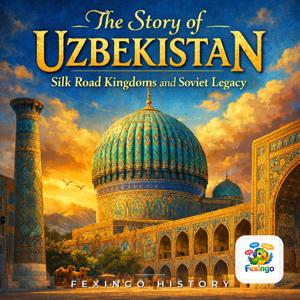


While earlier episodes covered the political maneuvering of the Great Game and the architectural grandeur of the Timurid era, this episode dives into the violent rupture of the Basmachi Movement. We explore how the Bolshevik conquest of the Emirate of Bukhara in 1920 triggered a decades-long guerrilla war that reshaped Central Asia. Lucas details the rise of figures like Enver Pasha and Fergana rebels who turned religious devotion into armed resistance against the Red Army. Luna helps unpack the brutal tactics used by Mikhail Frunze and the Cheka, including the mass executions and the deliberate destruction of cultural sites to break the spirit of the populace. This conversation examines the human cost of Soviet border delimitation and how the legacy of this conflict continues to influence regional politics today, moving beyond simple colonial narratives to understand the complex interplay of faith, nationalism, and survival.
#BasmachiMovement #EmirateOfBukhara #MikhailFrunze #EnverPasha #Cheka #SovietCentralAsia #RedTerror #GuerrillaWarfare #IslamicResistance #FerganaValley #CentralAsianHistory #BolshevikConquest #JadidReform #UzbekNationalism #SovietBrutality #ReligiousPersecution #GulagSystem #FexingoHistory #History
Keep every episode free: buymeacoffee.com/fexingo
We trace the dramatic fall of Central Asia’s great trading hubs from their zenith in the sixteenth century to their eventual marginalization by European maritime routes. Lucas and Luna explore how the shift from land-based caravan networks to sea trade, combined with internal political fragmentation and the rise of rival powers like the Ottoman Empire and Safavid Persia, turned the wealthy cities of Transoxiana into isolated backwaters. We look at specific figures like Shaykh Ahmad Sarhindi and the economic policies of the Ashtarkhanid dynasty that failed to stem the tide. The episode also examines the cultural resilience of these regions, where Sufi orders and local scholarship kept intellectual life alive even as commercial prestige faded, setting the stage for the Russian imperial expansion of the nineteenth century.
#Samarkand #SilkRoadDecline #CaravanTrade #CentralAsiaHistory #Transoxiana #Ashtarkhanid #Shaybanids #MaritimeTrade #EuropeanExpansion #Sufism #Naqshbandi #BukharaEmirate #KhivaKhanate #OttomanEmpire #SafavidPersia #MughalIndia #RussianImperialism #History #FexingoHistory
Keep every episode free: buymeacoffee.com/fexingo
We trace the ecological and human catastrophe of the Aral Sea, once the world's fourth largest lake. Starting in the 1960s, Soviet planners diverted the Amu Darya and Syr Darya rivers for massive cotton irrigation projects, aiming to turn Central Asia into a global textile hub. The result was the rapid shrinking of the sea, leaving behind toxic dust storms, abandoned fishing towns like Moynaq, and devastating health crises for local populations. We examine the specific policies of Stalin and Khrushchev that prioritized white gold over water, the rise of the Basmachi resistance against these changes, and the slow, incomplete efforts at restoration today. This episode explores how modern infrastructure reshaped ancient geography and left a legacy of environmental debt.
#AralSea #SovietEcology #AmuDarya #CottonPlan #CentralAsiaHistory #Moiynaq #KarakumCanal #StalinistAgriculture #EnvironmentalHistory #SyrDarya #UzbekistanCulture #SilkRoadLegacy #WaterWars #Tashkent #Nursultan Nazarbayev #PostSovietStates #FexingoHistory #History
Keep every episode free: buymeacoffee.com/fexingo
This episode explores the cultural zenith of the Timurid Empire through the life of Alisher Navoi, the poet who defined Chagatai Turkic literature. We trace his rivalry with Jami, the patronage of Sultan Husayn Bayqara, and how literary prestige served as a tool of statecraft in Herat. The conversation examines the translation projects that bridged Persian and Turkic worlds, the architectural legacy of the Ulugh Beg Madrasa, and the complex relationship between art and power in Central Asia. Listeners will discover how Navoi’s insistence on elevating the vernacular shaped modern Uzbek identity and how Soviet historiography later co-opted his work for nationalist narratives. From the bustling markets of Samarkand to the refined courts of Herat, we uncover the human stories behind the blue-tiled domes and the ink-stained manuscripts that survived centuries of conquest.
#AlisherNavoi #TimuridEmpire #Herat #Samarkand #ChagataiTurkic #SultanHusaynBayqara #MakhzanulAsrar #FivePoems #UlughBeg #CentralAsianHistory #PersianLiterature #SovietHistoriography #Shahrukh #Jami #MadrasaArchitecture #SilkRoadCulture #UzbekIdentity #FexingoHistory
Keep every episode free: buymeacoffee.com/fexingo
For centuries, the people now known as Uzbeks were viewed by their neighbors and even themselves through a lens of tribal fragmentation rather than national unity. This episode explores the fascinating transformation of the Uzbek identity from loose confederations of Turkic nomads under the Shaybanid dynasty into a cohesive modern nation-state. We trace how Soviet border delimitation in the 1920s, led by figures like Grigory Ordzhonikidze and Abdurauf Fitrat, accidentally stitched together distinct regional identities into the Republic of Uzbekistan. We examine the role of Jadid intellectuals who fought for educational reform against traditionalist forces, and how the legacy of Tamerlane was repurposed to forge a post-Soviet national narrative. Join Lucas and Luna as they uncover how a group defined by movement became fixed on a map, and what that means for Central Asia today.
#UzbekIdentity #ShaybanidDynasty #SovietBorderDelimitation #AbduraufFitrat #MahmudkhojaBehbudiy #Usul-iJadid #TimurLegacy #CentralAsiaHistory #NomadicConfederations #BukharaIntellectuals #Kazakh-UzbekRelations #Transoxiana #ChagataiKhanate #NationalismInSovietUnion #FexingoHistory #HistoryPodcast #SogdianLegacy #ModernUzbekistan #HistoricalIdentity
Keep every episode free: buymeacoffee.com/fexingo
While the blue domes of Registan dominate modern imaginations, Samarkand was once home to a legendary repository of knowledge that rivaled Alexandria. This episode explores the intellectual golden age under the Timurid Empire, focusing on Ulugh Beg’s observatory and the vast libraries that sustained it. We trace the journey of scholars like Al-Biruni and Ibn Sina, whose works were preserved, translated, and expanded upon in Central Asia when much of Europe had forgotten them. The narrative examines how political stability and royal patronage created an environment where astronomy, mathematics, and medicine flourished, leading to precise astronomical tables that remained accurate for centuries. We also look at the fragile nature of this legacy, as manuscripts faced threats from Mongol conquests and later Soviet censorship. Through the stories of specific texts and the tools used to measure the heavens, we uncover how Samarkand served as a critical node in the global exchange of ideas, connecting Chinese innovations with Greek philosophy and Arabic scholarship.
#Samarkand #TimuridEmpire #UlughBeg #SilkRoad #CentralAsia #AstronomyHistory #Gur-e-Amir #Zerijkhana #AlBiruni #IbnSina #IslamicGoldenAge #Madrasa #ZijISultani #ChagataiKhanate #Shahrukh #Babur #FexingoHistory #HistoryPodcast
Keep every episode free: buymeacoffee.com/fexingo
We left off with the grandeur of Timurid architecture and the spy networks of the Great Game, but the story of Uzbekistan takes a sharp turn in the early twentieth century. In this episode, we explore the fall of the Emirate of Bukhara and the brutal reality of the Red Army’s invasion in 1920. We meet Sultan Said Khan, the last emir who fled into exile, and examine how Bolshevik forces under Mikhail Frunze dismantled a centuries-old Islamic state. The narrative shifts to the immediate aftermath: the creation of the Bukharan People's Soviet Republic and the subsequent deportations of the Basmachi rebels. We look at the political purges that targeted local intellectuals like Abdurauf Fitrat, who tried to navigate the new Soviet order, and the violent suppression of resistance in the countryside. This is a story about how ideology replaced monarchy, and how the borders of modern Uzbekistan were drawn through blood and bureaucracy rather than ancient tradition.
#EmirateOfBukhara #SultanSaidKhan #MikhailFrunze #BasmachiMovement #RedArmy #1920Invasion #BukharanPSR #AbduraufFitrat #CentralAsiaHistory #SovietUzbekistan #TimuridLegacy #IslamicExile #PugachevRebellion #Transoxiana #RussianCivilWar #Bokhara #LeninistPolicy #FexingoHistory #History
Keep every episode free: buymeacoffee.com/fexingo
In Episode 267, we turn our gaze from the earth to the heavens with Ulugh Beg, the Timurid prince who became one of history’s most dedicated astronomers. While his grandfather Amir Temur conquered lands, Ulugh Beg sought to map the stars, building the Gurkhani Zerijkhana in Samarkand during the early 1400s. This episode explores how a ruler with an imperial throne traded the sword for the sextant, creating the largest mural quadrant ever constructed at that time. We discuss the precision of his Zij-i Sultani star catalog, which corrected centuries of Ptolemaic errors, and the cultural flourishing of the Timurid Renaissance under Shahrukh. We also examine the tragic irony of his end: the very piety he projected led him to suppress the scholars who made his work possible, culminating in his assassination by his own son. Join us as we trace the arc of a dynasty that valued knowledge until it threatened their power.
#UlughBeg #TimuridEmpire #Samarkand #AstronomyHistory #GurkhaniZerijkhana #ZijISultani #AmirTemur #Shahrukh #CentralAsiaHistory #IslamicGoldenAge #StarCatalog #MuralQuadrant #SufiScholars #BaburLegacy #ChagataiKhanate #FexingoHistory #HistoryPodcast #AncientScience
Keep every episode free: buymeacoffee.com/fexingo
In this episode, we step away from the cotton fields and espionage of previous installments to explore the intellectual zenith of Central Asia under the Timurid Empire. We focus on Ulugh Beg, the grandson of Tamerlane, who transformed Samarkand into a global center of science in the early 15th century. Lucas and Luna discuss the construction of the Gurkhani Zerijkhana, an observatory so precise it remained the most accurate in the world for decades. We examine how Ulugh Beg calculated the length of the solar year with astonishing precision and mapped over 1,018 stars, bridging ancient Greek astronomy with Islamic scholarship. The conversation also touches on the tragic irony of his life—how his scientific pursuits and modernizing reforms ultimately contributed to his assassination by his own son, Abd al-Latif. This is a story of ambition, intellect, and the fragility of power in the heart of the Silk Road.
#UlughBeg #SamarkandObservatory #TimuridEmpire #GurkhaniZerijkhana #CentralAsianHistory #AstronomyHistory #SilkRoadScience #IslamicGoldenAge #TamerlaneGrandson #StarCatalogue #SolarYearCalculation #RegistanSquare #MadinaiSebastiani #AbdullatifKhan #15thCenturyAsia #MathematicsHistory #FexingoHistory #History
Keep every episode free: buymeacoffee.com/fexingo
Before empires rose and fell in Central Asia, a network of merchants known as the Sogdians held the keys to trade along the Silk Road. In this episode, we explore how these city-dwellers from Samarkand and Panjikent became the first global bankers, creating credit systems that predated modern banking by centuries. We follow their journey from the ancient oasis cities to Chang’an, where they established vibrant communities and managed vast commercial networks across Eurasia. You will hear about the Patikar system, a form of early joint-stock partnership, and discover how Sogdian letters reveal the intricate social and economic lives of traders who operated between the Tang Dynasty and the Byzantine Empire. From the ruins of Afrosiab to the caves of Dunhuang, we uncover the tangible evidence of a people whose wealth was built on trust, language, and an unparalleled understanding of cross-cultural commerce.
#Sogdian #SilkRoad #Samarkand #Panjikent #Patikar #Afrosiab #Dunhuang #Changan #TangDynasty #ByzantineEmpire #CentralAsiaHistory #AncientTrade #MaritimeSilkRoad #EurasianTrade #HistoricalBanking #CrossCulturalTrade #Archaeology #FexingoHistory
Keep every episode free: buymeacoffee.com/fexingo
From the publisher's feed