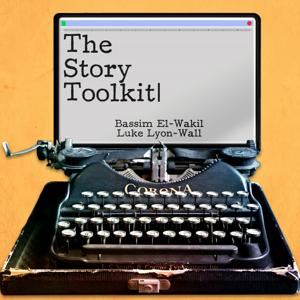
The Story Toolkit

The Story Toolkit

By Bassim El-WakilTV & Film
Download on the App Store

The Story Toolkit episodes

  • #44: Always Sunny In Philadelphia: The Gang Tries Desperately to Win an Award — The Idea of Satire
    This week, we breakdown the nature of one of our favourite episodes of IT'S ALWAYS SUNNY IN PHILADELPHIA, from it's 9th season, "THE GANG TRIES DESPERATELY TO WIN AN AWARD". Royalty free music from Bensound. Logo design by the Proxy Guy.
    1:38 - ‘Synopsis’ - Breaking down the major story beats of “The Gang Desperately Try to Win An Award”.
    10:27 - ‘Satire’ - Outlining the principles of Satire and where it sits in the spectrum of comedy.
    17:28 - ‘Cast Principles’- Outlining the principles of Institutionalizing your cast.
    25:00 - ‘Layering’ - Analyzing how IT’S ALWAYS SUNNY IN PHILADELPHIA Layers a separate meaning into this episode to create Satire.
    29:44 - ‘Institutionalizing’ - Analyzing how the episode Institutionalizes its cast.
    32:20 - ‘Elasticity’ - Discussing the Gaps created in Satire and how far you can stretch or contract those for comedic effect.
    45:34 - ‘Counter’ - Breaking down the counter example of FAMILY GUY: BLUE HARVEST and certain episodes of SOUTH PARK and why sometimes Satire can fail.
    53:25 - ‘Surrealism’ - Examining how Surrealism relates to Satire in terms of creating Gaps and audience expectation.
    1:01:30 - ‘Summary’ - Summarizing the key writing techniques discussed.

    1 hr 6 min
  • #43: The People v OJ — Adapting from a Single Source
    We have a special guest: Willard Foxton-Todd! An old friend and now journalist and documentary filmmaker who has worked on numerous programmes such as REGGIE YATES EXTREME, talking about adapting a drama from a real-world single source. Royalty free music from Bensound. Logo design by the Proxy Guy.
    0-50 - ‘Premise’ - Introducing our special guest Willard Foxton-Todd.
    2-50 - ‘Synopsis’ - Willard breaks down the major story beats of the THE PEOPLE VS O.J.
    11-00 - ‘Source’ - Outlining the benefits of creating historical drama from a single source.
    17-50 - ‘Pacific’- Comparing the example of THE PEOPLE VS O.J. with PACIFIC, which used numerous sources. .
    22-00 - ‘Cast’ - Analysing the choice of characters made by the writers’.
    41-10 - ‘Documentary’ - Discussing how the ESPN OJ Simpson documentary differs from the dramatisation.
    55-50 - ‘Summary’ - Summarising the key writing techniques discussed.
    1 hr 9 min
  • #43: The People v OJ — Adapting from a Single Source
    We have a special guest: Willard Foxton-Todd! An old friend and now journalist and documentary filmmaker who has worked on numerous programmes such as REGGIE YATES EXTREME, talking about adapting a drama from a real-world single source. Royalty free music from Bensound. Logo design by the Proxy Guy.
    0-50 - ‘Premise’ - Introducing our special guest Willard Foxton-Todd.
    2-50 - ‘Synopsis’ - Willard breaks down the major story beats of the THE PEOPLE VS O.J.
    11-00 - ‘Source’ - Outlining the benefits of creating historical drama from a single source.
    17-50 - ‘Pacific’- Comparing the example of THE PEOPLE VS O.J. with PACIFIC, which used numerous sources. .
    22-00 - ‘Cast’ - Analysing the choice of characters made by the writers’.
    41-10 - ‘Documentary’ - Discussing how the ESPN OJ Simpson documentary differs from the dramatisation.
    55-50 - ‘Summary’ - Summarising the key writing techniques discussed.
    1 hr 9 min
  • #42: Black Mirror: Nosedive — Contrivance vs Conflict
    We breakdown the premiere episode of the third season of BLACK MIRROR, "NOSEDIVE" and examine the qualitative differences between contrivances and conflicts. Royalty free music from Bensound. Logo design by the Proxy Guy.
    1:52 - ‘Premise’ - Outlining why we are talking about BLACK MIRROR.
    5:23 - ‘Synopsis’ - Breaking down the major story beats of the BLACK MIRROR episode ‘Nosedive’.
    17:05 - ‘Contrivances’ - Outlining the flawed use of Contrivances within the BLACK MIRROR episode.
    22:07 - ‘Conflict’- Comparing true Conflict with Contrivances.
    27:42 - ‘Clockwise’ - Analysing how the 1986 John Cleese film CLOCKWISE uses Conflict.
    45:34 - ‘Nosedive’ - Discussing how Nosedive uses Internal Conflict to good effect.
    59:01 - ‘Summary’ - Summarising the key writing techniques discussed.

    1 hr 2 min
  • #42: Black Mirror: Nosedive — Contrivance vs Conflict
    We breakdown the premiere episode of the third season of BLACK MIRROR, "NOSEDIVE" and examine the qualitative differences between contrivances and conflicts. Royalty free music from Bensound. Logo design by the Proxy Guy.
    1:52 - ‘Premise’ - Outlining why we are talking about BLACK MIRROR.
    5:23 - ‘Synopsis’ - Breaking down the major story beats of the BLACK MIRROR episode ‘Nosedive’.
    17:05 - ‘Contrivances’ - Outlining the flawed use of Contrivances within the BLACK MIRROR episode.
    22:07 - ‘Conflict’- Comparing true Conflict with Contrivances.
    27:42 - ‘Clockwise’ - Analysing how the 1986 John Cleese film CLOCKWISE uses Conflict.
    45:34 - ‘Nosedive’ - Discussing how Nosedive uses Internal Conflict to good effect.
    59:01 - ‘Summary’ - Summarising the key writing techniques discussed.

    1 hr 2 min
  • #41: The Matrix — Rules of Fantasy
    This week we examine the nature of building a fantasy world by looking at the first film in THE MATRIX trilogy. Royalty free music from Bensound. Logo design by the Proxy Guy.
    2:51- ‘Synopsis’ - Breaking down the major story beats of THE MATRIX, with reference to The Hero’s Journey.
    8:48 - ‘Rules’ - Outlining the principles of creating Rules for your Fantasy world.
    23:17 - ‘Fantasy’- Discussing where Fantasy sits in the spectrum between Absurdism and Factualism, and how each use coincidence.
    31:59 - ‘Exploiting’ - Analyzing how THE MATRIX exploits its rules to create exciting action sequences.
    36:46- ‘Animatrix’ - Discussing how a rich Fantasy world can leave room for exploration, as with THE ANIMATRIX.
    41:42 - ‘Stepping Out’ - Analyzing the Fantasy boundaries and the pitfalls of allowing yourself to step outside the rules of your world.
    53:43 - ‘Iceman’ - Breaking down the counter examples of X-MEN’s Iceman and Banshee.
    1:05:50 - ‘Summary’ - Summarizing the key writing techniques discussed.
    1 hr 9 min
  • #41: The Matrix — Rules of Fantasy
    This week we examine the nature of building a fantasy world by looking at the first film in THE MATRIX trilogy. Royalty free music from Bensound. Logo design by the Proxy Guy.
    2:51- ‘Synopsis’ - Breaking down the major story beats of THE MATRIX, with reference to The Hero’s Journey.
    8:48 - ‘Rules’ - Outlining the principles of creating Rules for your Fantasy world.
    23:17 - ‘Fantasy’- Discussing where Fantasy sits in the spectrum between Absurdism and Factualism, and how each use coincidence.
    31:59 - ‘Exploiting’ - Analyzing how THE MATRIX exploits its rules to create exciting action sequences.
    36:46- ‘Animatrix’ - Discussing how a rich Fantasy world can leave room for exploration, as with THE ANIMATRIX.
    41:42 - ‘Stepping Out’ - Analyzing the Fantasy boundaries and the pitfalls of allowing yourself to step outside the rules of your world.
    53:43 - ‘Iceman’ - Breaking down the counter examples of X-MEN’s Iceman and Banshee.
    1:05:50 - ‘Summary’ - Summarizing the key writing techniques discussed.
    1 hr 9 min
  • #40: Taken — Depths of Character Dimension
    Contrasting it with Garth Ennis' PUNISHER MAX comic series, we expose some of the problems in TAKEN in how it doesn't fully delineate its character's dimensions. Royalty free music from Bensound. Logo design by the Proxy Guy.
    2:20 – ‘Synopsis’ – Breaking down the major story beats of TAKEN.
    9:41 – ‘Delineation’ – Outlining the principles of Delineation and Depth.
    11:36 – ‘Problem’- Analysing the major problem with TAKEN and how it fails to express the full depth of Mills’ dimension.
    27:33 – ‘Counterpoint’ – Breaking down why Garth Ennis’ PUNISHER corrects the issues of Depth and Delineation.
    54:57 – ‘Summary’ – Summarising the key writing techniques discussed.
    1 hr
  • #40: Taken — Depths of Character Dimension
    Contrasting it with Garth Ennis' PUNISHER MAX comic series, we expose some of the problems in TAKEN in how it doesn't fully delineate its character's dimensions. Royalty free music from Bensound. Logo design by the Proxy Guy.
    2:20 – ‘Synopsis’ – Breaking down the major story beats of TAKEN.
    9:41 – ‘Delineation’ – Outlining the principles of Delineation and Depth.
    11:36 – ‘Problem’- Analysing the major problem with TAKEN and how it fails to express the full depth of Mills’ dimension.
    27:33 – ‘Counterpoint’ – Breaking down why Garth Ennis’ PUNISHER corrects the issues of Depth and Delineation.
    54:57 – ‘Summary’ – Summarising the key writing techniques discussed.
    1 hr
  • #39: Breaking Bad — Creating a Pilot
    We breakdown the pilot to BREAKING BAD to examine the elements necessary for a pilot for a long-form series. Royalty free music from Bensound. Logo design by the Proxy Guy.
    0-30 – ‘Premise’ – Introducing the premise of the episode.
    6-40 – ‘Synopsis’ – Breaking down the major story beats of the BREAKING BAD pilot.
    14-30 – ‘Pilot’- Discussing the purpose of a pilot episode and the elements you need to address as a writer including; Dramatic Question, Empathy and Exposition.
    36-45 – ‘Example’ – Analysing the pilot episode of BREAKING BAD and how it uses all these elements to hook the audience.
    1-03-20 – ‘Counterpoint’ – Referencing examples of shows that failed to address each of the elements.
    1-21-45 – ‘Research’ – Discussing a useful research tool the writer of a pilot can use.
    1-24-15 – ‘Summary’ – Summarising the key writing techniques discussed.
    1 hr 27 min

About The Story Toolkit

From the publisher's feed

Podcast by Bassim El-Wakil