
Sign up to save your podcasts
Or

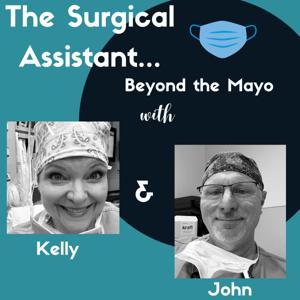


John and Kelly welcome surgical first assistant and advocate Amy Burton to discuss pathways into first assisting, the legal and patient-safety risks of “dual rolling” as both first assistant and scrub tech, and why malpractice coverage, documentation, and courtroom scrutiny make it unsafe despite staffing pressures. Amy shares her career shift from banking to CST, early transition into first assisting, independent practice challenges, and later stability with a surgical services group across Texas and Florida, noting differences in certification, licensure, and professional respect. She describes how a retained lap case led to expert witness work and increased advocacy through ASA involvement, social media content, and her role as COO of Surgefluencers to raise awareness of assistants’ value beyond “camera holding.” The conversation covers misconceptions about the role, professionalism, networking, conferences, the need for legislation and certification, and building trust with surgeons through teamwork, humility, and patient-focused leadership.
https://www.surgfluencers.com/
https://www.instagram.com/assist_this/
https://www.linkedin.com/in/amy-burton-csfa-lsa/?lipi=urn%3Ali%3Apage%3Ad_flagship3_profile_view_base_contact_details%3BopZ%2BdlKURGOaNlzvlJ0ItA%3D%3D
https://www.linkedin.com/company/vytalentsolutions/?lipi=urn%3Ali%3Apage%3Ad_flagship3_detail_base%3Btkaor2YzSZWBFitjLR8%2F2g%3D%3D
https://allstarssurgical.com/
00:00 Welcome and Guest Intro
00:54 Dual Role Debate
02:13 Legal and Safety Risks
03:43 Understaffing and Boundaries
05:31 Amy’s Career Path
08:56 Advocacy and Social Media
09:57 Expert Witness and Surgefluencers
12:07 Public Awareness and Career Outreach
16:18 Challenges Facing Assistants
18:24 Misconceptions About the Role
24:22 Professionalism and Networking
26:02 Earning Surgeon Trust
31:29 Earning Surgeon Trust
32:43 Quiet Leadership in the OR
35:43 Advocating for Patients
36:55 Humility and Lifelong Learning
39:38 Owning Mistakes Protecting Team
41:06 Future of the Profession
42:44 Legislation and ASA Membership
46:32 Conferences and Continuing Education
52:04 Where to Find Amy
53:46 Final Wrap Up
John and Kelly welcome James Romero from New Wave Endo for a product spotlight and demonstration of the MClose Port Site Pain Management Closure System used in laparoscopic and robotic port closure. James explains how MClose deploys two needles simultaneously for consistent 1 cm, 180-degree suture placement, enables local anesthetic delivery to the nerve plane via a first “click,” and improves safety by avoiding exposed needles and reducing risk near bowel. They cover kit contents, wire loading, the three-click workflow, common troubleshooting (missing the second click, thin-patient skin capture, plunger retraction), and techniques for large defects (apex-to-apex, multiple sutures). The group discusses reduced dimpling, less pain and opioid requests, learning curve, use cases (8 mm and larger), and pricing around the $80 range, plus how to request demos, trials, and training via New Wave Endo.
Videos Mentioned by James:
step-by-step instruction video:https://vimeo.com/1088939567?share=copy&fl=cl&fe=ci
https://youtu.be/4W0h883TJWk?si=tfWM3KjOlI1eAooZ
https://pubmed.ncbi.nlm.nih.gov/17666655/
https://europepmc.org/article/MED/17666655
00:00 Welcome and Setup
00:44 Meet James Romero
02:01 Why MClose Exists
03:12 Kit Contents Overview
04:29 Reloading the Wire
05:32 Consistent Safe Needle Placement
06:19 Trocar Through-Trocar Technique
07:10 Three Click Workflow Demo
10:07 Suture Loading and Removal
13:23 Clinical Benefits and Outcomes
14:51 Thin Patient Tips
16:48 Training and Demo Kits
17:44 Cost and Value Comparison
22:10 Learning Curve and OR Adoption
23:13 Bleeding Case Evidence
23:57 Three Clicks Troubleshooting
25:34 Speed and Handling Tips
27:37 Closing Large Defects
29:58 Cost and Value Pitch
31:43 Safety and Pain Benefits
34:36 Port Size Guidelines
38:37 Wrap Up and Resources
On the Surgical Assistant Podcast, John and Kelly interviewChristopher Sweebe, CSFA and founder/CEO of Precision Surgical Resources, about helping surgical assistants transition from W2 employment to independent 1099practice without getting overwhelmed by business operations. Sweebe explains PSR’s “fractional back office” model and partnerships (including All Starz anda long-time billing company) that support LLC setup, insurance, taxes, credentialing, collections, and facility contracting, while emphasizing that market factors like payer mix and state rules can determine whether independence is viable. He highlights common reimbursement barriers and a key documentation “pearl” for avoiding denials: the op note must include the assistant’s name and credential and clearly state why they were needed and what they did. The episode also covers PSR’s 20% fee, Weekly Fridaypayments,transparency, lack of non-competes, and longer-term efforts like grants to train surgical technologists.
https://precision-surgical.net/
00:00 Welcome and Guest Intro
00:57 Why PSR Exists
02:54 Independence Roadmap
06:23 Fractional Back Office
07:50 Billing Rules by State
12:04 No Noncompete Model
13:25 Dictation Gets You Paid
17:59 Pricing and Transparency
20:21 Facility Contracts Strategy
29:07 Weekly Pay and Denials
33:36 All Starz Risk Model
36:49 Outsourcing Billing Risk
37:20 Op Note Denials Basics
37:57 No Gatekeeping Support
39:10 Fees and Payer Mix
40:29 How Onboarding Works
42:04 Profit Sharing Teams
44:27 Reimbursement Nuances
46:21 Turnkey Practice Setup
49:23 Owner Mindset Required
52:56 Transparency and Responsiveness
54:54 Future Grants Pipeline
58:32 Hard Work and Processes
01:04:05 Contact and Next Steps
In this episode of the Surgical Assistant Podcast, Kelly and John welcome surgical educator, author, and former ASA vice president Rebecca Hall to discuss strengthening surgical assisting through education, resources, and professional standards. Rebecca explains how her pocket guide, Suture and Surgical Hemostasis (2nd edition), grew from teaching tools she created for students, and why updates like mesh, new sutures, and evolving technology matter for assistants making real-time closure decisions. They also cover The Practice and Principles of Surgical Assisting (2025), inspired by Karen Ludwig’s vision for an ASA-based textbook written by surgical assistants to better reflect OR realities. The conversation highlights ethics, scope of practice, independent practice, gaps in hands-on training and access to H&Ps/EHRs, and the need for more relevant CE content created by working assistants.
https://www.amazon.com/Suture-Surgical-Hemostasis-Pocket-Guide/dp/1416022473https://www.amazon.com/Practice-Principles-Surgical-Assisting/dp/126426437200:00 Welcome and Guest Introduction
.01:52 Rebecca's Background and Credentials
02:57 Location Update to Ohio
04:23 Creating the Suture Pocket Guide
05:43 Importance of Suture Knowledge
07:51 Second Edition Updates09:04 The Surgical Assisting Textbook
09:27 Karen Ludwig's Legacy
10:46 Need for More Resources
11:52 Ethics and Scope of Practice
14:21 Standing Up for Your Limits
15:46 Creating Resources for the Field
17:44 Available Textbooks and Materials
19:21 Improving Surgical Assistant Education
20:41 Improving CE Courses
21:42 Writing CE Articles
23:23 Sharing Knowledge and Experience
24:14 Defining Excellence in Surgical Assisting
26:26 Learning Surgeonese
27:55 Patient History and H&Ps
30:20 Epic Access for Assistants
32:27 Discussing Surgical Technique
33:55 Education Program Challenges
37:15 Hands-On Training Standards
38:54 Hospital Utilization Issues
40:59 Closing Thoughts and Resources
Kelly and John continue their hernia series with a practical discussion of hiatal and paraesophageal hernias for surgical first assistants, clarifying the four types (type I sliding vs types II–IV paraesophageal/giant) and why case details matter for preparation. They review key anatomy and risks near the hiatus (including aorta, pleura, vagus nerves, short gastrics) and emphasize reading the H&P, communicating with the surgeon, and anticipating equipment needs. John walks through major laparoscopic steps and common variations, including hernia sac reduction, mediastinal dissection, crural closure (EndoStitch vs swedged-on needle), bougie sizing, mesh options, Penrose for esophageal retraction, and Nissen vs Toupet fundoplication, plus complications like dysphagia, gas bloat, and pneumothorax. Kelly adds robotic setup considerations such as docking, port placement, AirSeal, instrument choices, and liver retraction options.
Robotic ApproachVideo by Dr. David Lourie:https://youtu.be/UfRGXkUY0ew?si=xAMjVgFa8Uzt95wg
Robotic approach (SAGES) by Caitlin Houghton
https://youtu.be/GbdQVAmRXro?si=XBzFY-kQCkHERqQV
Laparoscopic Approach:
https://youtu.be/7XmBH39KzcA?si=3JEHL42Vz7YDcQdx
https://youtu.be/4_ED29Dt-Bg?si=2yzxZSelMW8gQh6H
https://youtu.be/4_ED29Dt-Bg?si=USIUC5JT-4vn3g-x
In this episode of the Surgical Assistant Podcast, John and Kelly break down ventral, umbilical, and incisional hernias from the surgical first assistant’s point of view, focusing on anatomy, how defects form, and why risk factors like obesity, pregnancy, smoking, diabetes, prior surgery, increased intra-abdominal pressure, and especially wound infection matter for recurrence and outcomes. They review common presentations (pain, bulge), the role of clinical exam and CT imaging, and clarify reducible vs incarcerated vs strangulated hernias and why urgent cases are about freeing compromised bowel. The discussion includes operative considerations such as exposure, protecting bowel, lysis of adhesions, defect measurement, mesh sizing and handling, suture choices, open primary vs open mesh repairs, and robotic positioning tips, plus a practical “vacuum pack/space bag” umbilical dressing technique to help reduce seroma formation.
Kelly and John discuss John’s experience attending the Maddox Trauma Critical Care and Acute Care Surgery Conference and the Medical Disaster Response conference in Las Vegas, highlighting why these events are valuable for surgical assistants. John shares meeting Dr. Kenneth Maddox and keynote speaker Dr. Frank Butler, and explains how the conference offers cutting-edge trauma, acute care, and disaster-response education, panel Q&As, vendor innovations, and substantial CE opportunities. They cover practical logistics and cost-saving strategies such as early registration, requesting discounted rates, hotel deals, possible hospital reimbursement, and combining the trip with a vacation. John also notes key takeaways like ransomware preparedness, AI in the OR, ongoing debates such as REBOA, and recommends a reusable bowel suturing simulator from LifeLike BioTissue for at-home practice.
For Information on the Mattox Conference:
https://www.trauma-criticalcare.com/
For Lifelike 2 layer Bowel Simulated Tissue:
https://lifelikebiotissue.com/
John interviews co-host Kelly about her experience at the recent joint ASA/NSAA conference in Atlanta, which sold out with 173 attendees and over 200 including vendors. Kelly explains the typical conference flow, from Friday registration and optional pre-conference workshops to the State of the Association updates and keynote, followed by Saturday’s scientific sessions, vendor hall networking, and raffles. She shares highlights including a stapling technologies workshop with historical devices, standout vendor products like the SYLK incision dressing, and impactful talks on complex deformity correction, colorectal surgery, bariatric duodenal switch, wound closure principles, and neurosurgical considerations. Kelly notes strong professional energy, cross-mingling between organizations, progress toward unification under the American Academy of Surgical Assistants, and announces next year’s conference in Tampa, April 16–17, 2027.
In this episode of the Surgical Assistant Podcast, host John interviews Dr. Terry Herring, division chair for surgical services and director/founder of the Fayetteville Technical Community College (FTCC) Surgical First Assistant program, launched in 2019. Herring explains the program is entirely online with a paid, work-based learning clinical component where students count cases at their current employer under surgeon preceptorship. Admission requires candidates to be credentialed surgical technologists and already hold an associate degree. They discuss certification expectations, professional organization membership, and why SFA roles are growing as a cost-effective hospital model.
For Information of enrolling in FTCC's SFA program or program questions please contact Dr. Herring at:
Welcome to Season 2 of the Surgical Assistant Podcast!
In this episode, Kelly and John dive into the world of hernias, starting with inguinal hernias. They discuss the basics of what a hernia is, the differences between direct and indirect inguinal hernias, and highlight key anatomical landmarks. They also touch on the historical evolution of hernia surgery and offer practical tips on prepping and draping for these procedures. Stay tuned for insights on mesh types, surgical techniques, and more to keep you informed and at the top of your game in the OR. Don't forget to like, comment, and subscribe to stay updated with our latest episodes!
00:00 Welcome to Season Two
00:30 Introduction to Hernia Series
01:22 Understanding Hernias
03:44 Inguinal Hernia Anatomy
05:07 Direct vs Indirect Hernias
09:22 Hernia Repair Techniques
11:39 Historical Evolution of Hernia Surgery
14:24 Anatomical Landmarks and Surgical Considerations
14:40 Triangle of Pain and Triangle of Doom
17:17 Robotic and Laparoscopic Approaches
25:06 Critical Anatomy in Hernia Surgery
25:33 Regional Variations in Surgical Techniques
26:23 Prepping and Draping for Inguinal Hernia Surgery
32:10 Open Inguinal Hernia Repair: Step-by-Step
34:43 Mesh Types and Techniques in Hernia Repair
39:21 Robotic and Laparoscopic Hernia Repair
42:26 Tips and Tricks for Surgical Assistants
49:02 Conclusion and Upcoming Events
https://youtu.be/lscA6BPhE70?si=UaF3cKJzm390EUnf
https://youtu.be/pSy5zOeV4N8?si=E_9eSC4DdpcFSURB
https://www.youtube.com/@drlourie/videos
From the publisher's feed