
Sign up to save your podcasts
Or



Episode Summary
If you really want to shake up a family dinner just bring up sports or politics. Pepper in a bit of business and crime and you have Jim Campbell shaking things up on talk radio. From his start in radio, to his explosive interview with Bernie Madoff, and beyond, Jim has always had a passion for providing unbiased information in a world where facts matter less than ratings. Gain perspective on why some successful people become bad at what they do, in this episode of The Sydcast.
Syd Finkelstein
Syd Finkelstein is the Steven Roth Professor of Management at the Tuck School of Business at Dartmouth College. He holds a Master’s degree from the London School of Economics and a Ph.D. from Columbia University. Professor Finkelstein has published 25 books and 90 articles, including the bestsellers Why Smart Executives Fail and Superbosses: How Exceptional Leaders Master the Flow of Talent, which LinkedIn Chairman Reid Hoffman calls the “leadership guide for the Networked Age.” He is also a Fellow of the Academy of Management, a consultant and speaker to leading companies around the world, and a top 25 on the Global Thinkers 50 list of top management gurus. Professor Finkelstein’s research and consulting work often relies on in-depth and personal interviews with hundreds of people, an experience that led him to create and host his own podcast, The Sydcast, to uncover and share the stories of all sorts of fascinating people in business, sports, entertainment, politics, academia, and everyday life.
Jim Campbell
Jim Campbell has been the host, since 2008, of the nationally syndicated “Business Talk with Jim Campbell”; and, more recently, the syndicated crime show: “Forensic Talk with Jim Campbell.” “Biz Talk” is known for its “deep dives” with leading figures from the world of business; and the business of politics and sports. “Forensic Talk” features Wall Street crimes to unsolved murders to international scandal and corruption.
Mr. Campbell is also Assistant News Director at a Connecticut radio station – AM 1490 WGCH Greenwich. Previously, he was a National Director with a Big Four Consulting Firm – KPMG Consulting; an Officer with Dean Witter Financial Services (now Morgan Stanley); and an Analyst at IBM. He has a BA, Magna Cum Laude, from Tufts University, and an MBA from the Tuck School at Dartmouth.
Insights from this episode:
Quotes from the show:
Stay Connected:
Syd Finkelstein
Website: http://thesydcast.com
LinkedIn: Sydney Finkelstein
Twitter: @sydfinkelstein
Facebook: The Sydcast
Instagram: The Sydcast
Jim Campbell
Website: campbellbiztalk.com
LinkedIn: Jim Campbell
Book: Madoff Talks: Uncovering the Untold Story Behind the Most Notorious Ponzi Scheme in History
Subscribe to our podcast + download each episode on Stitcher, iTunes, and Spotify.
This episode was produced and managed by Podcast Laundry (www.podcastlaundry.com)
Episode Summary
As the world rages around us it may seem like there is no rule of law to keep us safe but Judge Fred Block provides us with ample evidence to be optimistic about the enduring independence of the Judicial Branch. Speaking to Syd from Greece, Fred shares his journey to a judgeship, why New York is still a great place to live, and why he doesn’t consider the infamous Gotti trial to be his most important case. In this episode of The Sydcast, get an enlightening view from the bench with Judge Fred Block.
Syd Finkelstein
Syd Finkelstein is the Steven Roth Professor of Management at the Tuck School of Business at Dartmouth College. He holds a Master’s degree from the London School of Economics and a Ph.D. from Columbia University. Professor Finkelstein has published 25 books and 90 articles, including the bestsellers Why Smart Executives Fail and Superbosses: How Exceptional Leaders Master the Flow of Talent, which LinkedIn Chairman Reid Hoffman calls the “leadership guide for the Networked Age.” He is also a Fellow of the Academy of Management, a consultant and speaker to leading companies around the world, and a top 25 on the Global Thinkers 50 list of top management gurus. Professor Finkelstein’s research and consulting work often relies on in-depth and personal interviews with hundreds of people, an experience that led him to create and host his own podcast, The Sydcast, to uncover and share the stories of all sorts of fascinating people in business, sports, entertainment, politics, academia, and everyday life.
Fred Block
Frederic Block was appointed by President Bill Clinton to the United States District Judge for the Eastern District of New York on September 29, 1994, and entered duty on October 31, 1994. He assumed senior status on September 1, 2005. He received a bachelor’s degree from Indiana University in 1956 and an LLB degree from Cornell Law School in 1959.
During his twenty-three years on the bench, Judge Block has presided over a number of high-profile cases, including the trials of former Bear Stearns hedge fund managers Ralph Cioffi and Matthew Tannin, Kenneth “Supreme” McGriff, Peter Gotti, Lemrick Nelson, and nightclub magnate Peter Gatien. He regularly sits by designation on the Ninth Circuit Court of Appeals.
In addition to Race to Judgment and Crimes and Punishments: Entering the Mind of a Sentencing Judge, he recently authored the best-selling book, Disrobed: An Inside Look at the Life and Work of a Federal Trial Judge.
He also co-authored the 1985 off-Broadway musical Professionally Speaking (music and lyrics) and he has published articles on a variety of legal topics.
Insights from this episode:
Quotes from the show:
Resources:
I Am Pilgrim by Terry Hayes
By Frederic Block:
Race to Judgment
Crimes and Punishments: Entering the Mind of a Sentencing Judge
Disrobed: An Inside Look at the Life and Work of a Federal Trial Judge
Stay Connected:
Syd Finkelstein
Website: http://thesydcast.com
LinkedIn: Sydney Finkelstein
Twitter: @sydfinkelstein
Facebook: The Sydcast
Instagram: The Sydcast
Fred Block
Website: fredericblock.com
Subscribe to our podcast + download each episode on Stitcher, iTunes, and Spotify.
This episode was produced and managed by Podcast Laundry (www.podcastlaundry.com)
Episode Summary
Football is synonymous with Sundays in America and the NFL draft has become almost like a celebrity awards show. What makes it so popular? Why have other sports not achieved that status? Kevin Demoff, Chief Operating Officer of the Los Angeles Rams, not only answers that question but also talks about how data drives the draft, why defense isn’t the best offense when it comes to hiring diversity, and how the NFL is continuing to operate under COVID. Get unprecedented access to the talent beyond the playbook, in this episode of The Sydcast.
Syd Finkelstein
Syd Finkelstein is the Steven Roth Professor of Management at the Tuck School of Business at Dartmouth College. He holds a Master’s degree from the London School of Economics and a Ph.D. from Columbia University. Professor Finkelstein has published 25 books and 90 articles, including the bestsellers Why Smart Executives Fail and Superbosses: How Exceptional Leaders Master the Flow of Talent, which LinkedIn Chairman Reid Hoffman calls the “leadership guide for the Networked Age.” He is also a Fellow of the Academy of Management, a consultant and speaker to leading companies around the world, and a top 25 on the Global Thinkers 50 list of top management gurus. Professor Finkelstein’s research and consulting work often relies on in-depth and personal interviews with hundreds of people, an experience that led him to create and host his own podcast, The Sydcast, to uncover and share the stories of all sorts of fascinating people in business, sports, entertainment, politics, academia, and everyday life.
Kevin Demoff
Kevin Demoff is in his 11th year as Chief Operating Officer with the Los Angeles Rams football team. In this capacity, Demoff serves as the team's top front office executive and liaison to owner and chairman, Stan Kroenke, on all organizational matters. After serving on the working group that helped Kroenke return the Rams – Los Angeles' original professional sports team – home to L.A., Demoff played a significant role in delivering on Kroenke's vision to design and construct the 298-acre sports and entertainment district in Inglewood that will serve as the future home of the Rams. The campus will include SoFi Stadium, a retail district and office complex and is currently the largest entitled real-estate project in Southern California.
Since joining the Rams in 2009, Demoff has been responsible for re-organizing the club's business efforts with a focus on delivering a better overall experience for Rams' fans and increasing the club's presence in the community. As part of his vision, Demoff spearheaded the organization's efforts to become one of the strongest philanthropic partners in professional sports. Demoff serves on the boards of the United Way of Greater Los Angeles, Los Angeles Sports and Entertainment Commission and Los Angeles Sports Council.
Prior to joining the Rams, Demoff spent the previous four seasons (2005-08) with the Tampa Bay Buccaneers, where he served as a consultant before being named Senior Assistant in 2006. In this capacity, Demoff assisted General Manager Bruce Allen in contract negotiations, salary cap management, strategic planning and both college and pro scouting.
Demoff was recognized by the Sports Business Journal as one of its "Forty under 40" class members of 2016, and in 2010 he was named one of the "NFL's 10 Future Power Brokers" by Sports Illustrated.
Born and raised in Los Angeles, CA, Demoff received a bachelors' degree in history from Dartmouth College in 1999 and an MBA from the Tuck School of Business at Dartmouth in 2006. Kevin and Jennifer have two children – a daughter, Claire and a son, Owen.
Insights from this episode:
Quotes from the show:
Stay Connected:
Syd Finkelstein
Website: http://thesydcast.com
LinkedIn: Sydney Finkelstein
Twitter: @sydfinkelstein
Facebook: The Sydcast
Instagram: The Sydcast
Kevin Demoff
Website: therams.com/team/front-office-roster/kevin-demoff
LinkedIn: Kevin Demoff
Twitter: @kdemoff
Subscribe to our podcast + download each episode on Stitcher, iTunes, and Spotify.
This episode was produced and managed by Podcast Laundry (www.podcastlaundry.com)
Episode Summary
Why is Bob Wallace – successful entrepreneur, advisor to senior executives, and author of multiple books on business – running as an Independent candidate for mayor of Baltimore? And why does this outsider, in a city where Democrats have dominated the political arena for decades, actually think he has a real chance to win? In this episode of The Sydcast, meet Bob Wallace and hear his story that took him from the Baltimore projects to the corner office, and now, maybe, City Hall.
Syd Finkelstein
Syd Finkelstein is the Steven Roth Professor of Management at the Tuck School of Business at Dartmouth College. He holds a Master’s degree from the London School of Economics and a Ph.D. from Columbia University. Professor Finkelstein has published 25 books and 90 articles, including the bestsellers Why Smart Executives Fail and Superbosses: How Exceptional Leaders Master the Flow of Talent, which LinkedIn Chairman Reid Hoffman calls the “leadership guide for the Networked Age.” He is also a Fellow of the Academy of Management, a consultant and speaker to leading companies around the world, and a top 25 on the Global Thinkers 50 list of top management gurus. Professor Finkelstein’s research and consulting work often relies on in-depth and personal interviews with hundreds of people, an experience that led him to create and host his own podcast, The Sydcast, to uncover and share the stories of all sorts of fascinating people in business, sports, entertainment, politics, academia, and everyday life.
Bob Wallace
Robert L. Wallace is an internationally-known entrepreneur, author, speaker, and consultant. With more than 30 years of business experience spanning engineering, energy, and IT, Bob blends decades of research with practical real-world advice to educate and inspire entrepreneurs and executives worldwide. His rags-to-riches story began in the Baltimore projects amidst poverty and racial segregation, before overcoming obstacles to establish three companies: BITHGROUP Technologies, Bithenergy, and through RobertWallace.com, EntreTeach. Now, he shares his innovative strategies for success with other corporate and community leaders through his growing library of books and other content, and through his energetic keynote presentations and training workshops. He is running for Mayor of Baltimore in 2020.
Insights from this episode:
Quotes from the show:
Stay Connected:
Syd Finkelstein
Website: http://thesydcast.com
LinkedIn: Sydney Finkelstein
Twitter: @sydfinkelstein
Facebook: The Sydcast
Instagram: The Sydcast
Bob Wallace
Website: robertwallace.com
Twitter: @RobertLWallace
Facebook: Bob Wallace for Baltimore Mayor 2020
Subscribe to our podcast + download each episode on Stitcher, iTunes, and Spotify.
This episode was produced and managed by Podcast Laundry (www.podcastlaundry.com)
Episode Summary
The Guggenheim Museum is one of the greatest art institutions in the United States, and in the world. Who works there? Who are these people we know as “curators?” What goes on behind the scenes in preparing exhibitions? The Sydcast goes on a road trip to the NY Guggenheim (pre-COVID) to talk to curator Megan Fontanella, who shares her passion for the stories behind the historic artworks in the collection, her journey to art and curatorship, and what it takes to create exhibits that bring art to life for patrons, critics, and general audiences.
Syd Finkelstein
Syd Finkelstein is the Steven Roth Professor of Management at the Tuck School of Business at Dartmouth College. He holds a Master’s degree from the London School of Economics and a Ph.D. from Columbia University. Professor Finkelstein has published 25 books and 90 articles, including the bestsellers Why Smart Executives Fail and Superbosses: How Exceptional Leaders Master the Flow of Talent, which LinkedIn Chairman Reid Hoffman calls the “leadership guide for the Networked Age.” He is also a Fellow of the Academy of Management, a consultant and speaker to leading companies around the world, and a top 25 on the Global Thinkers 50 list of top management gurus. Professor Finkelstein’s research and consulting work often relies on in-depth and personal interviews with hundreds of people, an experience that led him to create and host his own podcast, The Sydcast, to uncover and share the stories of all sorts of fascinating people in business, sports, entertainment, politics, academia, and everyday life.
Megan Fontanella
Megan Fontanella joined the curatorial staff in 2005 and conducts collections research for the Guggenheim, focusing on institutional history and the provenance of artworks. In addition to her research work, she has co-organized several collection-based exhibitions, including Art of Another Kind: International Abstraction and the Guggenheim, 1949–1960; The Great Upheaval: Modern Art from the Guggenheim Collection, 1910–1918; and From Berlin to New York: Karl Nierendorf and the Guggenheim. Her co-organized international presentations for the Guggenheim include From Private to Public: Collections and the Guggenheim and Painterly Abstraction, 1949–1969: Selections from the Guggenheim Collections, both at the Guggenheim Museum Bilbao; she likewise curated Visions of Modernity, the final presentation of the Deutsche Guggenheim, Berlin. More recently, Fontanella supported the traveling retrospective Alberto Burri: The Trauma of Painting; curated Visionaries: Creating a Modern Guggenheim, and co-curated Giacometti. She has also helped organize numerous presentations in the museum’s former Kandinsky Gallery and currently maintains the Thannhauser Gallery, a permanent display of 19th- and early 20th-century art. For the Guggenheim Bilbao she organized Van Gogh to Picasso: The Thannhauser Legacy. Megan graduated from Dartmouth College with a BA in art history modified with history and received her MA in art history from the Courtauld Institute of Art, London, where she specialized in late 19th-century French art. She is a member of the Board of Advisors at the Hood Museum of Art at Dartmouth.
Insights from this episode:
Quotes from the show:
Stay Connected:
Syd Finkelstein
Website: http://thesydcast.com
LinkedIn: Sydney Finkelstein
Twitter: @sydfinkelstein
Facebook: The Sydcast
Instagram: The Sydcast
Megan Fontanella
Book: Visionaries: Creating a Modern Guggenheim
Website: www.guggenheim.org
LinkedIn: Megan Fontanella
Instagram: @meganfontanella
Subscribe to our podcast + download each episode on Stitcher, iTunes, and Spotify.
This episode was produced and managed by Podcast Laundry (www.podcastlaundry.com)
Episode Summary
Coffee, cheese, chocolate, carbs. We all love to eat, but we don’t completely understand how food affects our health and that’s what Dr. Dariush Mozaffarian wants to change. A cardiologist by trade and a food scientist by necessity, Dr. Mozaffarian appreciates the complex relationship between food and health and the need to make choices based on individual health needs, not broad guidelines. Put down that diet magazine and get ready to hear the real skinny on nutrition with Dr. Dariush Mozaffarian, in this episode of The Sydcast.
Syd Finkelstein
Syd Finkelstein is the Steven Roth Professor of Management at the Tuck School of Business at Dartmouth College. He holds a Master’s degree from the London School of Economics and a Ph.D. from Columbia University. Professor Finkelstein has published 25 books and 90 articles, including the bestsellers Why Smart Executives Fail and Superbosses: How Exceptional Leaders Master the Flow of Talent, which LinkedIn Chairman Reid Hoffman calls the “leadership guide for the Networked Age.” He is also a Fellow of the Academy of Management, a consultant and speaker to leading companies around the world, and a top 25 on the Global Thinkers 50 list of top management gurus. Professor Finkelstein’s research and consulting work often relies on in-depth and personal interviews with hundreds of people, an experience that led him to create and host his own podcast, The Sydcast, to uncover and share the stories of all sorts of fascinating people in business, sports, entertainment, politics, academia, and everyday life.
Dr. Dariush Mozaffarian
Dariush Mozaffarian is a cardiologist, Dean, and Jean Mayer Professor at the Tufts Friedman School of Nutrition Science and Policy, and Professor of Medicine at Tufts Medical School. As one of the top nutrition institutions in the world, the Friedman School’s mission is to produce trusted science, future leaders, and real-world impact.
Dr. Mozaffarian has authored more than 400 scientific publications on dietary priorities for obesity, diabetes, and cardiovascular diseases, and on evidence-based policy approaches to reduce these burdens in the US and globally. He has served in numerous advisory roles including for the US and Canadian governments, American Heart Association, World Health Organization, and United Nations. His work has been featured in a wide array of media outlets including the New York Times, Washington Post, Wall Street Journal, National Public Radio, and Time Magazine. In 2016, Thomson Reuters named him as one of the World’s Most Influential Scientific Minds. Dr. Mozaffarian received a BS in biological sciences at Stanford (Phi Beta Kappa), MD at Columbia (Alpha Omega Alpha), residency training in internal medicine at Stanford, and fellowship training in cardiovascular medicine at the University of Washington. He also received an MPH from the University of Washington and a Doctorate in Public Health from Harvard. Before being appointed as Dean at Tufts in 2014, Dr. Mozaffarian was at Harvard Medical School and Harvard School of Public Health for a decade and clinically active in cardiology at Brigham and Women’s Hospital. He is married, has three children, and actively trains as a Third Degree Black Belt in Taekwondo.
The Friedman School pursues cutting-edge research, education, and public impact across five Divisions, a cross-divisional Center, and multiple academic programs. Areas of focus range from cell to society, including: molecular nutrition, human metabolism and clinical trials, nutrition data science, behavior change, community and organizational interventions, communication and media, agriculture, food systems, and sustainability, hunger and food security, humanitarian crisis, and food policy and economics. Friedman School graduates are leaders in academia, US and international government, policy, advocacy, industry, public health, community service, and entrepreneurship. The School’s unique breadth, engagement with the world, and entrepreneurial spirit make it a leading institution for nutrition education, research, and public impact.
Insights from this episode:
Quotes from the show:
Resources
New York Times article Our Food is Killing Too Many of Us by Dr. Dariush Mozaffarian, August 26, 2019
Stay Connected:
Syd Finkelstein
Website: http://thesydcast.com
LinkedIn: Sydney Finkelstein
Twitter: @sydfinkelstein
Facebook: The Sydcast
Instagram: The Sydcast
Dr. Dariush Mozaffarian
Website: nutrition.tufts.edu
Twitter: @DMozaffarian
Subscribe to our podcast + download each episode on Stitcher, iTunes, and Spotify.
This episode was produced and managed by Podcast Laundry (www.podcastlaundry.com)
Episode Summary
Bill Helman sits on the board of directors for some of the most influential institutions that are changing the business landscape and, as a partner at Greylock, he is helping to foster the next generation of big ideas. Internet conspiracy theories, flying cars, and a talent search for a president are among the scenery on this wild ride of an episode of The Sydcast.
Syd Finkelstein
Syd Finkelstein is the Steven Roth Professor of Management at the Tuck School of Business at Dartmouth College. He holds a Master’s degree from the London School of Economics and a Ph.D. from Columbia University. Professor Finkelstein has published 25 books and 90 articles, including the bestsellers Why Smart Executives Fail and Superbosses: How Exceptional Leaders Master the Flow of Talent, which LinkedIn Chairman Reid Hoffman calls the “leadership guide for the Networked Age.” He is also a Fellow of the Academy of Management, a consultant and speaker to leading companies around the world, and a top 25 on the global Thinkers 50 list of top management gurus. Professor Finkelstein’s research and consulting work often relies on in-depth and personal interviews with hundreds of people, an experience that led him to create and host his own podcast, The Sydcast, to uncover and share the stories of all sorts of fascinating people in business, sports, entertainment, politics, academia, and everyday life.
Bill Helman
William W. Helman IV is a general partner at Greylock Partners, a venture capital firm focused on early-stage investments in technology, consumer Internet, and healthcare. He joined Greylock in 1984, has been a partner since 1997, and served as managing partner from 2000 to 2013.
Bill was elected to the board of directors of Ford Motor Company in 2011. He serves on the finance committee and nominating and governance committee, and as chair of the sustainability and innovation committee. As of 2019, he is also a trustee for Vornado Realty Trust and a Member of the Board at Inari.
Bill led Greylock’s investments in Aveo Pharmaceuticals, Millennium Pharmaceuticals, Hyperion Software, Vertex Pharmaceuticals, Filene’s Basement, UPromise, Reveal Imaging, and Zipcar, among others.
He is a former trustee of Dartmouth College and chaired the investment committee from 2014 to 2017. In addition, he serves on the board of Harvard Management Company, Isabella Stewart Gardner Museum, Dartmouth-Hitchcock Medical Center, and The Steppingstone Foundation.
Bill is a member of the board of fellows at Harvard Medical School and Damon Runyon Cancer Research Foundation.
He graduated from Dartmouth in 1980 and Harvard Business School in 1984.
Insights from this episode:
Quotes from the show:
Stay Connected:
Syd Finkelstein
Website: http://thesydcast.com
LinkedIn: Sydney Finkelstein
Twitter: @sydfinkelstein
Facebook: The Sydcast
Instagram: The Sydcast
Bill Helman
Website: www.greylock.com
Email: [email protected]
LinkedIn: Bill Helman
Instagram: @billhelman
Subscribe to our podcast + download each episode on Stitcher, iTunes, and Spotify.
This episode was produced and managed by Podcast Laundry (www.podcastlaundry.com)
Episode Summary
Listening to Oliver Kremer of Dos Toros Taqueria illustrate the beauty of the burrito, it is easy to understand how he and his brother, Leo, found success bringing Mission-style Mexican food from San Francisco to New York. Oliver and Syd discuss the ingredients that came together to launch Dos Toros and how Oliver, Leo, and Dos Toros have grown and changed along the journey, in this episode of The Sydcast.
Syd Finkelstein
Syd Finkelstein is the Steven Roth Professor of Management at the Tuck School of Business at Dartmouth College. He holds a Master’s degree from the London School of Economics and a Ph.D. from Columbia University. Professor Finkelstein has published 25 books and 90 articles, including the bestsellers Why Smart Executives Fail and Superbosses: How Exceptional Leaders Master the Flow of Talent, which LinkedIn Chairman Reid Hoffman calls the “leadership guide for the Networked Age.” He is also a Fellow of the Academy of Management, a consultant and speaker to leading companies around the world, and a top 25 on the Global Thinkers 50 list of top management gurus. Professor Finkelstein’s research and consulting work often relies on in-depth and personal interviews with hundreds of people, an experience that led him to create and host his own podcast, The Sydcast, to uncover and share the stories of all sorts of fascinating people in business, sports, entertainment, politics, academia, and everyday life.
Oliver Kremer
Oliver Kremer, co-founder and co-CEO of Dos Toros Taqueria, grew up in Berkeley, California. He graduated from Washington University in St. Louis in 2008, where he flexed his entrepreneurial muscles in the business world, starting a website devoted to helping students find off-campus housing. After graduating with a degree in finance he ultimately decided to return to his first love – burritos – and build a business with his brother Leo. They opened the first Dos Toros Taqueria in New York City in 2009. Today, Dos Toros has 22 locations in NYC and Chicago. In January of 2020 Dos Toros was acquired by Chopt Salad and L Catterton to form Founders Table Restaurant Group with the mission to create, acquire, and cultivate innovative and profitable founder-led restaurant companies.
Insights from this episode:
Quotes from the show:
Stay Connected:
Syd Finkelstein
Website: http://thesydcast.com
LinkedIn: Sydney Finkelstein
Twitter: @sydfinkelstein
Facebook: The Sydcast
Instagram: The Sydcast
Oliver Kremer
LinkedIn: Oliver Kremer
Facebook: Oliver Kremer
Instagram: @guackaflockaflame
Subscribe to our podcast + download each episode on Stitcher, iTunes, and Spotify.
This episode was produced and managed by Podcast Laundry (www.podcastlaundry.com)
Episode Summary
When taking off in an Apache helicopter you turn into the wind and face that wind head-on ... and that is how Shannon Polson takes on life. A fighter pilot, mountain climber, and author, Shannon is the embodiment of grit, whose energy and personal story inspires others to change, overcome, and transform. Syd talks with his former student about her unique military experience, family tragedy, and navigating life, in this episode of The Sydcast.
Syd Finkelstein
Syd Finkelstein is the Steven Roth Professor of Management at the Tuck School of Business at Dartmouth College. He holds a Master’s degree from the London School of Economics and a Ph.D. from Columbia University. Professor Finkelstein has published 25 books and 90 articles, including the bestsellers Why Smart Executives Fail and Superbosses: How Exceptional Leaders Master the Flow of Talent, which LinkedIn Chairman Reid Hoffman calls the “leadership guide for the Networked Age.” He is also a Fellow of the Academy of Management, a consultant and speaker to leading companies around the world, and a top 25 on the Global Thinkers 50 list of top management gurus. Professor Finkelstein’s research and consulting work often relies on in-depth and personal interviews with hundreds of people, an experience that led him to create and host his own podcast, The Sydcast, to uncover and share the stories of all sorts of fascinating people in business, sports, entertainment, politics, academia, and everyday life.
Shannon Polson
After eight years in uniform as one of the Army's first women Apache pilots, Shannon Huffman-Polson never stopped looking for challenges. She climbed high mountains, raced long-course triathlons, and took journeys to Alaska's Arctic, all epic in their challenge emotionally and physically. For three years, she has interviewed women in the vanguard of their military fields as research for The Grit Factor to better understand shared stories and lessons in leadership and grit to inspire other leaders in ways she would have liked to be inspired herself. The Grit Institute is a culmination of that work toward the mission of providing resources for leaders at all levels, especially those in transitions or navigating change.
Insights from this episode:
Quotes from the show:
Stay Connected:
Syd Finkelstein
Website: http://thesydcast.com
LinkedIn: Sydney Finkelstein
Twitter: @sydfinkelstein
Facebook: The Sydcast
Instagram: The Sydcast
Shannon Polson
Website: www.thegritinstitute.com
Website: www.shannonpolson.com
Twitter: @ABorderLife
Book: The Grit Factor: Courage, Resilience, and Leadership in the Most Male-Dominated Organization in the World
Book: North of Hope: A Daughter's Arctic Journey
Subscribe to our podcast + download each episode on Stitcher, iTunes, and Spotify.
This episode was produced and managed by Podcast Laundry (www.podcastlaundry.com)
Episode Summary
If Stuart Weitzman - storyteller, entrepreneur, impresario - had a motto it would be “stand on the shoulders of others.” That simple phrase characterizes his approach to business, branding, and advertising and has helped him create a shoe that regularly walks the red carpet while remaining affordably accessible. From his first shoe design sketches to opening the first shoe store on Rodeo Drive, Stuart shares stories of how Stuart Weitzman shoes became a coveted celebrity brand, in this episode of The Sydcast.
Syd Finkelstein
Syd Finkelstein is the Steven Roth Professor of Management at the Tuck School of Business at Dartmouth College. He holds a Master’s degree from the London School of Economics and a Ph.D. from Columbia University. Professor Finkelstein has published 25 books and 90 articles, including the bestsellers Why Smart Executives Fail and Superbosses: How Exceptional Leaders Master the Flow of Talent, which LinkedIn Chairman Reid Hoffman calls the “leadership guide for the Networked Age.” He is also a Fellow of the Academy of Management, a consultant and speaker to leading companies around the world, and a top 25 on the Global Thinkers 50 list of top management gurus. Professor Finkelstein’s research and consulting work often relies on in-depth and personal interviews with hundreds of people, an experience that led him to create and host his own podcast, The Sydcast, to uncover and share the stories of all sorts of fascinating people in business, sports, entertainment, politics, academia, and everyday life.
Stuart Weitzman
It can certainly be said that Stuart Weitzman’s passion for design has been a lifelong pursuit: he began working at his father’s Massachusetts shoe factory while still in college. After graduating from university, Weitzman applied himself to the industry with a laserlike focus, eventually building the globally-renowned company that bears his name. He has been honored with numerous awards from the footwear, bridal, advertising, and business communities for his work in the world of fashion and entrepreneurship.
Today, his shoes dominate the red carpet events and are worn by loyal celebrity fans like Meghan Markle, Kate Middleton, Beyonce, Taylor Swift, Selena Gomez, Gigi and Bella Hadid, Jennifer Lawrence, Halle Berry, Angelina Jolie, Julia Roberts, Nicole Kidman, and by millions of women who buy them in over 70 countries around the world.
Weitzman approaches his other endeavors with equal commitment. He shares his time with his wife Jane and their two daughters and is personally involved in philanthropic causes close to his heart. Among these is his mentoring students on their entrepreneurial aspirations at several universities, including the University of Pennsylvania, Princeton, Yale, and the London Business School. Weitzman is a graduate of Penn’s Wharton School of Business and in 2019 the university honored him by renaming their design school the Stuart Weitzman School of Design.
During his free time, you may find him on the tennis court or at the ping-pong table. If you’ve got a racket, he’ll welcome the challenge.
Insights from this episode:
Quotes from the show:
Stay Connected:
Syd Finkelstein
Website: http://thesydcast.com
LinkedIn: Sydney Finkelstein
Twitter: @sydfinkelstein
Facebook: The Sydcast
Instagram: The Sydcast
Stuart Weitzman
Website: www.stuartweitzman.com/home
Subscribe to our podcast + download each episode on Stitcher, iTunes, and Spotify.
This episode was produced and managed by Podcast Laundry (www.podcastlaundry.com)
From the publisher's feed
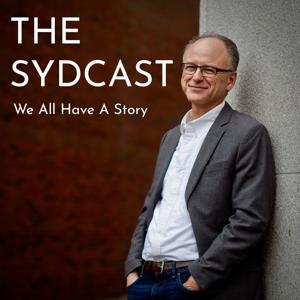
The Sydcast is all about intimate and informative conversations with fascinating people you may not know. Until now. Because everyone has a story.
Listen in as Syd talks to entrepreneurs,…
Sydney Finkelstein is an award winning professor at the Tuck School of Business at Dartmouth College, and a best-selling author of Superbosses and 25 other books. He’s written for the Harvard Business Review, the BBC, Fortune, Forbes, the Wall Street Journal, and more academic journals than you’d care to know about. He spends his time asking questions, and sometimes, even answering them.