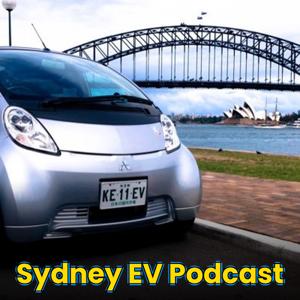
Big week. Mitsubishi, the brand that gave us one of the first modern EVs back in 2009 , has officially announced they're done building their own electric cars. Meanwhile 2,000 Australians have already put deposits on a Mazda they've never sat in. And sodium batteries are quietly matching Tesla's lithium benchmarks while some politicians are still out here demanding more coal.
Standard Tuesday, really.
Local cars this week:
The Geely EX2, Geely's best-selling hatchback with 465,000 units sold in China last year , has been approved for Australia, arriving mid-to-late 2026 at around $30,000. It comes in beige and pink, tows absolutely nothing, and will probably outsell everything you'd expect it to.
Xpeng dropped the X9, a seven-seater people-mover that charges 10-80% in twelve minutes, does 615km WLTP, and has an AI chassis that sees obstacles 30 metres ahead. It also tows 1,500kg, which means it will absolutely be used to tow a new camper trailer directly to its permanent resting place in someone's front yard.
Mazda already has over 2,000 firm orders for the 6e and CX-6e and nobody's even sat in one yet. This is either peak Australian enthusiasm or the world's most successful cult. Possibly both.
Mercedes is bringing the CLA Shooting Brake EV to Australia before year's end , "bargain luxury" in their words, which means you might only need to sell one kidney instead of two.
And the Polestar 4 is now taking orders from $78,500 the one with no rear window, because apparently visibility is for people who don't appreciate Scandinavian minimalism.
Internationally:
Ford has produced its first American-made LFP battery cells in Michigan, licensed from Chinese tech, because nothing says manufacturing independence quite like that. Honda is going tiny and quirky with the Super One. Mitsubishi is outsourcing their entire EV future to Nissan and Foxconn. And Jeep has opened orders for the new Compass EV with 674km WLTP range and genuine off-road capability, because apparently even Jeep figured out that silence doesn't mean soft.
Battery and tech:
Sodium-ion batteries from Hina Battery are now matching key Tesla lithium benchmarks, cheap, abundant, doesn't require mining half of Chile. In Western Australia, home batteries are flattening the solar duck curve and helping slash the need for peaking gas. Your neighbour's Powerwall is doing more for the grid than your local coal lobbyist, and that's just where we are now.
And finally , EVs can't go around corners. I know. I've heard. I addressed it. The physics laughed.
Still dailying an OG i-MiEV like a true masochist. Catch you next week.