
Sign up to save your podcasts
Or

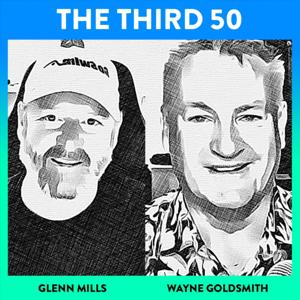


Season 3, Episode 6: Social Media & Sports — with Dr. Valerie Gruest
One spelling note first: the transcript reads "Valerie Gruest" consistently throughout, except one self-introduction moment where it's transcribed "Gruost" — almost certainly an ASR mishearing. I've used Gruest everywhere; worth a quick double-check against her own bio before this goes out.
Dr. Gruest — a Northwestern alum, 2016 Olympic swimmer for Guatemala, and now an assistant professor of strategic communication at New Mexico State — joins Glenn and Wayne to talk about what social media is actually doing to young (and not-so-young) athletes.
In this episode:
Season 3, Episode 5: Creating a Successful Club (Part 1)
Wayne Goldsmith and Glenn Mills lay out what actually goes into building a swim program that lasts — not the technique, the decisions underneath it.
In this episode:
Coaches can help reverse competitive swimming participation declines by making the sport more flexible, engaging, and sustainable for athletes, families, and coaches.
Participation Trends
•Glenn and Wayne discussed declining competitive swimming participation, especially among ages 11–12 and 15–16, while learn-to-swim, wellness, fitness, and masters participation are growing.
•Contributing pressures include competing sports, screens and gaming, busy parents, traffic, limited pool space, coach shortages, demanding schedules, and lengthy competition formats.
•The issues are global and also appear in hockey, rugby, soccer, and other sports; COVID-19 accelerated trends that were already underway.
Coaching Priorities
•Coaches should prioritize joy, relationships, belonging, and lifelong benefits alongside performance. Helping a swimmer overcome fear of water or experience a small breakthrough can be as meaningful as improving an elite athlete by three-tenths of a second.•Hard work and high standards remain important, but coaches can deliver them through encouragement, creativity, relevant communication, and engaging challenges rather than yelling or creating a negative environment.
•Programs should acknowledge athletes as whole people with school, jobs, family responsibilities, friendships, and other interests. Flexible attendance and competition options may improve retention.
Questions Ahead
•How can clubs redesign practices with dryland, varied groupings, and more engaging activities?
•How can competitions reduce waiting, simplify participation, and provide a better family experience?
•What will coaches change this season to improve athlete and personal well-being while sustaining performance?
•How should swimming respond to the influence of social media, gaming, and screens?
A future episode will examine this with a guest who holds a PhD in social media and children.
Overview
The meeting established a stage-based framework for measuring swimmers, emphasizing technique before maturation and integrated performance testing after maturation.
Glenn Mills and Wayne Goldsmith discuss the importance of testing and data in swimming. They emphasize the acronym T.E.S.T.: Test, Evaluate, Swimmer, and Re-evaluate. Wayne shares his experience from running national testing programs, highlighting the need for consistent testing conditions and accurate data collection. Glenn adds that testing should be measurable and relevant, using examples like stroke count and speed. They stress the importance of allowing swimmers to take ownership of their data and solutions. They also discuss the significance of recording and storing data for future reference and the benefits of individual attention in coaching.
Glenn Mills and Wayne Goldsmith discuss the integration of AI in coaching, emphasizing its role in enhancing efficiency rather than replacing human coaches. They introduce the "ATTAC" method: Ask, Think, Tool, Apply, Check. Wayne highlights AI's potential to streamline data analysis, improve workout design, and provide real-time feedback. Glenn stresses the importance of using AI to capture and analyze existing data, such as swim times and coach comments, to inform better coaching decisions. They also address practical considerations like the durability of tech in wet environments and the need for parental consent when filming minors. The conversation underscores AI's evolving role in optimizing coaching practices and athlete performance.
Visit Wayne's Substack: https://swimminggold.substack.com
Visit Glenn's Website: https://www.goswim.tv
BUY & Review Wayne's book, The Talent Myth:
AMAZON EBOOK
AMAZON PAPERBACK
Glenn Mills and Wayne Goldsmith discuss Wayne's new book, "The Talent Myth," which challenges the conventional notion of talent in sports. Wayne emphasizes the importance of character, work ethic, and love for the sport over physical prowess. He shares a personal story about a 12-year-old rugby player cut from a team, highlighting the broader issue of how coaches and parents often undervalue non-talented but dedicated athletes. Wayne argues that true talent is often hidden and that coaches should focus on fostering a love for the sport and building resilience in young athletes. The book also includes a framework for making champion choices and handling critical moments.
Glenn Mills and Wayne Goldsmith discuss the importance of starting to teach data and swimming fundamentals early, emphasizing that teaching kids concepts like length and tempo at a young age makes their learning easier and more effective. They highlight the benefits of using technology to enhance coaching, such as providing personalized feedback and making stroke mechanics more understandable. Glenn shares his experience with a new software that gathers data from 3,000 races, showing how understanding length, tempo, and duration can improve performance. They also touch on the need for coaches to adapt to new technologies and methods to better engage and develop young athletes.
Check out a segment from Wayne's new Substack:
https://swimminggold.substack.com/p/training-zone-insanity
Subscribe to get more great content from Wayne:
https://swimminggold.substack.com
Here's a short explainer video of the GoSwim app - https://vimeo.com/goswim/app
If you'd like to set up a demo with Glenn about the GoSwim app, follow this link:
https://tidycal.com/glenn/30-minute-goswim-demo
Glenn Mills and Wayne discuss the potential inclusion of the 50-meter event in NCAA swimming, proposed by the College Swimming Coaches Association (CSCA). They highlight concerns about the event's underwater nature, which may not appeal to spectators. Wayne emphasizes the need for adaptability in coaching to accommodate both sprint and distance events. They debate the impact on longer events, suggesting incentives like bonus points for swimmers competing in multiple distances. Glenn proposes giving more points for longer events to balance the focus. They also discuss the importance of engaging parents and the potential for increased participation if NCAA swimming becomes more visible on TV.
Glenn Mills and Wayne discuss the impact of the new 50-meter sprint events on swimming, particularly at the Olympics. Wayne shares insights from a meeting with Bill Sweetenham, emphasizing the positive opportunities for coaches to engage more athletes. They highlight the increased competitiveness and the need for better skills, timing, and technique. The conversation also touches on the broader implications of sport changes, citing examples from triathlon, cricket, and lacrosse. They stress the importance of adapting to attract more participants and improve the sport's accessibility, particularly for young athletes and their families.
From the publisher's feed